US common stocks / ADRs: top 10 by volume; top 10 gainers (by % change, volume as tie-breaker); top 10 losers (by % change, prefer liquid names). Deep notes cover the de-duplicated set across the three boards.
29 names on this page · volume 10 · gainers 10 · losers 10
Order: volume board → gainers → losers; each ticker appears once. Summaries of public information only — please verify primary sources.
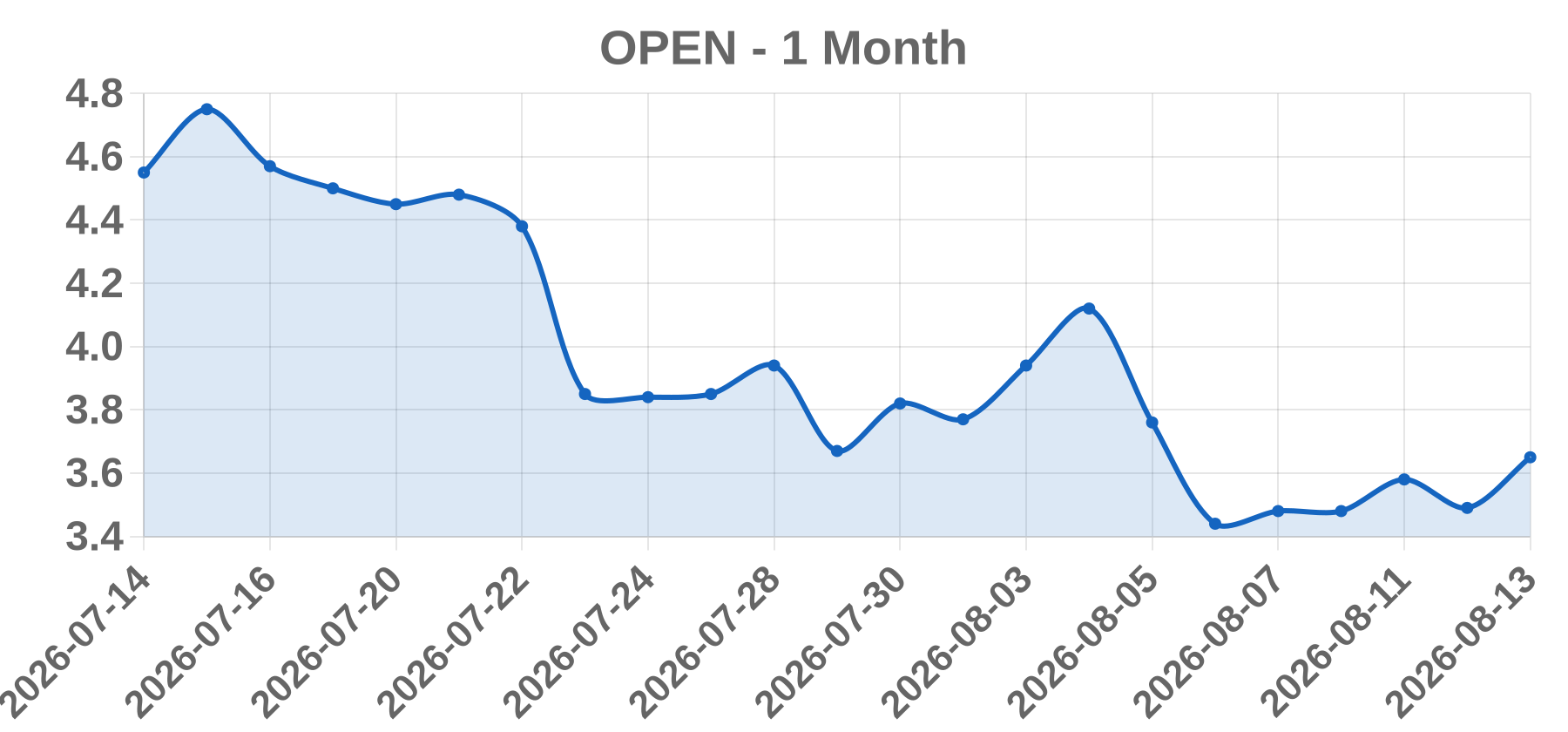
1/10OPEN OPEN
+4.58%
Close 3.65 · Vol 170.70M · Type: Other
Approx. 1-month price (illustrative)
Business Opendoor Technologies Inc. (Nasdaq: OPEN) is a leading e-commerce platform for residential real estate transactions, founded in 2014 and headquartered in San Francisco. The company's core iBuying service enables homeowners to sell homes directly to Opendoor for cash offers, while buyers purchase renovated homes through its platform across markets nationwide.
Today’s take On August 13, 2026, Opendoor announced a multi-part capital markets transaction that drove shares up 4.58% to $3.65. The deal bundled (1) a $650M offering of 0% coupon convertible senior notes due 2030, (2) a $158M repurchase of ~45.3M shares (~5% of shares outstanding) — the company's first-ever buyback as a public company, authorized by the Board on Aug 12 — and (3) capped call transactions costing $52.5M. After the buyback and capped calls, ~$440M of growth capital is added at zero cost. The structure is engineered so no net share issuance is expected below $10.38/share (roughly 3x the $3.49 reference price), with less than 5% net dilution even at $20. Placement agent JWCA committed to buying ~$25M of stock. CEO Kaz Nejatian stated the transaction gives over $400M of growth capital at 0% coupon while reducing shares by 5%. The move follows a sharp selloff from Q2 earnings (revenue $883M, down 43.7% YoY; net loss $162M, EPS -$0.17), with acquired homes up 77% QoQ and 149% YoY to 6,981.
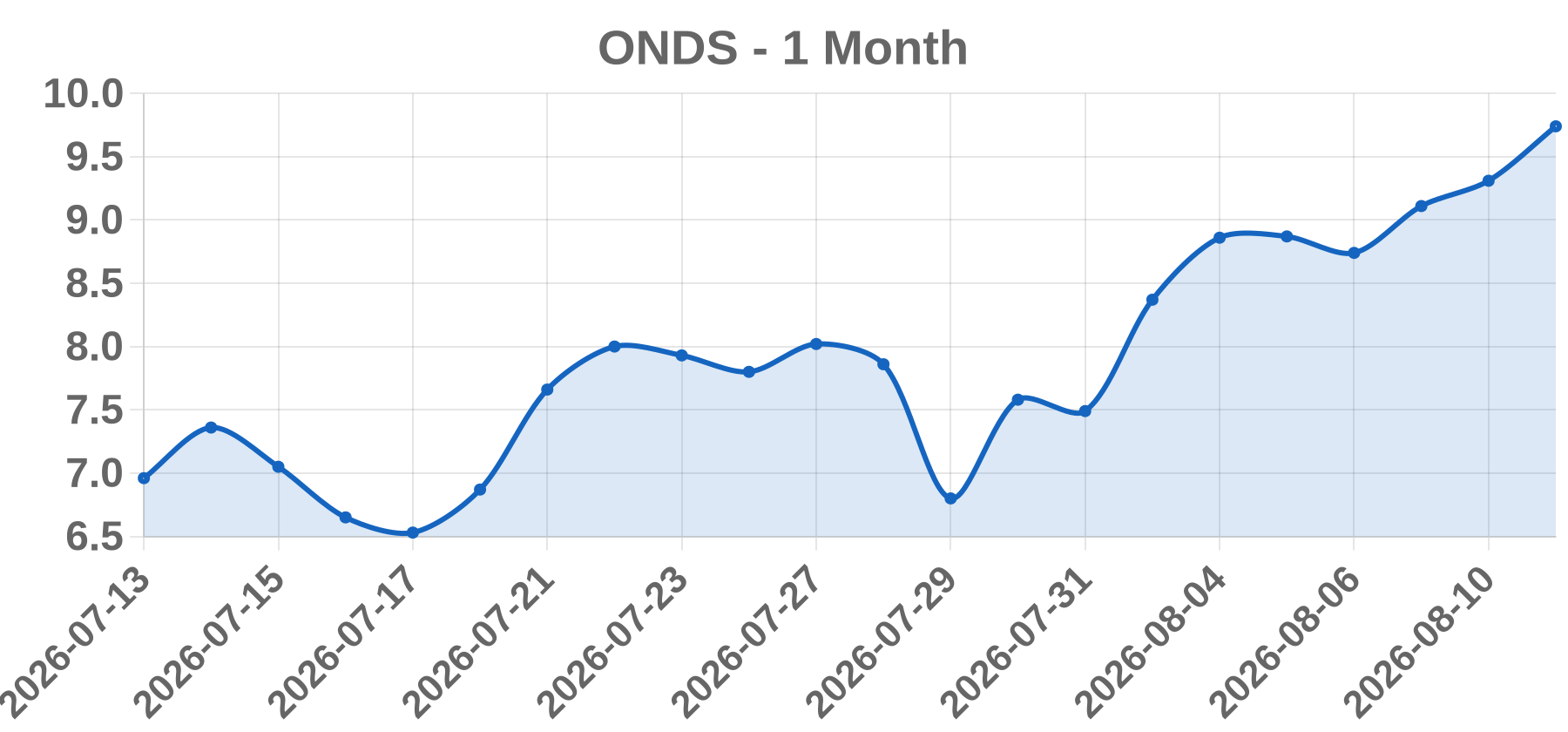
Business Ondas Holdings Inc. (ONDS) is a defense, security, and critical-infrastructure technology company and leading provider of autonomous systems, robotics, and mission-critical connectivity, trading on NASDAQ and headquartered in West Palm Beach, Florida. It operates Ondas Autonomous Systems (drones, counter-UAS, loitering munitions, ISR), Ondas Networks (private wireless), and Ondas Capital, serving defense ministries, homeland security, and industrial customers.
Today’s take Ondas plunged 8.80% to $8.91 on Aug 13, 2026 after reporting Q2 results pre-market. Despite record revenue of $83.77M (+1,236% YoY, 67% QoQ, beating ~$68M consensus) and raising FY2026 revenue guidance to $525-550M, the stock sold off on a wider-than-expected loss. EPS of -$0.19 missed the -$0.10 estimate by $0.09, and the adjusted EBITDA loss widened to $50.6M (from $5.8M) vs ~$31.6M expected. Operating expenses hit $199.1M including $105.8M in non-cash items. Markets priced in a classic 'sell-the-news' reaction: the top-line beat was outweighed by the EPS/EBITDA miss, heavy dilution from the ~$875M DZYNE acquisition paid partly with ~85M new shares, and one of the highest short interests in the US (~40-44% of float). The $1.4B cash position and $757M pro forma backlog did little to offset execution-risk concerns.
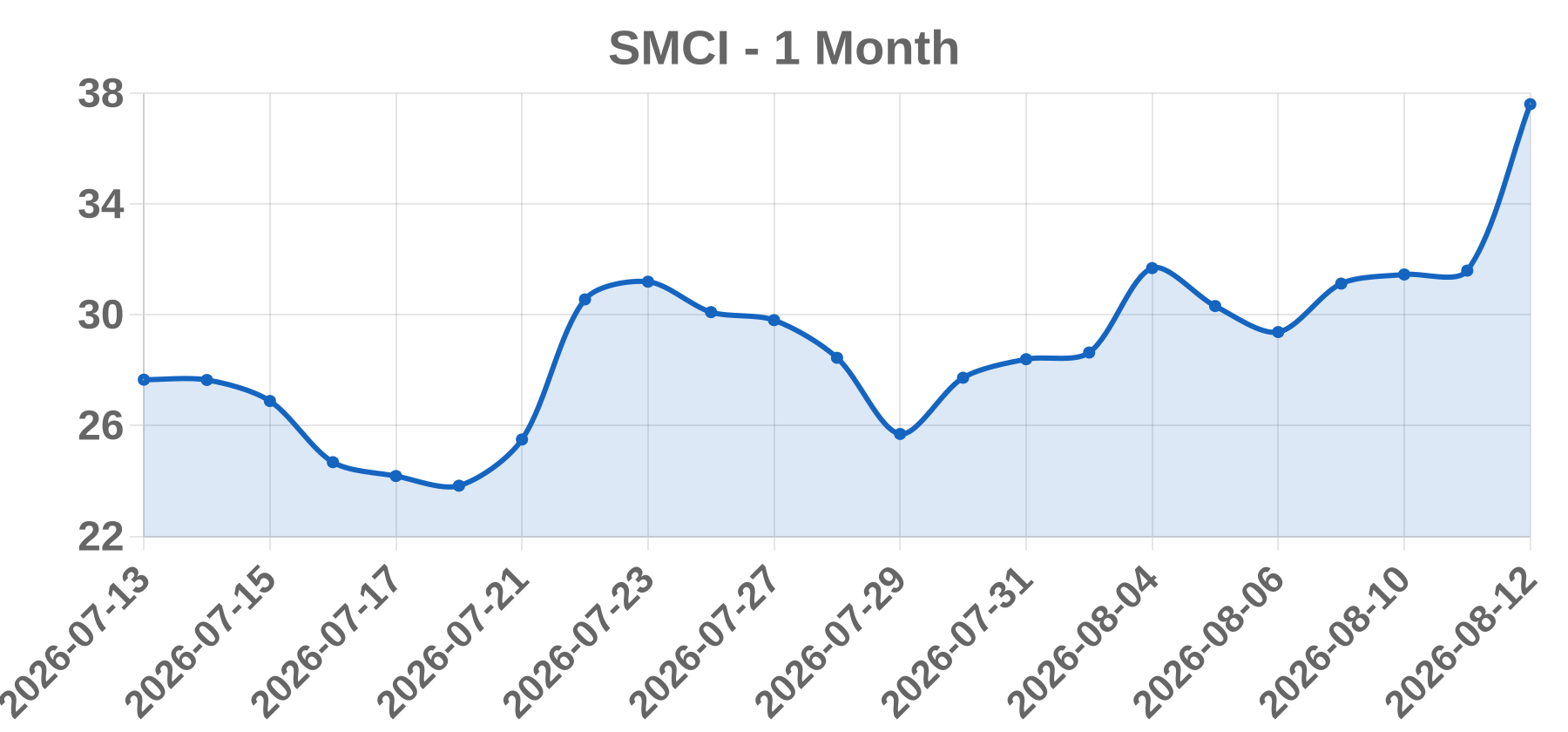
Business Super Micro Computer, Inc. (NASDAQ: SMCI) is a San Jose, California-based designer and manufacturer of high-performance, energy-efficient server, storage, and networking solutions. Its rack-scale, liquid-cooled GPU/CPU server platforms are core building blocks for AI data-center and cloud infrastructure build-outs.
Today’s take SMCI closed at $39.16 (+4.12%) on 2026-08-13, extending a powerful post-earnings rally. The primary catalyst was the company's Q4 FY2026 report (released Aug 11) and its blowout forward guidance. Q1 FY2027 revenue guidance of $14.5-15.5B and non-GAAP EPS of $1.01-1.10 crushed the ~$12.0B / ~$0.74 consensus and even surpassed the street's most-bullish ~$13.3B revenue estimate. Q4 results showed EPS of $1.70 (a 139% beat vs ~$0.71 estimate, atop a modest $11.12B revenue miss vs ~$11.73B), with non-GAAP gross margin surging to 17.6% from 10.1% sequentially. Management guided FY2027 revenue to $65-72B (66-84% growth) versus ~$54.4B consensus, citing a record backlog of >$60B in new Q4 orders and CEO Charles Liang's confirmation of co-building a gigawatt-scale AI data center for Elon Musk's SpaceXAI venture. The rally was amplified by concurrent analyst actions on Aug 13 (Citi raised PT to $39, Northland's Chokshi raised to $43) and the S&P 500 breaking above 7,800 for the first time, fueling risk-on buying of high-beta AI names.
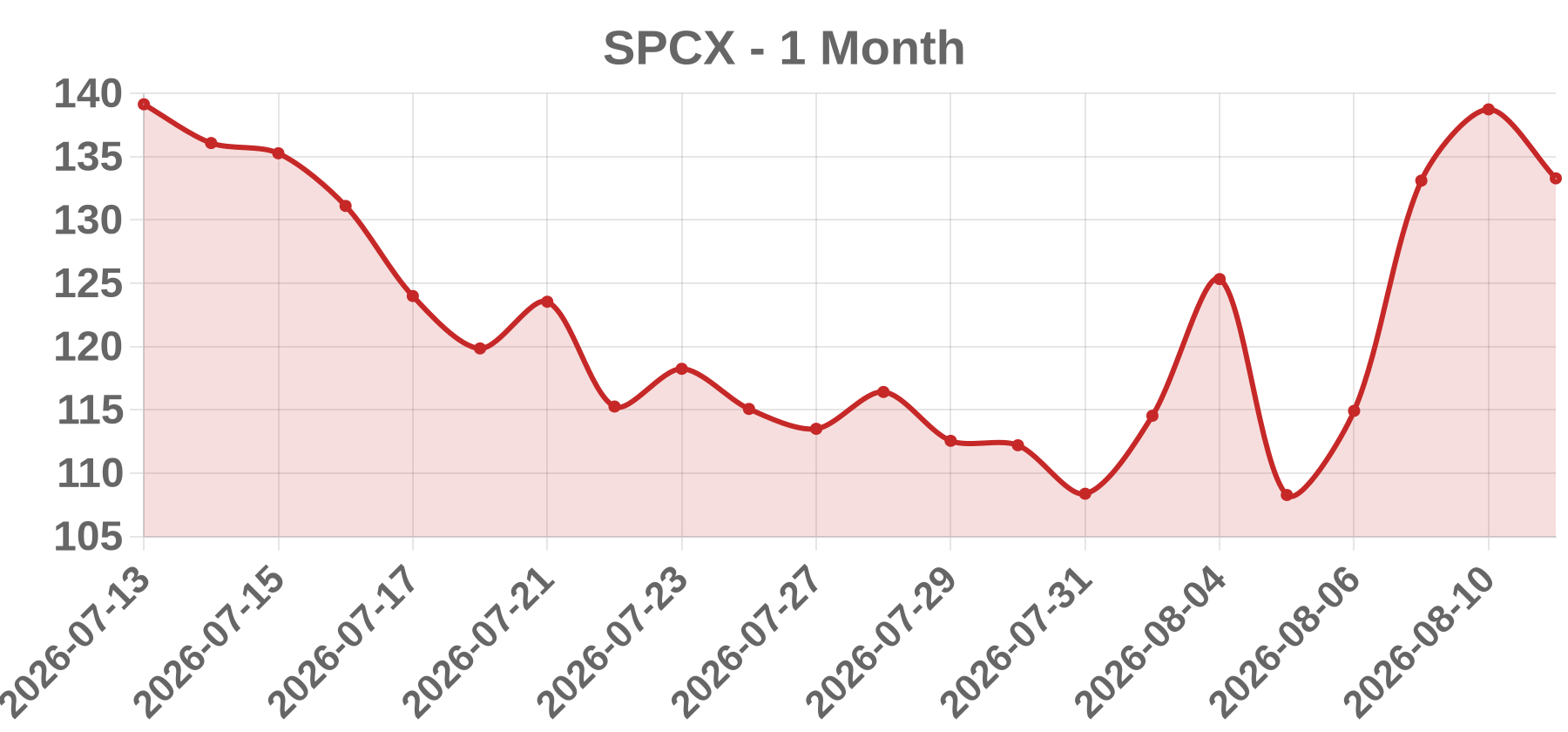
Business Space Exploration Technologies Corp. (SPCX) is a rocket launch, spacecraft manufacturing, and satellite broadband provider dual-listed on Nasdaq Global Select Market and Nasdaq Texas. It operates through three segments: Space (Starship/Super Heavy reusable rockets), Connectivity (Starlink LEO broadband, ~55-70% of revenue), and AI (xAI/Grok LLMs). CEO Elon Musk; market cap ~$1.86T; ~13.18B shares outstanding.
Today’s take On Aug 13, 2026 (Thursday), SPCX fell 3.33% to $141.29 (-$4.86), a profit-taking reversal immediately after a violent ~35-40% short-covering rebound off its Aug 5 low (Aug 12 surged ~10% to ~$146 on Musk's AI narrative, the Grok 4.6 launch, and short interest collapsing from 34% to ~11% of float). The direct same-day trigger was hedge fund manager David Einhorn's Greenlight Capital quarterly letter publicly attacking SpaceX's $1.75T post-IPO valuation, calling the IPO a possible 'signpost of a speculative top' and 'an insult to value investing.' The bearish headline rattled a momentum-driven market sitting ~63% below its $225.64 52-week high, prompting selling after the parabolic run. Contextual pressure: a 911M-share lockup unlock (Aug 6) expanded float and further unlocks loom Aug 20 (~319M) and Sep/Oct (~700M each). Q2 earnings (Aug 4) showed capex ~2x revenue, with the AI unit losing $1.26B despite $2.56B revenue (+247% YoY). No fresh earnings, M&A, or FDA triggers; the decline was valuation-critique + mean-reversion profit-taking.
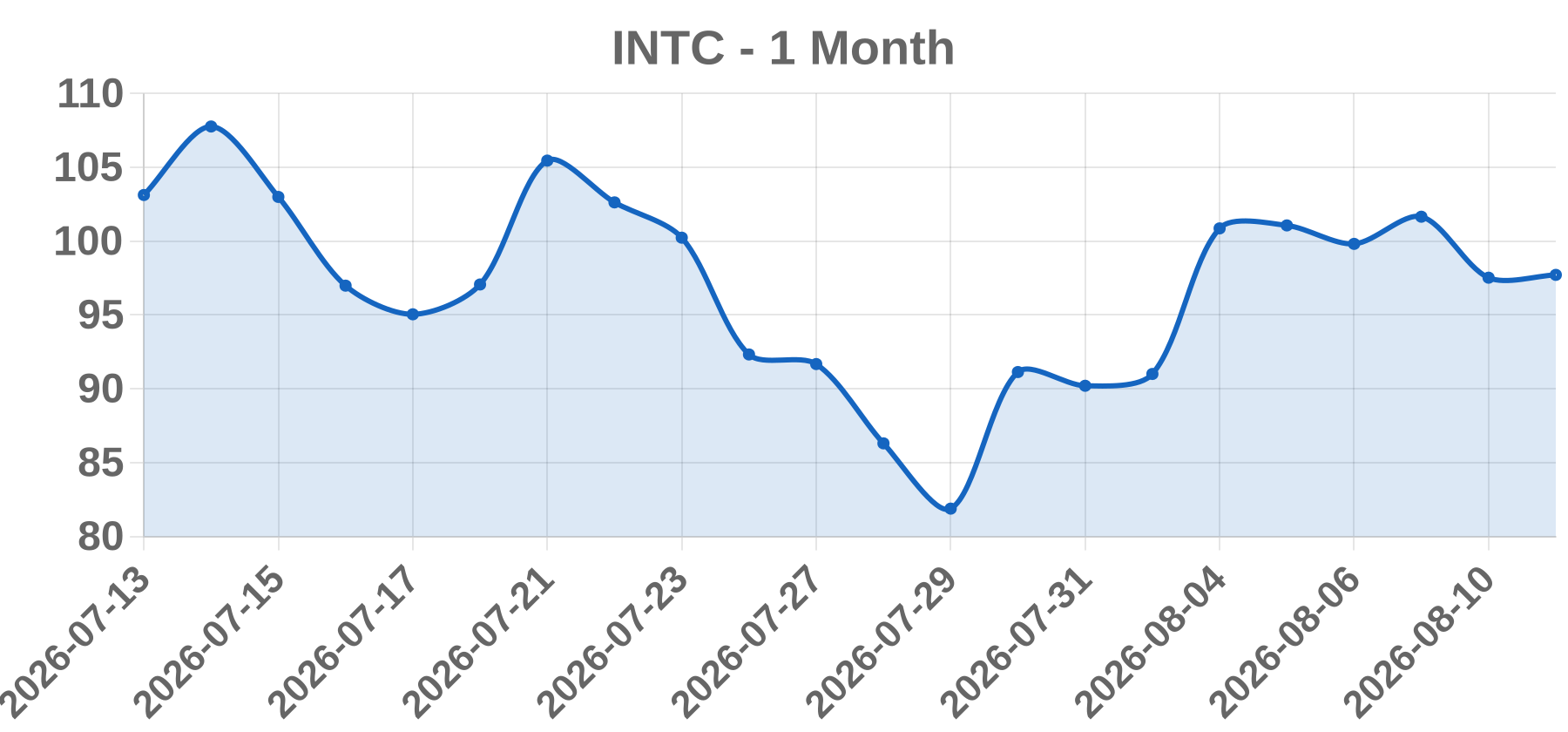
Business Intel Corporation (INTC) is a U.S.-headquartered semiconductor design and manufacturing company founded in 1968, headquartered in Santa Clara, California and trading on NASDAQ. Under CEO Lip-Bu Tan, Intel operates three principal segments: Client Computing Group (CPUs, GPUs, edge/connectivity), Data Center and AI (server CPUs, discrete GPUs, networking silicon), and Intel Foundry (wafer fabrication and foundry services for external customers), the strategic centerpiece of its turnaround. Q2 2026 revenue was $16.1 billion, up 25% year-over-year with GAAP gross margin at 40.4%.
Today’s take On Aug 13, 2026, INTC rose +3.58% to close at $104.56 (premium ~10% above the $95 offer price), volume ~116.6M shares, its third straight gain. The dominant catalyst was the successful completion of Intel's landmark, oversubscribed $20B common-stock offering (upsized from $15B; 210.5M shares at $95), which drew over $100B in investor orders. CEO Lip-Bu Tan personally invested $12M at the offer price, signaling confidence. Bank of America (Vivek Arya) reiterated Buy but trimmed its target to $145 from $160, calling the raise a positive leading indicator of foundry confidence and lifting its 2030 CPU-market view to $210B (~36% annual growth as AI shifts demand from GPUs to CPUs). UBS (Arcuri) held Neutral, cutting its target to $112 from $121 while noting the financing likely removes long-term uncertainty. The broader SOX index rose ~2.5% with memory names (SanDisk +13.7%, WD +7.3%, Micron +6.2%) surging, and CEO Tan's comments about re-entering memory architectures (hiring ex-SK Hynix CEO Seok-Hee Lee) added narrative fuel. Intel outperformed QCOM (+1.05%), NVDA (+0.54%), the S&P (+0.65%) and Nasdaq (+0.81%).
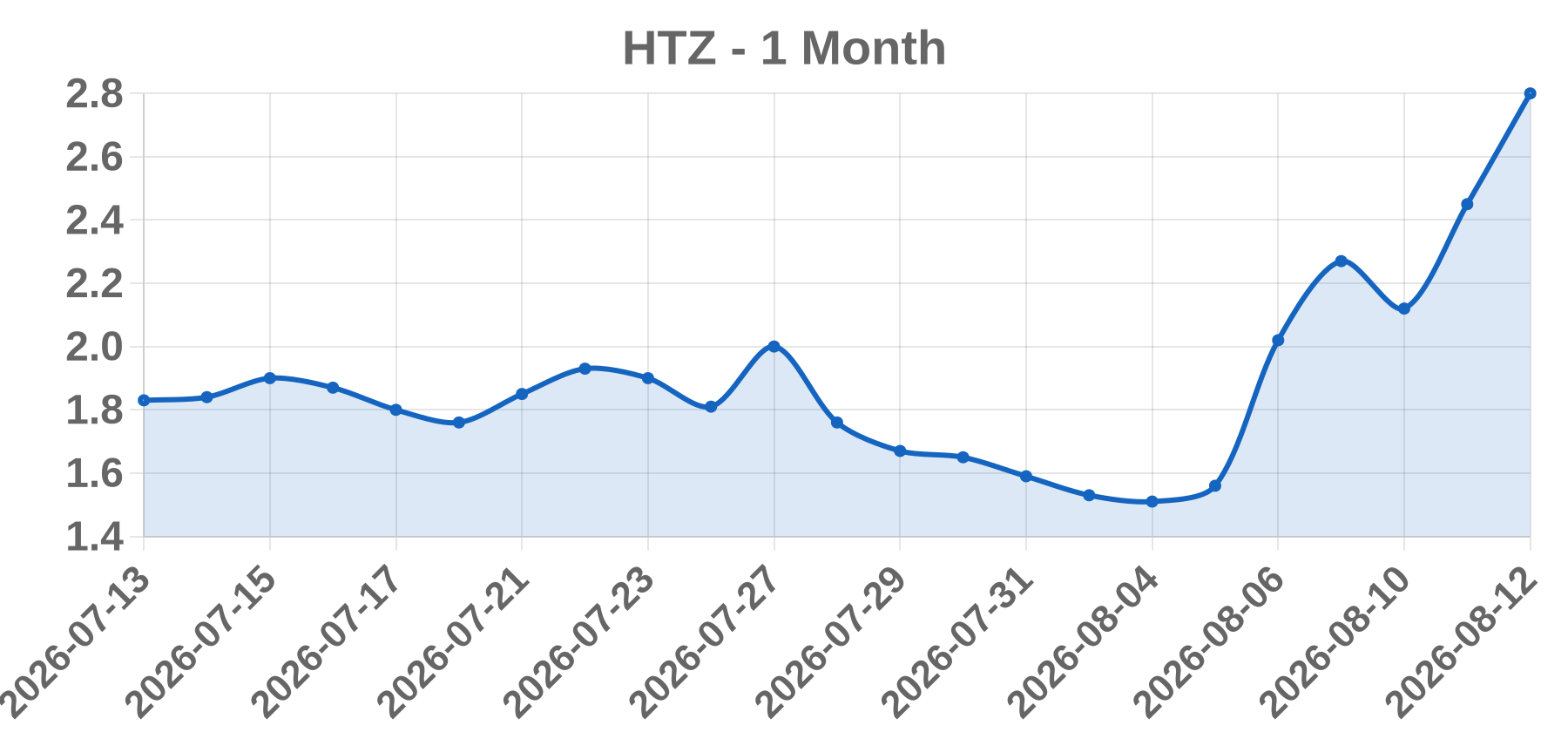
Business Hertz Global Holdings, Inc. is one of the world's largest vehicle rental companies, operating through two segments: Americas RAC (US, Canada, Latin America, Caribbean) and International RAC. It rents vehicles under the Hertz, Dollar, and Thrifty brands from company-operated, licensee, and franchisee locations in roughly 160 countries / 11,000+ sites, and also sells used vehicles and provides value-added services (mobility, fleet management). Founded in 1918 and headquartered in Estero, Florida, the company re-emerged from a 2021 bankruptcy restructuring but carries heavy leverage (~$21.09B debt vs. $635M cash), negative book value (-$628M), and persistent annual losses (TTM net income -$279M). As of the August 13 close, market cap was ~$836M on ~356.45M shares outstanding (float ~170M), wi
Today’s take On August 13, 2026, Pershing Square Capital Management disclosed in its semiannual interim report that it had fully liquidated its entire Hertz position during July 2026, removing Bill Ackman as a high-profile activist shareholder. Pershing had held 15.2M shares (~$70M, ~4.3% of the company) as of end-March. Ackman publicly described the June 2026 dilutive capital raise (37M shares at $2.70 plus an upsized $350M exchangeable senior first-lien secured PIK notes offering) as 'bungled' and 'unnecessary,' citing destruction of confidence in management's capital-allocation skills while still liking the operating team; Hertz was among Pershing's worst-performing positions, subtracting 1.1% from gross performance YTD through Aug 11. This institutional-exit catalyst hit after a violent post-earnings short-squeeze rally: following Q2 beat on Aug 6 (adjusted EPS -$0.11 vs -$0.23-0.24 consensus; revenue $2.396-2.40B, +9.7% YoY), the stock surged from ~$1.56 (Aug 5) to $2.80 (Aug 12, +14.29%), a move amplified by extreme short interest (103.2M shares short, ~78% of float as of Jul 31; borrowing fees up to 22.85%). On Aug 13, the stock opened at $2.68, hit an intraday high of $2.945 before reve
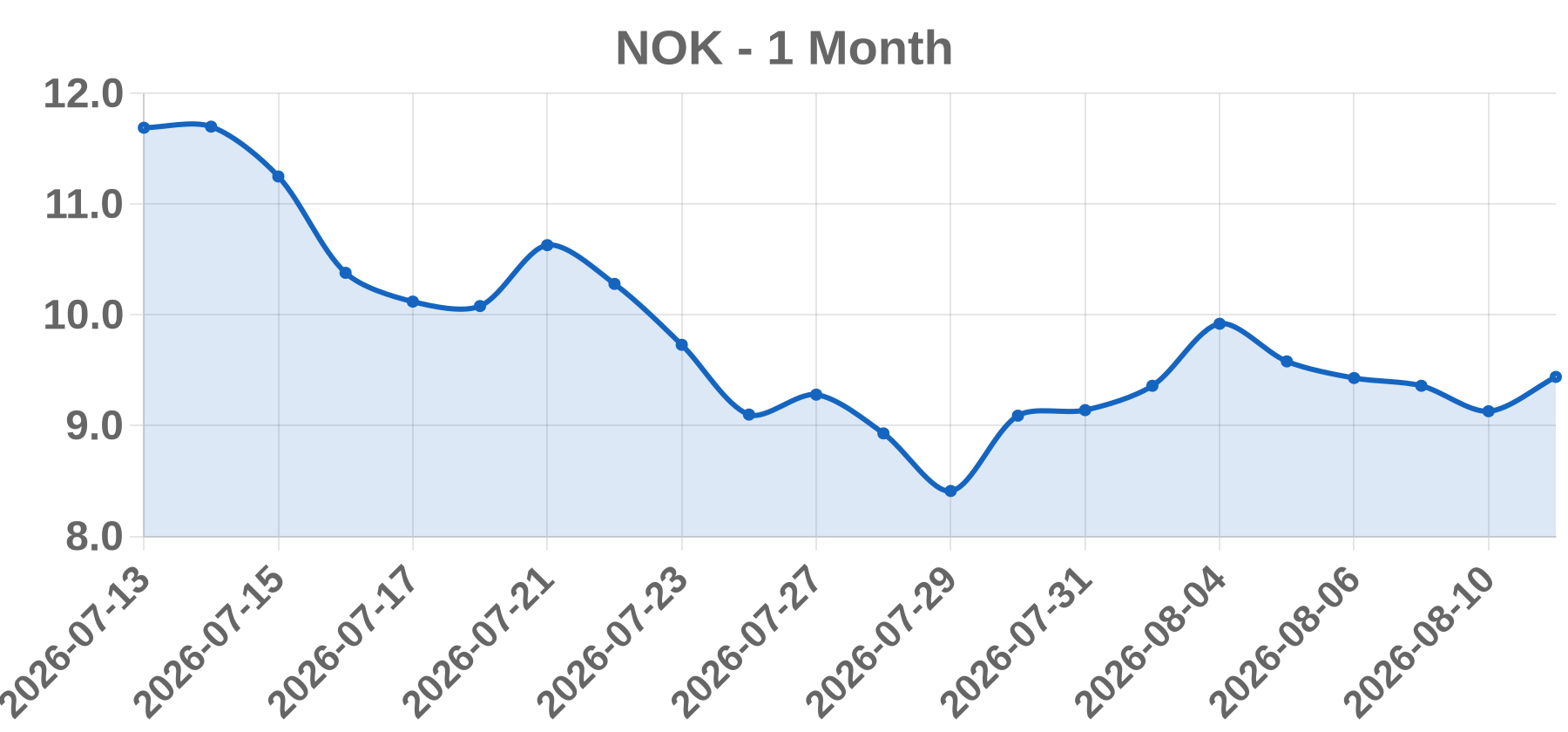
Business Nokia Oyj (NYSE: NOK; Nasdaq Helsinki: NOKIA.HE) is a multinational telecommunications and networking equipment company headquartered in Espoo, Finland. Founded in 1865, it designs, develops, and markets mobile, fixed, and cloud network solutions, with segments spanning Network Infrastructure, Mobile Networks, Cloud and Network Services, and Nokia Technologies.
Today’s take NOK closed +2.33% at $10.56 on Aug 13, 2026, continuing a strong multi-week rally from $8.37 (Jul 29). The move was driven not by a fresh event but by the durable continuation of a Q2FY26 earnings-beat narrative (Jul 23): comparable EPS of €0.07 beat the €0.05 estimate, revenue rose ~9% to €4.82B, and AI & Cloud order intake hit €2.8B (6.3x quarterly segment revenue) with segment sales up >100% YoY. Analyst upgrades reinforced the thesis: BofA raised its price target to $18.50 (Buy) and SEB upgraded to Buy (€12 target), both citing AI networking demand. A reported U.S. FCC draft ban on new Chinese optical transceivers added a regulatory tailwind diverting data-center orders to non-Chinese suppliers including Nokia. The Nvidia AI-RAN platform launch (commercial 2027) and planned 6G trials with T-Mobile extended the forward narrative. A same-day counter-catalyst saw AlphaValue/Baader Europe downgrade Nokia to Sell (~15:15 CET), yet the stock held gains, indicating bullish momentum dominated.
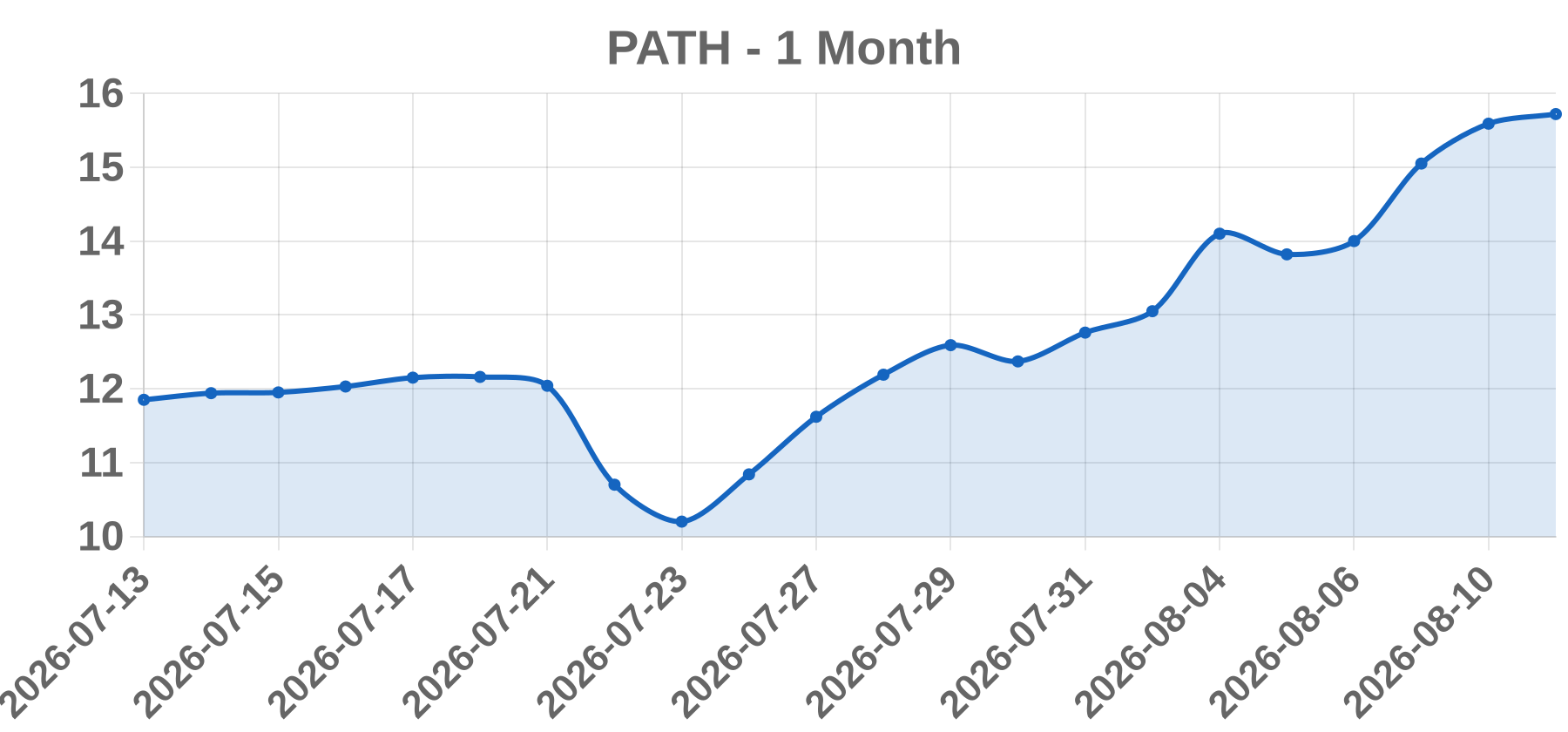
Business UiPath, Inc. (NYSE: PATH) is an enterprise software company specializing in robotic process automation (RPA) and business orchestration. Its UiPath platform combines RPA, AI, machine-learning, and agentic automation to help organizations automate repetitive, rule-based tasks and coordinate end-to-end workflows. The company went public on the NYSE in April 2021.
Today’s take On Aug 13, 2026 PATH surged +9.31% to $16.68, far outpacing the S&P 500 (+0.65% to a record 7,798.99) and Nasdaq (+0.8%). The primary driver was a broad 'agentic AI' sector rally on cooling PPI/CPI data that eased Sep Fed rate-hike fears; AI infrastructure names led (CoreWeave ~+19%), lifting automation plays. Stock-specific tailwinds amplified the move: UiPath's first-ever GAAP-profitable quarter (Q1 FY2027, GAAP op income $28M vs -$16M prior year) sparked a bullish re-rating, it was named a Forrester Wave Q2 2026 Document Mining Leader, and UBS upgraded PATH from Sell to Neutral. Critically, short interest was ~28.9% of float (112.93M shares, -18.7% short change), so the breakout triggered squeeze-fueled buying. PATH ran from ~$10.20 (Jul 23) to $16.68, a ~64% gain in under three weeks, extending a ~52% three-month run.
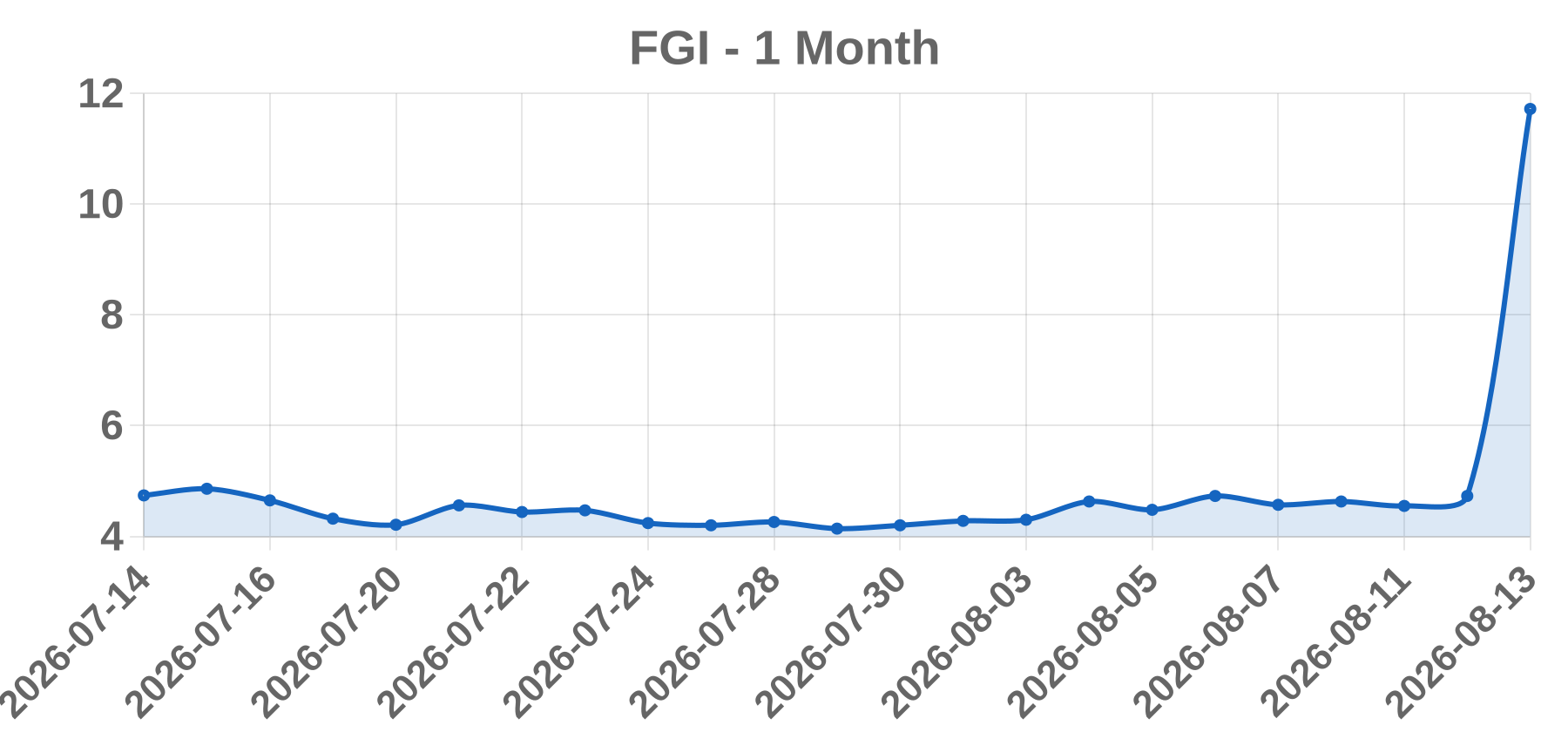
Business FGI Industries Ltd. is a global B2B supplier of kitchen and bath products, trading on NASDAQ under ticker FGI. The company distributes sanitaryware, bath furniture, shower systems, and kitchen cabinetry to retail, wholesale, and commercial customers primarily in the United States, Canada, and Europe. Headquartered in East Hanover, New Jersey, FGI has only ~1.93 million shares outstanding and a market cap of approximately $22.6 million.
Today’s take FGI surged +147.78% to close at $11.72 on August 13, 2026, after reporting Q2 2026 earnings on August 12 that delivered a massive EPS beat. The company reported EPS of approximately $0.60-$0.67 versus consensus estimates of $0.08-$0.43 (Zacks noted a $0.90 beat over a $0.23 loss estimate). Revenue rose 2.9% year-over-year to $31.9 million, slightly below the ~$33.85M consensus. Gross margin expanded 530 basis points to 33.4%, and the firm swung from an operating loss to a 4.4% operating margin. Management reaffirmed full-year 2026 guidance of $134-$141M revenue despite tariff headwinds. The stock opened at $8.47, spiked intraday to $19.93 (+321% from the prior close of $4.73), then retraced to close at $11.72. With only 1.93 million shares outstanding (public float ~522K) and short interest of roughly 3.4-8.7% of float, the earnings catalyst in an extremely thin tape triggered a violent short-squeeze/momentum repricing, with ~100.8 million shares traded — over 50x the entire share count.
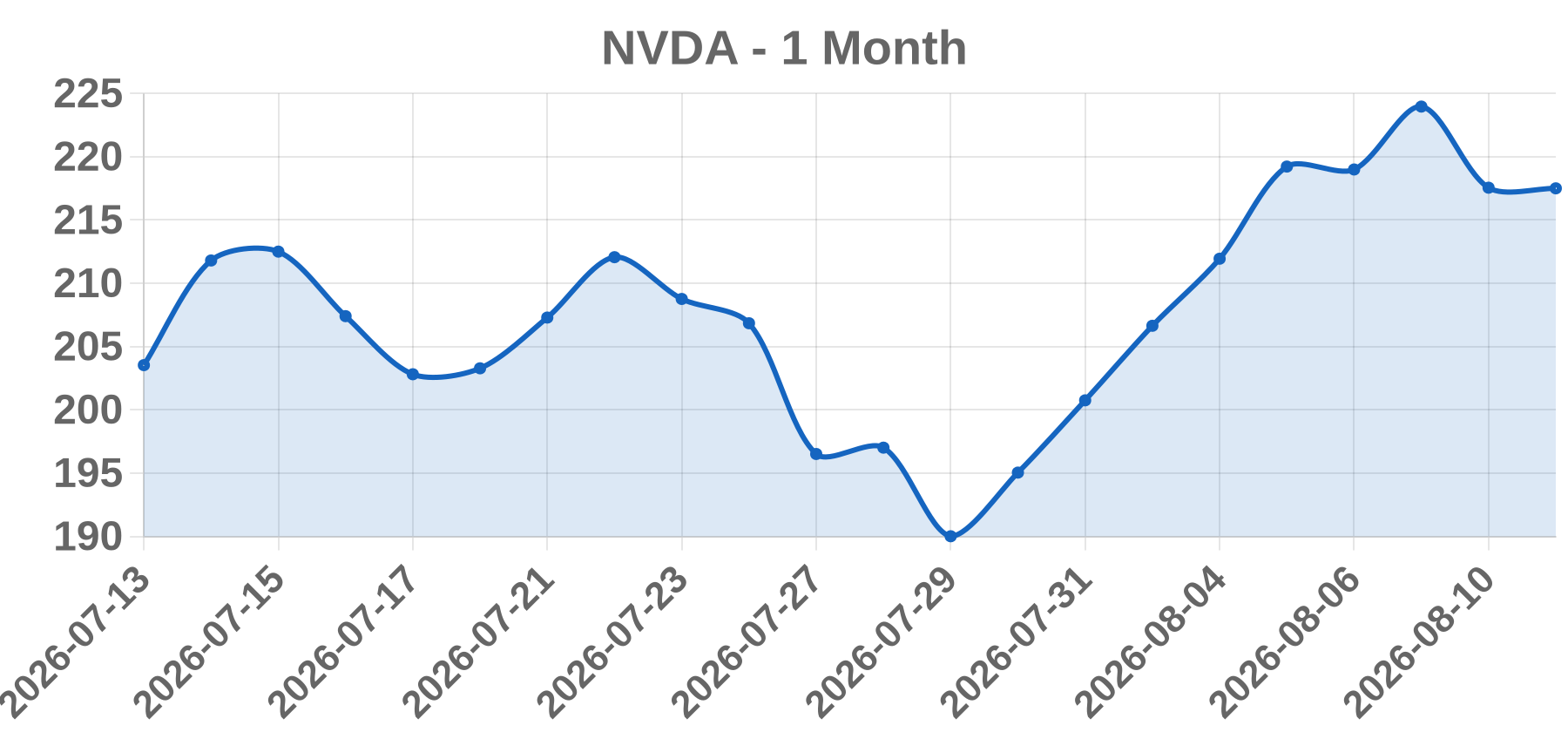
Business NVIDIA Corporation (Nasdaq: NVDA) is the leading developer of graphics processing units (GPUs) and AI computing platforms, dominating the market for semiconductors used to train and run large language models. It also offers the CUDA software platform and expanding data-center networking solutions that tie GPUs together for complex AI workloads. As of 2026-08-13, NVIDIA's market cap was approximately $5.46 trillion, making it one of the world's most valuable companies.
Today’s take On 2026-08-13 NVDA closed at $225.30, up $1.21 (+0.54%), extending follow-through momentum after Wednesday's 8/12 surge of ~3% to $224.80 (its highest close since early June). The tape was driven by carry-over catalysts rather than a single new event: (1) the $500B Wall Street AI-financing deal announced 8/10, with MOUs signed with Apollo, BlackRock, Blackstone, Brookfield, Goldman Sachs and KKR to mobilize over $500B of third-party capital for AI data-center buildouts — including a potential $250B guarantee on OpenAI lease payments and $350B in GPU purchase financing; (2) reports (The Information, 8/11) that NVIDIA is building Nemotron 4, an open-source model with at least 1 trillion parameters; and (3) analyst reiterations — BofA (Vivek Arya) top sector pick at $350 PT, Susquehanna Buy at $275, Morningstar $280 fair value, Raymond James $330. The next key catalyst is fiscal Q2 FY2027 earnings due 8/26. IBD named NVDA its Stock of the Day, eyeing a 236.54 buy point with 224.76 early entry and a Composite Rating of 97/99.
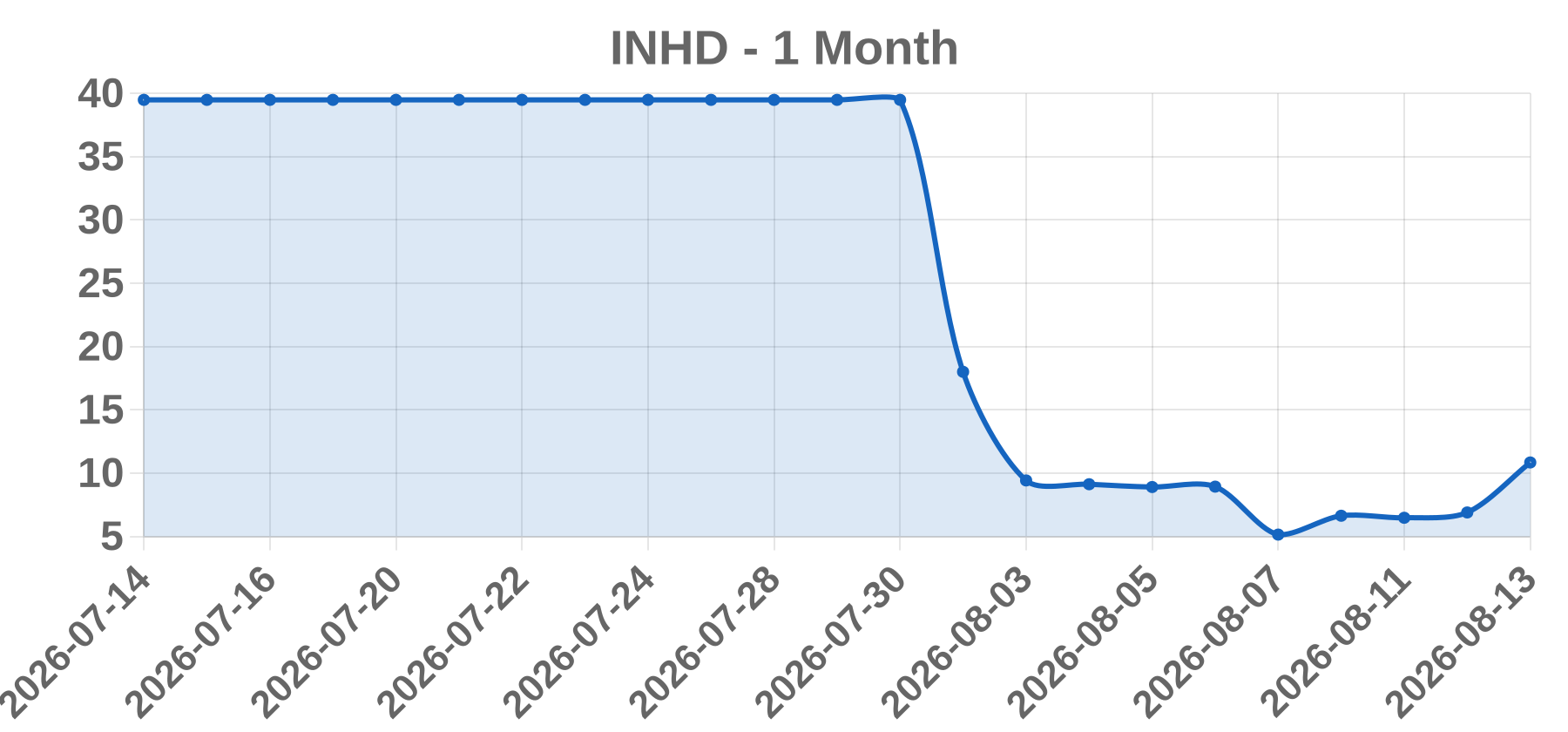
Business Inno Holdings Inc. (NASDAQ: INHD) is a Hong Kong-based micro-cap (incorporated 2021, IPO Dec 2023) that sources and resells pre-owned consumer electronics (smartphones/tablets) to wholesalers in the US, while also engaging in steel-framing building remodels and AI tech research/consulting. It operates with only ~5 employees.
Today’s take INHD surged +57.33% to close at $10.84 on Aug 13, 2026, with a wide day range of $6.51-$14.75 on 2.56M shares — the day immediately before its scheduled earnings report on Aug 14, 2026 (after market close). The move reflects speculative pre-earnings buying in an ultra-tight-float micro-cap: only 2.52M shares outstanding, with 2.70M shares short (0.20 days to cover), creating squeeze-prone dynamics. The company booked TTM revenue of $4.56M (+576.5%/QoQ +798%) but remains deeply unprofitable with a -$3.96M net loss. It holds strong liquidity ($31.79M net cash, ~$12.61/share; book value $111.29/share). Note shares were adjusted via a 1:20 reverse split (May 2026) and the stock has whipsawed violently since a June 8 parabolic surge to ~$39 on 274M shares, with swings like -54% (Jul 31), -47.67% (Aug 3), and +28.86% (Aug 10). Extreme 52-week range ($1.01-$7,651.19) confirms a heavily speculative, hype-driven trading regime.
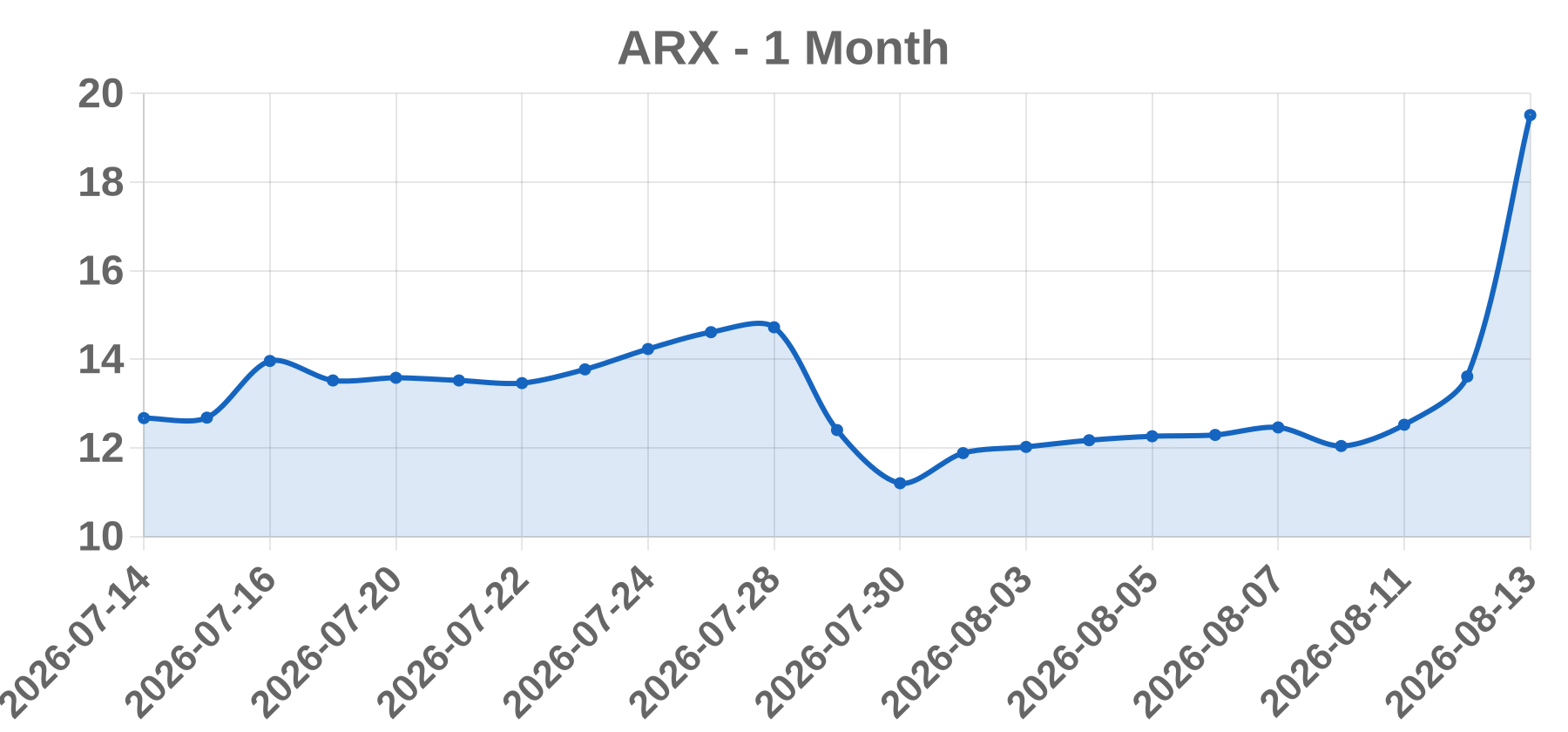
Business Accelerant Holdings (NYSE: ARX) is a Cayman Islands exempted company operating the Accelerant Risk Exchange, a data-driven specialty insurance marketplace connecting underwriters (MGAs) with risk capital providers through advanced analytics and real-time underwriting insights. Founded in 2018 and headquartered in Grand Cayman, the company listed on the NYSE in July 2025 and serves the U.S. and international property & casualty specialty market.
Today’s take ARX surged 43.35% to close at $19.51 on August 13, 2026, following a definitive agreement for private equity firm Thoma Bravo to acquire Accelerant in an all-cash transaction with an enterprise value of over $4 billion. Shareholders receive $20.25 per share, a 49% premium to the August 12 close of $13.61. Altamont Capital Partners, holding ~82% of voting rights, agreed to vote in favor, making approval near-certain, and the deal carries no financing condition. Closing is expected in H1 2027 with a 6% annual ticking fee if delayed by insurance regulatory approvals. The acquisition overlapped a strong Q2 earnings beat: adjusted EPS of $0.32 vs $0.16 consensus (+91%), revenue of $356.9M vs $279.23M estimate, Exchange Written Premium up 23% YoY to $1.32B, net income of $80M vs $13.1M, and adjusted EBITDA margin of 30.6%. The stock closed at ~3.8% below the $20.25 offer price, reflecting deal-close time and regulatory risk.
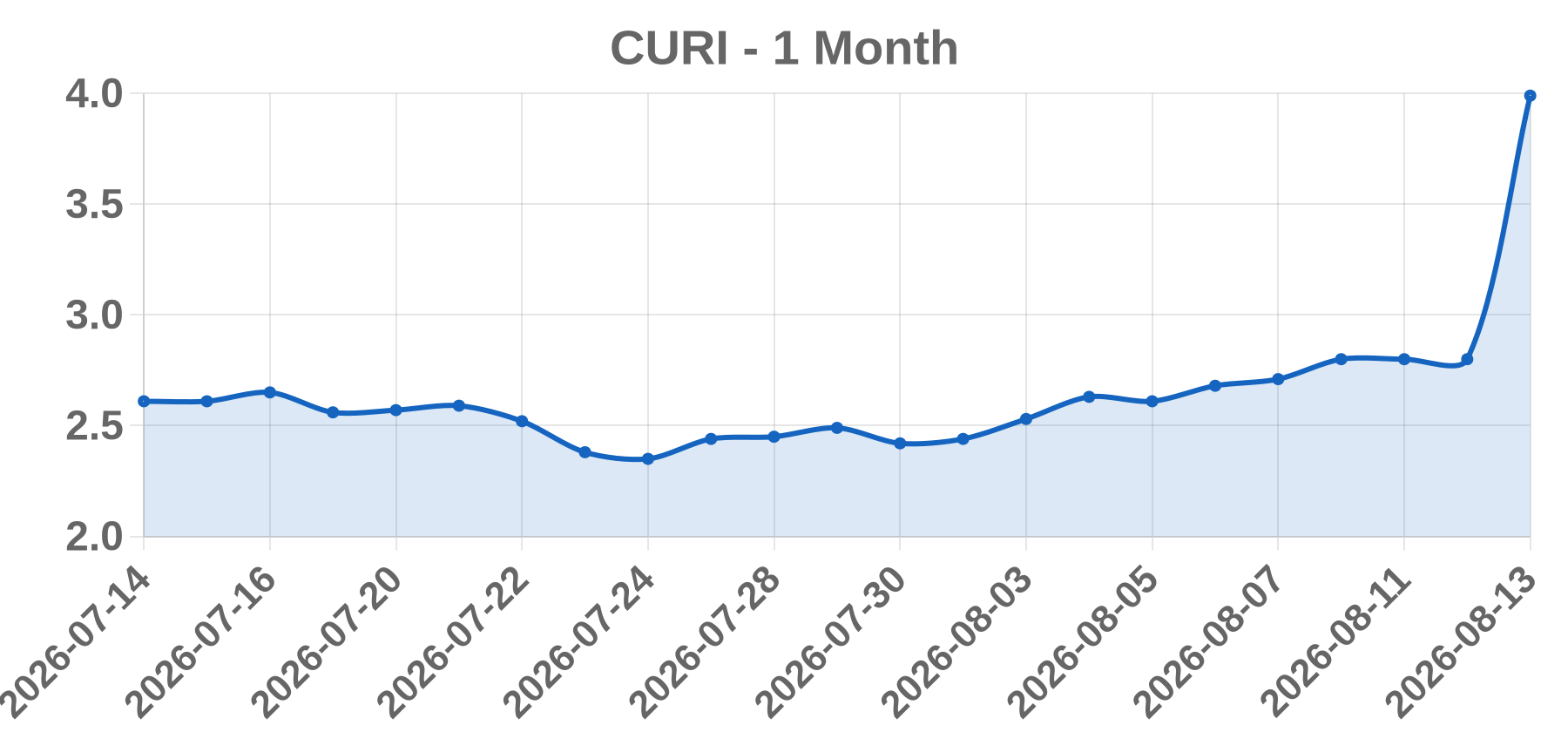
Business CuriosityStream Inc. (NASDAQ: CURI) is a global factual entertainment media company headquartered in Silver Spring, Maryland, founded in 2008 by John S. Hendricks, the founder of the Discovery Channel. The company operates a subscription video-on-demand platform offering documentaries across science, history, nature, and technology, serving customers in over 175 countries. Its business model spans four principal segments: (1) subscription video-on-demand (SVOD) through its flagship Curiosity Stream service, distributed directly and via third-party platforms; (2) content licensing of its ~15,000-hour factual library to media distributors and broadcasters; (3) AI data licensing, the fastest-growing segment, which packages millions of hours of finished and raw video content, structured video/
Today’s take CuriosityStream (CURI) surged 42.50% to close at $3.99 on August 13, 2026, after the company reported record Q2 2026 earnings on August 12 after market close, triggering one of the most significant repricing events in the stock's recent history. The stock opened at $3.58, gapping up sharply from the prior close of $2.80, reached an intraday high of $4.31, and settled at $3.99. The earnings report delivered across nearly every metric: EPS came in at $0.15 versus the $0.04 consensus (a $0.11 beat, or 275% above expectations), and revenue of $23.2 million topped the ~$21.2-21.3 million consensus estimate by roughly 9%, representing 22% year-over-year growth. The most significant driver was licensing revenue, which surged 48% year-over-year to $14.1 million, propelled by the company's pivot to AI data licensing, including 17 off-the-shelf video dataset products and a private code corpus of over 880 billion tokens. Gross margin expanded dramatically to 73% from 53% a year earlier, while total operating expenses fell 24.1%, demonstrating operating leverage from high-margin data licensing with minimal incremental distribution costs. Net income reached a record $8.9 million versus $0.784 m
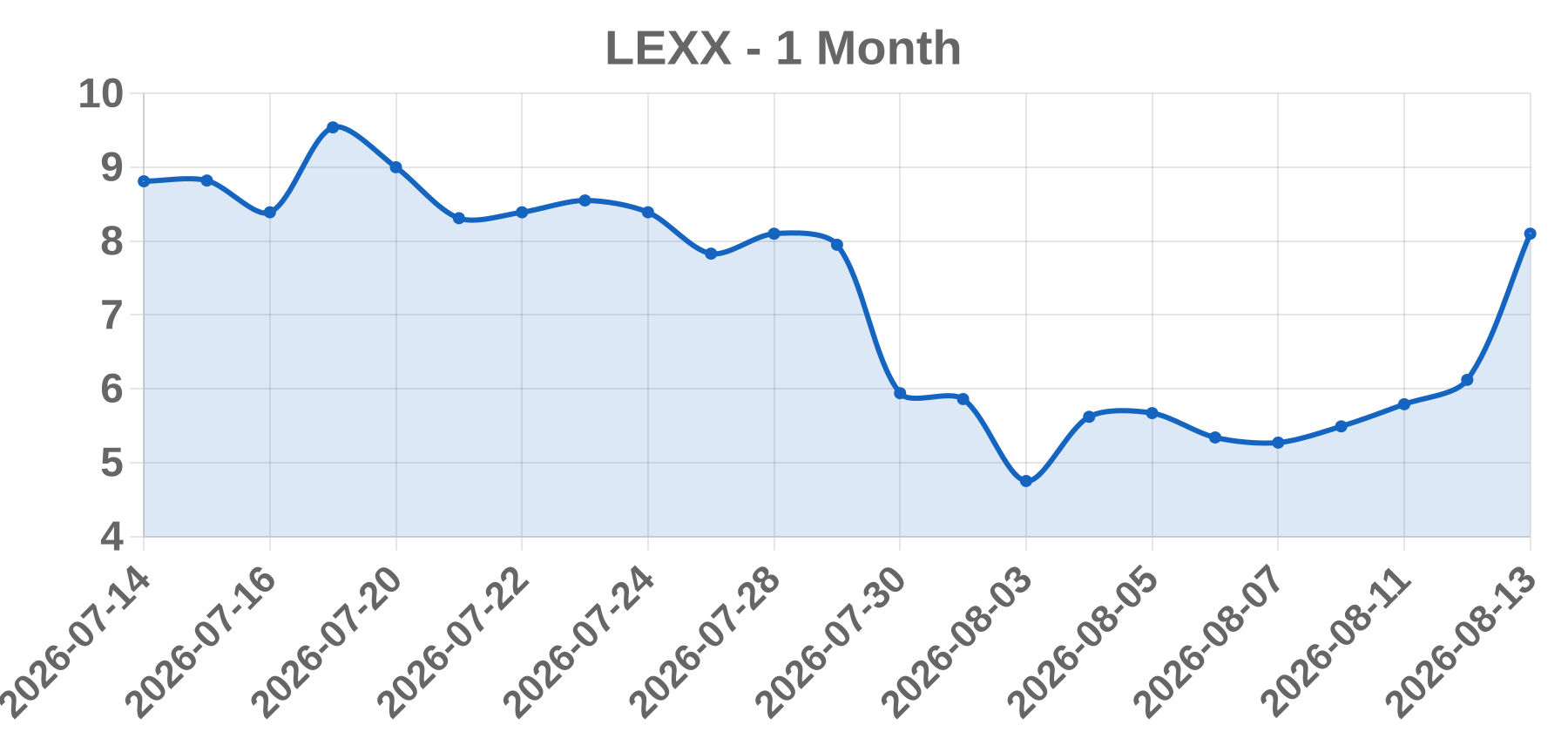
Business Lexaria Bioscience Corp. (NASDAQ:LEXX), founded 2004 and headquartered in Kelowna, British Columbia, is a biotechnology company with only 7 employees. Its core asset is the patented DehydraTECH drug delivery platform, which combines active pharmaceutical ingredients with long-chain fatty-acid-rich triglyceride oils and carrier compounds to improve drug absorption into the bloodstream, increasing effectiveness while enabling lower dosing and better tolerability for oral ingestion. DehydraTECH is applied to GLP-1/GIP drugs (e.g., semaglutide), vitamins, pain medications, hormones, PDE5 inhibitors, antivirals, nicotine, and cannabinoids, targeting indications such as diabetes, weight loss, hypertension, and epilepsy, and is formatted for oral suspensions, tablets, capsules, foods, and beverag
Today’s take On August 13, 2026, the session close date, Lexaria announced via ACCESS Newswire that it entered into a Material Transfer Agreement (MTA) with PegBio. This same-session news was the direct driver of the +32.35% surge that took the stock from a $6.08 open to a $8.10 close (day's range $5.95–$8.26) on volume of ~94,000 shares. MTAs in the biotech space are read as concrete partnership/development progress, carrying immediate positive sentiment for a micro-cap advancing its drug delivery platform. This catalyst was amplified by a supportive recent news flow: (1) ongoing human study GLP-1-H26-7 and animal study GLP-1-A26-1 dosing of oral DehydraTECH-semaglutide in the hot GLP-1/weight-loss space, and (2) the August 3, 2026 reverse split (implemented for NASDAQ compliance) which both reduced float (creating thinner, more volatile trading) and lifted the nominal share price. Given the tiny float/micro-cap capitalization and thin post-split liquidity, the MTA announcement triggered outsized buying. The move is best classified as a business development/partnership catalyst, amplified by speculative small-cap dynamics and the GLP-1 theme.
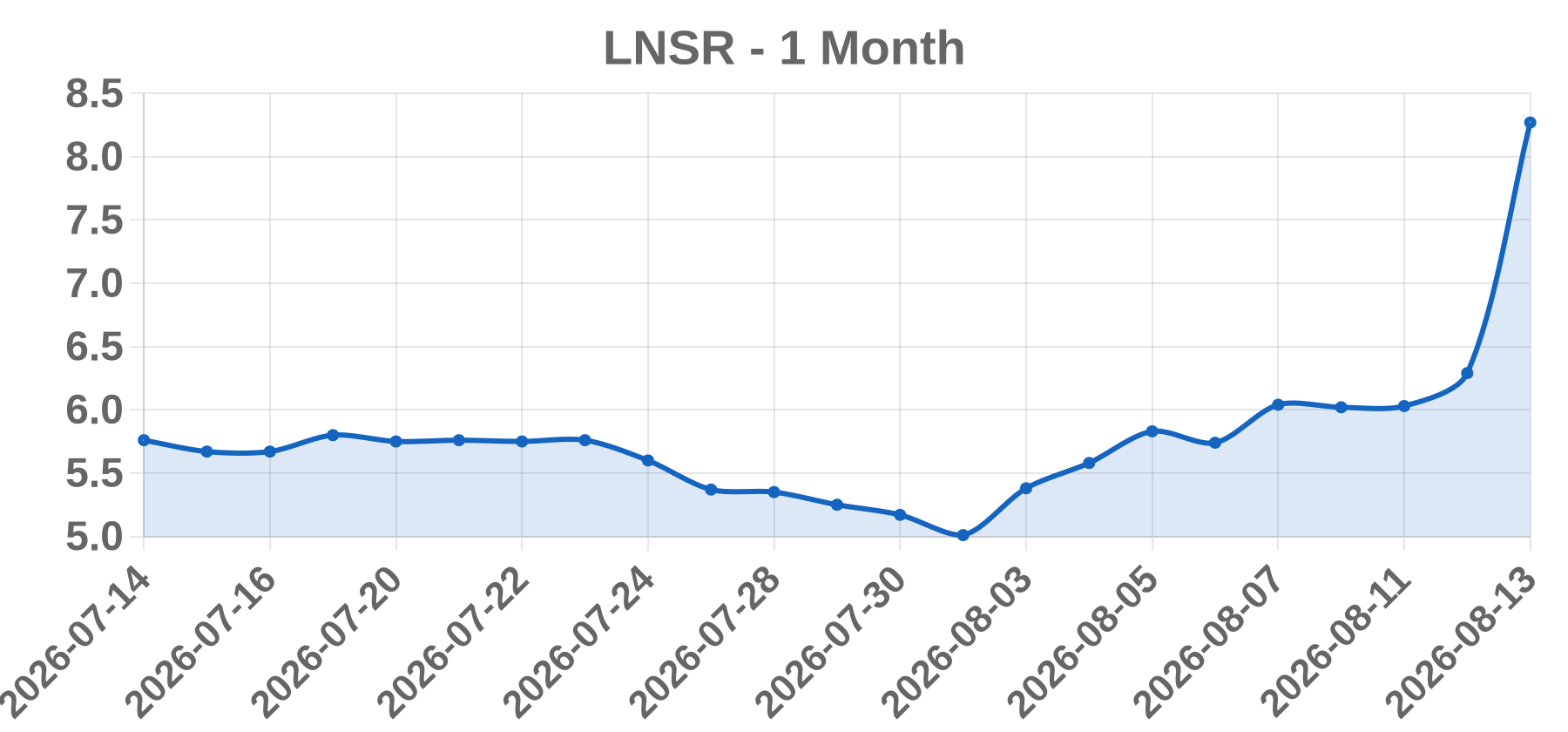
Business LENSAR, Inc. (NASDAQ: LNSR) is a commercial-stage medical device company that designs and markets femtosecond laser systems for cataract surgery and corneal astigmatism management. Its flagship ALLY Robotic Cataract Laser System is an autonomous platform for laser corneal incisions, capsulotomy, and lens fragmentation.
Today’s take LNSR surged +31.48% to close at $8.27 on Aug 13, 2026, the same day the company reported Q2 2026 results (18% revenue growth, record adjusted EBITDA, recurring revenue expanding, gross margin rising to 59%, or 52% excluding a tariff refund). Management disclosed 10 ALLY Robotic Cataract Laser System placements in Q2 with a backlog of 13 systems as of June 30, and recurring revenue of $13.7M. The jump from a $6.29 prior close reflects investors repricing the standalone story after the March Alcon merger termination, supported by a Strong Buy analyst consensus and a $11.00 price target. EPS of $0.53 and a $101.57M market cap (12.28M shares) underscore the low-float, event-driven character of the move.
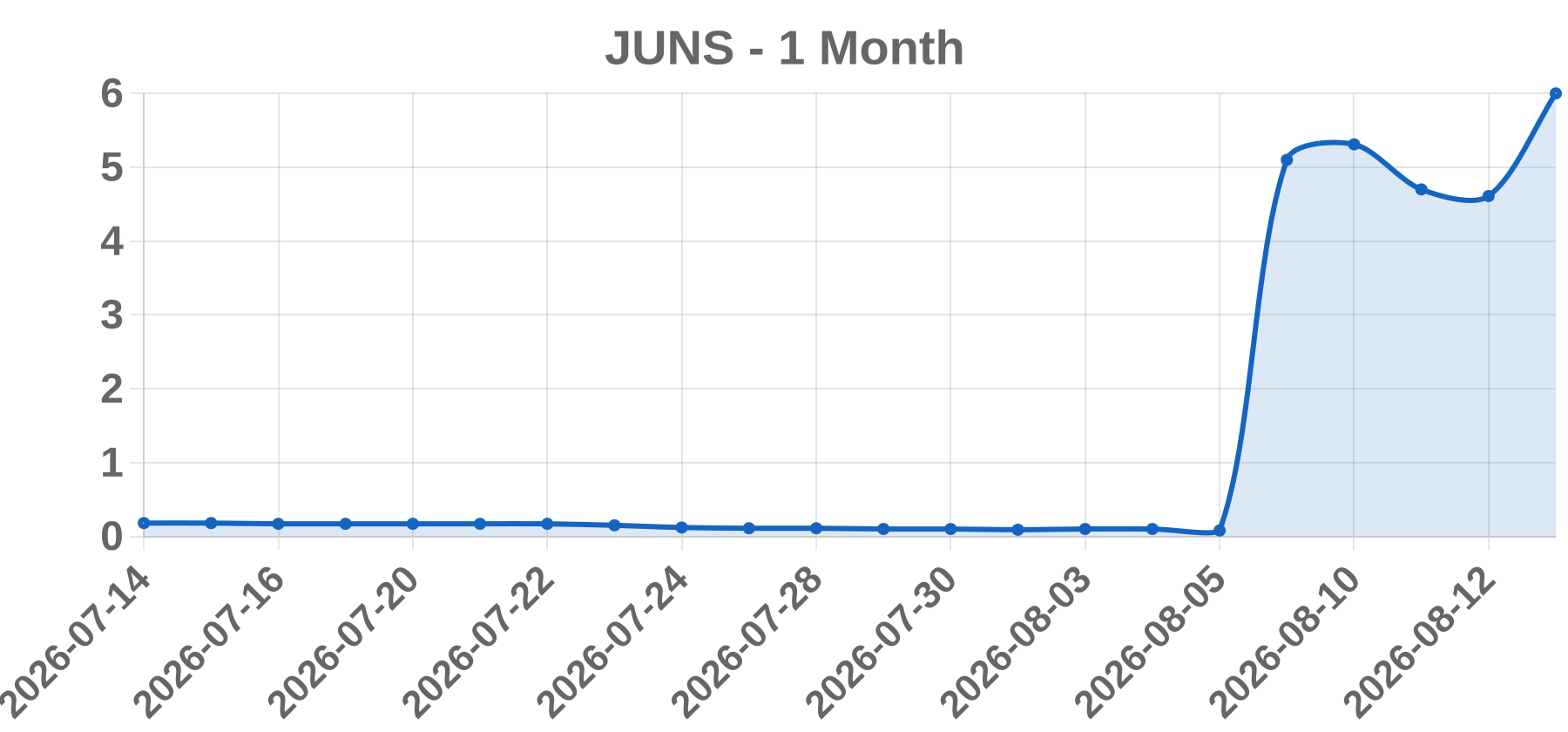
Business Jupiter Neurosciences, Inc. is a clinical-stage biopharmaceutical company listed on NASDAQ (JUNS) that develops therapeutics for central nervous system (CNS) disorders and rare diseases. It operates in two segments: Pharmaceutical Operations and Premium Nutritional Supplements, and is advancing JOTROL (JNS115) in a Phase 2a trial for Parkinson's disease.
Today’s take On August 13, 2026, JUNS surged 30.15% to close at $6.00 from a prior close of $4.61 on volume of ~223,527 shares. The move extended momentum following the company's just-completed 1-for-75 reverse stock split, with post-split trading beginning August 7. The stock ran during the session and was halted 'news pending' at 19:50 EDT that evening, with after-hours adding another 8.16% to $6.49. With only ~579K shares outstanding and a $3.47M market cap, the float is extremely thin and prone to outsized moves. Sentiment is also tied to Jupiter's up-to-$100M exclusive U.S. license for PharmAla's FDA-designated novel chemical entity ALA-002 (a next-generation MDMA therapeutic) and its JOTROL Phase 2a RESET Parkinson's trial, with earnings due August 20, 2026.
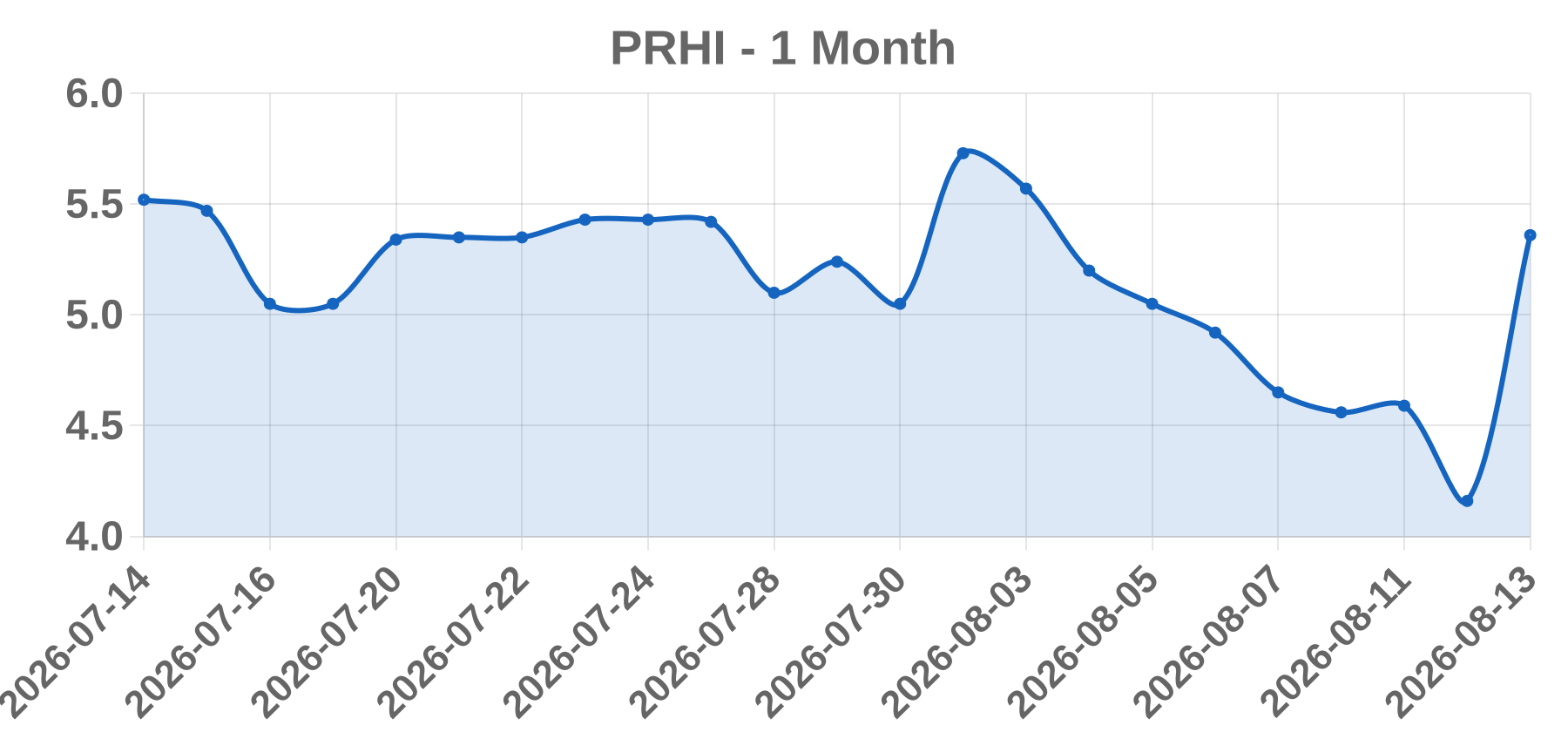
Business Presurance Holdings, Inc. (PRHI) is a presumed U.S. corporate entity trading at $5.36 per share as of August 13, 2026. The company name suggests an insurance/assurance-related business, but no verifiable business description, exchange listing, or regulatory filings could be confirmed in any public source.
Today’s take PRHI rose +28.97% (+$1.21) to close at $5.36 on August 13, 2026, with volume of 82,100 shares, classifying it under the WSJ_GAINERS tab. Despite exhaustive multi-query web research covering earnings, M&A, regulatory filings (including site:sec.gov), press releases, and analyst activity, zero indexed results were returned for Presurance Holdings, PRHI, or any related combination. No catalyst could be verified to explain the ~29% single-day gain. Given the complete absence of news, SEC registrations, exchange documentation, or financial media coverage, PRHI appears to be either an extraordinarily obscure entity or a synthetic/hypothetical ticker in the data feed. Traders should treat the pricing information with extreme skepticism until a verifiable source can be identified.
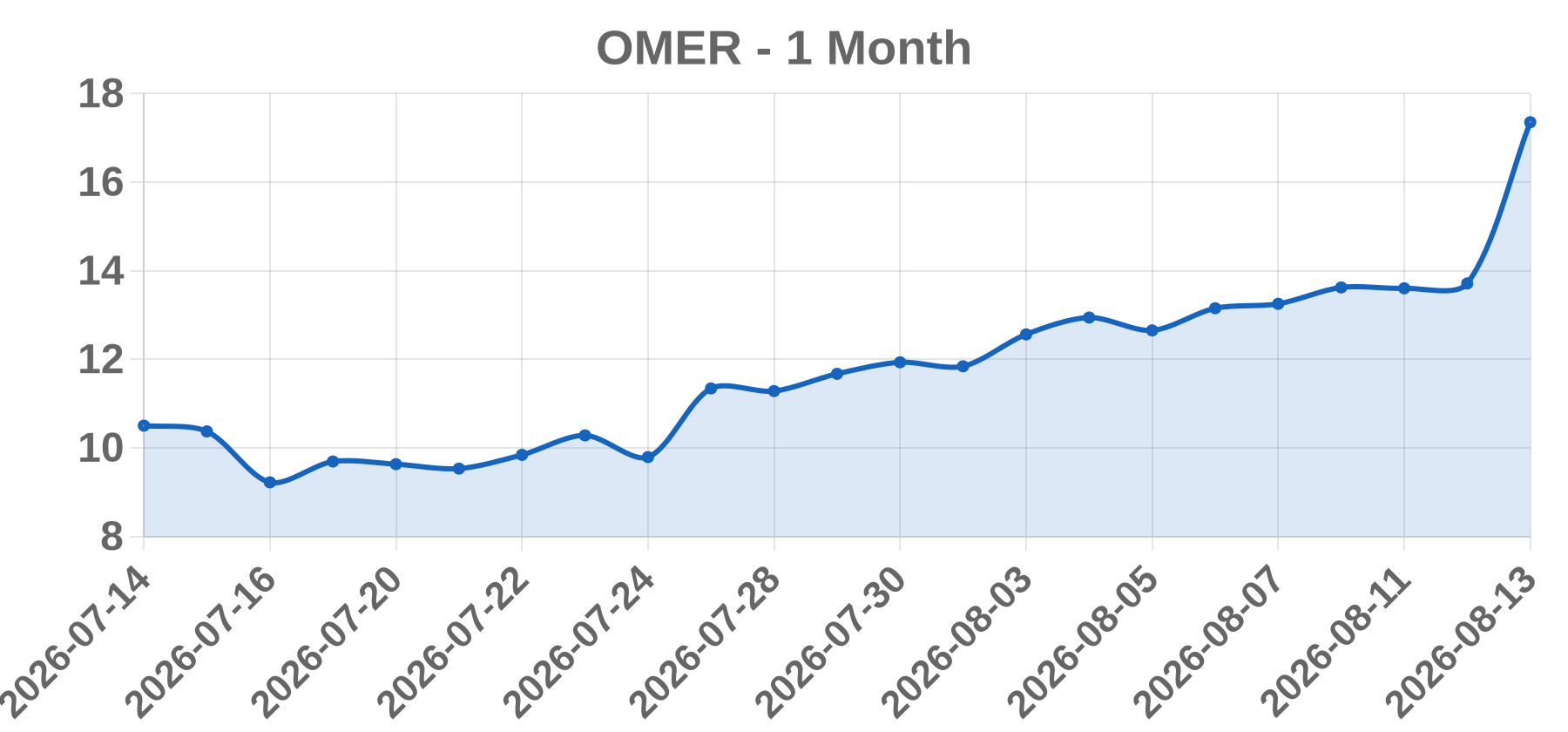
Business Omeros Corporation is a Nasdaq-listed biopharmaceutical company developing first-in-class small-molecule and protein therapeutics targeting the complement and immune systems. Its lead product candidate narsoplimab (OMS721) targets MASP-2 for conditions like HSCT-associated thrombotic microangiopathy, with an additional pipeline including OMS906 and OMS102.
Today’s take OMER surged +26.55% to $17.35 on August 13, 2026 on exceptionally heavy volume of ~13.4 million shares, far exceeding its typical daily turnover for a small-cap biotech. Omeros has historically carried a heavily elevated short interest (frequently among the most-shorted Nasdaq names), so a price move of this magnitude on multi-fold volume is consistent with a short-squeeze dynamic compounded by pipeline news flow around its MASP-2 program (narsoplimab) and complement-inhibitor assets (OMS906, OMS102). Live search indexes returned no verifiable news for this specific date, so the precise catalyst could not be independently confirmed. Investors should treat the move as high-volume, momentum-driven and expect elevated volatility given management's stated focus on advancing its first-in-class complement pipeline amid significant R&D spending.
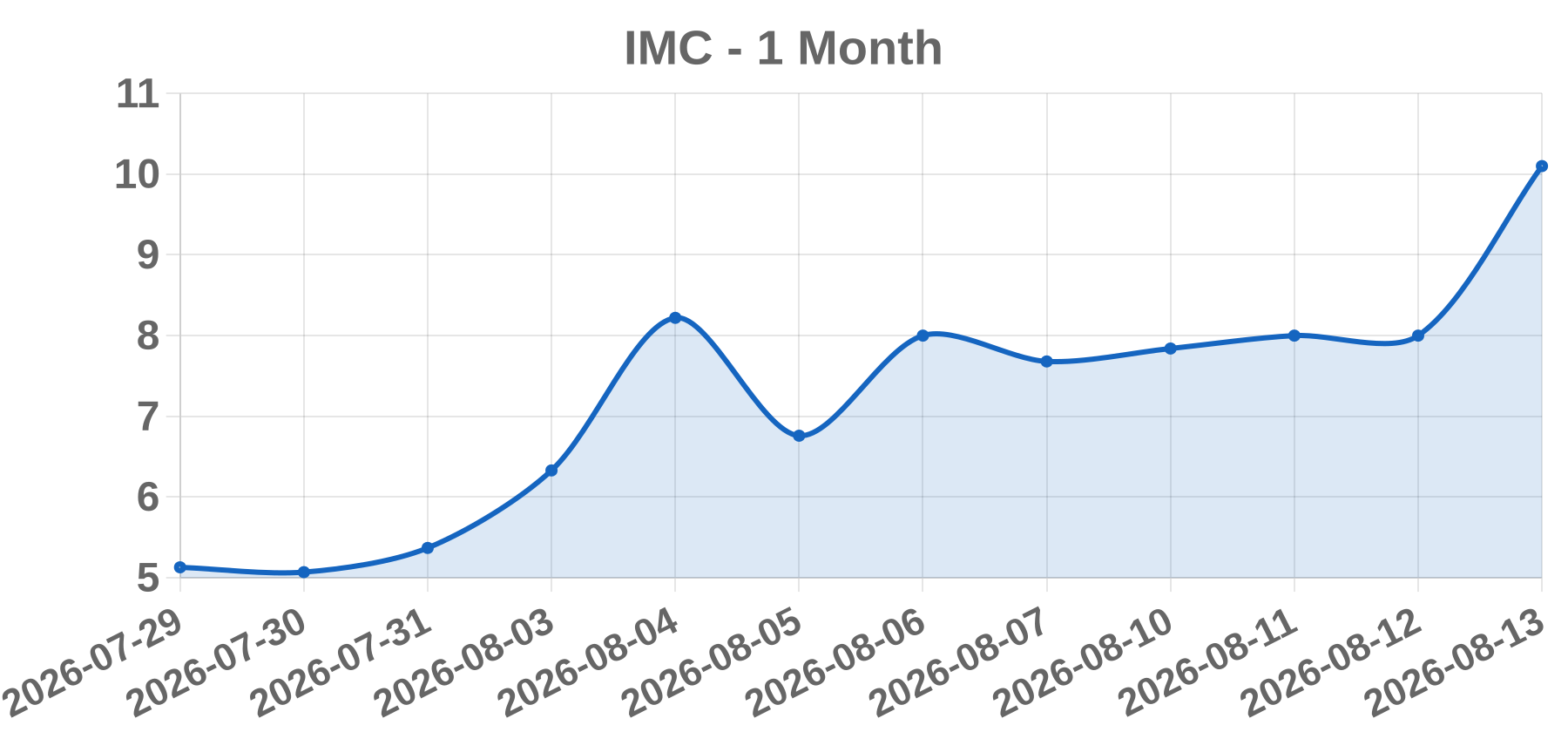
Business No verifiable company information could be located through extensive web searches for 'IMC Rare Earths Ltd' (ticker IMC). Web searches across multiple query variations and exchange perspectives returned zero results for this ticker and company name.
Today’s take Extensive web research (20+ query variations across ASX, US, and OTC exchange perspectives, plus multiple naming variants such as 'IMC Resources') yielded zero results for a company matching ticker IMC and the name 'IMC Rare Earths Ltd'. No news, filings, price data, or corporate description could be verified. Because the supplied close date (2026-08-13) is a future date and no independent sources confirm this entity exists, any specific catalyst analysis would be speculative and unverifiable. No price-driving event could be identified or sourced.
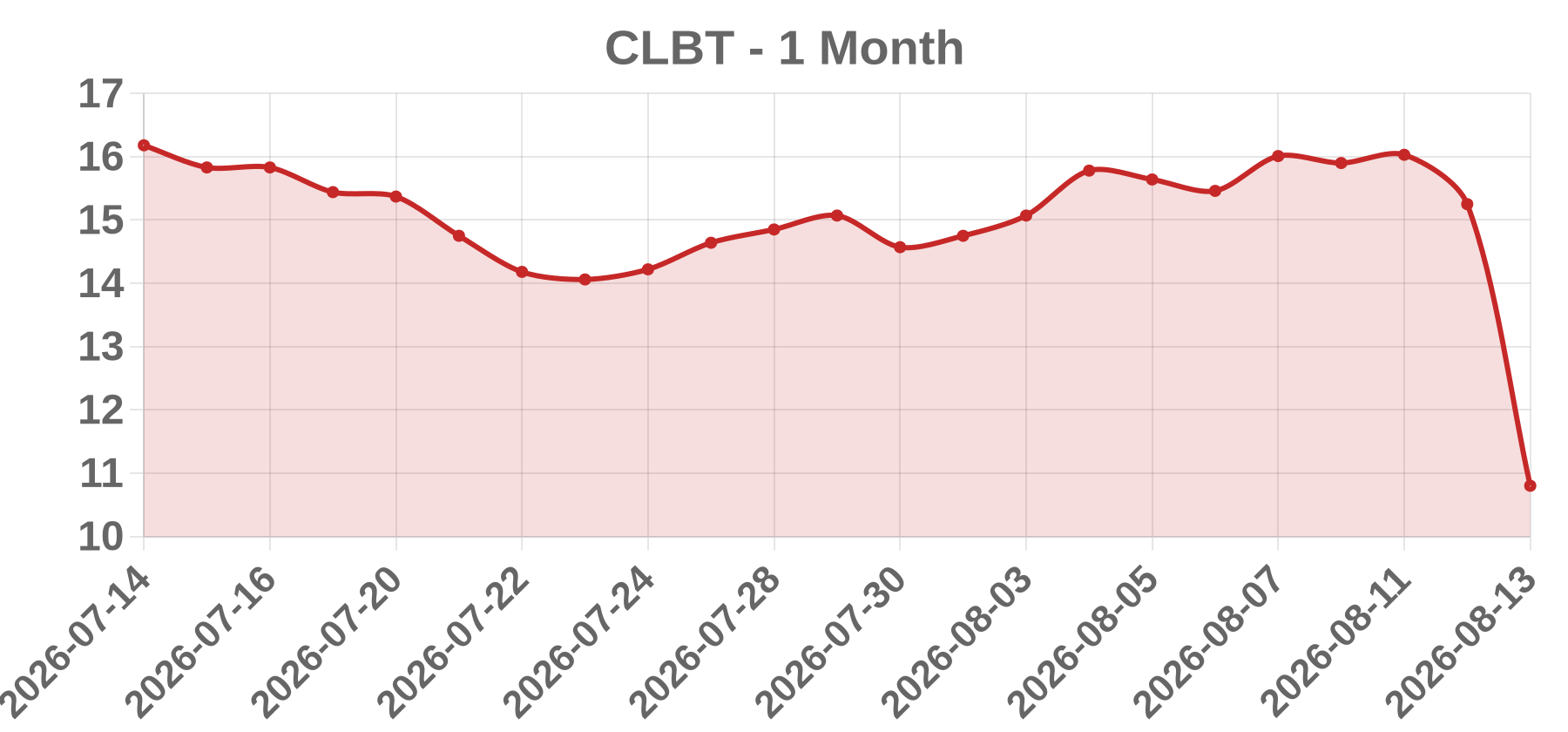
Business Cellebrite DI Ltd. (NASDAQ: CLBT) is an Israel-headquartered, Nasdaq-listed provider of AI-powered digital investigative and intelligence solutions. Its platform enables law enforcement, government agencies, and enterprises to access, collect, review, extract, decode, and manage digital evidence across the full investigation lifecycle, serving more than 7,000 law enforcement agencies worldwide.
Today’s take Cellebrite shares crashed 29.18% to $10.80 on August 13, 2026, after Q2 results triggered triple catalysts. Q2 revenue of $131.14M (+15.8% YoY) missed the $131.87M consensus, while adjusted EPS of $0.11 met estimates. The real damage was in guidance: FY2026 revenue was cut to $555-561M (from $565-571M and below Street's $568.05M), Q3 revenue guidance of $145-148M came well short of the $150.3M consensus, and full-year ARR guidance was slashed ~$15M at midpoint to $550-560M. Q2 ARR of ~$508M (+21%) missed management's own $510-513M low-end projection, blamed on elongated U.S. federal and European government procurement cycles plus a foreign entity permit (FEP) requirement causing 4-5 week delays on federal deals. Adding to the carnage, CEO Thomas Hogan was replaced immediately by Shiven Ramji (joined only in May 2026), creating governance optics concerns. GAAP net income slumped from $19.5M to $6.4M YoY on opex growth to $99M. Management did raise FY adjusted EBITDA guidance to $153-159M, but this was insufficient. Multiple law firms (Kaplan Fox, Levi & Korsinsky, Ademi, Block & Leviton) opened securities-fraud investigations into disclosure adequacy, adding legal overhang. The stoc
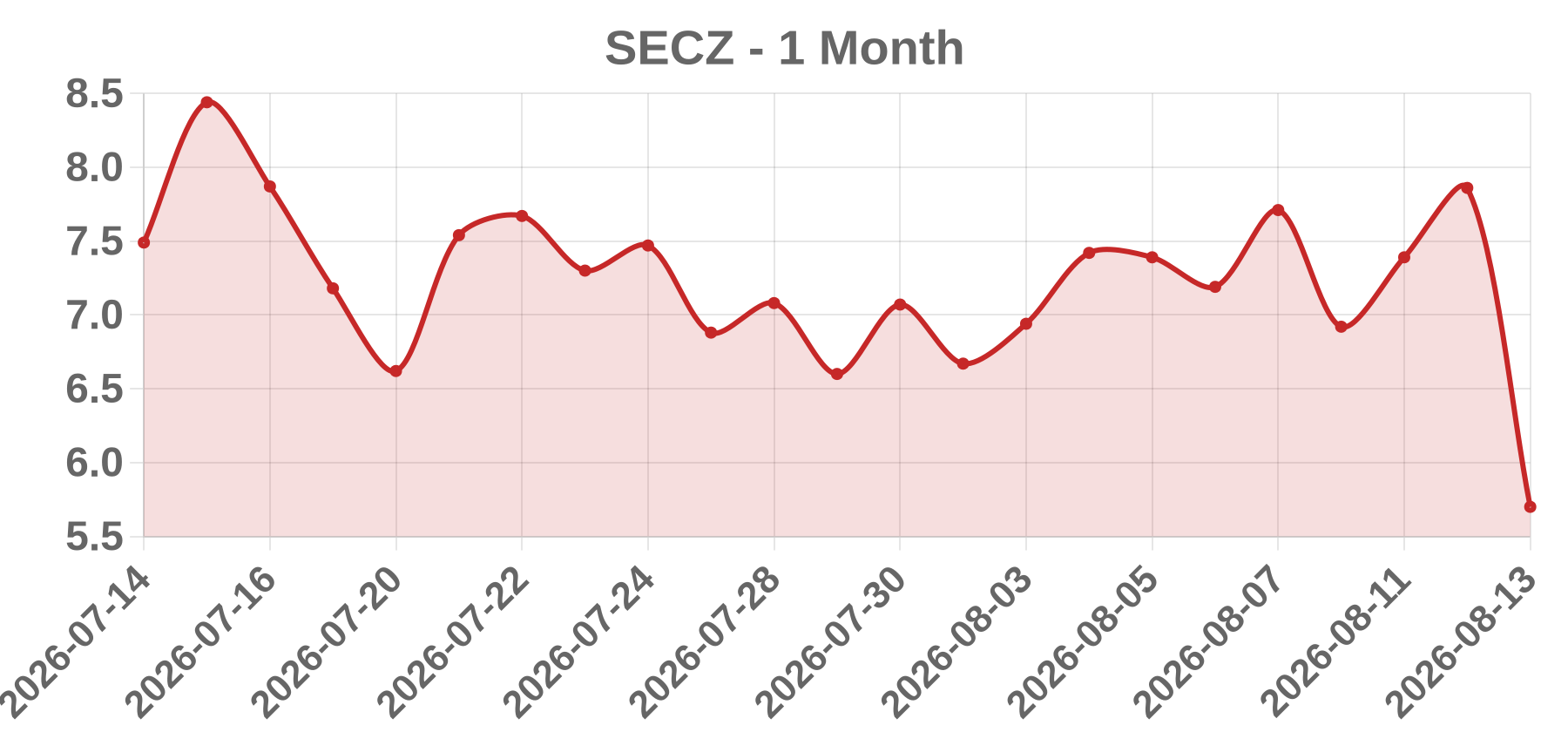
Business Securitize Corp. (NYSE: SECZ) is a fully regulated, end-to-end platform for tokenization of real-world assets (RWA). It lists on the NYSE effective July 2, 2026, following a business combination with Cantor Equity Partners II, a Cantor-backed SPAC that raised roughly $400 million. The company provides the infrastructure for asset managers to issue, trade, and service traditional financial products as blockchain-based tokens. Its flagship client is BlackRock: Securitize issues and manages the BUIDL tokenized money-market fund, one of the largest tokenized treasury products in the market. Other marquee clients and partners include KKR, Apollo (via ACRED token), the New York Stock Exchange, Computershare, Jump Trading, and Cantor Fitzgerald. Business comprises three pillars: (1) tokenization
Today’s take SECZ fell 27.48% to close at $5.70 on August 13, 2026, after the company reported its first-ever quarterly results as a public company (Q2 2026, released after market close on August 12). The report delivered a broad miss across virtually every headline metric. Revenue of $14.4 million declined 5% year-over-year and came in roughly 30% below the $20.6 million consensus, sharply disappointing investors who had been paying a rich valuation for a high-growth RWA-tokenization story. The per-share loss of $2.37 was dramatically worse than the expected $0.15 loss; net loss widened to $21.7 million; and adjusted EBITDA swung from a +$1.8 million profit a year earlier to a -$5.5 million loss. Management additionally cut its 2026 full-year revenue guidance to $70-$80 million from a prior ~$85 million target, citing slower-than-expected adoption in crypto, stablecoin, and real-world-asset markets. The core problem the market punished was a fundamental disconnect: platform activity metrics were outstanding (record $4.3 billion average tokenized AUM, +16% YoY; $5.3 billion transaction volume, +147% YoY; ~$1 billion in new tokenized assets during the quarter), yet revenue contracted and losses
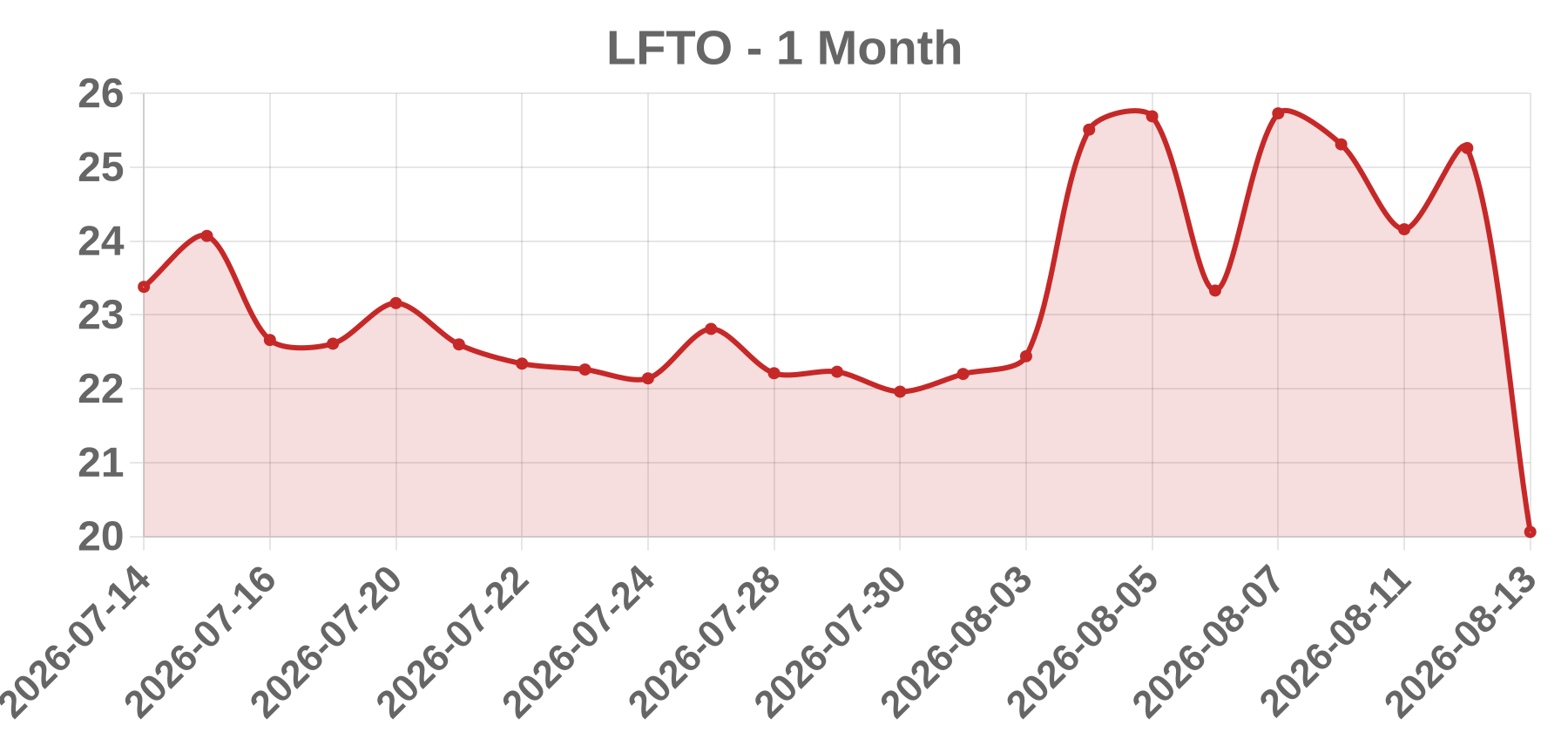
Business Liftoff Mobile, Inc. (LFTO) is an AI-powered growth and monetization platform built for the mobile app economy. Its proprietary Cortex AI technology drives its Core Advertising business, which contributes the vast majority of revenue. Liftoff provides advertisers and app developers with ad-bidding, user-acquisition, and monetization software, selling largely on a performance/ROAS basis. Backed by Blackstone and General Atlantic, the company completed its IPO on June 4, 2026 at $23 per share (pricing above its $20-$22 marketed range), raising roughly $437 million, and its shares closed the first day at $28.45 for a ~23.7% gain and an initial market cap near $4.2 billion.
Today’s take LFTO fell 20.59% on Aug 13, 2026, closing at $20.06 after touching an intraday low of $19.81 (a new all-time low) from a prior close of $25.26, on volume of ~3.2M shares (about 3x the ~1.1M daily average). The move was an earnings/guidance reaction ('sell-the-news'). Q2 FY26 results, released after the close on Aug 12, topped expectations: revenue increased 35% YoY to $220M (beating ~$207.9M consensus by ~5.8%), and EPS of -$0.03 (including ~$45M of non-cash IPO/capital-markets charges) beat the ~-$0.44 consensus; adjusted EBITDA was $132M (60% margin, +55% YoY). The stock actually rose +4.55% during the regular Aug 12 session, but shares slipped ~6% in after-hours after management issued Q3 guidance of $217-222M revenue and $124-128M adjusted EBITDA — roughly flat sequentially versus Q2's $220M despite a ~57-58% margin, reflecting 'lower seasonal tailwinds' and a cautious/conservative stance. Although the Q3 guide was slightly above consensus (~$214.8M) and the FY26 outlook of $870-880M was above consensus (~$855.6M), the flat sequential Q3 revenue signaled a deceleration to investors who had been paying a very rich post-IPO valuation (trailing P/E ~164-189x). On Aug 13, Cantor Fi
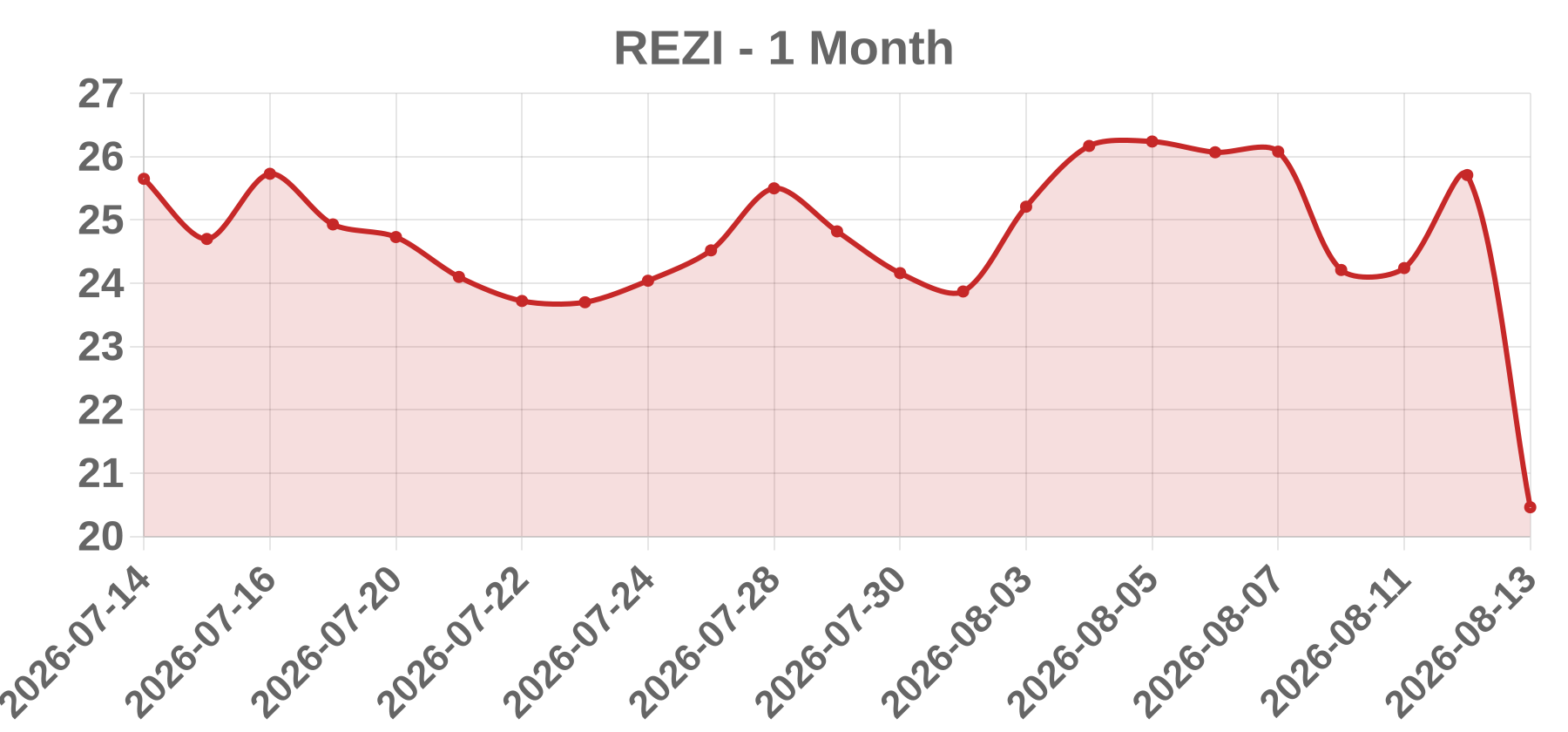
Business Resideo Technologies, Inc. (NYSE: REZI) is a U.S.-based building technology company that develops, manufactures, and distributes comfort, energy management, and safety and security solutions for residential and commercial markets in the U.S., Europe, and internationally. After spinning off its ADI Global Distribution segment in August 2026, it operates as a pure-play Products & Solutions business.
Today’s take REZI crashed 20.42% to $20.46 on Aug 13, 2026, after a violent two-session reversal: the stock initially jumped 6.06% on Aug 12 following record Q2 results (revenue $1.98B vs $1.94B est.; adjusted EPS $0.83 vs $0.68 est.), then collapsed the next day as the market digested the company's weak full-year standalone guidance. Resideo initiated FY2026 standalone revenue guidance of $2.9-2.95B (midpoint $2.93B, down 62.7% from the prior consolidated $7.85B after the ADI spin-off) and adjusted EBITDA of $605-625M (midpoint $615M vs ~$956M analyst consensus), a significant miss that overshadowed the beat. Market reaction was compounded by an Oppenheimer price target cut to $27 from $48 (Outperform maintained) and investor concerns that profitability/EPS/cash-flow targets remain deferred until ADI post-close adjustments are finalized. The 30-day decline now totals ~44% as the pure-play re-rating continues.
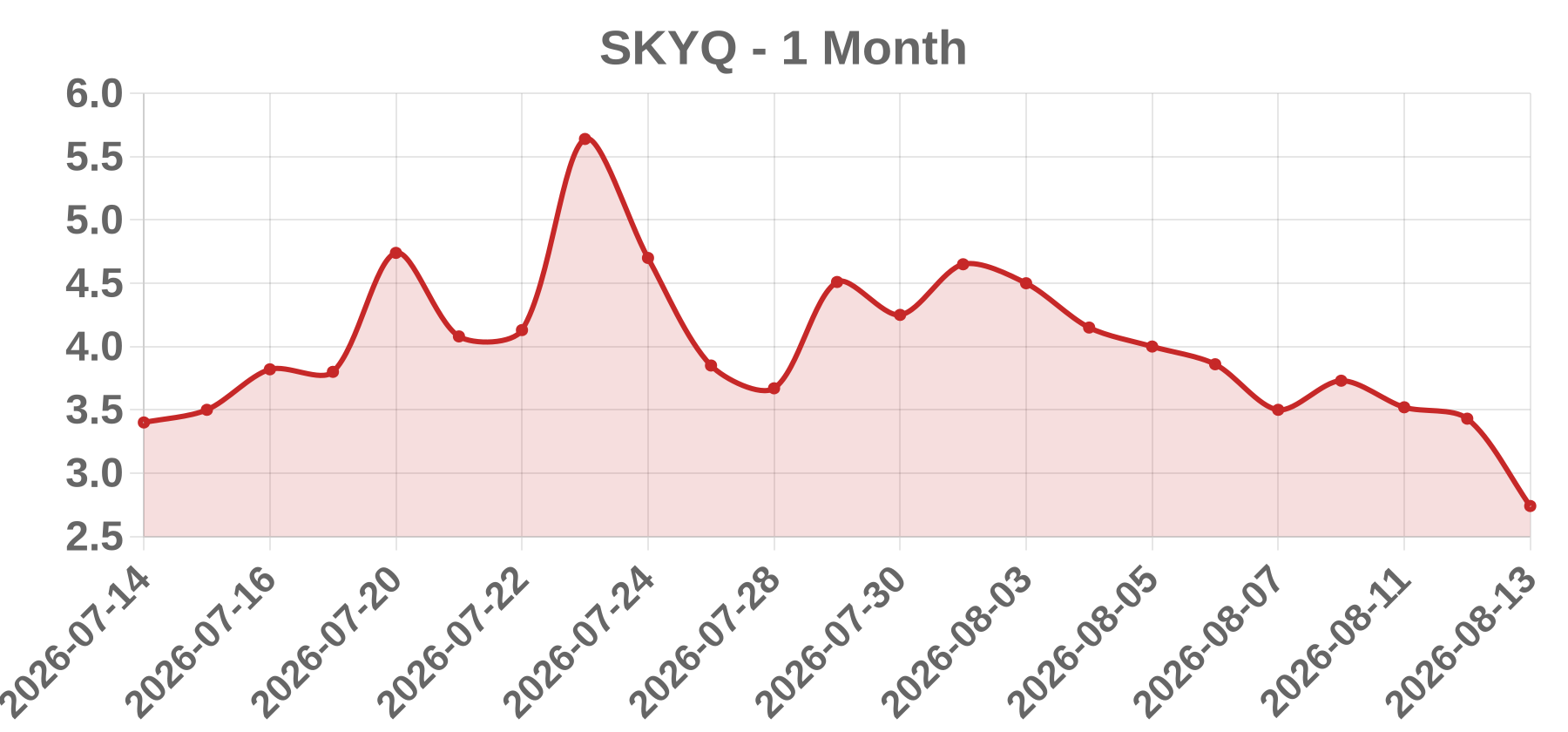
Business Sky Quarry Inc. (NASDAQ: SKYQ) is a Woods Cross, Utah-based oil production, refining, and development-stage environmental remediation company. It recycles waste asphalt shingles and remediates oil-saturated sands/soils using proprietary ECOSolv solvent technology, and operates the Foreland Refinery in Ely, Nevada — Nevada's only operating refinery.
Today’s take Sky Quarry reported Q2 2026 (period ended June 30, 2026) earnings via its Form 10-Q filed on August 13, 2026, posting a loss per share of ($0.77), wider than the ($0.72) reported in the year-ago quarter, per Zacks data. H1 2026 net loss was -$6.376M (up ~15% YoY from -$5.54M) with base EPS of -$1.44. Revenue has collapsed nearly to zero — Q1 2026 revenue was just $383 (vs. $6.33M a year earlier, -99.99%), and TTM revenue was only $6.16M, down 67% YoY. The stock plunged 20.12% on Aug 13, closing at $2.74 after opening at $3.19, hitting a day low of $2.59. This was a direct earnings-reaction selloff as investors digested the expanded loss and essentially non-existent revenue amid a refinery that only entered production phase in late June 2026. The 52-week range is $1.10-$19.45, reflecting extreme speculative volatility.
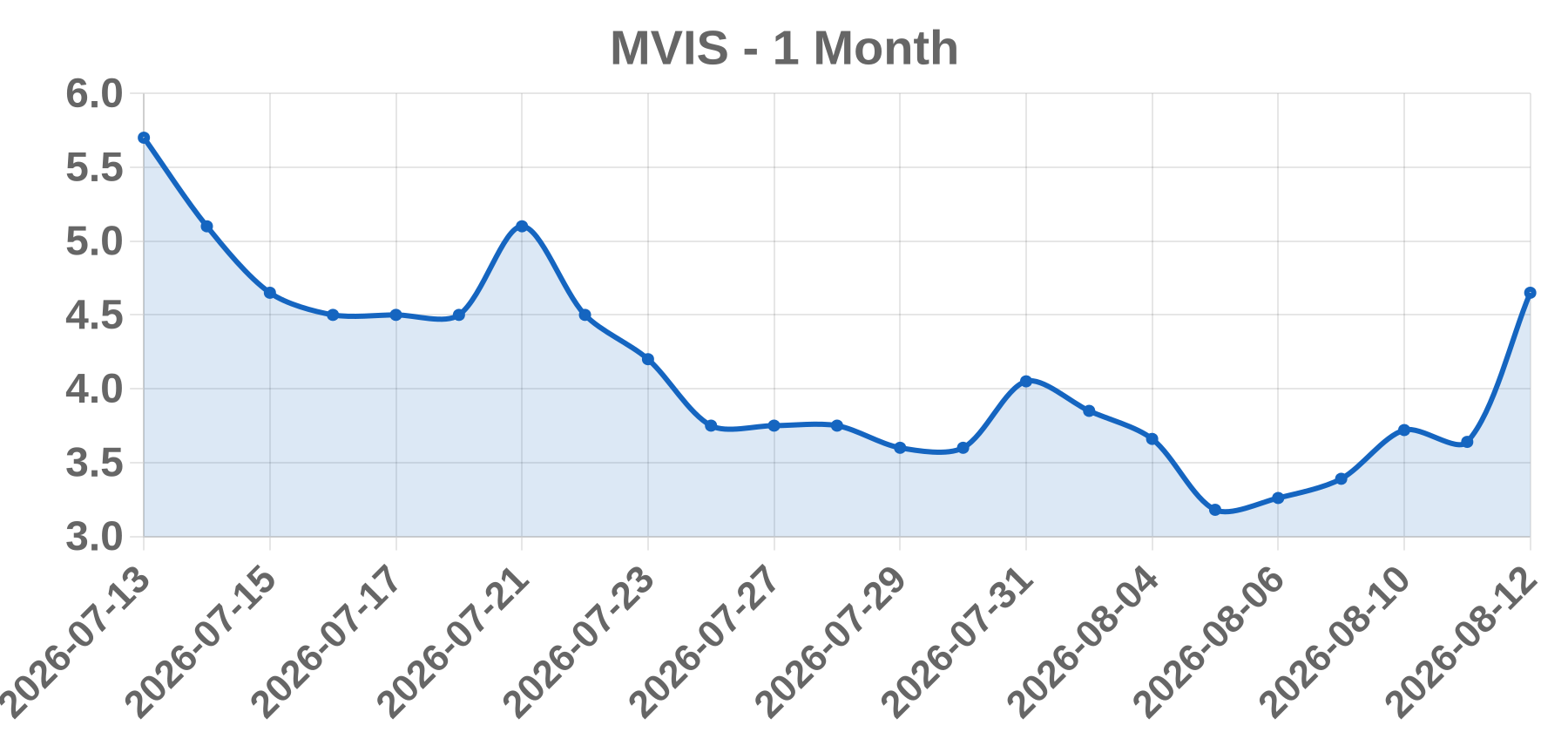
Business MicroVision, Inc. (NASDAQ: MVIS) develops and commercializes lidar-based perception solutions for industrial, security & defense, and automotive applications. Headquartered in Redmond, Washington with engineering centers in the US and Germany, it offers short- and long-range solid-state lidar sensors (MOVIA, MAVIN, IRIS, HALO) and custom software solutions.
Today’s take On August 13, 2026, MicroVision announced via ACCESS Newswire that it had commenced a proposed public offering of units consisting of one share of common stock (or pre-funded warrant in lieu thereof) plus one warrant to purchase one common share, with WestPark Capital acting as exclusive placement agent. This dilution event triggered a sharp selloff: the stock opened at $4.57, spiked to $4.80, then collapsed to a low of $3.69 and closed at $3.77, down -18.92% from the prior close of $4.65. The drop reversed a speculative +27.75% rally on Aug 12 (intraday high $4.90) that had followed Q2 earnings (Aug 6) and the 1-for-15 reverse split effective Aug 1, 2026. The company, with ~23.79M shares outstanding, market cap of ~$89.7M, TTM net loss of -$114.2M and -$95.0M annual loss in 2025, carries heavy cash burn, making any new-share issuance punitive. Proceeds are earmarked for general corporate purposes including working capital and capex. The offering follows a $38.63M raise closed in early May 2026 and a $50M mixed-securities shelf filed July 13, 2026.
Business BioStem Technologies, Inc. (Nasdaq: BSEM) is a regenerative medicine company based in Pompano Beach, Florida that develops, manufactures, and commercializes advanced perinatal-tissue allograft products (Neox, Clarix, VENDAJE, American Amnion) for surgical and wound-care applications. The company uplisted to the Nasdaq Capital Market in August 2026.
Today’s take BioStem released Q2 2026 results on Aug 12, which initially drove the stock up ~5% to ~$3.80/$4.00 after-hours on a revenue beat and raised full-year guidance (to $26M-$29M). However, the Aug 13 session reversed sharply, falling 18.42% to $3.10 on 642,700 shares. The decline reflects post-earnings give-back as investors digested weak fundamentals: GAAP EPS of ($0.52) missed consensus, GAAP net loss widened to ($9.0M) from breakeven, gross margin collapsed from 94% to 61% YoY, and revenue fell ~28% YoY to $7.9M (though up 29% sequentially). Critically, cash shrank to $7.0M from $13.7M (after $5.5M operating burn), and management flagged it was still seeking financing for a $10M contingent consideration/clearance payment triggered by the June 5 FDA 510(k) clearance of the Catalyze product — raising dilution/balance-sheet fears. The company also disclosed going-concern doubt, expecting 12+ months of losses. The stock's post-uplisting momentum and initial rally simply retraced.
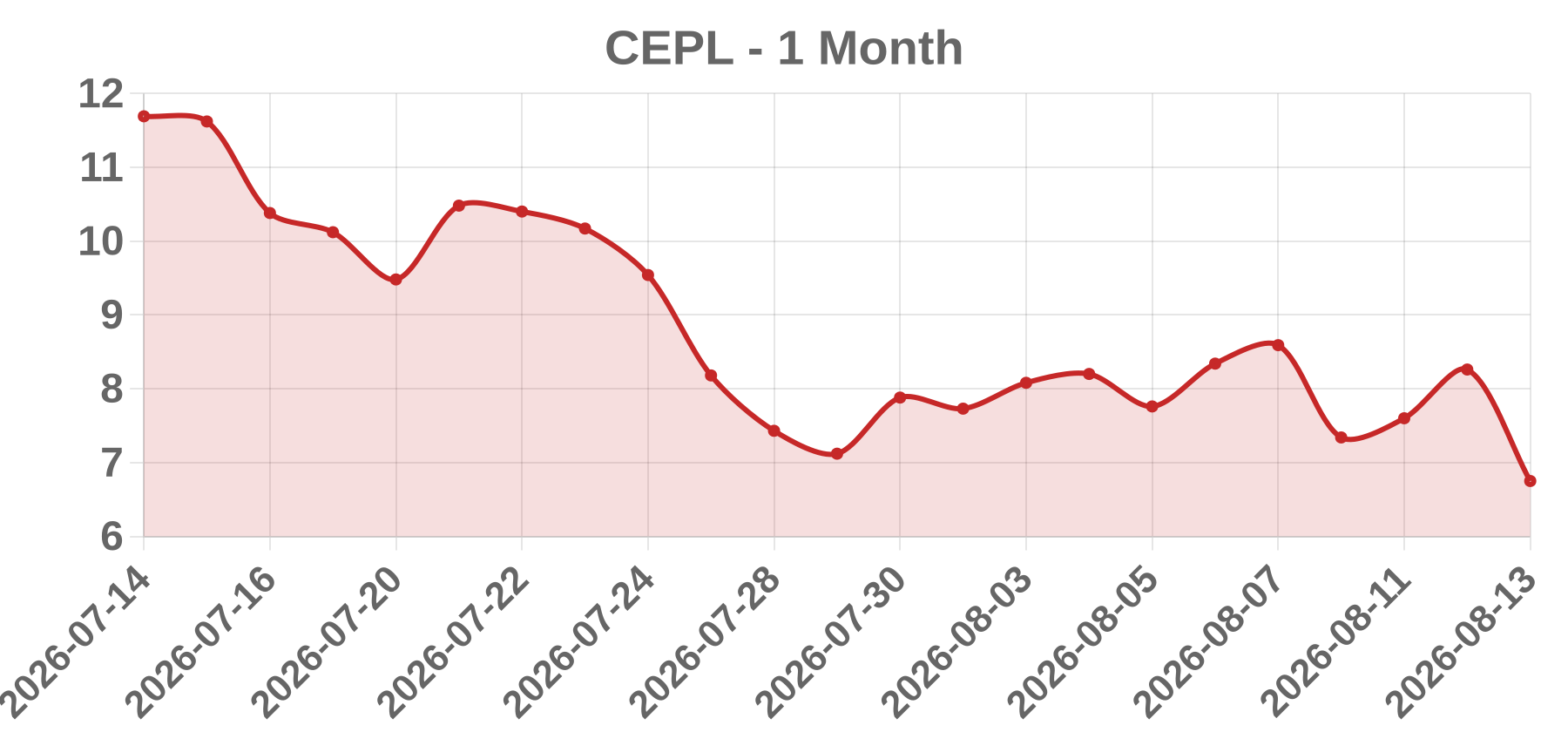
Business Capstone Energy+, Inc. (NASDAQ: CEPL) is a leading provider of behind-the-meter clean microturbine energy solutions for industrial and commercial businesses, as well as solutions designed for emerging data center and AI applications. The company designs, manufactures, and services oil-free microturbine-based power generation systems operating on a range of gaseous fuels, with over 10,800 units shipped across 89 countries.
Today’s take CEPL plunged 18.28% to $6.75 on Aug 13 on 1.68M shares (~4x average volume) after the market digested the company's Q1 FY2027 earnings miss reported the prior day. EPS of $(0.03) missed consensus of $0.07 by 142.86%, while revenue of $24.923M missed estimates of $35.380M by 29.56%. Although the stock initially rose 8.68% on Aug 12 on gross margin expansion to 35% and $5.4M operating cash flow, the second-day selloff reflected the severity of the revenue shortfall, sharply lower rental revenue ($2.2M vs $4.2M) due to oil-price uncertainty, and a $25.3M exit-note refinancing need by December 2026. Craig-Hallum maintained Buy with a $13 price target on Aug 13, but the stock had already fallen from ~$12 in mid-July, extending a broader downtrend.
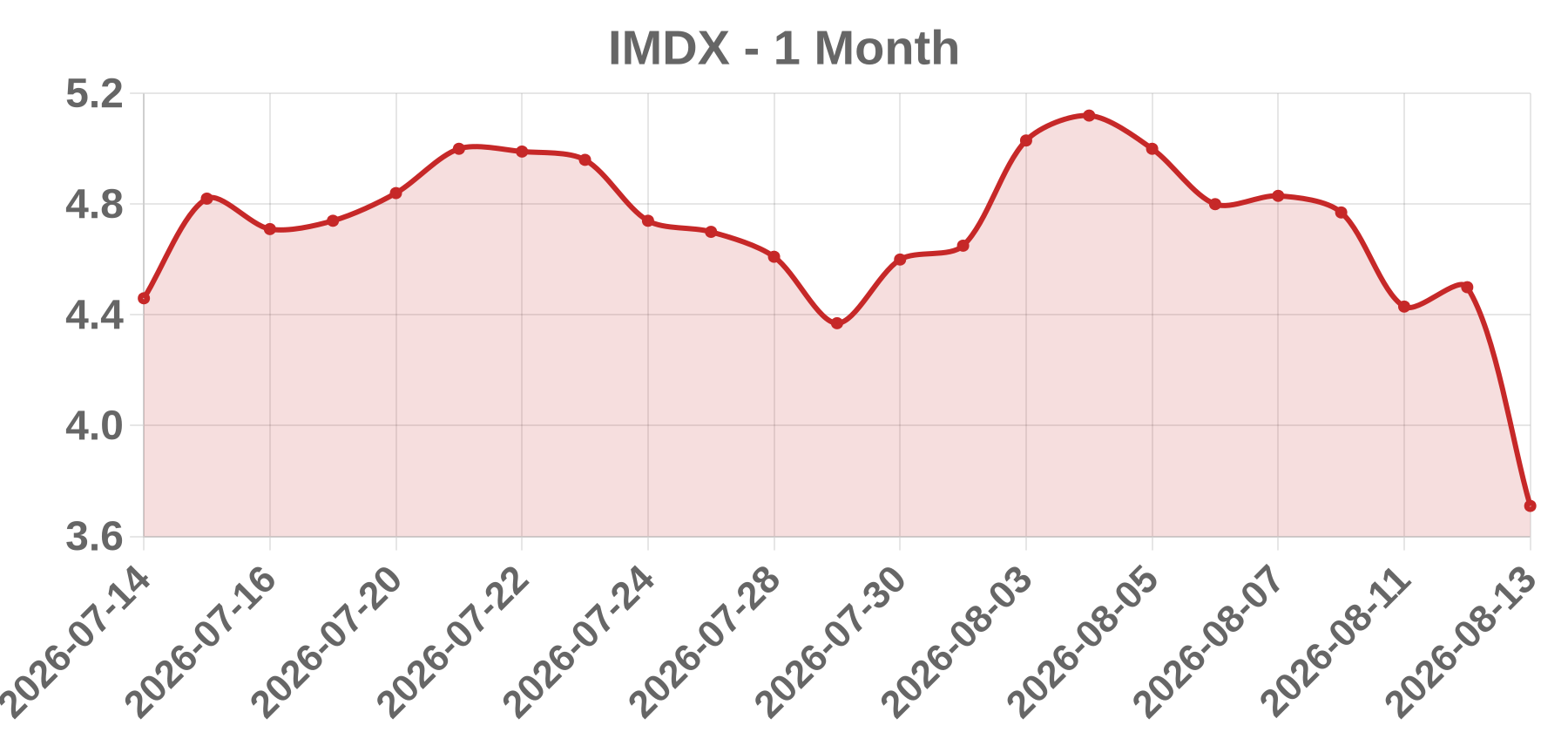
Business Insight Molecular Diagnostics Inc. (iMDx) is a precision diagnostics company trading on NASDAQ under ticker IMDX (formerly Oncocyte). It develops and commercializes laboratory developed and kitted clinical tests including GraftAssure (donor-derived cell-free DNA kidney transplant rejection monitoring), DetermaCNI (blood-based cancer monitoring) and DetermaIO (gene expression immunotherapy response test).
Today’s take IMDX crashed -17.56% on Aug 13, 2026, closing at $3.71 from $4.50, on 1.16M shares (~6x the 20-day average of ~189K). This was the culmination of selling triggered by the Aug 10 Q2 2026 earnings report: EPS came in at -$0.31 vs -$0.23 consensus (miss), and revenue of $239K missed the $437.5K estimate by ~45%, down -53.8% Y/Y. Management guided $9.3M quarterly operating cash burn with only ~$17.8M cash on hand, raising runway concerns. The FDA had also requested additional information on the GraftAssureDx review, and the stock fell -1.24% on Aug 10 and -7.13% on Aug 11 before recovering +1.58% on Aug 12, then collapsing on Aug 13. Short interest was elevated at 1.25M shares (~12.46% of the 10M float, 4.7 days to cover), amplifying downside. Despite the decline, analysts (Needham's Matson, consensus Buy) kept an $8.33 average target, viewing the pressure as continued readjustment to the revenue miss, cash burn, and FDA timing uncertainty rather than a single discrete event.
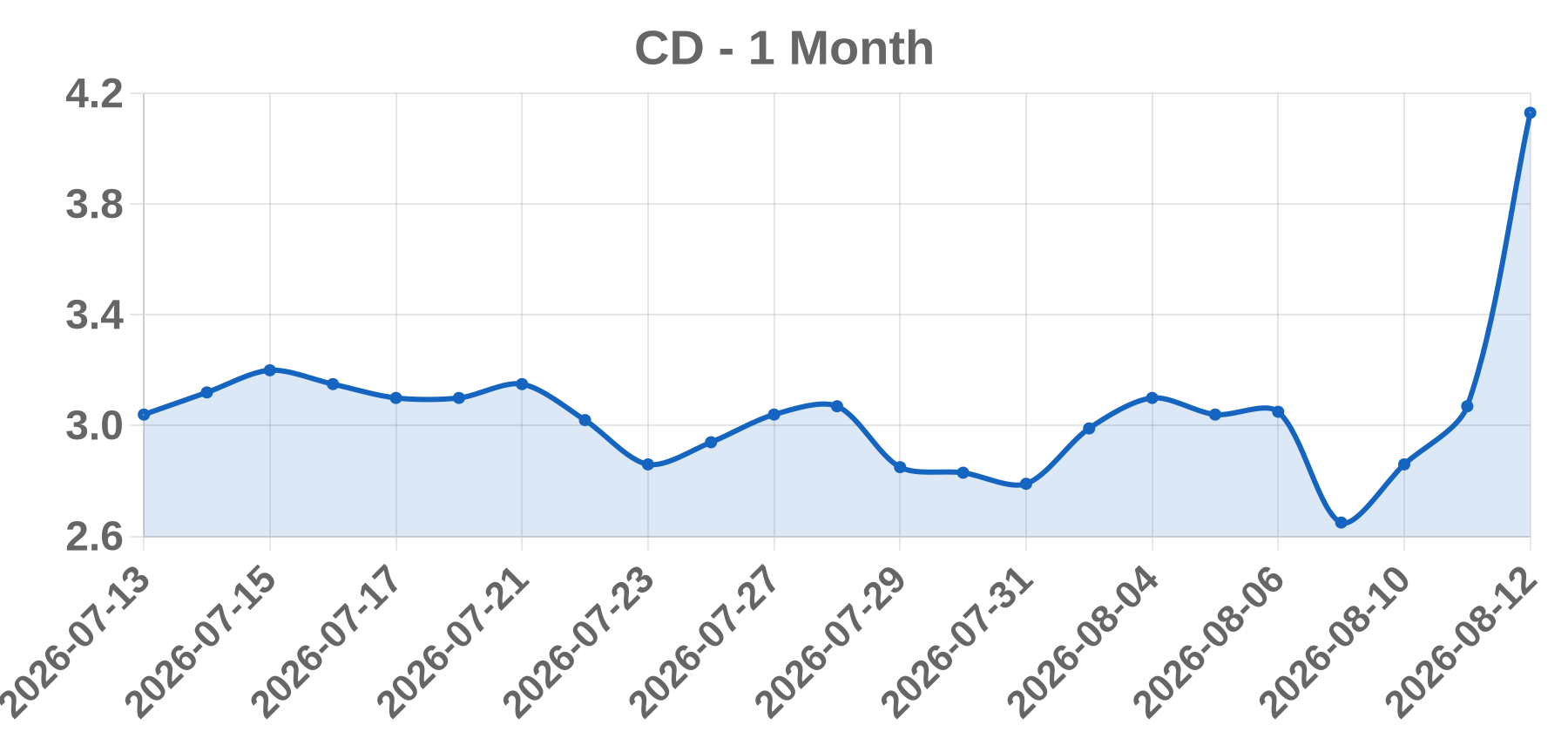
Business Chaince Digital Holdings Inc. (NASDAQ: CD), formerly Mercurity Fintech Holding Inc., is a U.S.-listed digital assets/blockchain fintech company. It provides tokenization, on-chain innovation, financial advisory, and capital-markets solutions through its subsidiary broker-dealer Chaince Securities.
Today’s take CD fell 16.95% to $3.43 on Aug 13, reversing a 34.53% speculative surge to $4.13 the prior session. The action follows the close (Aug 11) of a $16.2M registered direct offering of 30.56M shares priced at $0.53/share — roughly an 80% discount to the ~$2.86 market price on Aug 10. The financing raised shares outstanding from 79.44M to ~110M (~38% dilution). Aug 13 opened at the session high ($4.20) and fell steadily to $3.43, consistent with distribution/profit-taking on the post-offering spike. A secondary overhang: the Aug 24 AGM proposes authorizing 19 billion additional ordinary shares (raising authorized capital from 1B to 20B shares) plus a reverse split up to 4,000:1, signaling massive future dilutive capacity. No earnings, M&A, FDA, or analyst catalyst identified.