US common stocks / ADRs: top 10 by volume; top 10 gainers (by % change, volume as tie-breaker); top 10 losers (by % change, prefer liquid names). Deep notes cover the de-duplicated set across the three boards.
30 names on this page · volume 10 · gainers 10 · losers 10
Order: volume board → gainers → losers; each ticker appears once. Summaries of public information only — please verify primary sources.
1/10PCG PCG
+5.95%
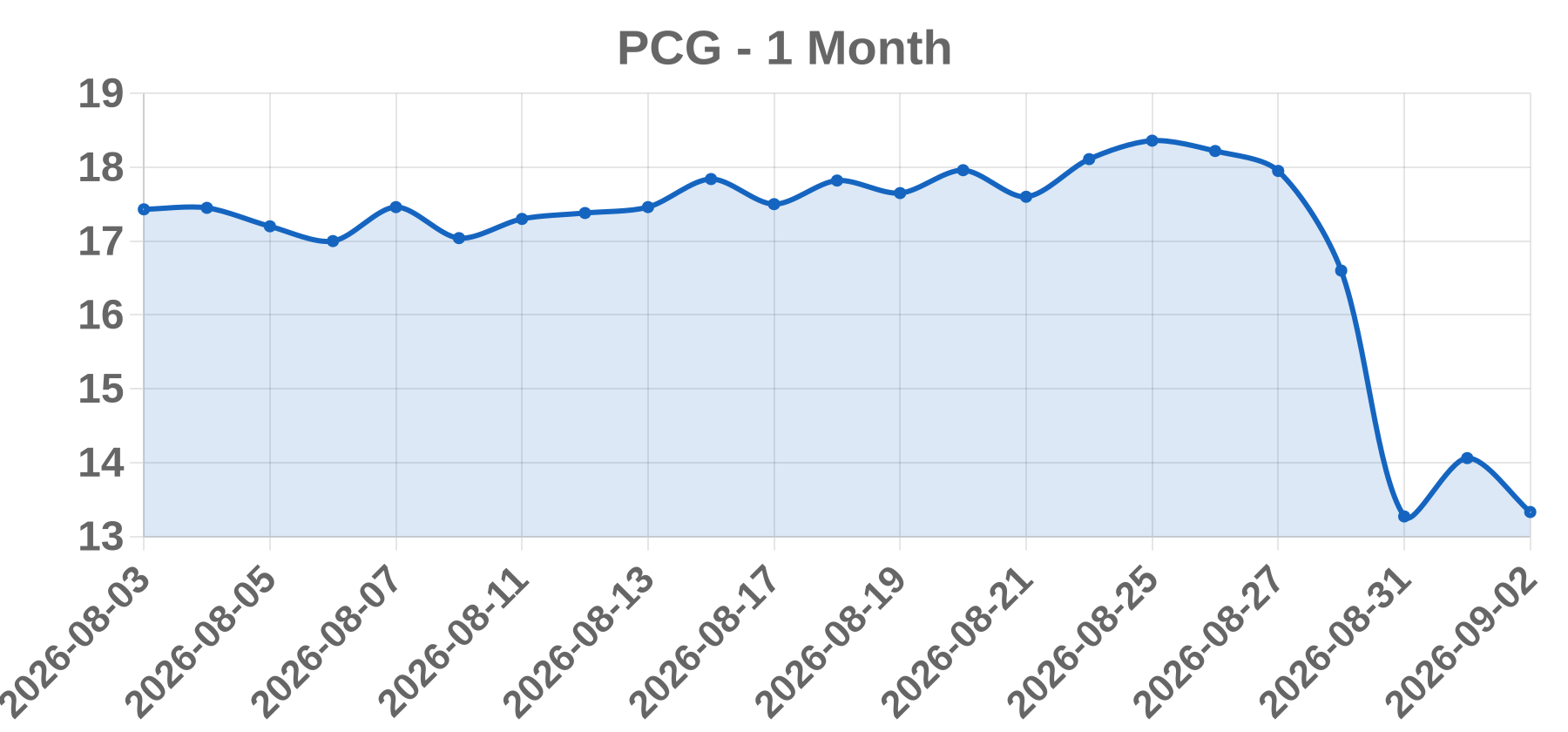
Close 14.06 · Vol 144.51M · Type: Other
Approx. 1-month price (illustrative)
Business PG&E Corporation (NYSE: PCG) is an Oakland, California-based holding company whose main subsidiary, Pacific Gas and Electric, is a regulated electric and natural gas utility serving roughly 5.3 million power and 4.6 million gas customers across northern and central California.
Today’s take On the rebound session (2026-09-02 per the data), PG&E surged +5.95% to close at $14.06 on ~144.5M shares, its strongest one-day gain in over a year. Shares had crashed ~20% the prior session after amended California wildfire bill SB 492 omitted utility liability protections. Relief came when the state Assembly declined to bring SB 492 to a vote, effectively killing the measure and removing the immediate subrogation/liability threat to PG&E and peer Edison (+8.9%). The rally was reinforced by PG&E announcing a board-led strategic review and deferring ~$2B of 2027 capex (2027 plan cut to ~$11.4B) to trim ~$2B of standalone financing needs, while reaffirming 2026 core EPS guidance of $1.64-$1.66. JPMorgan maintained Overweight but trimmed its price target to $18 from $25, cautioning that unresolved wildfire-liability risk still caps upside. Notable: the stock reversed lower the following session, underscoring lingering overhang.
Business NVIDIA Corporation (NASDAQ: NVDA) designs and sells graphics processing units (GPUs), system-on-chip units for mobile computing, and accelerated computing platforms. It dominates the market for AI data-center compute and GPU accelerators, serving hyperscalers and enterprise customers across gaming, data center, and automotive.
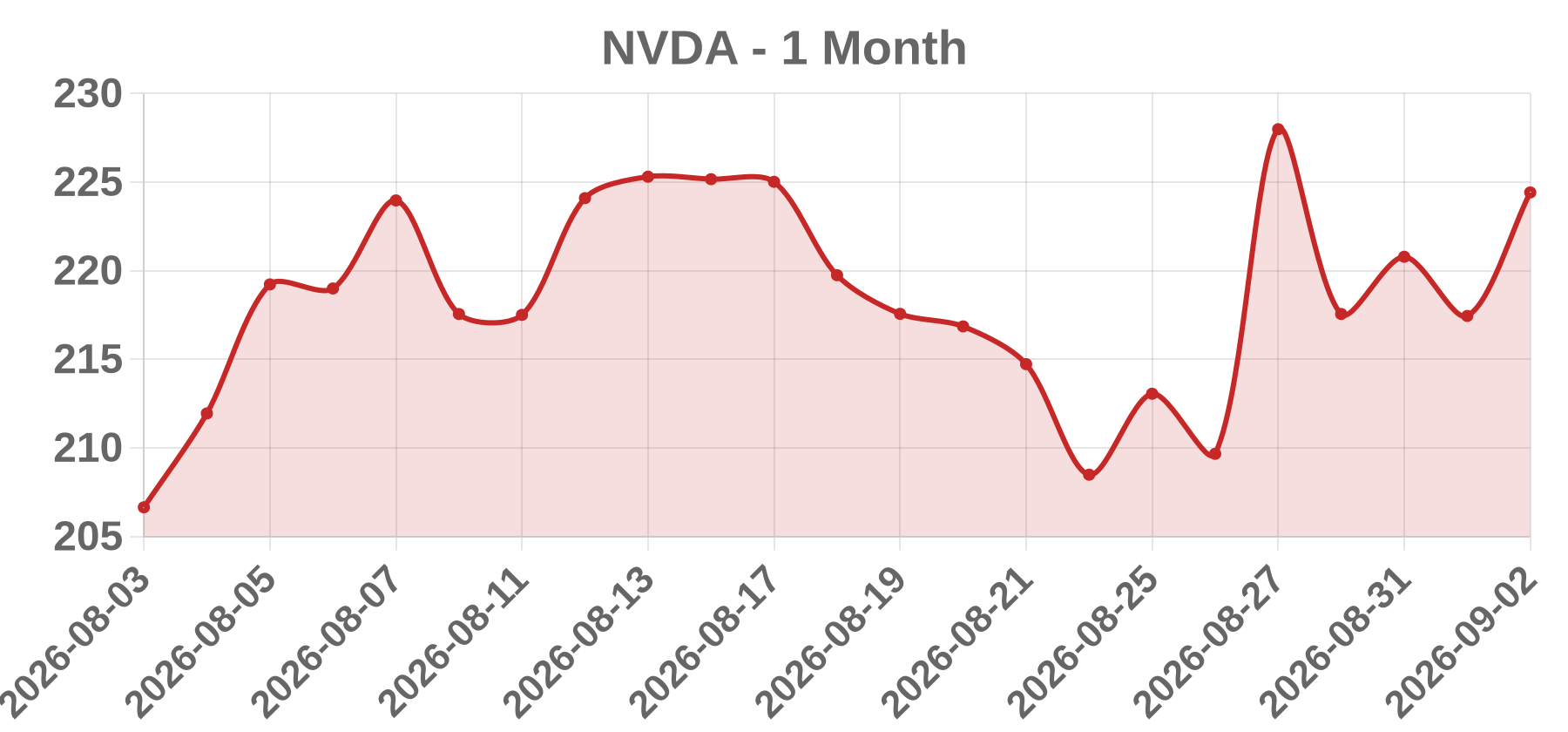
Today’s take On the captured session (Sept 1, 2026, reflected in the Sept 2 close-date field), NVIDIA fell 1.51% to $217.44 (down ~$3.33), erasing roughly $69 billion of market value. The drop was macro-driven: US-Iran military strikes spiked WTI crude above $90 (+3%), and a sharp global bond selloff lifted the 10-year Treasury yield to ~4.77% and the 2-year to 4.37%. Rising discount rates compress the present value of long-duration growth/AI cash flows, so high-multiple chip names led the decline. NVIDIA outperformed peers slightly—AMD fell ~2.4–3.3%, Micron ~2.4%, Qualcomm ~5%, Intel ~4%—but still closed near its 227.92 cup-with-handle entry region after the earlier week's record earnings-driven surge. The move was valuation/interest-rate selling rather than a stock-specific or company fundamental event.
Business NIO Inc. (NYSE: NIO) is a Shanghai-headquartered pioneer in the premium smart electric vehicle (EV) segment, designing, developing and manufacturing connected EVs under the NIO, ONVO and Firefly brands across China and internationally, with fitted battery-swap and intelligent-driving services.
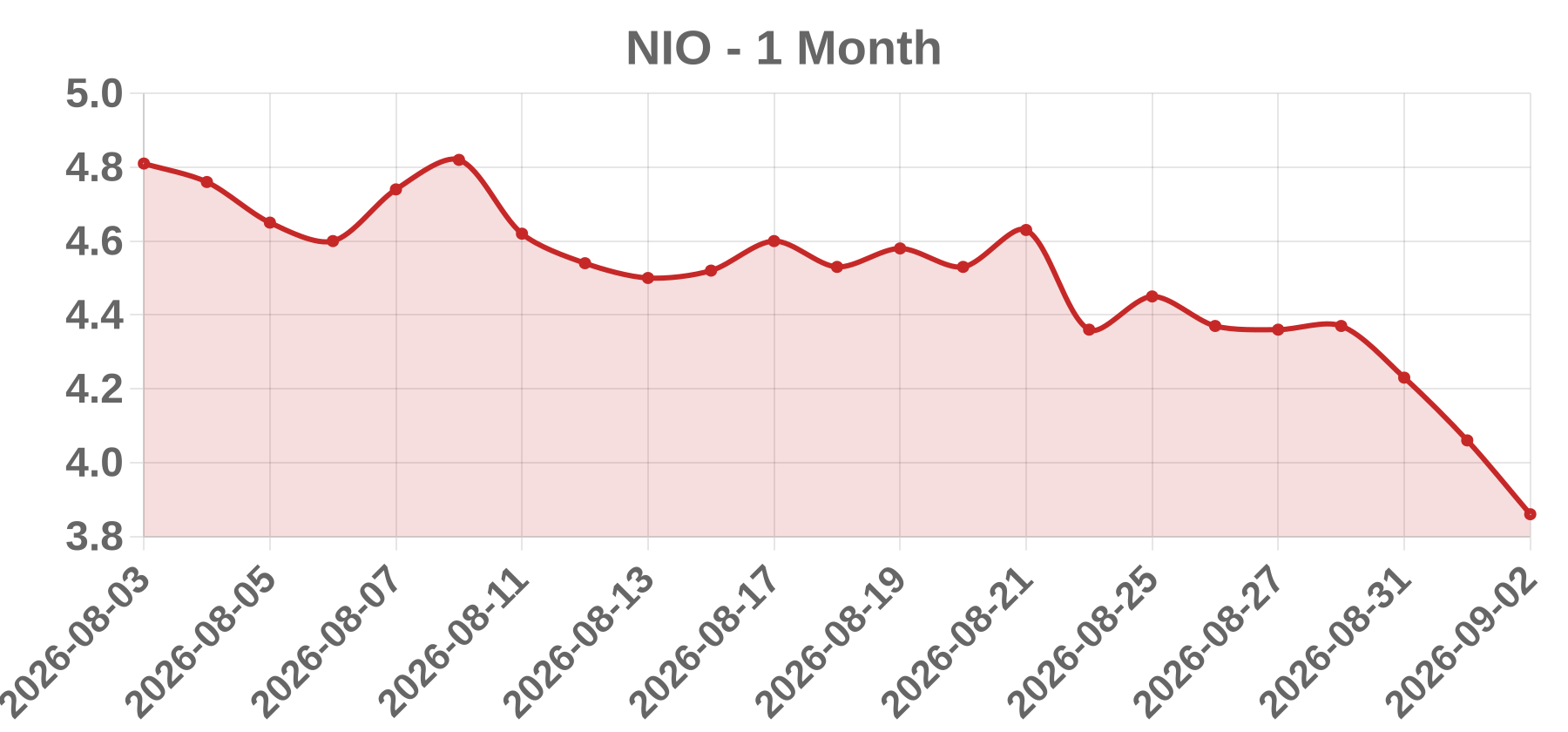
Today’s take NIO fell 4.02% to close at $4.06 after printing a fresh 52-week low of $3.99, as the market punished its Q2 FY2026 results (released September 1) and the analyst reactions that followed. Revenue rose 69.1% YoY to RMB32.14B ($4.74B) but missed the ~$4.78-4.95B consensus and also came in below the company's own prior guided range of RMB32.78B-34.44B. While adjusted EPS of RMB0.01 beat the ~RMB0.30 loss expected and vehicle margin improved to 18.5%, the Q3 outlook disappointed: deliveries of 108,000-111,000 units and RMB33.29B-34.05B revenue fell below the ~$5.07B consensus. CEO William Li added to the drag by flagging an additional RMB2,000-3,000 per-vehicle cost rise in 2H26 after vehicle costs already rose ~RMB14,000 in Q2. Analysts echoed the concern: JPMorgan downgraded NIO to Neutral (PT $7.00 to $4.50), Freedom Broker cut to Hold (PT $4) and Citi trimmed its target to $7.10, citing slow China demand.
Business Intel Corporation (Nasdaq: INTC) is a leading semiconductor designer and manufacturer of microprocessors for personal computers, data centers, and AI workloads. It also operates the Intel Foundry business and retains leading CPU market share in both PC and server end markets while seeking to reinvigorate its manufacturing strategy.
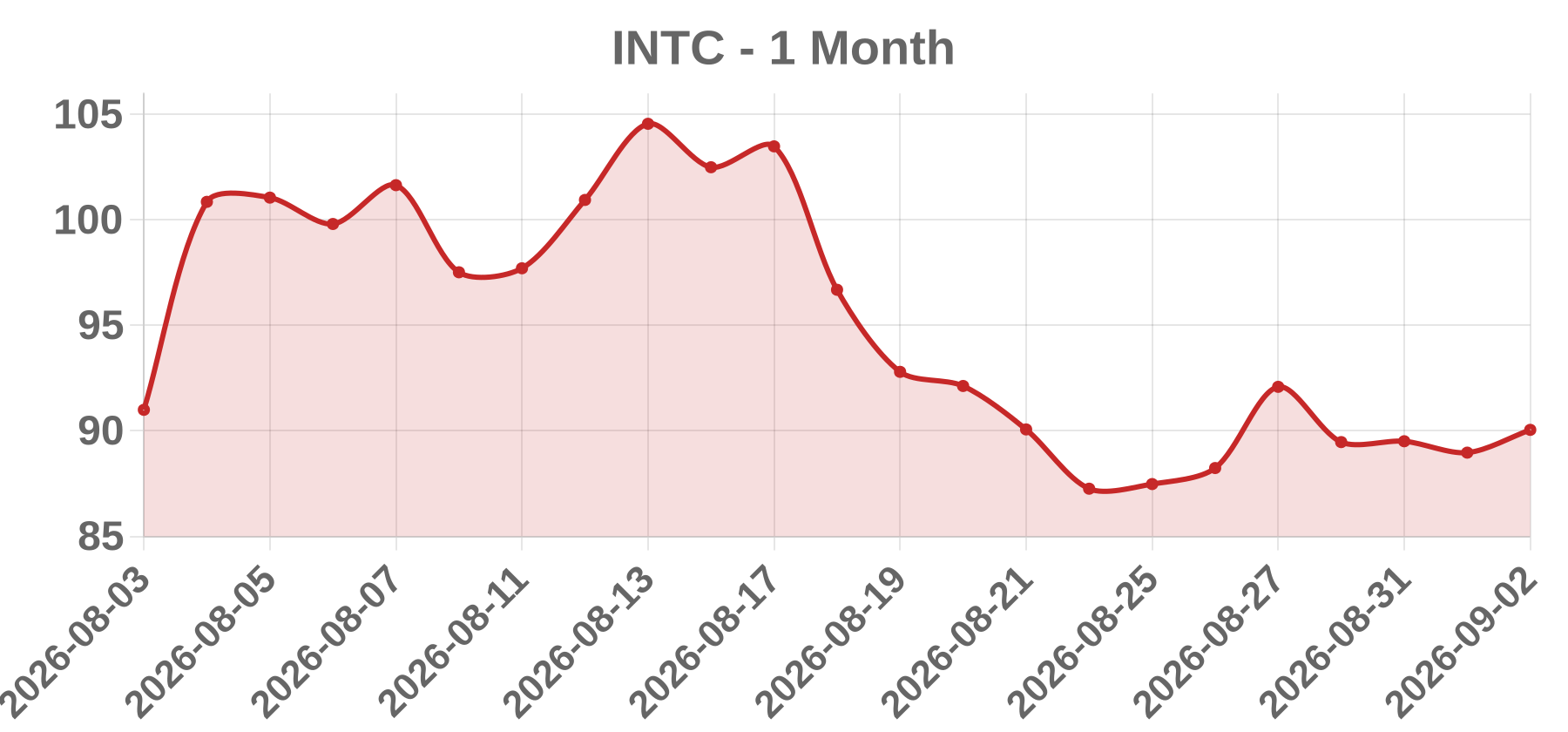
Today’s take On the session recorded on the close date, Intel fell 0.60% to close at $88.97 (intraday range roughly 85.72-89.41), tracking broad weakness across chipmakers rather than any company-specific news. Rising Treasury yields and inflation fears, plus a high perceived likelihood of a September rate hike, pressured long-duration growth and semiconductor names. AMD fell 2.36% to $459.61, Qualcomm fell 2.27% to $166.61, while the S&P 500 dropped 0.71% and the Nasdaq 1.03% - Intel's decline was comparatively mild. Context includes Intel's upsized $20B equity offering priced near $95/share in mid-August, raising dilution concerns but funding foundry expansion and narrowing foundry losses. The stock had already begun recovering in after-hours trading. Near-term direction hinges more on macro/rate sentiment and Intel's ability to hold its position in the AI/foundry narrative than on specific Intel operational news.
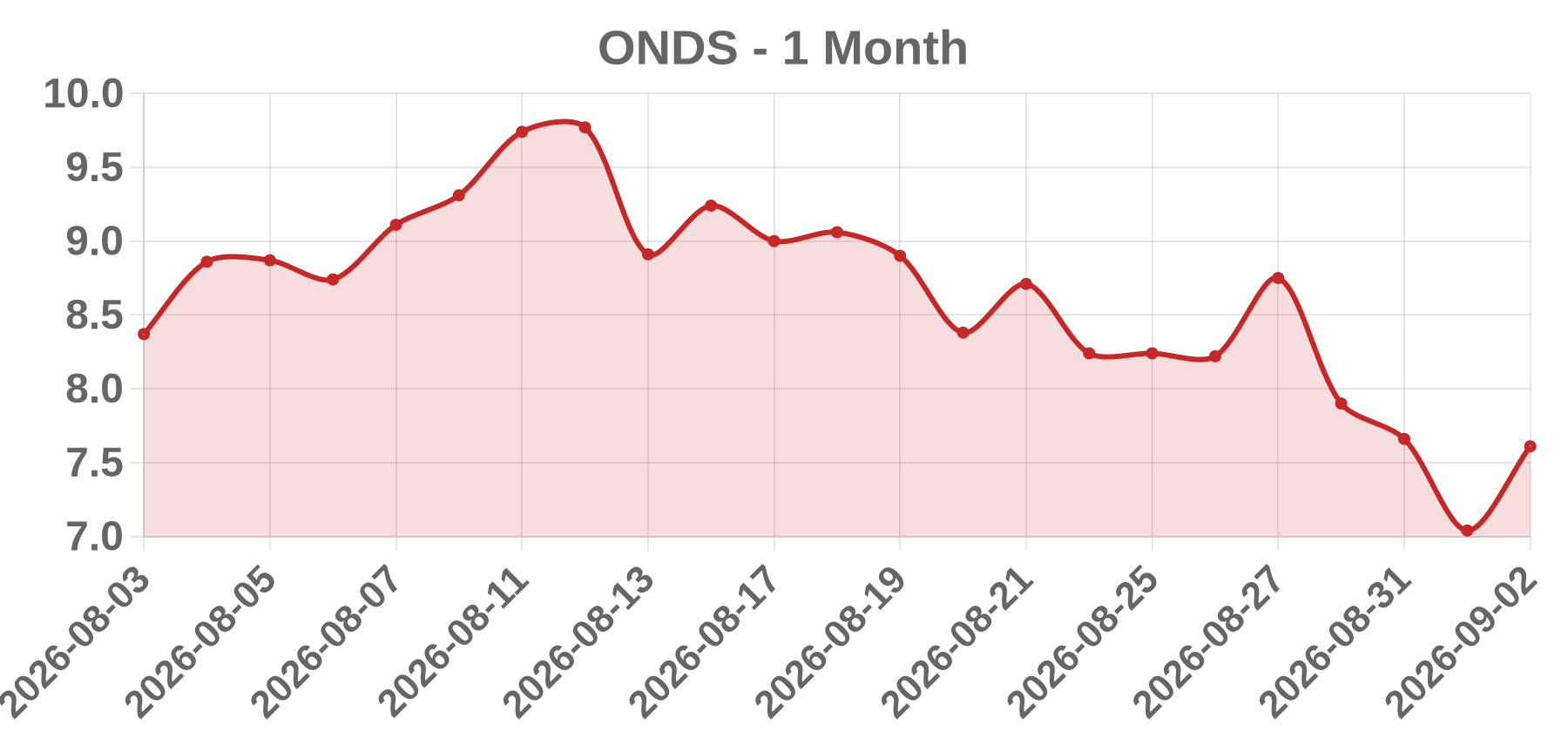
Business Ondas Inc. (ONDS) is a defense-and-security technology provider formerly known as Ondas Holdings, a Nevada corporation trading on Nasdaq. It builds and integrates autonomous aerial and ground systems, robotics, counter-drone (counter-UAS) solutions, loitering munitions, and unmanned infrastructure platforms for defense, homeland security, public safety, critical infrastructure, and industrial customers. Key operating assets include its American Robotics/drone businesses, ironYun (wireless broadband/AI), and recent acquisitions of DZYNE, Cyberhawk, and Aran Defense. The company grew rapidly on record Q2 2026 revenue of $83.8 million and carries a large pro forma order backlog, but remains deeply unprofitable and is undergoing heavy cash-intensive M&A integration.
Today’s take The sharp decline reflects investors realigning to the feasibility and valuation of Ondas' steep back-half revenue ramp. Management raised full-year 2026 guidance to $525-550 million, which mathematically forces fourth-quarter revenue to roughly $244-269 million - about 2.9-3.2x the just-reported Q2 run rate - a trajectory seen as aggressive and difficult to validate. This coincided with lingering disappointment over a wider-than-expected Q2 adjusted loss of $0.19/share (vs. ~$0.09 consensus), an adjusted EBITDA loss near $51 million (management's projected peak), and gross margin compression to 43.1% on acquisition amortization. The bear case was amplified by short interest climbing to roughly 42% of the tradable float (~$1.9 billion), one of the highest ratios among large Nasdaq names, driven by concerns over cash burn, equity dilution, and integration risk. Sentiment was further dented by an Aug 28 regulatory prospectus allowing resale of acquisition-linked shares (World View-related) and by broader risk-off selling cascading through speculative drone/defense peers (Red Cat, Unusual Machines) with no company-specific filings that day. Net effect: with the stock trading near ~7.5
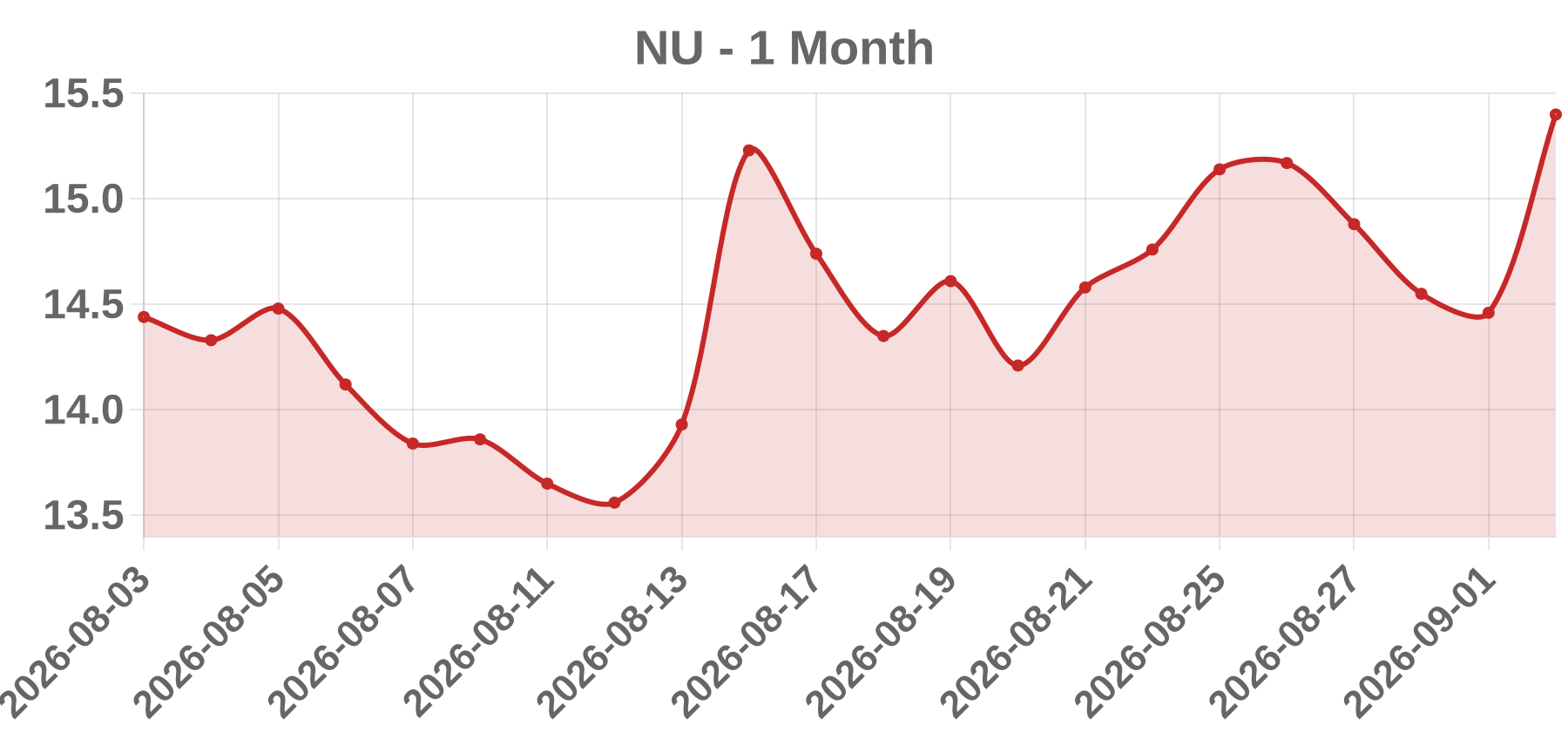
Business Nu Holdings Ltd. (NYSE: NU), headquartered in the Cayman Islands, operates the Nubank digital banking and financial-services platform across Brazil, Mexico, Colombia and the U.S. It offers credit cards, digital accounts, lending, investments and other products to tens of millions of customers in Latin America.
Today’s take The stock's pullback figures supplied (close 14.46, -0.62%, ~67.5M shares) correspond to a post-earnings consolidation session occurring after Nu's record Q2 2026 results (released Aug 13, 2026). Nu reported the first-ever >$1B quarterly net income (~$1.06B-$1.1B, +49% YoY) on ~$5.88B revenue (+39% YoY), which beat consensus near $5.4-5.5B, with 33% ROE, plus a fresh $1B share buyback. Wall Street reacted bullishly: Needham lifted its target to $19, UBS to $18.20, Susquehanna to $16, and one analyst raised fair value to $23. Shares had climbed from ~$13.86 on Aug 10 into the mid-$15s by early September, so the flagged session represented a standard cooling/cooldown within a broader analyst-upgrade- and earnings-driven advance rather than a new negative catalyst. Cross currents, however, included rising credit provisions, an unexpected CFO departure and a slower U.S. expansion plan, which tempered the upside narrative.
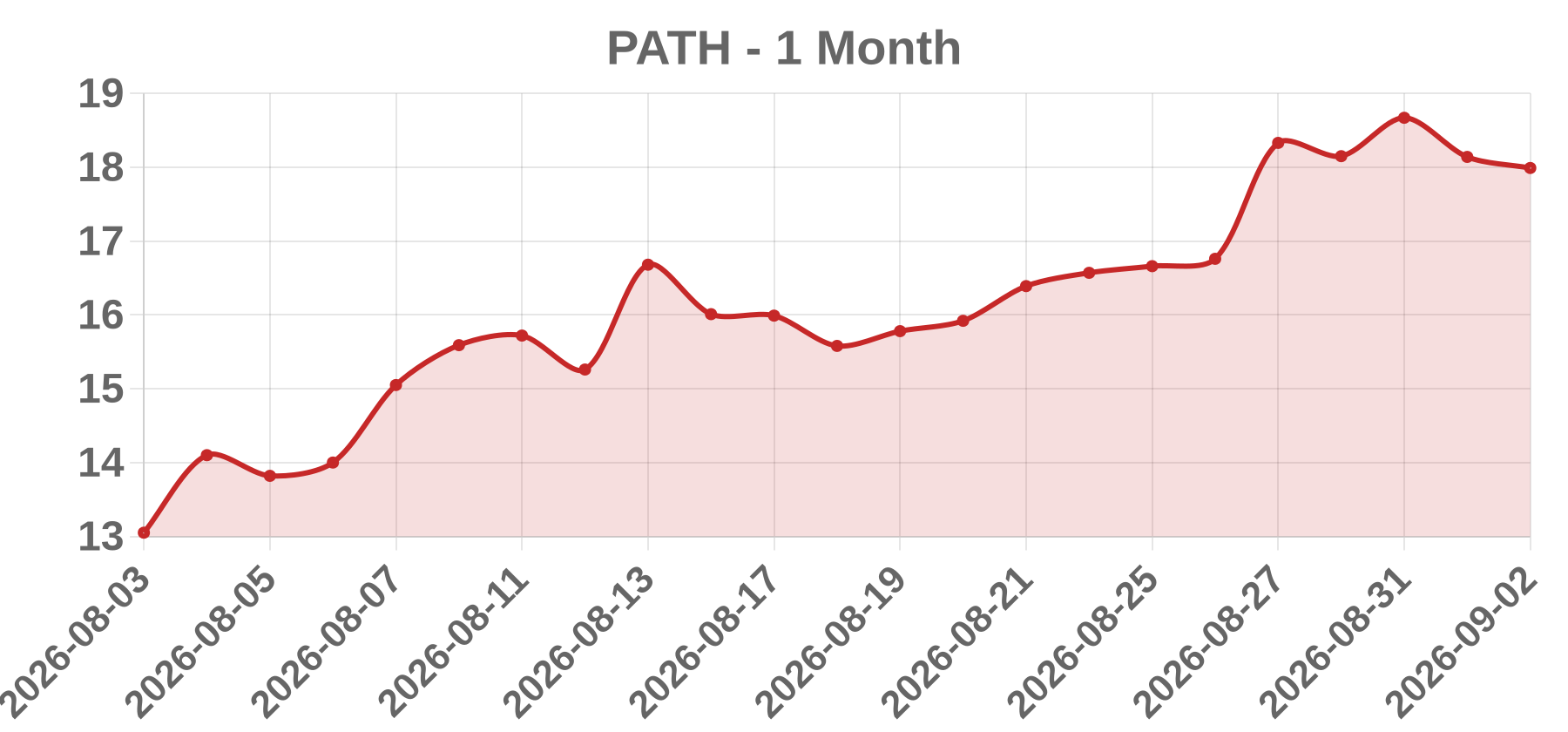
Business UiPath, Inc., listed on the NYSE under PATH, is a global leader in robotic process automation (RPA) and AI-driven business orchestration. Its enterprise platform (including Maestro, agent building, and coding-agent orchestration) lets AI agents, robots, people, and models work together in coordinated workflows across organizations worldwide.
Today’s take The -2.84% decline to $18.14 (on the session captured for Sep 2, 2026, which sources confirm occurred Tuesday Sep 1's close; Sep 2 itself slipped a further -0.83% to $17.99) was a pre-earnings profit-taking pullback. UiPath was scheduled to report Q2 fiscal 2027 results after the close on September 3, 2026. The stock had surged ~38-42% in one month and ~78% from a July 23 low on rallying agentic-AI momentum (Maestro, coding agents, Banco Azteca deployment), leaving it ~25-29% above the ~$13.44-14.33 consensus analyst price target. UBS even raised its target to $19 but kept a Neutral rating. Analysts projected ~$0.15 EPS on ~$397.6M revenue (roughly in line with guidance midpoint ~$397.5M), with net-new ARR slowing to ~$30.5M from Q1's $49M. High short interest (~29% of float, ~115M shares) plus a ~1.86 beta amplified volatility ahead of the print, with options implying a near-14% one-day move.
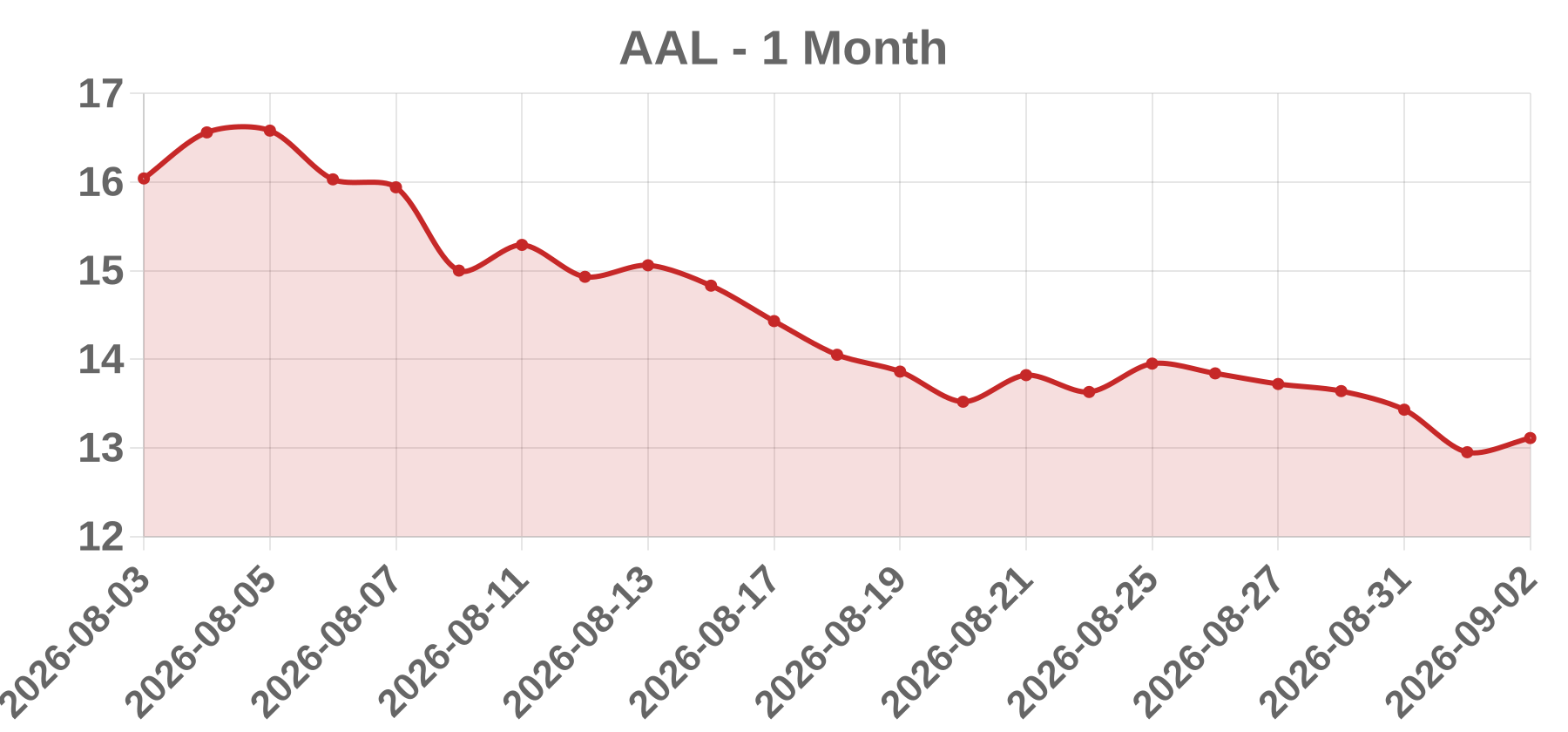
Business American Airlines Group Inc. (NASDAQ: AAL) is the world's largest airline by passenger count, operating a network air carrier across the United States, Latin America, the Atlantic and Pacific through hubs including Dallas/Fort Worth, Charlotte, Chicago, Miami and New York. It operates a mainline fleet of about 1,013 aircraft.
Today’s take AAL fell sharply in heavy trade as fresh U.S. military strikes on Iranian missile launchers near the Strait of Hormuz drove Brent crude ~2.7% to over $92-100/bbl, raising jet-fuel costs — the airline's largest and most volatile expense. Management had already cut its full-year 2026 outlook (now an adjusted loss of up to $0.65/share to a $0.65 profit, roughly breakeven) citing $6B in added 2026 fuel costs from the U.S.-Iran war. Q2 2026 fuel expenses jumped ~83% to $4.88B on record $16.7B revenue, leaving only a 0.4% net margin; a $0.10/gal rise adds ~$120M pretax cost. Brent's surge to $92-100 compounded this razor-thin margin, pressuring the stock ~3.6% on the session to $12.95 from prior close $13.43.
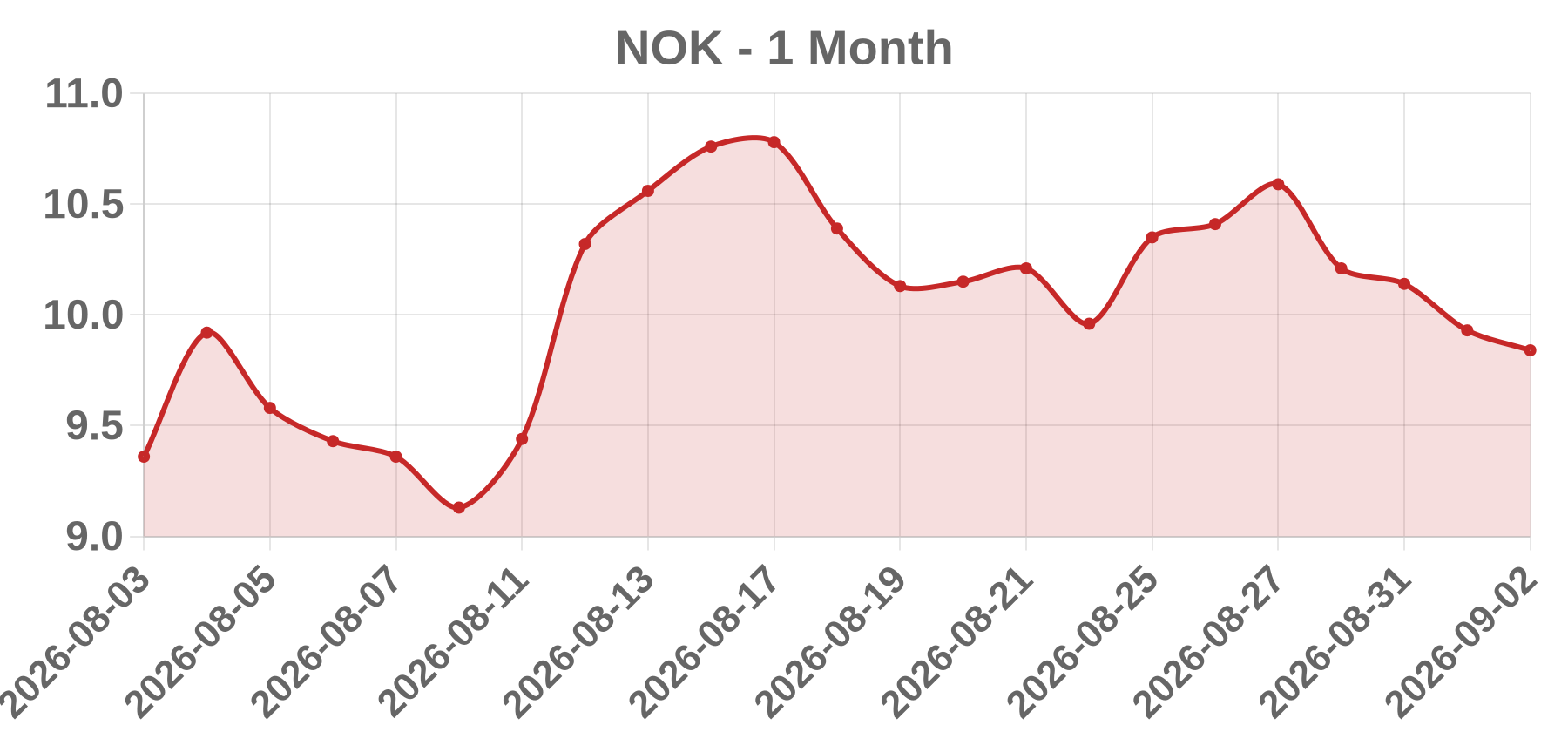
Business Nokia Oyj (NYSE: NOK) is a Finnish multinational telecommunications and networking equipment maker listed on both the NYSE (ADR) and Helsinki exchange. It is pivoting from legacy 5G wireless gear toward AI-driven data-center optical networks, AI-RAN, and IP routing equipment, competing with Ciena, Corning, and others.
Today’s take Data reconciliation: the session with close 9.93 and -2.07% on ~61.4M shares (yahoo shows 61.58M) corresponds to the Sept 1, 2026 US ADR session, not Sept 2 (which closed 9.84). The decline was sector-driven: on Sept 1 optical-communications/AI-infrastructure names sold off broadly, with AXT -8%, AAOI/MRVL/Astera >-5%, Coherent/Ciena/Lumentum/POET >-4%, and Nokia -3% (roughly double the -2.07% ADR read due to ADR/Helsinki variance). Concurrent positive news was overwhelmed on the day: STOXX confirmed Nokia would rejoin the EURO STOXX 50 (replacing Volkswagen) effective Sep 21, driving expected passive fund inflows; Nokia announced an AI network-automation R&D center in Riyadh; and JPMorgan (Overweight, $21 PT) remained bullish on AI/cloud ordering. NOK had already rallied ~53% YTD, so the pullback read as profit-taking within the broader AI-trade reset.
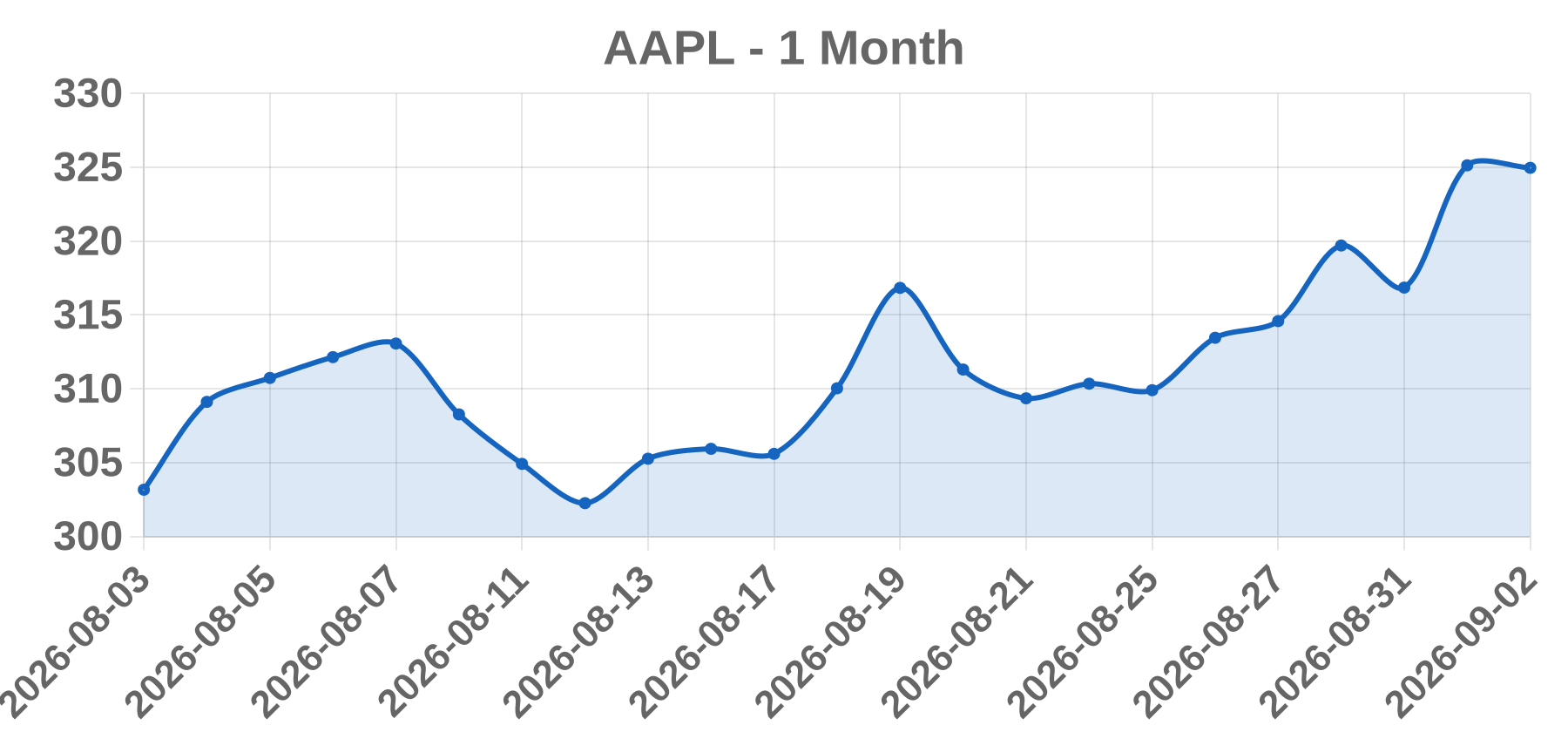
Business Apple Inc. (NASDAQ: AAPL), founded 1976 and headquartered in Cupertino, California, designs, manufactures and markets smartphones (iPhone), personal computers (Mac), tablets (iPad), wearables and accessories, plus services such as the App Store, iCloud and Apple Music. It operates globally across the Americas, Europe, Greater China, Japan and Rest of Asia Pacific.
Today’s take Apple shares jumped +2.61% to close at $325.13 (up ~$8.27 from $316.85) on the September 1, 2026 US trading session (dated Sept 2 in some Asia timing feeds) — the first trading day of John Ternus as CEO, who formally replaced Tim Cook after 15 years. Cook moved to Executive Chairman. The gain added roughly $120-130 billion to market cap, lifting it to ~$4.75 trillion, even as the NASDAQ skidded. Ternus, a 25-year hardware-engineering veteran, inherits a strong base: Q3 FY2026 revenue hit $109.4 billion (+16% YoY), EPS $2.02 (+29%), with June-quarter records across iPhone ($54.3B, +22%), Mac (+29%) and Services. Sentiment was further lifted by Ternus teasing a 'sensational' surprise ahead of the September 9 'Surprise and Shine' event, expected to unveil the new iPhone generation and possibly Apple's first foldable device. Compensation details (Ternus $3M salary + $55M equity) were disclosed in a regulatory filing, signaling a smooth, well-governed transition.
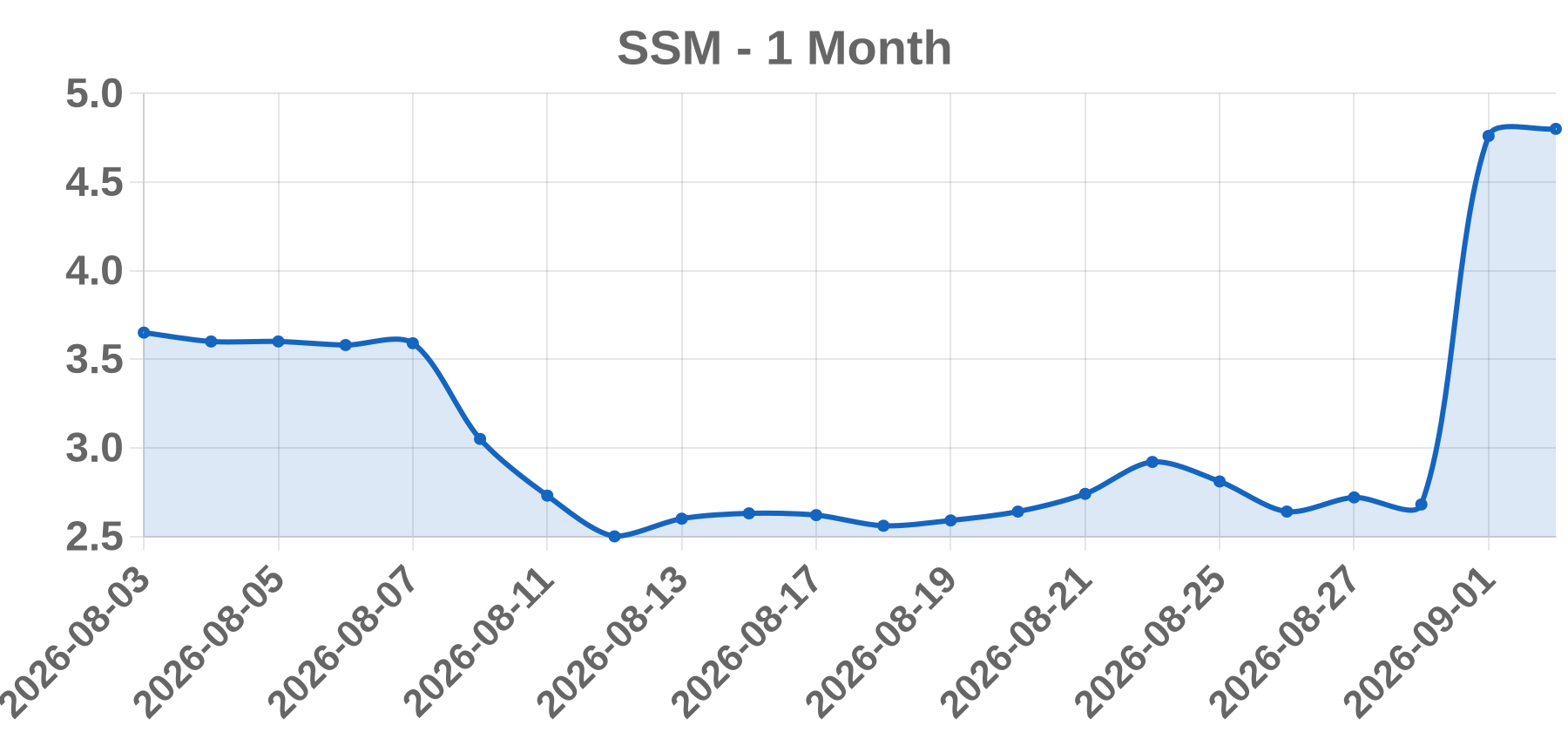
Business Sono Group N.V. (Nasdaq: SSM) is a Netherlands-incorporated company listed on the Nasdaq Capital Market, currently operating as a digital asset treasury company whose strategy centers on Bitcoin holdings and covered-call income generation under an ISDA Master Agreement. It was formerly the developer of solar-electric mobility, including the Sion vehicle.
Today’s take Sono Group shares surged roughly 77% on news of a proposed combination. On Aug 31, 2026 the company signed a non-binding letter of intent (LOI) with privately held Sports One to merge and create a publicly traded 'permanent-capital' vehicle that would acquire and hold minority stakes in NFL, NBA, MLB and NHL franchises alongside an AI-driven sports-intelligence business (athlete data, social-value scoring, NIL/sponsorship valuations). Under the deal, Sports One equity holders would own a super-majority of the renamed 'Sports One' public company and its management team would lead. In parallel, an investor group affiliated with Sports One bought 283,500 ordinary shares (~19.9% of outstanding) at market price in a registered direct offering with no discount or warrants and a 180-day lockup, which helped simplify the capital structure alongside a preferred-share call-option agreement with YA II PN. The stock, which had been trading near $2.68 with ~1.5M shares outstanding, jumped to $4.76 intraday (high $4.99). Because the LOI is non-binding and still requires due diligence, definitive agreements, regulatory league/team approvals and shareholder consent, the move is largely speculative
Business bioAffinity Technologies, Inc. (Nasdaq: BIAF) is a San Antonio, Texas biotechnology company developing noninvasive diagnostics and therapeutics for lung disease and broad-spectrum cancers. Its lead product, CyPath Lung, is an AI-driven, flow-cytometry sputum test for early lung cancer detection, marketed as a Laboratory Developed Test (LDT) by subsidiary Precision Pathology Laboratory Services, a CAP-accredited lab.
Today’s take BIAF surged 44.52% to $6.59 on massive volume after the company announced (Sept 1, 2026) it will advance CyPath Lung for the post-curative surveillance of lung cancer survivors, expanding the test's commercial use beyond initial screening into recurrence monitoring. With ~680,000 Americans living with a lung-cancer history and 230,000 new cases expected in 2026 (plus 20%-55% NSCLC recurrence rates per published studies), this opens a large addressable follow-up market complementary to CT imaging. Confidence is further supported by a prior Aug 18, 2026 nationwide federal distribution agreement with AvMEDICAL granting access to VA/military healthcare channels, an Aug 24 1-for-15 reverse split tightening float, and Q2 2026 CyPath Lung volume up 216% YoY (revenue $1.5M, +19%). Caution: CyPath Lung's published performance (92% sensitivity, 87% specificity, 88% accuracy, 99% NPV) was validated in the initial-detection setting, not post-treatment surveillance, so the expansion is prospective and not yet clinically validated for this use.
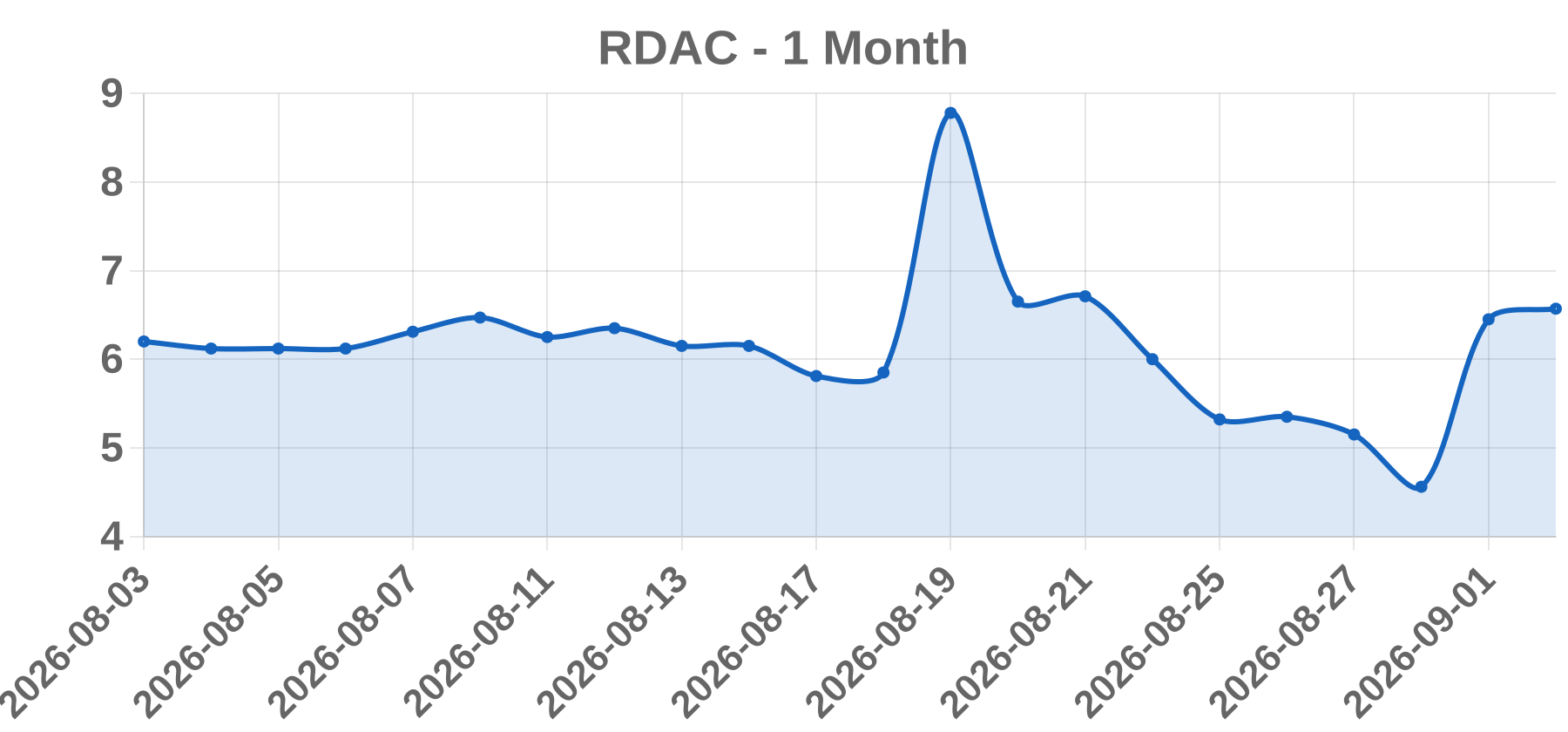
Business Rising Dragon Acquisition Corp. is a Cayman Islands-incorporated special purpose acquisition company (SPAC) listed on NASDAQ that was formed to pursue a merger, share exchange, or asset acquisition with one or more target businesses. It has entered a definitive merger agreement with HZJL Cayman Limited, an early-stage operating company, with the combination deadline extended to August 2026 and now beyond.
Today’s take On the September 1, 2026 US session (reported as session close 2026-09-02 in some feeds), RDAC surged 41.45% to close at $6.45, with an intraday high of $8.58 and low of $4.58, on an explosive ~24.15 million shares traded — roughly 80x its typical sub-30K daily volume. The catalyst was purely technical/speculative: Rising Dragon is an extremely thin-float SPAC whose public float collapsed after massive shareholder redemptions (5.7M+ shares redeemed; ~1.9M more in a subsequent vote), leaving roughly 3.4-6M shares outstanding. There was no earnings release, merger completion, or new 8-K driving the move that session. This mirrors earlier low-float squeeze action on Aug 19, 2026, when RDAC spiked ~50% to a high of $22.28 on 16.5M shares before unwinding. Multiple outlets (Benzinga, Financial Modeling Prep, Kalkine, Perplexity) characterize the surge as a low-float short squeeze disconnected from fundamentals and marked by violent, unsustainable swings.
Business Swvl Holdings Corp. (Nasdaq: SWVL) is a Dubai-headquartered, technology-driven provider of mass-transit and shared-mobility solutions. Through its B2C ride network and Swvl Business enterprise offering, it serves corporate clients, schools, and municipalities across Egypt, Saudi Arabia, the UAE, the UK, and Kuwait.
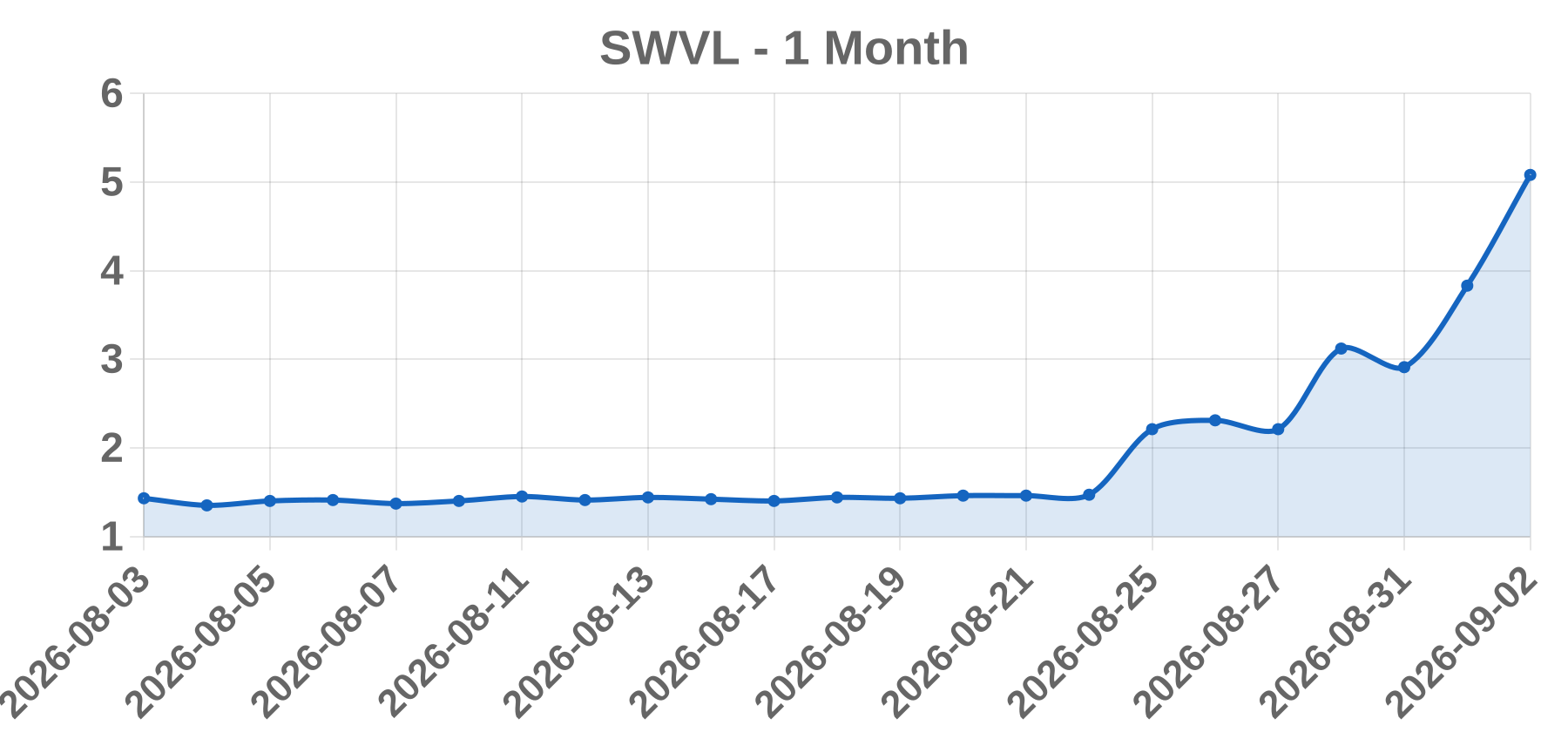
Today’s take SWVL closed at $3.83 on Sept 1, 2026, up +31.62% from a prior close of $2.91, after the company disclosed in an SEC filing (Sept 1) that it had secured its first UAE working-capital facility with ADGM-regulated finance platform Zelo (backed by International Holding Company). The dedicated short-term liquidity is earmarked to launch and scale new enterprise accounts in the UAE. This builds on an accelerating catalyst chain: a Sawiris-led $13M strategic PIPE (Coefficient LP) priced Aug 25, a $1.5M Sofico private placement Aug 26, and a five-year enterprise contract worth up to $5.5M. Management says GCC revenue has grown ~5x since the UAE relaunch in Dec 2024, while FY25 revenue rose 41% to $24.2M with positive net income of $1.3M. Note: user data lists close date 2026-09-02, but the +31.62% rise to $3.83 matches the Sept 1 session; stocks continued to ~$5.08 (+32.64%) on Sept 2. Momentum likely reflects the financing catalyst plus low float (~9.96M shares).
Business Fervo Energy Company (NASDAQ: FRVO) is a Houston-based enhanced geothermal systems (EGS) developer and independent power producer, backed by Bill Gates, that commercialized after an May 2026 IPO (70M Class A shares at $27, raising $1.89B). The firm uses shale-drilling-inspired techniques to create subsurface fracture networks that produce 24/7 firm, carbon-free baseload power, targeting AI hyperscalers and utilities.
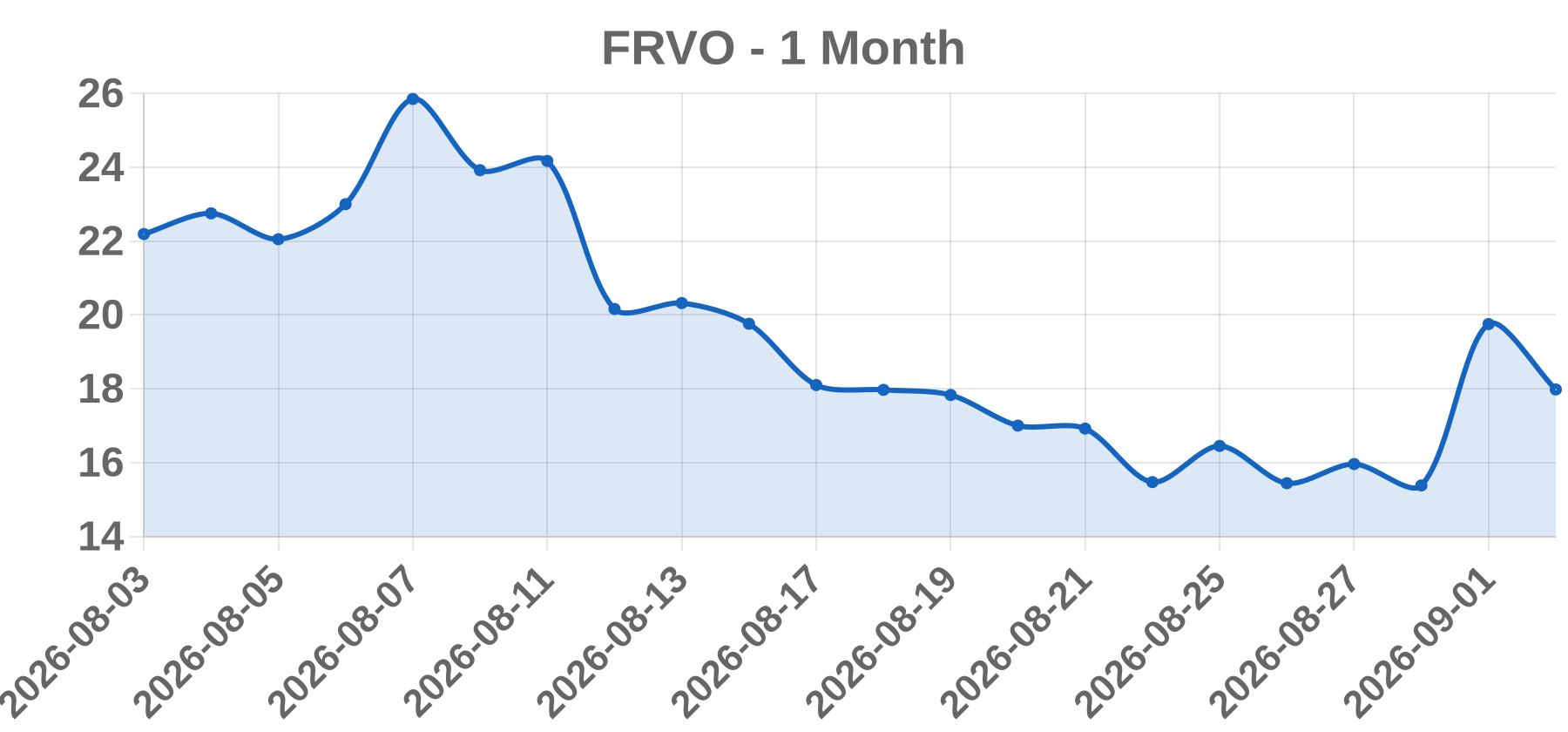
Today’s take FRVO surged +28.41% to close at $19.75 (+$4.37) after Sept 1 announcement of the world's largest enhanced geothermal PPA: a 396-MW power purchase agreement with Google (Alphabet) enabling development of the Cape Station EGS GeoCluster in Beaver County, Utah (expected online 2028), with an option for Google to expand offtake by ~600 MW toward ~1 GW by June 2030. RBC Capital (Christopher Dendrinos, Outperform, $46 PT) said the deal arrived sooner than the Street expected, building on Fervo's earlier 115-MW Google/NV Energy contract and lifting contracted visibility to ~1.1 GW through 2030. The agreement validates EGS as round-the-clock clean power for data centers and pulled forward a key de-risking milestone in a beaten-down post-IPO name that had fallen ~46% since its May 2026 debut.
Business System1, Inc. (NYSE: SST), a Los Angeles-based consumer internet and advertising company, operates flagship online utilities including MapQuest, CouponFollow, Info.com, Startpage.com and Answers.com. It runs an AI-powered customer acquisition marketing platform with two segments: Owned & Operated Advertising and Partner Network.
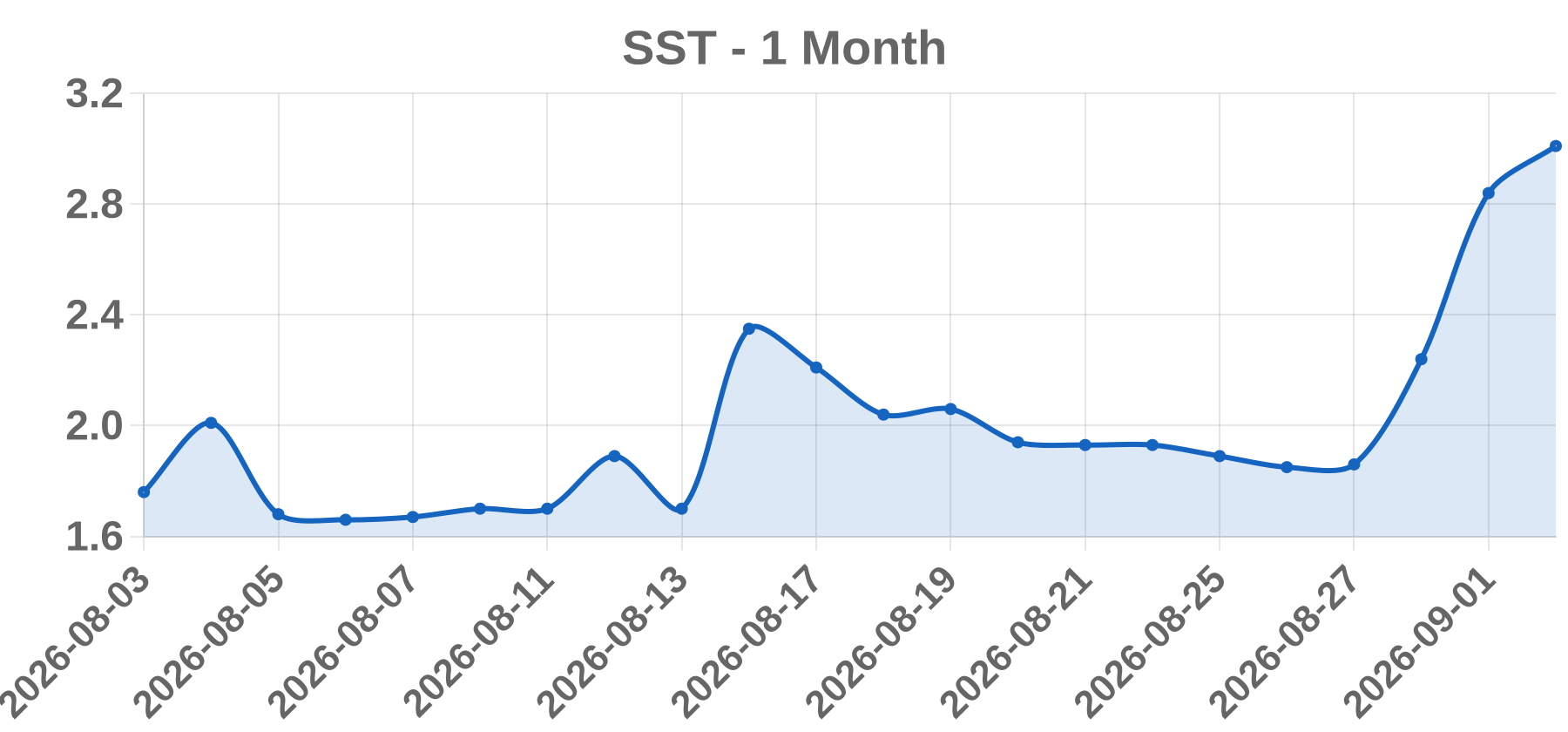
Today’s take Data reconciliation: the row quoting a $2.84 close with +26.79% corresponds to the September 1, 2026 trading session (stockanalysis.com history: 'Sep 1, 2026 ... 2.84 ... 26.79% ... 2,098,930'); several delayed feeds label this session's print with the following business day, 2026-09-02. The actual Sept 2 close was $3.01 (+5.99%). The move was the continuation of a viral, news/meme-driven rally after System1's MapQuest app refused to rename Lake Ontario to 'Lake America' following a Trump executive order and a related US-Canada trade dispute. On Sept 1, System1 announced MapQuest reached the No. 1 overall free app in both the U.S. and Canada Apple App Stores, with usage up more than 50x normal and 'hundreds of thousands' of new downloads (Sensor Tower showed ~162k U.S. downloads in the week of Aug 24). The stock had already jumped ~18.5% on Aug 31 (to $2.24 on ~9M shares) and +25.4% intraday that day per Benzinga. The Sept 1 session added +$0.60 (+26.79%) to close at $2.84, at a ~$31.6M market cap on ~10.5M shares, with several volatility-led trading halts; the run extended to a $3.01 close ($3.30 high) on Sept 2.
Business Greenwave Technology Solutions, Inc. is a Nasdaq-listed metal recycling company operating 13 scrap metal processing facilities across Virginia, Ohio, and North Carolina through its wholly owned subsidiary Empire Services, Inc. It collects, classifies, and processes ferrous and nonferrous scrap metal, end-of-life vehicles, appliances, and industrial machinery under three segments: Scrap Metal Recycling, Hauling, and Other.
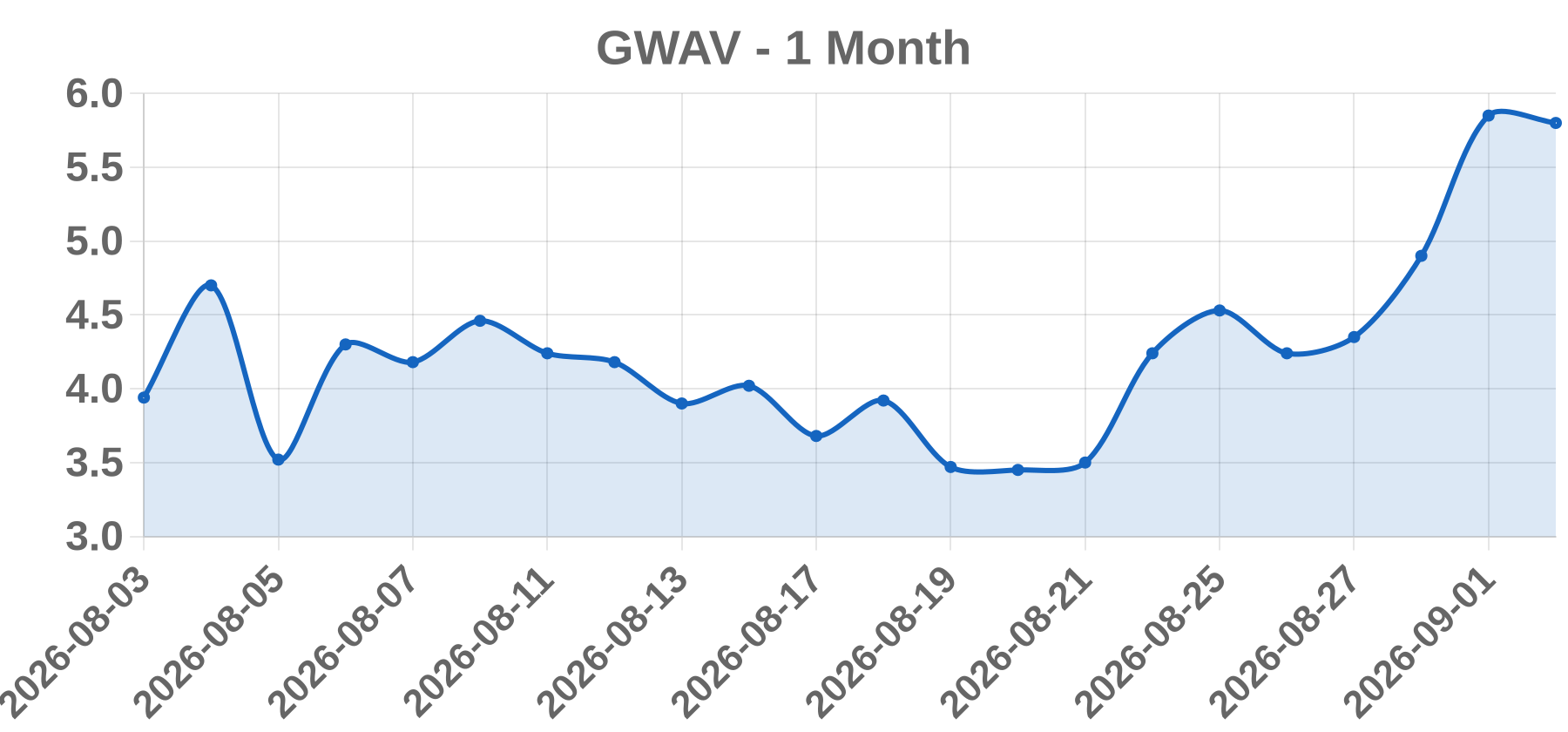
Today’s take GWAV closed at $5.85, +19.39%, on the trading session reported as of the 2026-09-02 close date (the actual move was logged Sep 1, 2026 at ~$5.85 on thin 58,792-share volume). No company-specific release landed on that day; the gain was a low-float speculative extension of a rally that began in late July 2026 (~$2.50) and was catalysed by restructuring news: an Aug 27, 2026 8-K showed GWAV entered an Aug 24 Exchange Agreement with DWM Properties LLC (controlled by CEO Danny Meeks), issuing 2,152,853 shares to extinguish ~$8.0M of related-party debt ($5,391,859 promissory note plus $2,608,141 other amounts). That followed an Aug 17 Q2 FY2026 report showing net loss narrowed ~34% to $3.24M on ~24% revenue growth plus a $2.1M debt-settlement gain. Around a ~$4.85M market cap with roughly 2.6% of float shorted, the concentrated order flow and momentum, not fundamentals, drove the ~19% single-session jump.
Business Reading International, Inc. (NASDAQ: RDIB) is a diversified, family-controlled cinema and real-estate company operating in the U.S., Australia and New Zealand under brands such as Reading Cinemas and Angelika Film Center, alongside commercial/retail property development. The Class B shares are super-voting, low-float equity interests in the same diversified company.
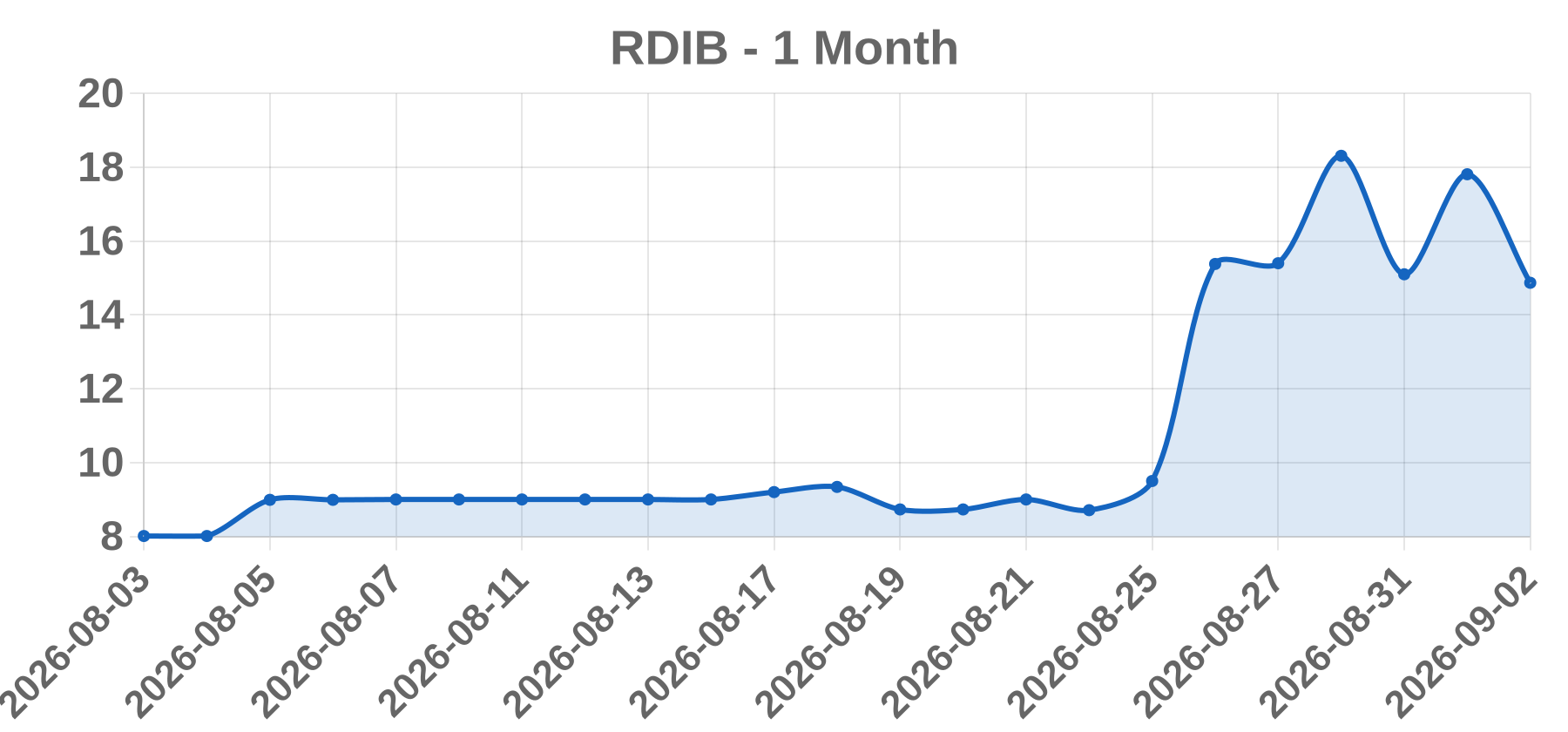
Today’s take Note: the tab dates the +17.22% close at $17.70 as 2026-09-02, but price history confirms that session was actually Monday, September 1, 2026 (open 13.69, high 19.58, low 13.05, close 17.70, on 119,261 volume); Sept 2 closed lower near $14.87. The move was one session within an extraordinary, thinly-traded volatility spike on RDIB's tiny Class B voting float (~299K shares). It began Aug 26, 2026 with a +61.89% surge to ~$15.38 on enormous volume of ~8.4M shares — grossly exceeding total outstanding Class B shares (~1.68M) and signaling heavy speculative/possible short-covering trading. Financial media explicitly found 'no clear immediate company-specific news' and characterized the action as speculative trading on a super-low float. This ran against an improving fundamental backdrop (record Q2 2026 revenue of $66.9M, net income swinging to +$2.3M from a prior loss, driven by Australian cinema and U.S. real estate monetization strategy). Overall RDIB rose roughly +86% over the single week and +109% over one month, reflecting momentum/retail-driven speculation on premium-voting shares far detached from earnings (TTM net loss, weak fundamentals).
Business Corvex, Inc. (NASDAQ: MOVE), formerly Movano Inc., is an engineering-led AI computing platform specializing in GPU-accelerated cloud infrastructure for AI workloads, providing secure, scalable training and inference compute. The company became publicly traded via an all-stock merger with Movano in March 2026.
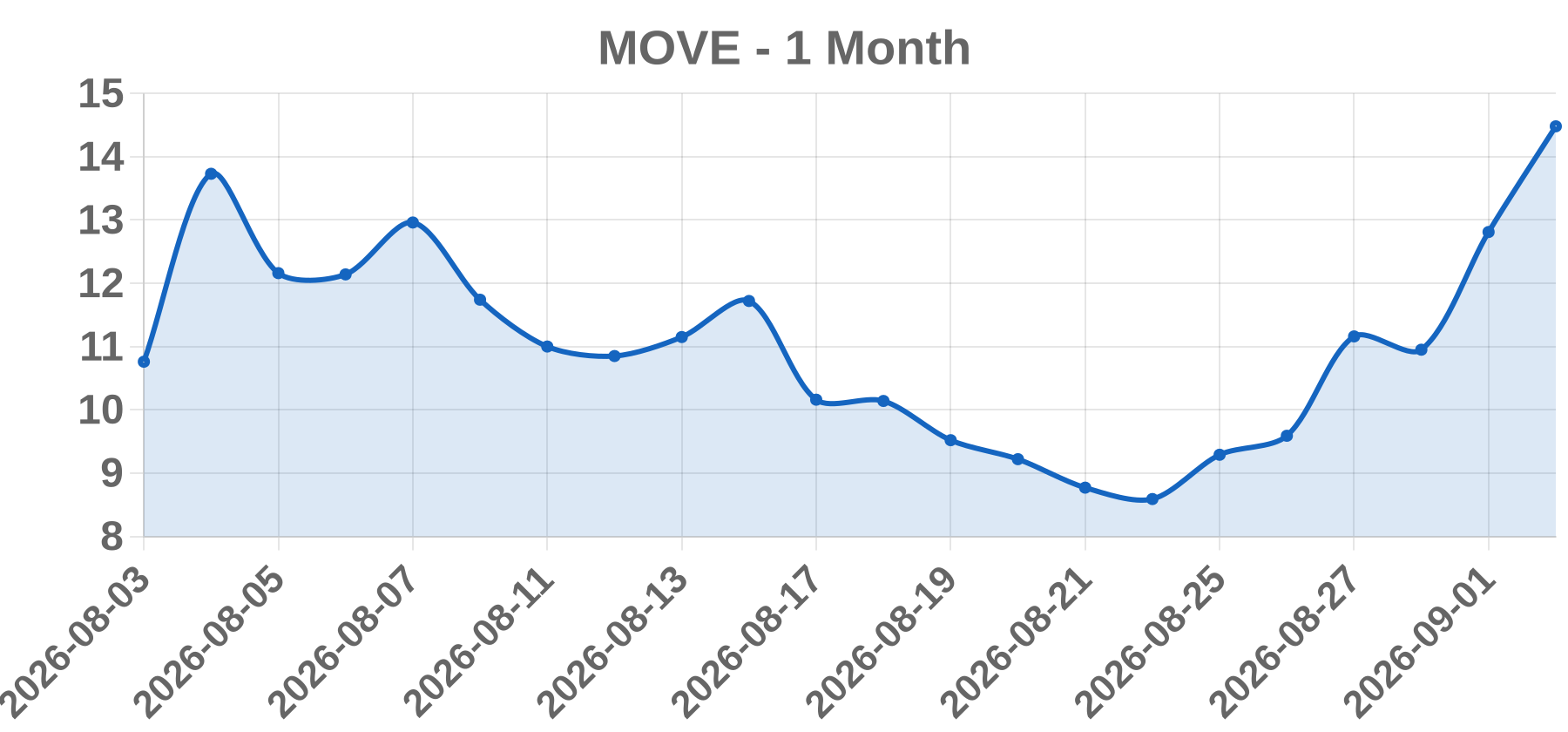
Today’s take Corvex (MOVE) advanced +16.99% to $12.81 (from a prior close near $10.95) on the early-September session, extending a multi-day AI-infrastructure rally. The driver is the company's Aug 31, 2026 announcement that it will quintuple critical IT power capacity from ~1.5 MW to ~8 MW by year-end 2026, with a contracted path to 13x (~20 MW in 2027). The expansion spans a doubling of its Mid-Atlantic data center plus a second enterprise-scale Midwest site, bringing roughly 2,000 latest-generation GPUs online in the Midwest and ~1,000 in the Mid-Atlantic in Q4 2026. Momentum was reinforced by a $33M PIPE at $7.75/share led by Goldman Sachs, Morgan Stanley and Oppenheimer (expected to close on or about Sept 2, 2026), lifting pro forma cash to ~$55M. The stock had already jumped ~25% on Monday after the release, and a prior Blackwell GPU supply deal with a leading AI company had validated demand. The volatility reflects retail/AI-infrastructure enthusiasm and a heavy short base in a small float.
Business Pyxis Tankers Inc. is a Greece-based international maritime transportation holding company listed on the NASDAQ Capital Market under 'PXS'. It owns and operates a modern diversified fleet of eco-efficient mid-sized product tanker and dry-bulk vessels, transporting refined petroleum products and other bulk liquids and dry cargo.
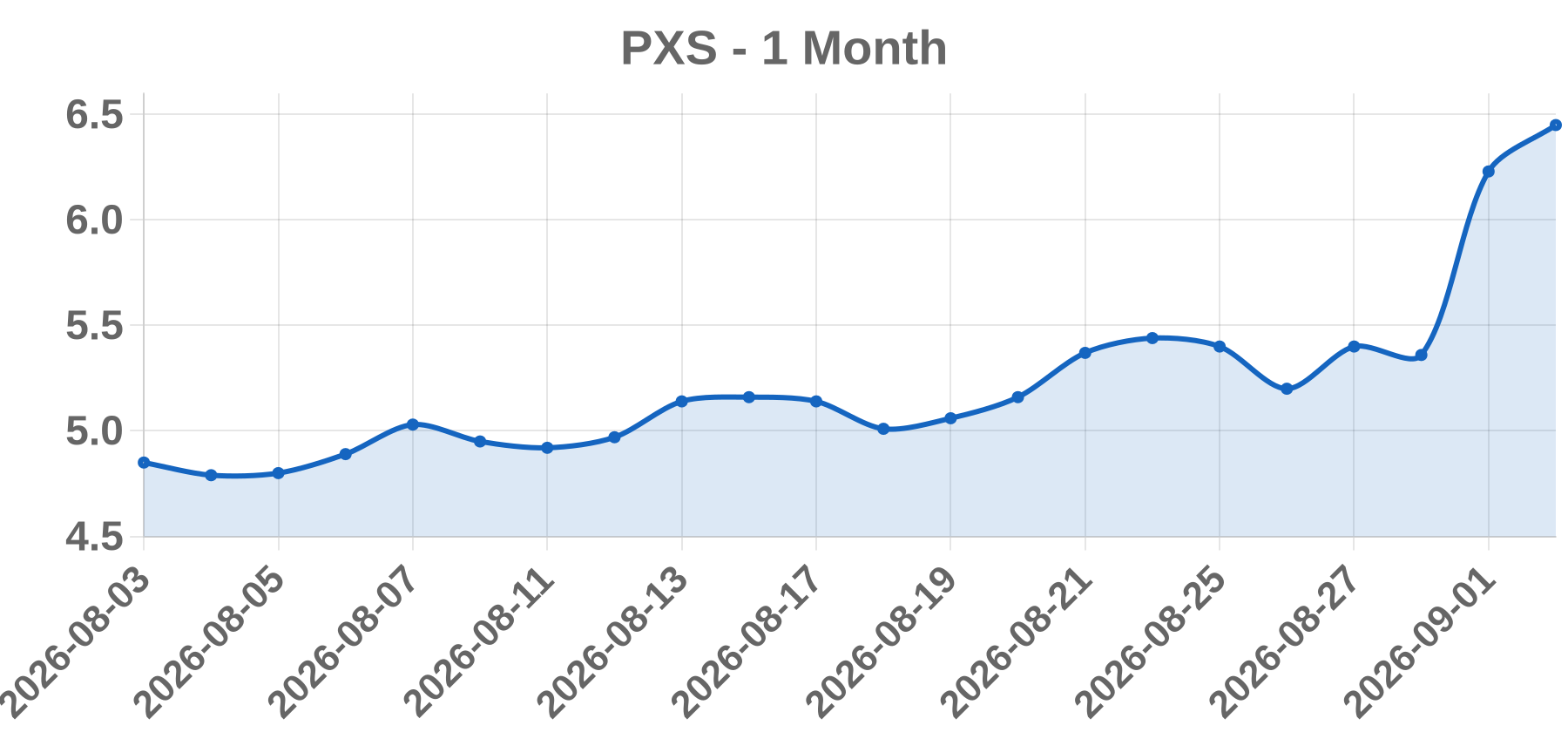
Today’s take PXS surged after reporting better-than-expected Q2 2026 results on Aug 31 (post-market). The company posted GAAP EPS of $0.27, beating the $0.20 consensus by $0.07, and revenue of $12.1M (+32.6% Y/Y), topping the ~$10.34M estimate by ~$0.72M. Supporting the beat, the MR fleet average daily TCE rose to $21,899 (+$1,213 vs Q2 2025). The stock jumped ~11.4% to $5.97 in premarket on Sep 1 and closed that first full session up +16.23% to $6.23 (prior close $5.36) on volume of ~1.08M shares, roughly 16x the ~66.8K daily average. Note: the dataset labels this move under a 2026-09-02 session date, but the closing price/change ($6.23, +16.23%) exactly matches the Sep 1 trading row in price history; the session remained strong into Sep 2 (close $6.45, +3.53%) before profit-taking. The earnings beat on improved tanker rates was the clear driver.
Business Alumis Inc. (NASDAQ: ALMS) is a clinical-stage biopharmaceutical company headquartered in South San Francisco, California, focused on developing oral next-generation TYK2 inhibitors for autoimmune disorders such as systemic lupus erythematosus (SLE) and moderate-to-severe plaque psoriasis. Its lead candidate envudeucitinib targets immune pathways driven by IL-23, IL-17, and Type I interferons. The company completed a merger with ACELYRIN on May 21, 2025.
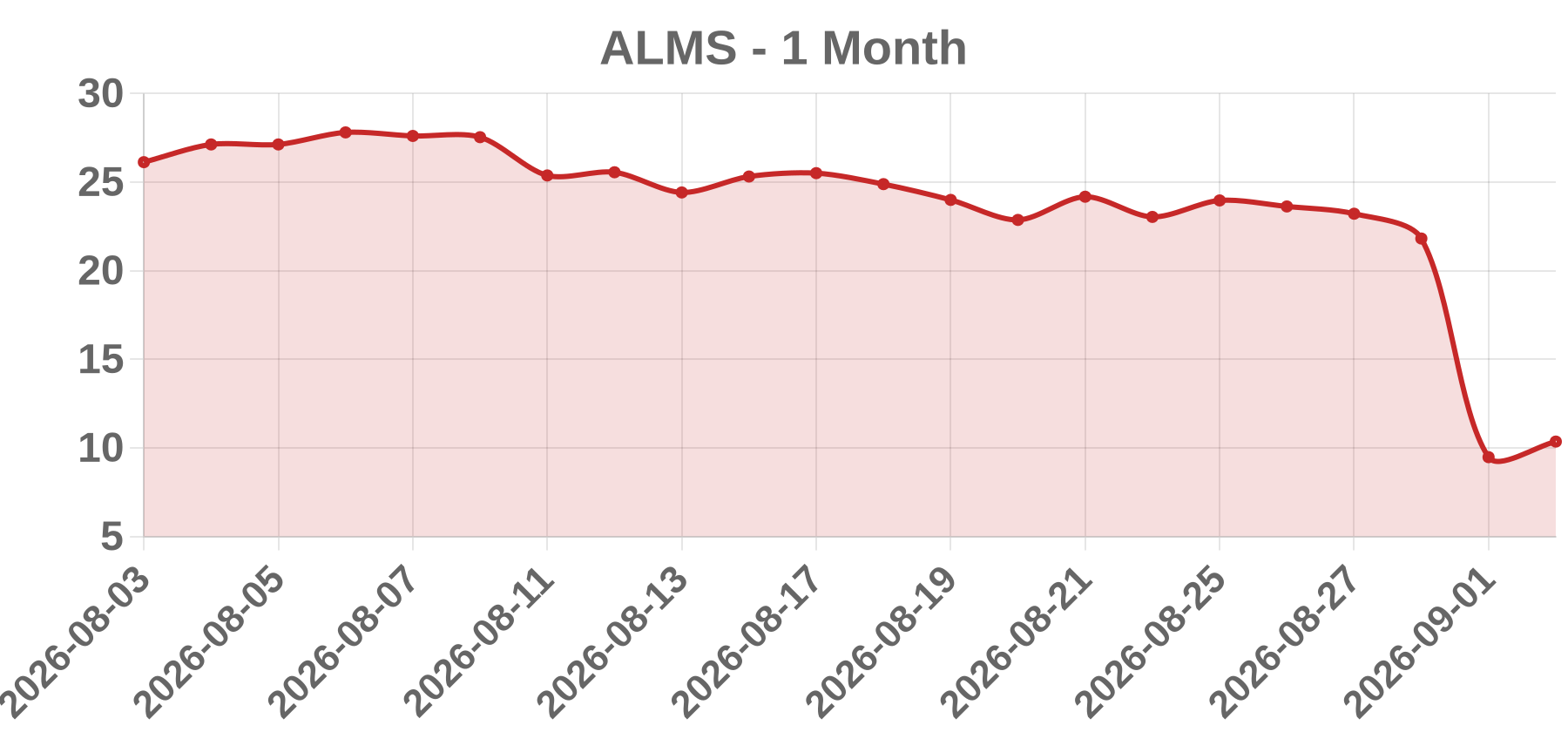
Today’s take Alumis shares collapsed 56.58% to $9.47 (from a prior close of $21.81), its worst daily drop since the mid-2024 IPO, after topline results from the Phase 2b LUMUS trial (NCT05966480) of envudeucitinib in 408 moderate-to-severe SLE patients failed to meet primary and key secondary endpoints in the overall population at 48 weeks. The market read this as a setback for TYK2 inhibitors in lupus, a historically difficult area (vs. approved injectables AstraZeneca's Saphnelo and GSK's Benlysta). However, a prespecified subgroup with a high interferon gene signature (IFNGS-high, ~52.6% response, typically the majority of moderate-severe SLE cases but underrepresented in this trial) showed robust responses, leading the company to plan a Phase 3 program and regulatory discussions. Analysts cut targets but largely kept buy ratings: Wells Fargo to $25 (from $51, Overweight), Baird to $27 (from $35, Outperform), Morgan Stanley to $29 (from $39). The psoriasis NDA submission remains on track for Q4 2026. Note: the reported crash session (close 9.47/-56.58%) matches the Sept 1, 2026 trading row; Sept 2 printed a partial rebound to ~$10.35.
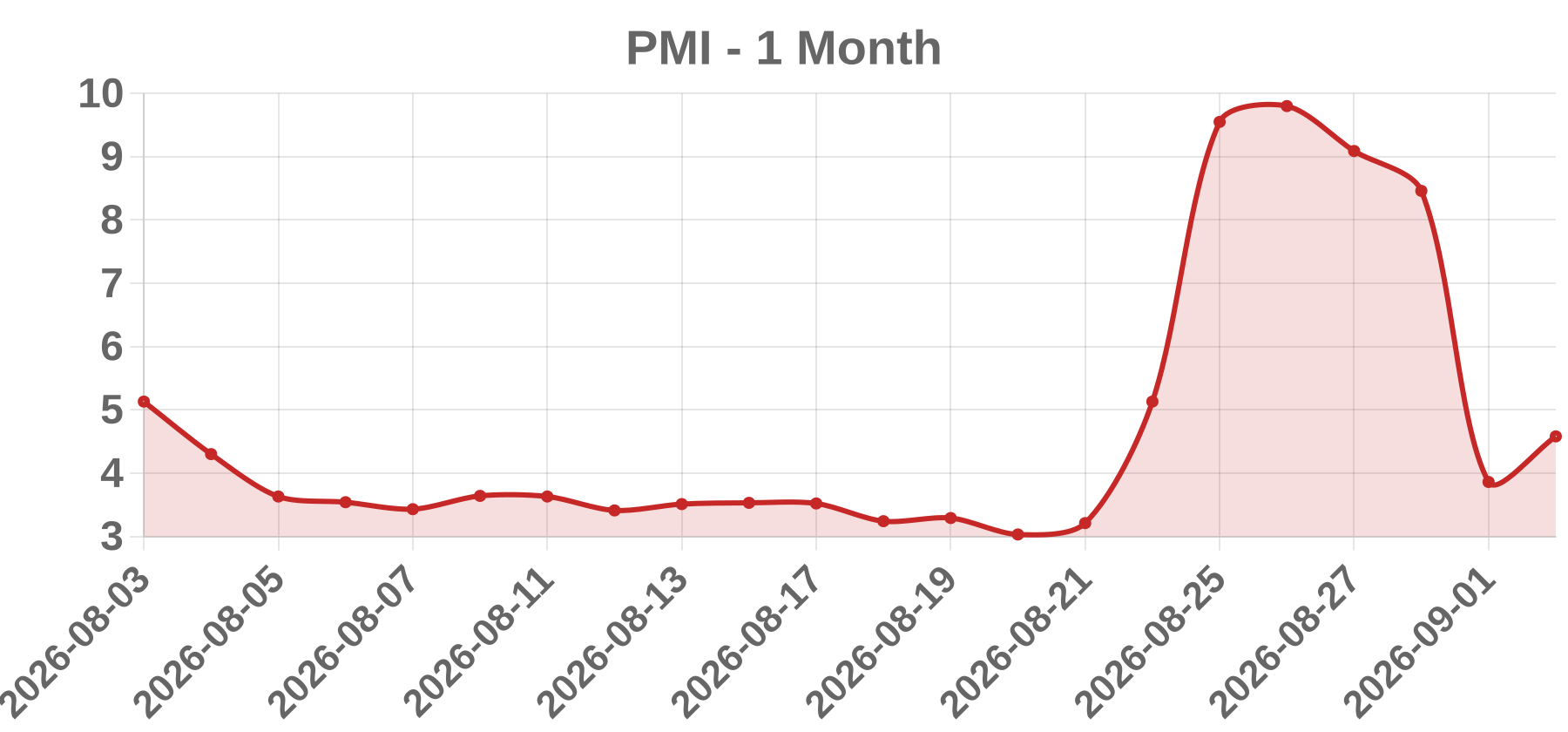
Business Picard Medical, Inc. (NYSE American: PMI), headquartered in Tucson, Arizona, is the parent of SynCardia Systems, maker of the SynCardia Total Artificial Heart (STAH) - the only FDA- and Health Canada-approved total artificial heart for end-stage biventricular heart failure patients awaiting transplant, with over 2,100 implants across 27 countries. It is a development-stage micro-cap that generated roughly $4.9M revenue in 2025 (product-driven), carries deep losses, negative operating cash flow, a going-concern doubt (auditor Malone & Bailey), relies on repeated dilutive equity raises, executed a 1-for-50 reverse stock split effective July 31, 2026 to restore NYSE American listing compliance, and has a history of being targeted by an illicit social-media stock-promotion scheme (the October
Today’s take The queried session - a collapse of roughly 54% to $3.86 - was not driven by a discrete company announcement on that date; rather it was the bursting of a parabolic, retail/social-media-driven speculative surge that had built through late August 2026. PMI, which had traded near $3.00 in mid-August, exploded higher on momentum (buyers reacting to upbeat Q2 results and artificial-heart headlines): +59.81% on Aug 24 to $5.13 (21.3M shares) and +86.16% on Aug 25 to $9.55 on ~40.9M shares, running to an intraday high near $11.87 on Aug 31. That run-up was purely sentiment-driven in a thinly traded micro-cap with no fundamental anchor and a documented pump/promotion history. On Sep 1 the stock opened $8.24, touched a low of $3.80, and closed $3.86, erasing most of the speculative gain. The reversal reflects fading momentum, chronic dilution overhang (multiple 2026 equity offerings on a razor-thin cash/balance sheet under a going-concern doubt), and a weak macro tape pressuring high-volatility development-stage names - the same structural factors finwire/Investing.com flagged the prior session (Aug 31) in a piece titled 'Why is Picard Medical stock sliding today?' Independent sources cons
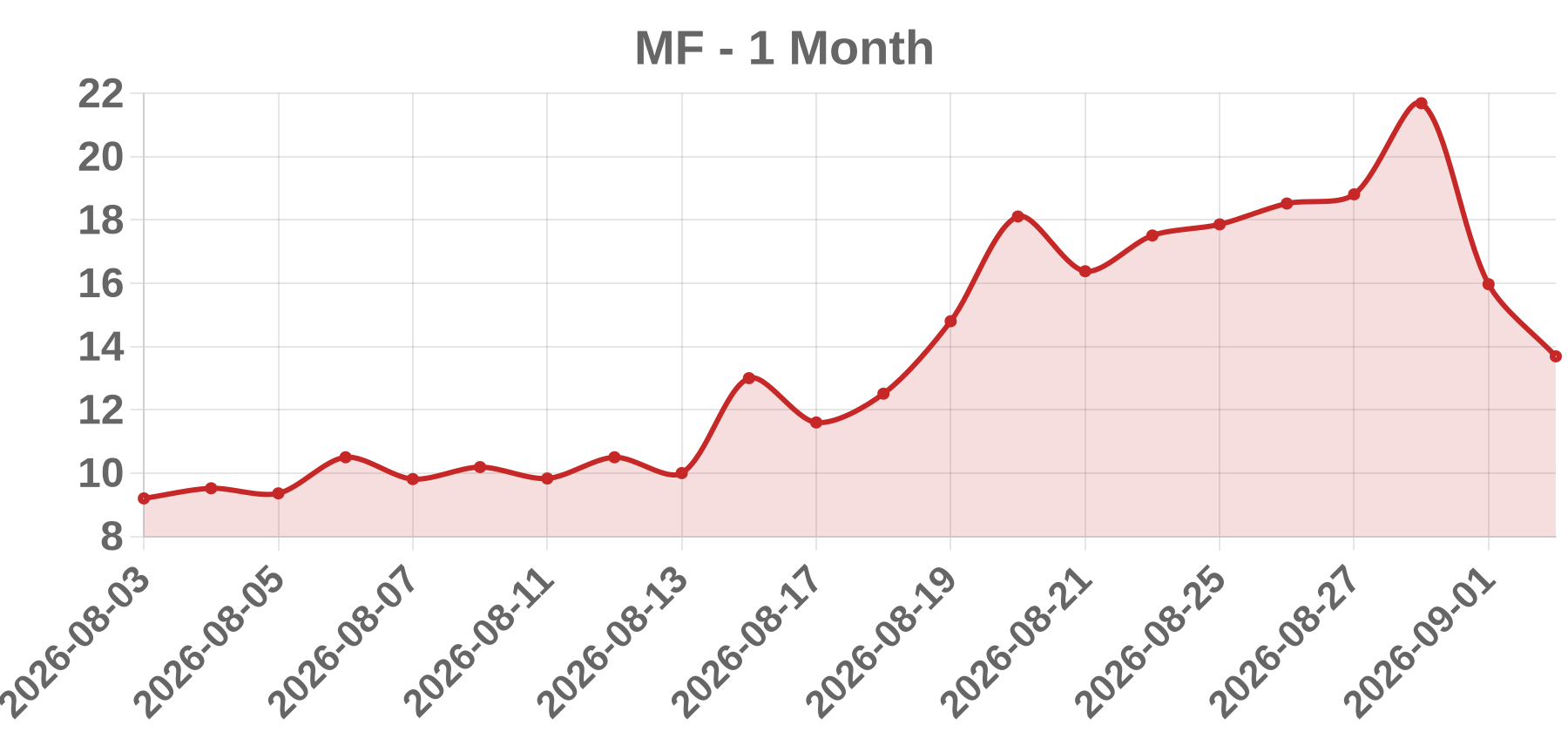
Business MindForge Inc. (Nasdaq: MF), formerly U-BX Technology Ltd., is a Beijing-based Chinese insurtech that provides AI-driven digital promotion, insurance risk-assessment and bundled value-added services to insurance carriers and brokers in China. It rebranded to MindForge in mid-July 2026 after a thin-float capital restructuring that included multiple reverse splits.
Today’s take On the Sep 1, 2026 US session (reported early Sep 2 Beijing time), MF plunged 26.37% to close at $15.97 from $21.69, capping a sharp multi-day unwind of an unsupported speculative rally. The stock had surged ~42% on Aug 14 and climbed to a high of $22.56 on Sep 1 before collapsing intraday on no company-specific news. The slump is momentum/meme-style profit-taking in a thinly traded post-reverse-split microcap: analyst notes show FY2025 revenue collapsed ~42% YoY to ~$29.7M with gross margin near 0.9%, H2-FY25 risk-assessment revenue shrank to ~$97K, and repeated equity dilution (1-for-16 in Nov 2024, then 1-for-25 in May 2026) plus share-based comp inflated accounting losses. The Sept 1 session saw ~279K shares traded (about 6x the prior day's 45.9K), reflecting intense speculative volatility dwarfing the ~$24M revenue / negative-$13M LTM net income baseline. The following US session (Sep 2) MF fell another 14.28% to $13.69.
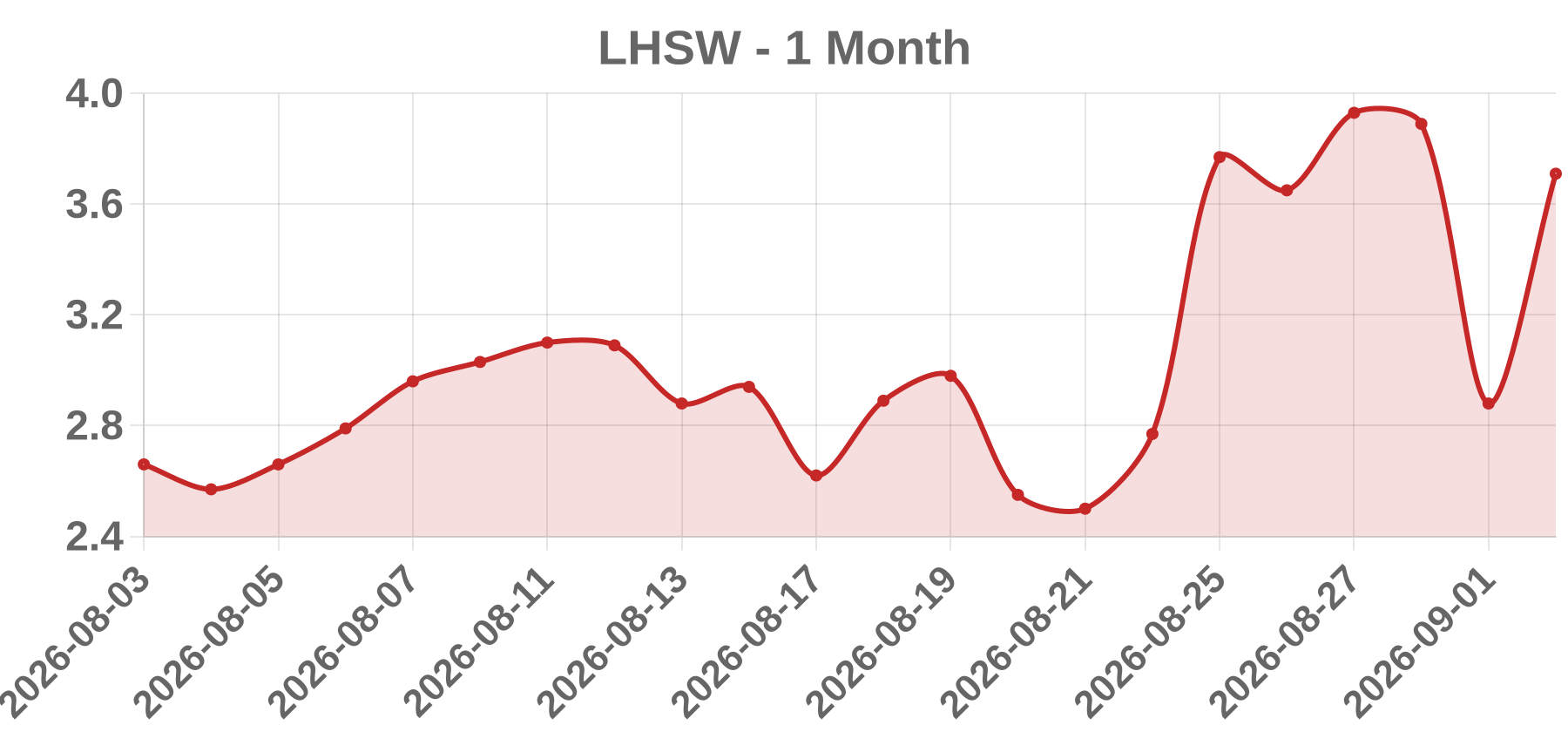
Business Lianhe Sowell International Group Ltd (Nasdaq: LHSW) is a Shenzhen, China-based holding company providing industrial machine vision and industrial robotics solutions. Through subsidiaries it offers machine vision products, intelligent transportation systems, industrial automation, and precision AI spray-painting robots for customers worldwide.
Today’s take On the quoted session (Sep 1, 2026 US close; press dated Sep 2 Beijing time) LHSW plunged 25.96% to $2.88 (intraday low $2.55, volume 472,176). The catalyst was the company pricing an $11.0 million best-efforts follow-on public offering of 7,638,889 units at $1.44 per unit — a steep discount to the prevailing ~$3.70-3.90 market price. Each unit comprised one Class A Ordinary Share plus three warrants (6-month term, $1.66 exercise price), which if exercised could add up to 22,916,667 new shares — severe dilution to a microcap with only ~3.27M shares outstanding. The pricing, announced when shares were trading near $3.70-3.90 and down from a 52-week high of $47.52, triggered a ~19.4% premarket decline per Taiwanese media. The stock fell ~26% on the session before rebounding +28.82% to $3.71 on Sep 2, 2026 (US) after the offering was disclosed. Context includes a 1-for-16 reverse split (June 2026), Nasdaq compliance issues, and a trailing net loss (~-$5.7M) on ~$43.3M revenue.
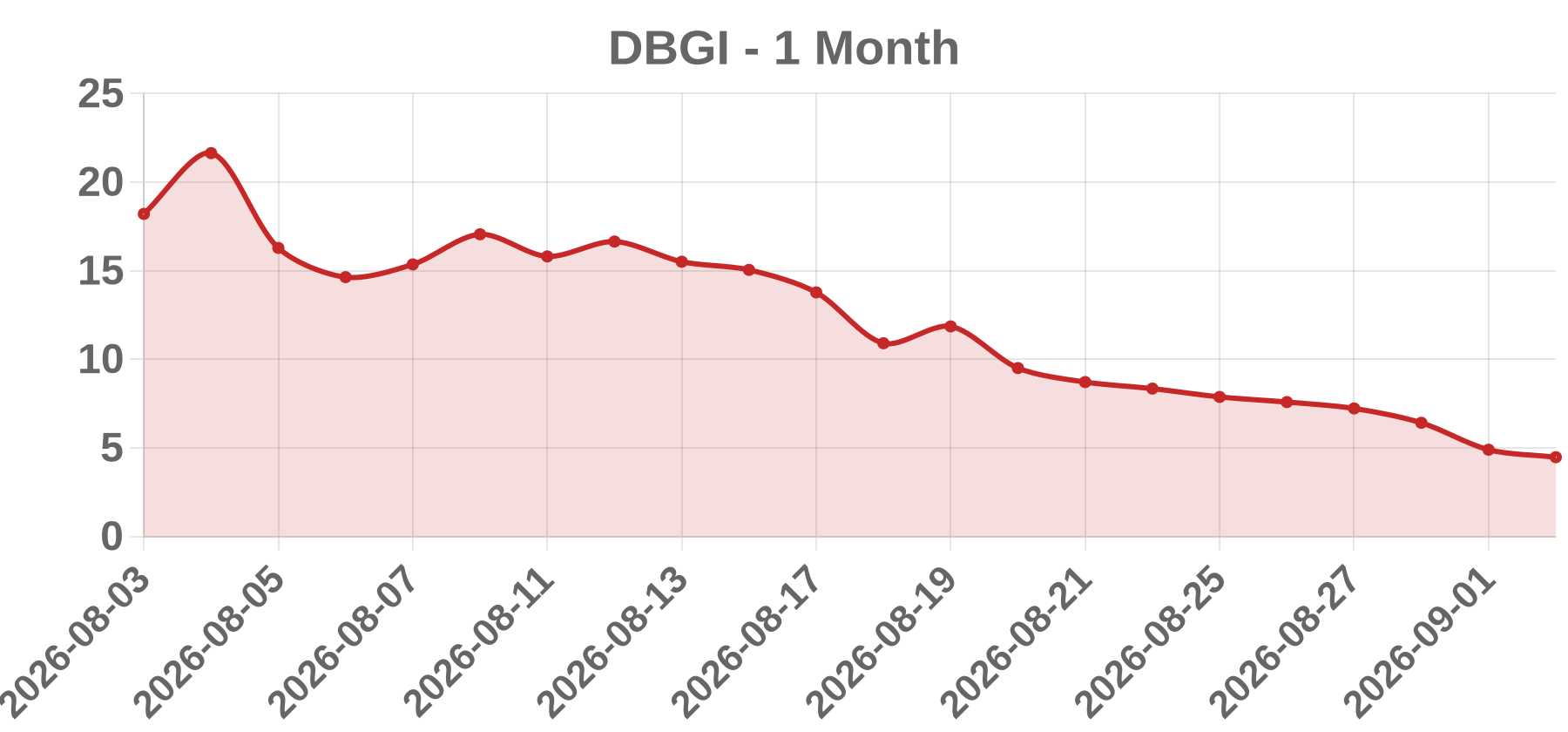
Business Digital Brands Group, Inc. (NASDAQ: DBGI) is an Austin, Texas-based apparel and e-commerce company that owns and operates multiple fashion brands sold through direct-to-consumer and wholesale channels. It leverages customer data across its brands to drive cross-selling and personalized content.
Today’s take DBGI plunged ~23.65% on the September 1-2, 2026 window, closing at $4.89 from a prior ~$6.40 with heavy turnover. The stock has collapsed from a January 14 high near $720 (pre-split speculative peak) and trades far below a non-binding $77.58-per-share buyout proposal (€) from a billionaire shareholder disclosed August 5, amid mounting market skepticism (Kalkine reported an earlier 19.83% drop to $9.50 on August 20 as disbelief grew). On September 1 the company issued a positive-sounding release announcing a binding $3.3 million guaranteed cash-flow contract from Sept-Dec 2026, representing the first two markets of a larger $165 million two-year U.S. Program (originally detailed in the July 27, 2026 8-K). The market effectively sold the news: investors viewed the $3.3M tranche as trivial relative to the grand $165M target and to prior years of losses and liquidity stress. The defining feature is a 1-for-40 reverse split effective July 24, 2026 that shrank the float to roughly 557,000 shares (~575,000 outstanding). That microscopic float lets even modest turnover (EastMoney showed ~366K shares, hundreds of thousands versus a ~$4.56M market cap) drive 20%+ single-session swings, ampli
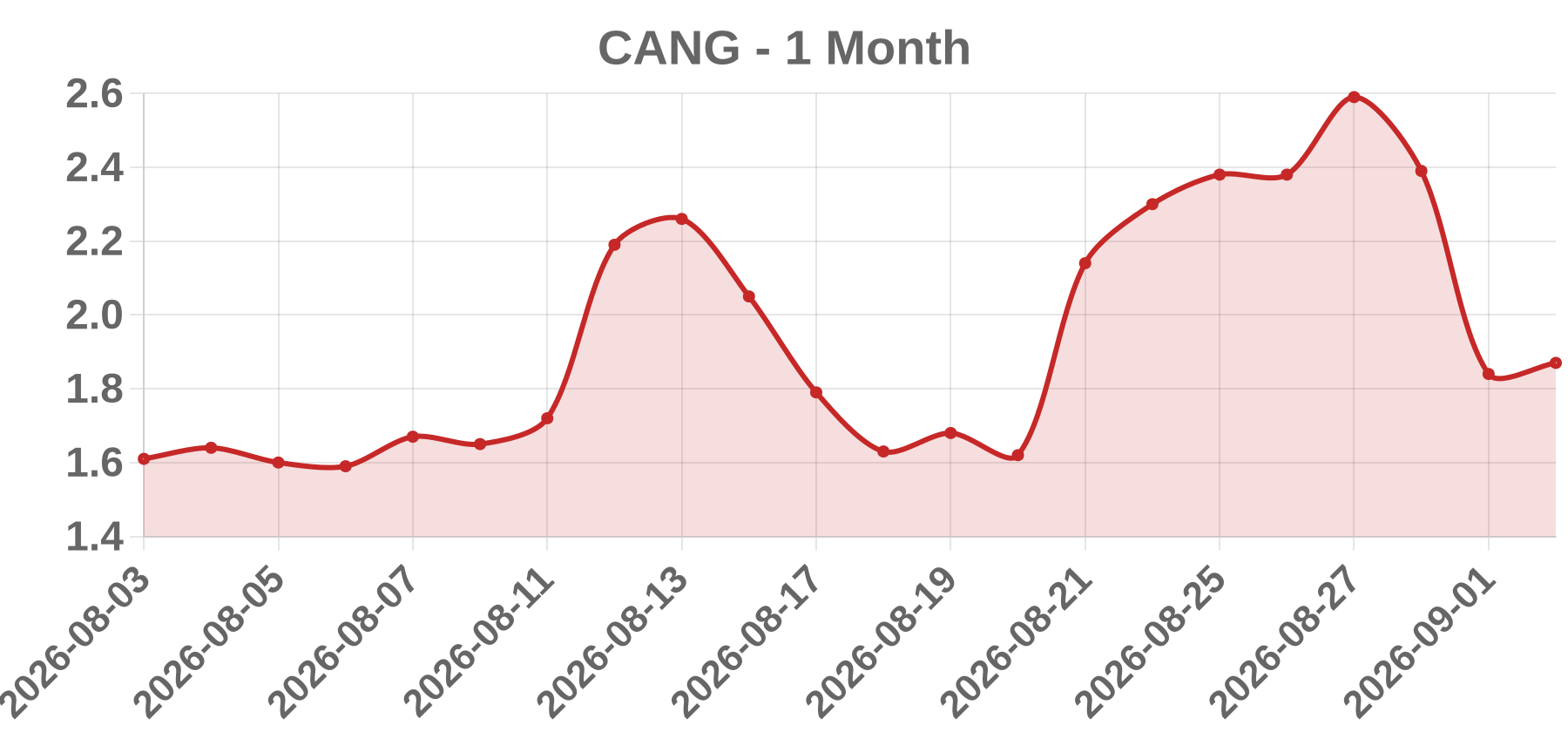
Business Cango Inc. (NYSE: CANG) is a Bitcoin mining company headquartered in Dallas, Texas, operating over 40 mining sites across North America, the Middle East, South America, and East Africa. Originally a Chinese automotive transaction-services platform founded in 2010 and listed on the NYSE in 2018, it pivoted into Bitcoin mining in November 2024 (entering digital assets) while also running AutoCango.com used-car export and expanding into AI compute via its EcoHash platform. Note: the tab's price data (Close 1.84, -23.01%) corresponds to the Sept 1, 2026 trading session, the earnings-reaction day; the 09/02 label reflects a one-day offset.
Today’s take The ~23% plunge is a classic post-earnings crash triggered by Cango's Q2 2026 results released Aug 31, 2026 (down 9.6% in after-hours first, then -20%+ the next full session, Sept 1). Net loss from continuing operations was US$81.6M vs US$261.1M in Q1, but still far worse than expected: diluted EPS of ~-US$1.99 (RMB -13.37) badly missed the consensus of ~-RMB 6.82 (a RMB 6.55 miss), and total revenue of ~US$50.8M (RMB 341.24M) fell ~50% QoQ, missing the ~US$77M/RMB 577.37M consensus. Nearly all revenue ($47.4M) came from Bitcoin mining. Of the loss, ~$51.4M was non-cash ($42.9M impairment + $8.5M disposal losses) from deliberately culling older S19 rigs and shifting to hosted leasing. Operating hashrate dropped to 27.58 EH/s; Cango mined only 656 BTC vs 1,266 in Q1, holding ~1,065 BTC (~$82.8M). Cash cost per BTC improved ~5% to $73,313. Adjusted EBITDA loss narrowed to $10.7M from $154.1M. Market punished the steep QoQ revenue drop, EPS miss, and shrinking mining scale despite the AI/EcoHash pivot (Georgia GPU site).
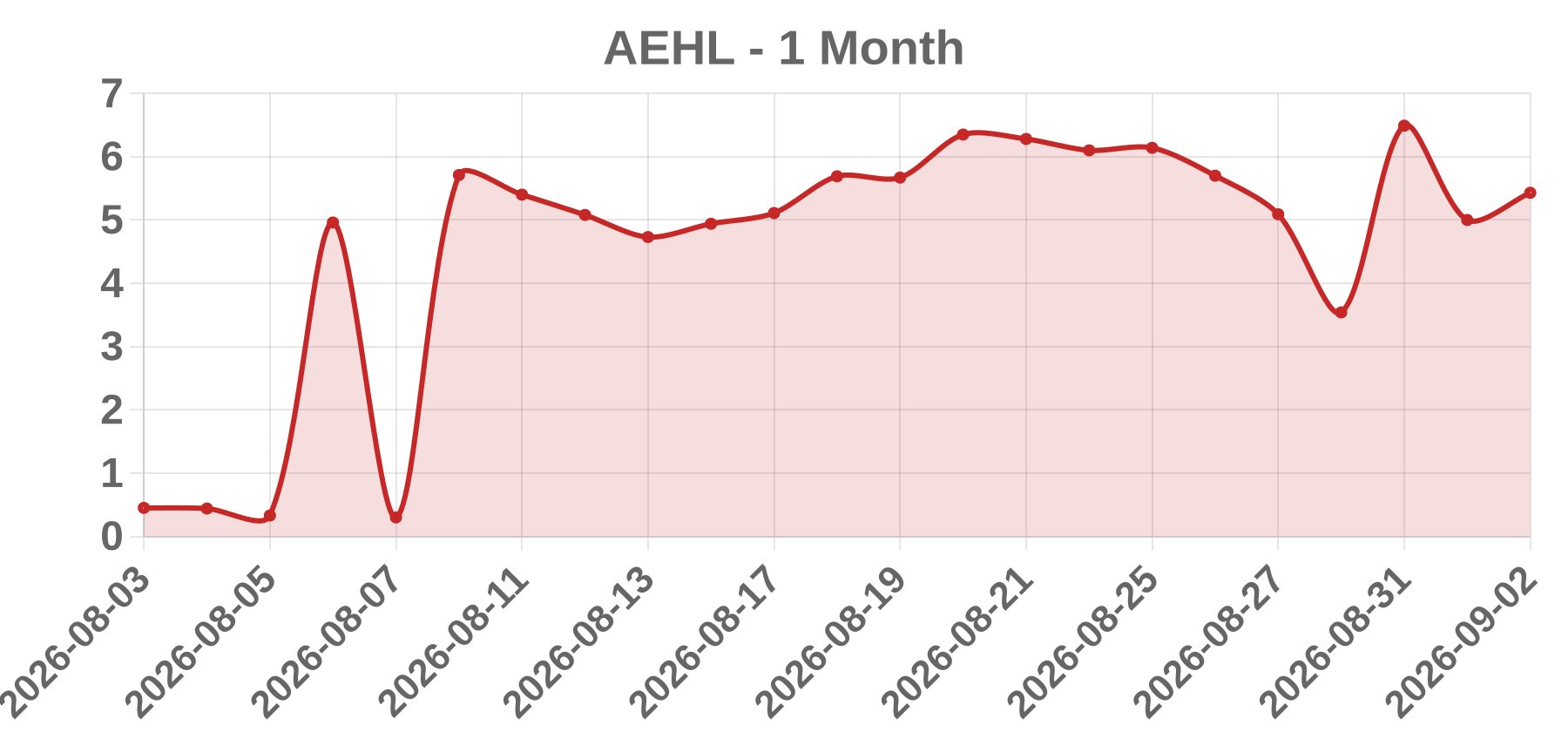
Business Antelope Enterprise Holdings Limited (NASDAQ: AEHL), formerly China Ceramics Co. Ltd., is a China-based manufacturer of ceramic tiles (porcelain, glazed, rustic and polished-glazed) sold under brands including Hengda, Tin Hor and TOERTO, plus computer consulting/software businesses. It is a heavily shorted, low-float micro-cap listed on the Nasdaq Capital Market.
Today’s take The -22.96% drop to close at $5.00 occurred during the Sept 1, 2026 U.S. session (from Aug 31's $6.49 close), although the WSJ data tab is dated 2026-09-02 (a snapshot/data-date convention that references the prior close). The primary driver is massive dilution overhang: on Aug 24, 2026 AEHL signed an $18.99M private placement — 15M new Class A ordinary shares at $1.266 plus 15M warrants at a $0.50 strike — against only 1,392,840 shares outstanding as of Aug 24, implying roughly 10x new supply. The stock had violently whipsawed: -30.45% on Aug 28, then +83.33% to $6.49 on Aug 31 on 46.5M shares (a short-squeeze-style pop amid very high short interest), before the market reversed that speculative rally Sept 1 as the dilution overhang and Nasdaq-compliance/multiple reverse-split concerns resurfaced. Sept 2 rebounded +8.60% to $5.43 on 385,570 shares. This is a highly volatile, manipulated micro-cap subject to repeated capital raises and corporate actions.
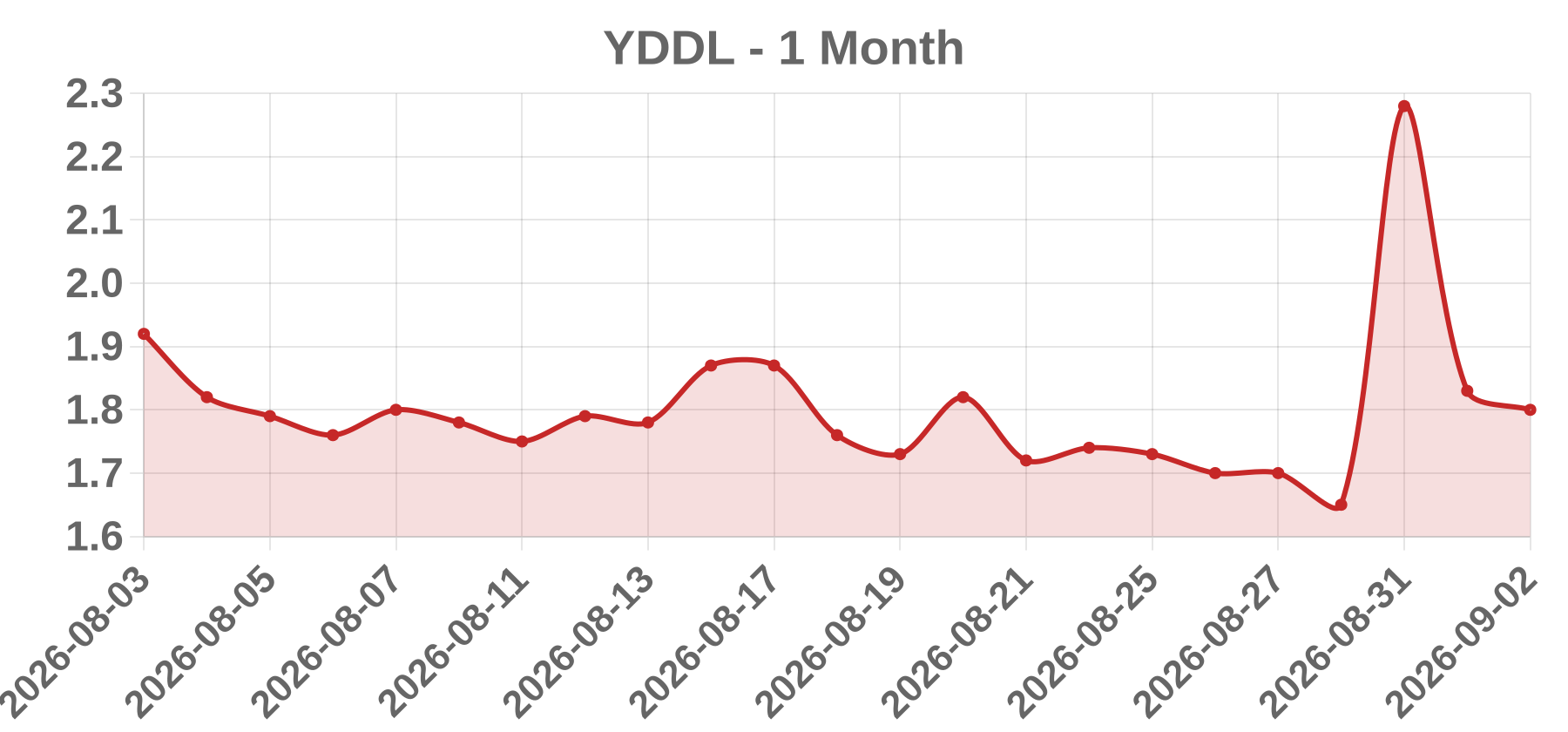
Business One and One Green Technologies, Inc. (NasdaqCM: YDDL) is a Cayman-incorporated holding company whose Philippine subsidiaries operate as licensed hazardous-waste importers and licensed recyclers of non-ferrous metals. Based in San Rafael, Bulacan, the firm converts electronic waste, scrap metal, copper and nickel sludge into high-value products such as copper alloy ingots and aluminum materials. It listed on Nasdaq in October 2025.
Today’s take YDDL fell 19.74% to close at $1.83 on the Sep 1, 2026 session (open $1.94, low $1.71), the direct reversal of the prior session's extreme +38.18% spike to $2.28 on Aug 31, which ran on extraordinary volume of 32.3 million shares versus a normal ~4,000–30,000. Benzinga flagged the stock +31.7% premarket Aug 31, and it touched $3.00+ premarket amid meme/momentum trading in a low-float microcap (shares ~56M, float ~10.26M, market cap ~$100M). No company-specific negative catalyst drove the drop — short interest was minimal (~0.47% of float), so the decline represents profit-taking/unwinding of the speculative ramp, with volume of 842,264 (still ~17-28x average) confirming heavy retail turnover. A positive Sept 2 press release (procurement of 2,000+ tons of raw materials for a new metals recovery line) failed to support price, reinforcing the technical/momentum nature of the reversal.
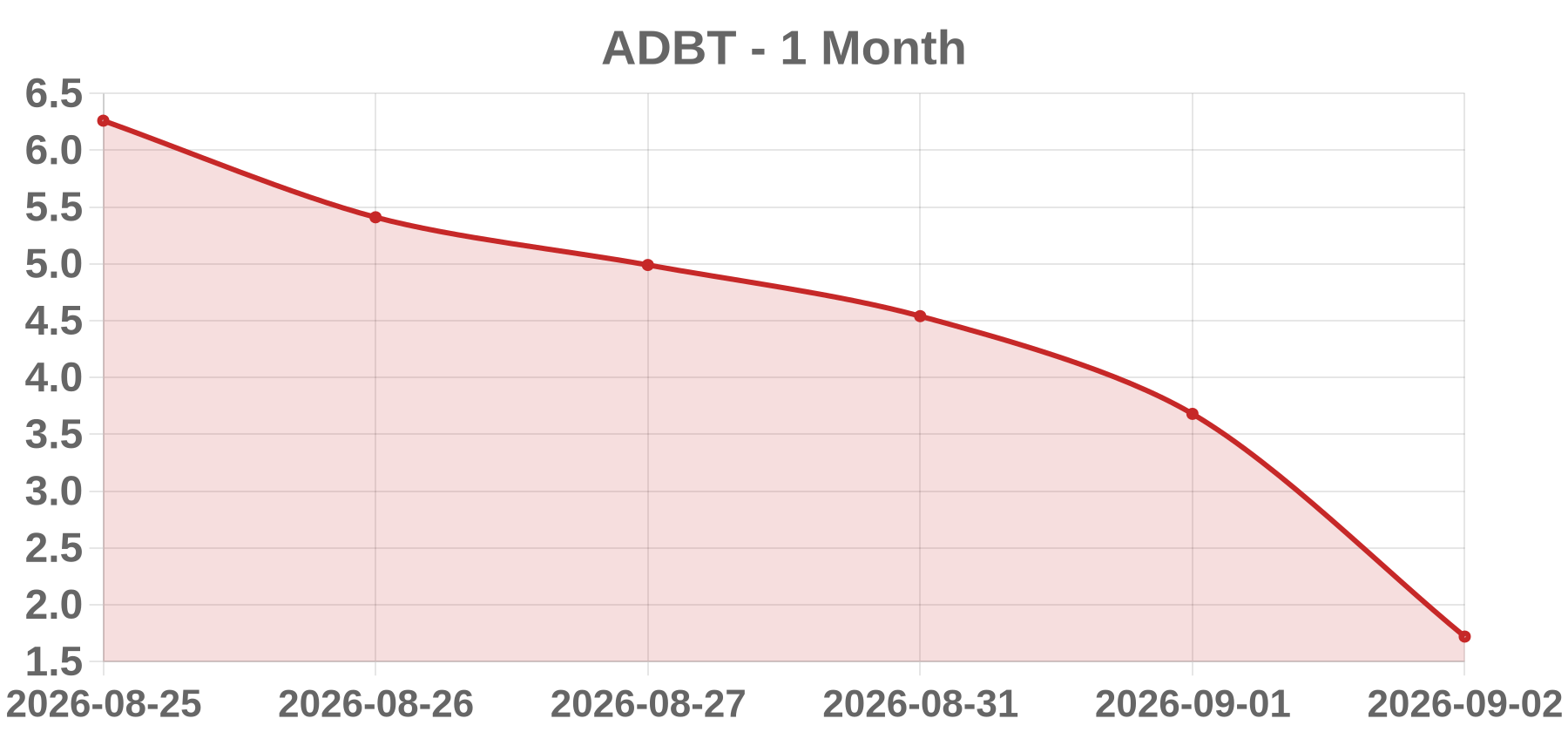
Business Advasa Holdings, Inc. (NASDAQ: ADBT) is a Delaware fintech payment holding company operating through Japanese subsidiary ADVASA Co., Ltd., which runs the FUKUPE Earned Wage Access (EWA) platform plus an ADVASA Visa Card that now supports USDC payments. It completed a ~$940M direct listing on the Nasdaq Global Market on Aug 25, 2026.
Today’s take ADBT is a freshly direct-listed fintech that began trading Aug 25, 2026 via Nasdaq's opening auction (opening ~$12, intraday high $13.20) and has collapsed since. The 2026-09-02 session marks a continuation of severe post-direct-listing selling pressure: on a previous close of $3.68 the stock plunged ~53% to close at $1.72 (day low $1.47, range 1.47-3.65) on ~3.5M shares. The float carries heavy supply — a registration provides for resale of up to ~94M common shares by existing stockholders. Fundamentals are thin for a newly-public equity: ttm revenue ~$18.7M with net income under $1M (EPS ~$0.00, PE ~857 at $1.72). Management's Sep 2 press release on adding USDC functionality to the Visa card and exploring RWA tokenization (a ~$18.9T-by-2033 market per a BCG/Ripple projection) offered no support. The slide is a re-rating unwind as the inflated direct-listing opening price converges toward underlying value under an overhang of registrable shares and elevated volatility — a top-10 US decliner that day (-53.26%).
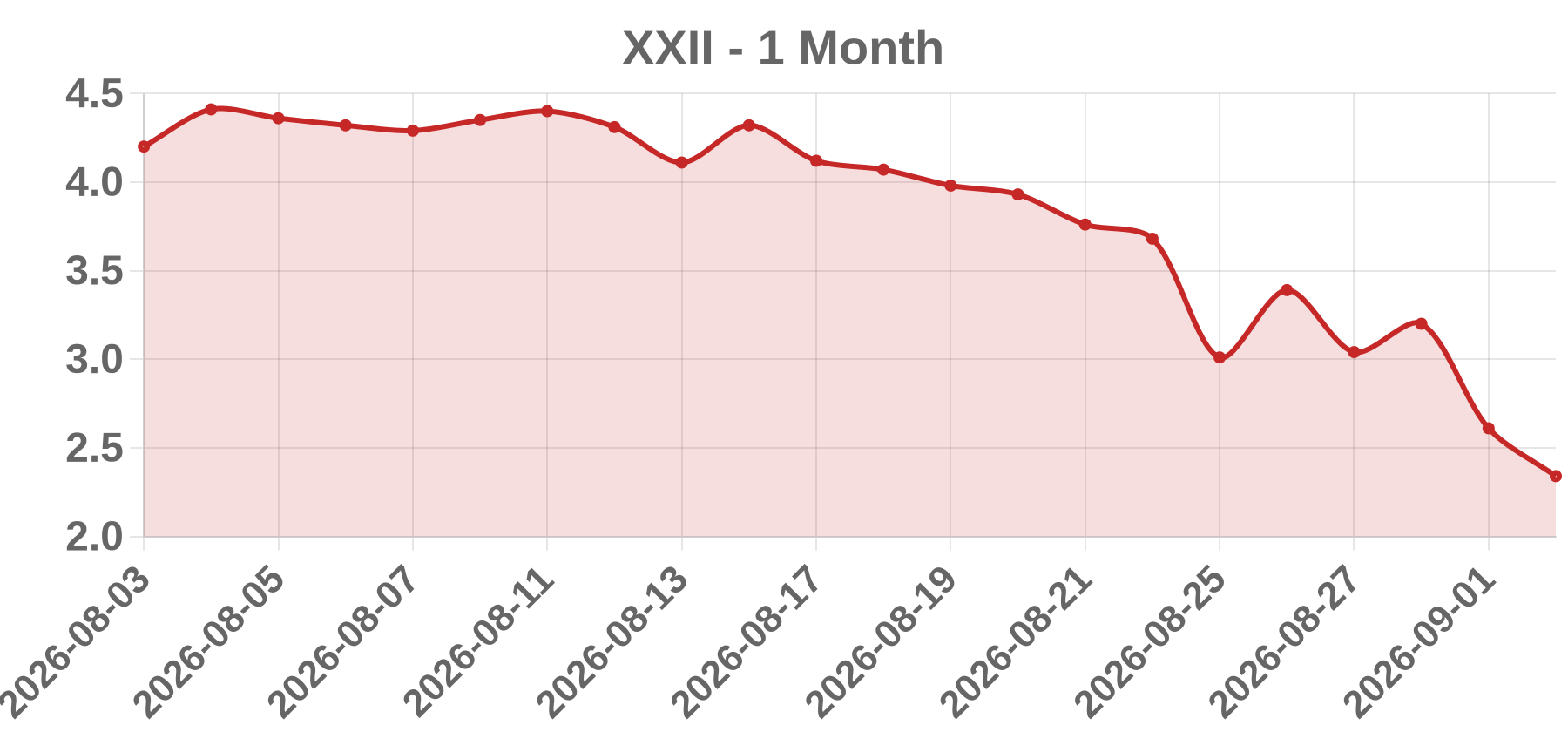
Business 22nd Century Group, Inc. (NASDAQ: XXII) is a Mocksville, NC based tobacco company and leader in low-nicotine tobacco, producing VLN® cigarettes — the only low-nicotine combustible cigarette authorized by the U.S. FDA — along with the value-oriented Pinnacle brand.
Today’s take The user's dated session (2026-09-02, close $2.61, -18.44%) maps to the Sept 1, 2026 trading session in the underlying market data. That session opened at $3.18, spiked to an intraday high of $3.80 (+about +19%), then collapsed to a low of $2.51 and closed at $2.61, down 18.44%, on volume of ~436,721 shares versus a normal ~14K-33K — a roughly 15-30x spike. The catalyst was 22nd Century's Sept 1 pre-market (8:00 AM GlobeNewswire) 2026 Mid-Year shareholder letter, a sharply promotional, forward-looking release touting ~5,000 retail outlets by year-end, improved gross margins, month-over-month same-store sales growth, and a >$50 billion U.S. market opportunity. The intraday pattern — rally then sharp reversal — reflects a classic 'buy the news, sell the news' fake-out on a promotional, low-float microcap. Bearish pressure was amplified by persistent dilution and structural concerns: Q2 2026 revenue fell ~29% QoQ to $2.9M with only $6.1M cash, the company has a going-concern warning, and it executed multiple reverse splits (1-for-15 in Jan 2026 and 1-for-20 in June 2026) plus Series B convertible preferred and warrant-inducement financings to prop up its Nasdaq listing.