US common stocks / ADRs: top 10 by volume; top 10 gainers (by % change, volume as tie-breaker); top 10 losers (by % change, prefer liquid names). Deep notes cover the de-duplicated set across the three boards.
28 names on this page · volume 10 · gainers 10 · losers 10
Order: volume board → gainers → losers; each ticker appears once. Summaries of public information only — please verify primary sources.
1/10NU NU
+9.33%
Close 15.23 · Vol 156.30M · Type: Earnings
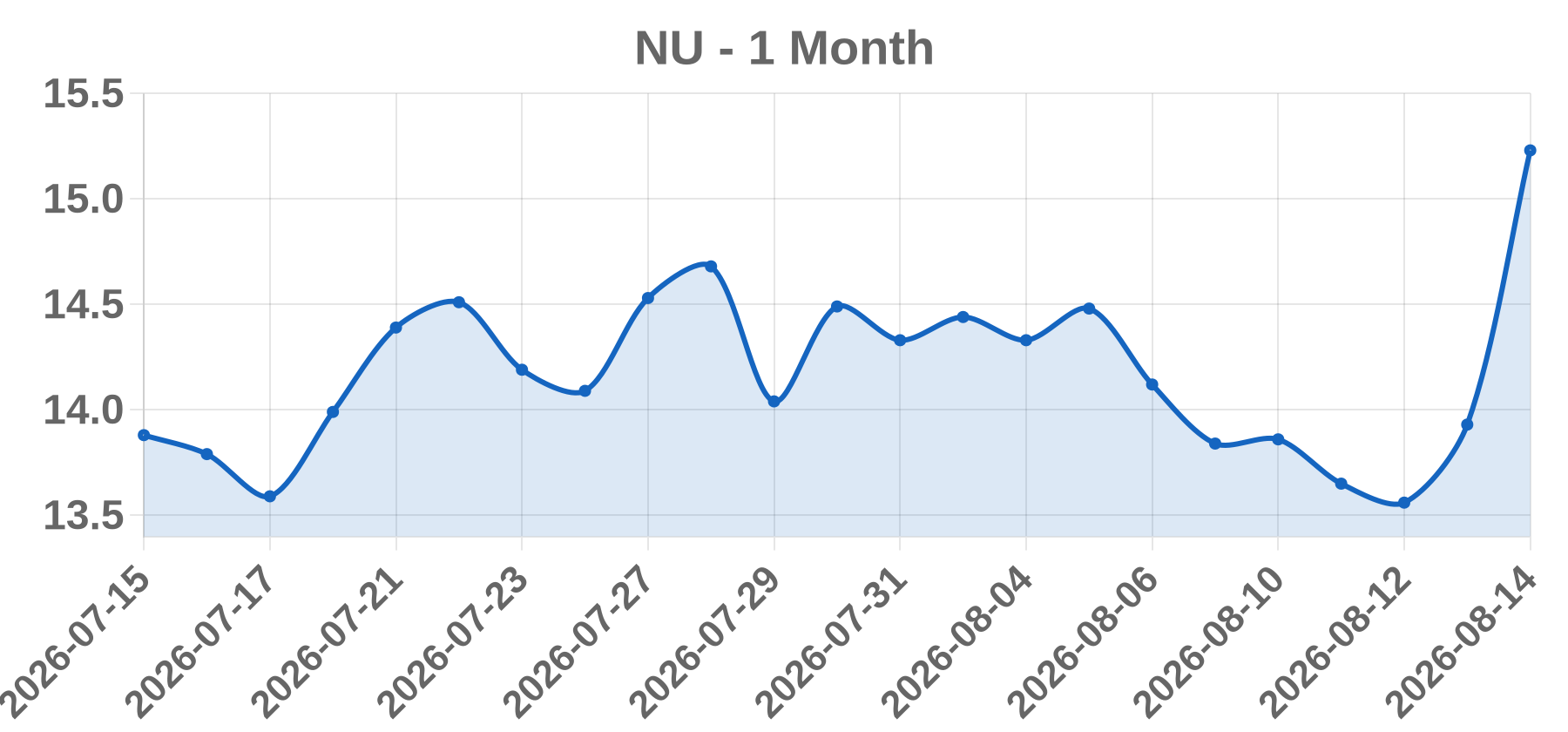
Approx. 1-month price (illustrative)
Business Nu Holdings Ltd. (NYSE: NU) is the Cayman Islands-incorporated parent of Nubank, the largest digital bank in Latin America. Operating branchless digital-first banking across Brazil (~118M customers), Mexico (~16M), Colombia (~5M+), and the United States (~139M total customers), it offers credit/prepaid cards, payments, lending, deposits, and digital banking services. IPO'd December 9, 2021, with ~4.83B shares outstanding and a market cap of ~$73.6B.
Today’s take Nu surged +9.33% to close at $15.23 on August 14, 2026, after reporting blowout Q2 2026 earnings post-market on August 13. Net income hit $1.1B (+49% YoY) — the first time Nu crossed $1B in quarterly net income — with ROE at 33%. Gross revenue reached ~$5.9B (+39% YoY), beating consensus of ~$5.39B–$5.45B. Risk-adjusted NIM expanded 290bps to 12.4%, while cost of credit declined 9% QoQ, easing prior credit concerns. Catalysts compounded: Nu Mexico received CNBV authorization, becoming Mexico's largest digital bank (~16M customers); Needham initiated Buy ($19 target) and analysts raised targets (Susquehanna $16, JPMorgan $20). The move took shares to a five-month high, unwinding ~18% YTD pressure entering the report.
Business Ondas Holdings Inc. (NASDAQ: ONDS) is a leading provider of autonomous systems, robotics, and mission-critical technologies for defense, homeland security, public safety, and critical infrastructure markets. It operates through Ondas Autonomous Systems (autonomous drones, counter-UAS, and ground robotics) and Ondas Networks (private licensed broadband). The company is headquartered in West Palm Beach, Florida.
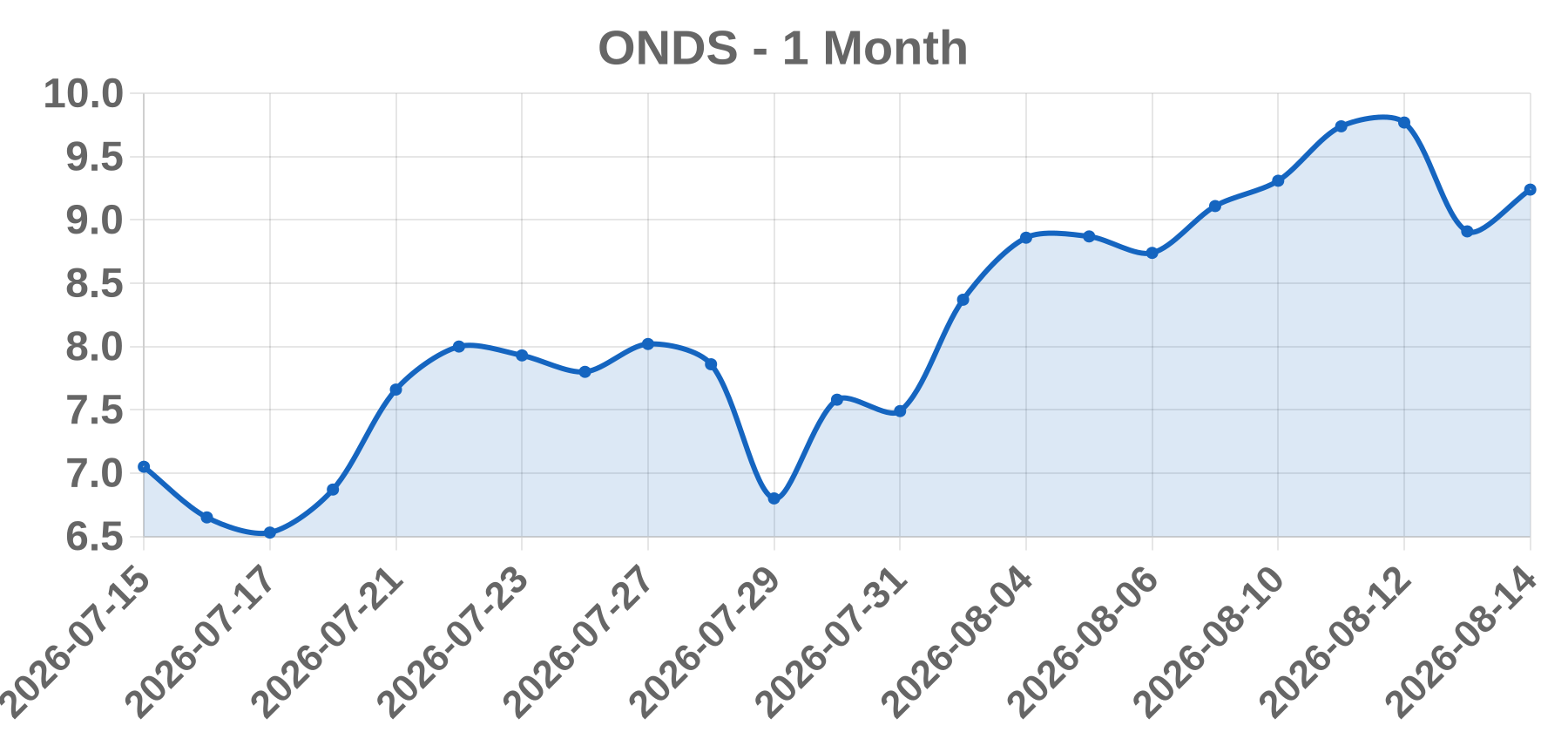
Today’s take ONDS closed Aug 14, 2026 at $9.24, up +3.70% (+$0.33) on ~96.1M shares after falling ~8% the prior session post-earnings. The primary catalyst was President Trump's protective proclamation (signed Thursday Aug 13) imposing up to 100% tariffs on imported drones/components, which rallied U.S. drone makers including Ondas, AeroVironment, Red Cat, and Kratos on Friday. This offset Q2 2026 results reported Aug 13 — record revenue of $83.8M (up 13x YoY, 25% above consensus) and raised FY2026 guidance to $525-550M, but a wider-than-expected net loss of $89.7M (-$0.19/sh adjusted) drove Thursday's decline. Analyst momentum added fuel: Oppenheimer reiterated Outperform (PT $18), Needham reiterated Buy (PT $19), and H.C. Wainwright reiterated Buy (PT $25). With short interest near ~41% of float, the bullish drone-policy news triggered short covering that amplified the recovery.
Business Space Exploration Technologies Corp. (NASAQ: SPCX) is an aerospace, AI, and satellite-communications company. Core segments include launch services (Falcon rockets, the Starship mega-rocket), Starlink satellite internet, and a fast-growing AI business anchored by the recent Cursor purchase. It went public June 12, 2026 in a record ~$85.7B IPO priced at $135/share.
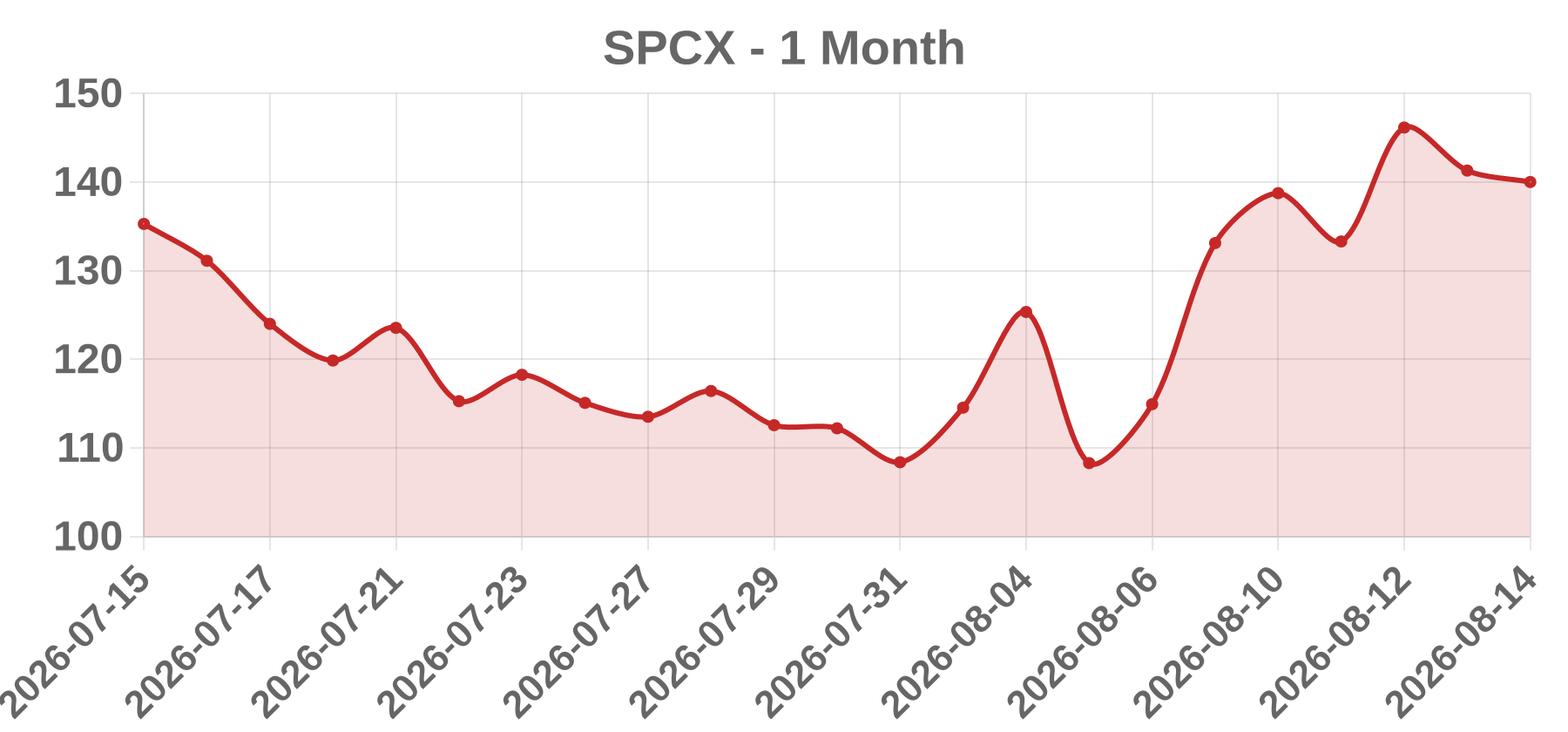
Today’s take On Aug 14, 2026 SPCX closed at $140.00, down 0.91%, after opening at $142.90, hitting a $144.02 high and a $135.50 low. The dominant same-session corporate event was the formal closure of SpaceX's $60B all-stock acquisition of Anysphere (Cursor), confirmed via a Form 8-K, with ~389.3M new Class A shares issued. Critics framed the deal as a dilution event (an ~4% share increase) that converted long-anticipated supply risk into reality, driving the late-day fade toward IPO price support at $135. Momentum was already spent: short interest had collapsed from 34% to ~11% during the Aug 6-7 lockup/EPS squeeze (Aug 7 +15.8%), leaving little covering fuel. Adding pressure, a further ~319M insider shares unlock Aug 20. The Aug 13 Musk 13G (48.4% stake, >$900B, >82% voting) reinforced the concentrated low-float narrative. Valuation overhang (P/S ~61x, $18.4B quarterly capex) capped upside. The move was a consolidation/profit-taking day within a multi-day squeeze, with the Cursor closure a priced-in confirmation rather than a surprise.
Business Intel Corporation (NASDAQ: INTC) is an American semiconductor designer and manufacturer, operating through CCG (client computing), DCAI (data center and AI), and Intel Foundry segments. The company supplies CPUs, GPUs, and advanced manufacturing services globally.
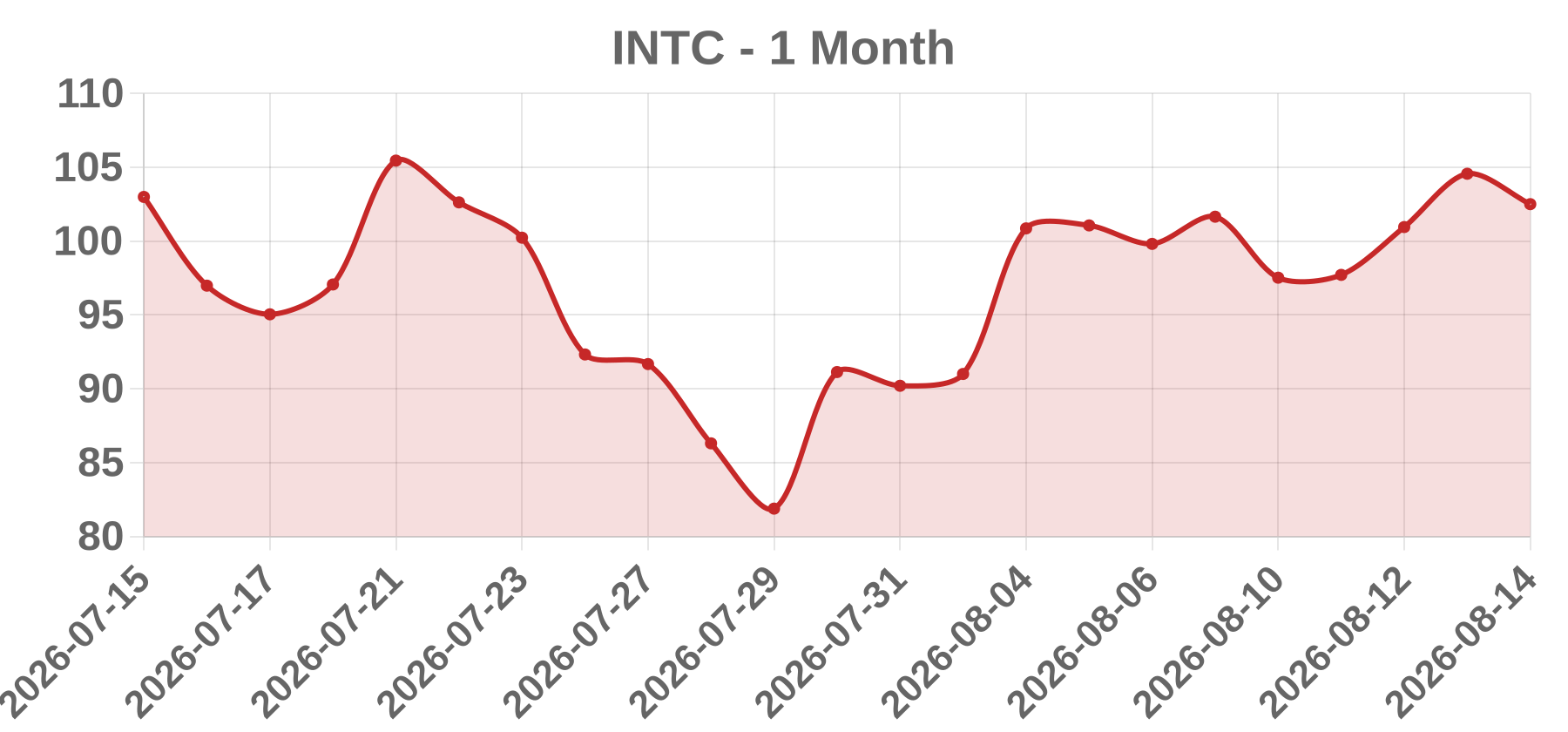
Today’s take On Aug 14, 2026, INTC fell 2.06 (-1.97%) to close at $102.50 after an intraday reversal from a high of $106.87, on volume of ~95.1M shares. The stock had opened +3.6% higher following completion of Intel's record $20B common stock offering (upsized from $15B, priced at $95/share for 210.5M shares, closed Aug 12) — its first equity raise since the 1971 IPO — and CEO Lip-Bu Tan's Aug 11 purchase of 105,263 shares ($10M) at $95 plus his podcast remarks (Aug 13) hinting at a return to memory chips. However, the session reversed sharply as Applied Materials plunged 5.1% after its upbeat Q3 forecast failed to impress investors, triggering a broad semiconductor selloff that dragged Broadcom (-5.9%) and Intel down despite strong demand (deal drew >$100B interest). Weak July retail sales (-0.6% vs +0.1% expected) and Middle East shipping tensions added caution. UBS had cut its price target to $112 (from $121) on Aug 12; BofA reiterated Buy at $145. Market cap stands at ~$538.6B.
Business Onfolio Holdings, Inc. (NASDAQ: ONFO) is a Delaware-based publicly traded holding company and owner-operator of cash-generative online businesses. It acquires and operates profitable online businesses across marketing, education, and e-commerce verticals, with a focus on sustainable cash flow and long-term value creation.
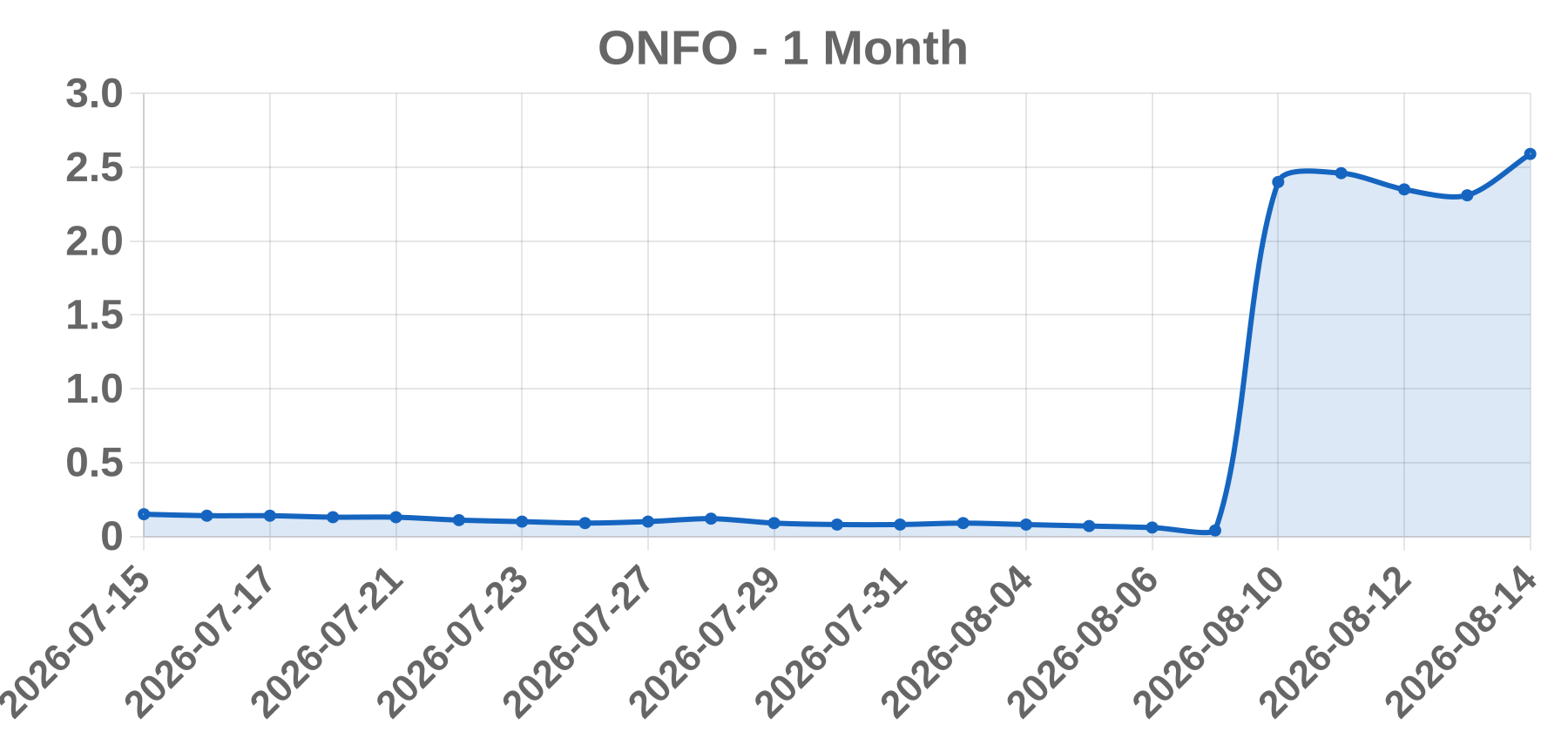
Today’s take ONFO surged +12.12% to close at $2.59 on Aug 14, 2026 amid extreme intraday volatility (open $2.70, high $6.08, low $2.55). The session followed Q2 2026 earnings released pre-market Aug 13 (analyst estimates: ~$1.68M revenue, -$0.11 EPS); shares rose 30.7% to $3.02 in Aug 14 pre-market and gapped up ~80% intraday. The real driver was a violent short squeeze: a 1-for-50 reverse split effective Aug 10 cut the float from ~42M to ~850K shares, while short interest sat near 46% of shares outstanding. Combined with a secured $100M equity acquisition facility and the Aug 11 annual-meeting SEC filing, modest buying pressure on the ultra-thin float produced a ~163% intraday range and a closing gain.
Business NVIDIA Corporation (NASDAQ: NVDA) is a US-based fabless semiconductor leader that designs GPUs, CUDA/Spectrum-X networking, and full-stack accelerated computing for AI, data center, gaming, and automotive. It reports in fiscal years ending in late January.
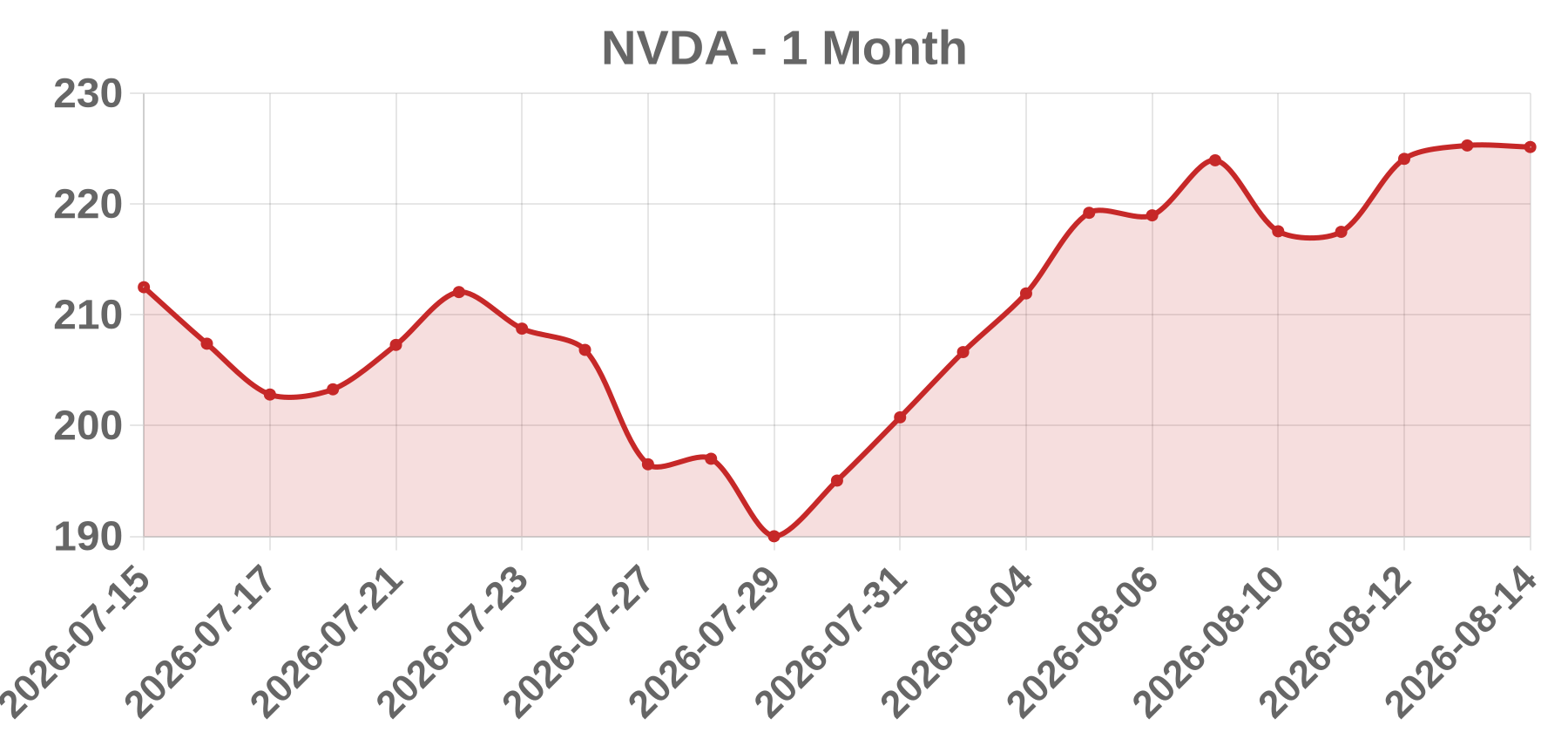
Today’s take NVDA closed nearly flat at $225.16 (-0.06%) on Aug 14, 2026, ~12 sessions before its Q2 FY2027 earnings print on Aug 26. The dominant driver was pre-earnings positioning: the stock had rallied >10% the prior week, sat roughly 5% below its $236.54 52-week high, and Goldman's James Schneider flagged elevated forecasts creating 'sell-the-news' risk. Contemporaneous catalysts included UBS reiterating Buy at $280 (Q2 EPS forecast lifted from $2.09 to $2.13) on Aug 14; Nvidia's own 13F disclosing a ~122.76M-share (~$21B) SpaceX stake; Spectrum-X CPO switch mass production (4x fewer lasers, 5x lower power); and reports Goldman was courting investors for the $500B third-party AI-infrastructure financing initiative. Consensus stands at Strong Buy with avg PT $302.83.
Business Nokia Oyj (NYSE: NOK; primary listings on Nasdaq Helsinki and Euronext Paris) is a Finland-based, Espoo-headquartered telecom-equipment vendor founded in 1865. It operates four segments: Network Infrastructure, Mobile Networks, Cloud and Network Services, and Nokia Technologies, providing mobile, fixed, IP, optical, and cloud networking gear and software to carriers and enterprises worldwide.
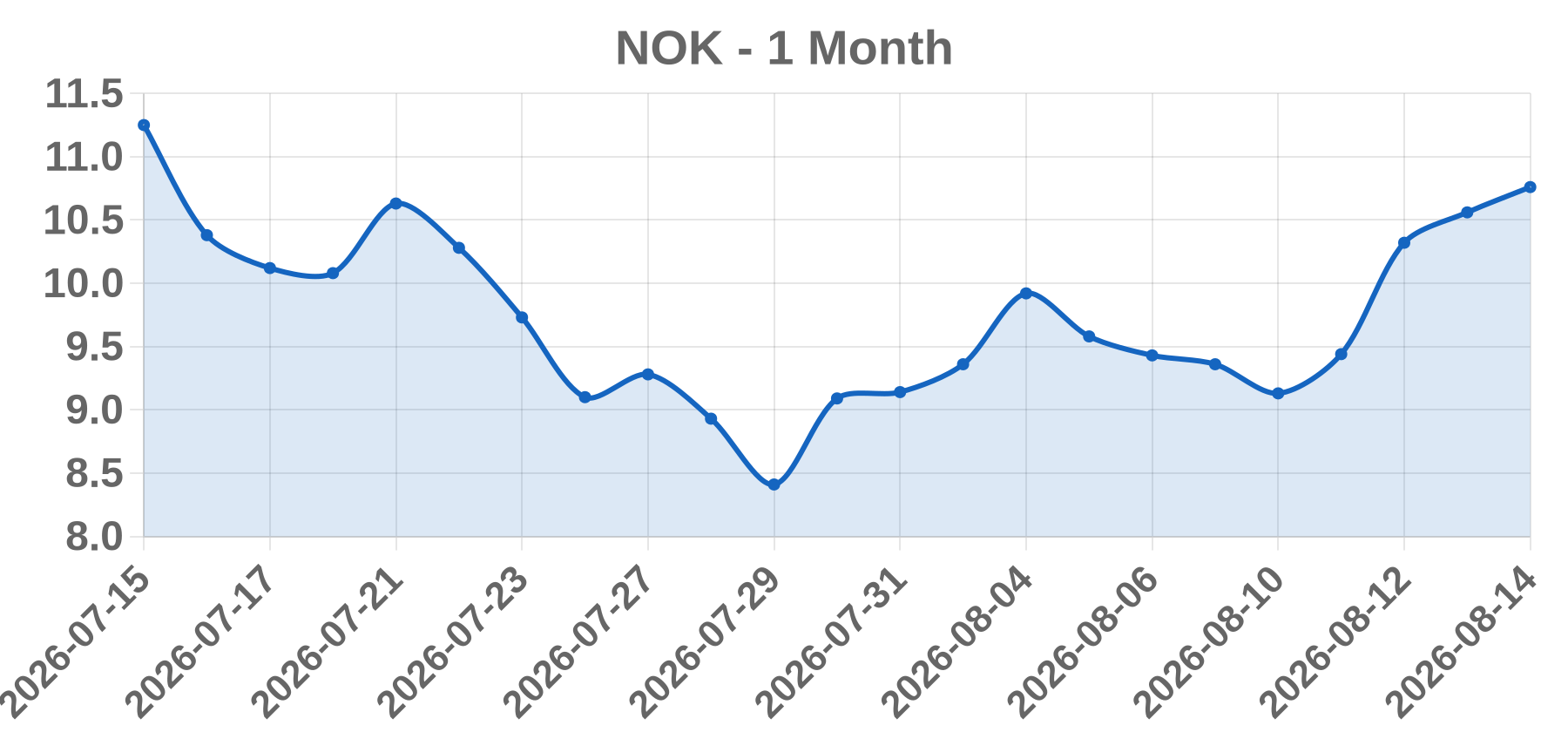
Today’s take Nokia's +1.89% close to $10.76 on Aug 14 was a lower-volume continuation day of a multi-session AI/optical-networking rally rather than a single company-specific event. The surge was sparked Aug 12 when Lumentum's blowout results (revenue +109%) triggered a broad sector rally that lifted Nokia +9.32% on 115M shares; Nokia followed with +2.33% Aug 13. The fundamental anchor is Nokia's Q2 order book: AI & Cloud segment order intake of EUR 2.8B (about 6.3x that segment's EUR 446M quarterly sales, which doubled YoY). BofA hiked its target to $18.50 (Buy) and SEB upgraded to Buy (EUR 12) on AI order strength; Nokia's AI-RAN platform built on NVIDIA's compute stack and 6G trials with NVIDIA/T-Mobile reinforce the AI-infrastructure thesis. Same-day news — reports Nokia will shutter its Hangzhou (China) R&D unit cutting ~1,600 jobs by year-end, plus managers' insider share purchases announced Aug 14 — were incremental cost-discipline/insider tailwinds, not primary drivers.
Business Capricor Therapeutics, Inc. (NASDAQ: CAPR) is a San Diego-based biotechnology company developing cell and exosome-based therapeutics for rare diseases. Its lead candidate, deramiocel (CAP-1002), an allogeneic cardiosphere-derived cell therapy, is in late-stage development for Duchenne muscular dystrophy (DMD), with Orphan Drug, RMAT, and Rare Pediatric Disease designations.
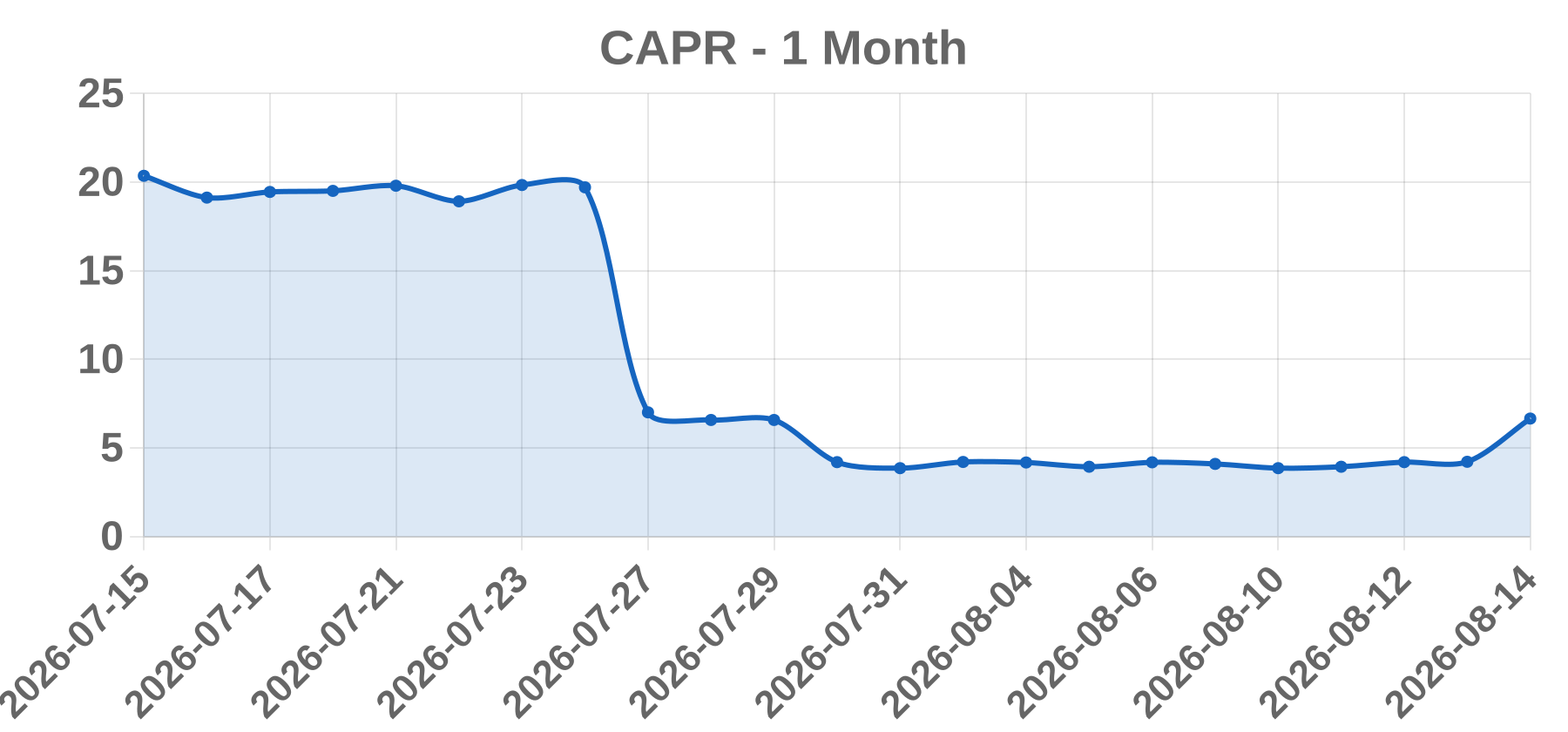
Today’s take CAPR surged ~58% to $6.65 on August 14, 2026, after the FDA indicated willingness to review an amended Biologics License Application for deramiocel, including 24-month open-label extension data from the Phase 3 HOPE-3 trial, supporting a refined indication focused on upper-limb skeletal muscle function instead of the cardiomyopathy indication rejected by the FDA advisory committee (9-3 negative vote on July 29). The FDA also signaled it would extend the August 22, 2026 PDUFA target date. Cantor Fitzgerald upgraded CAPR from Neutral to Overweight, raising its price target from $3.50 to $28.00, citing the regulatory progress. The HOPE-3 trial met its primary endpoint—54% slowing of upper-limb function decline (PUL 2.0, p=0.03)—recently published in The Lancet. Short interest was ~30% of float (~15.6M shares), fueling a short-covering rally.
Business Super Micro Computer, Inc. (NASDAQ: SMCI) designs, manufactures, and sells high-performance, high-efficiency server and storage solutions built on modular, open-standard architecture. The company is a leading provider of AI training and inference servers (liquid-cooled and air-cooled), SuperBlade systems, GPU platforms, and rack-scale data center building blocks, serving hyperscalers and AI infrastructure builders.
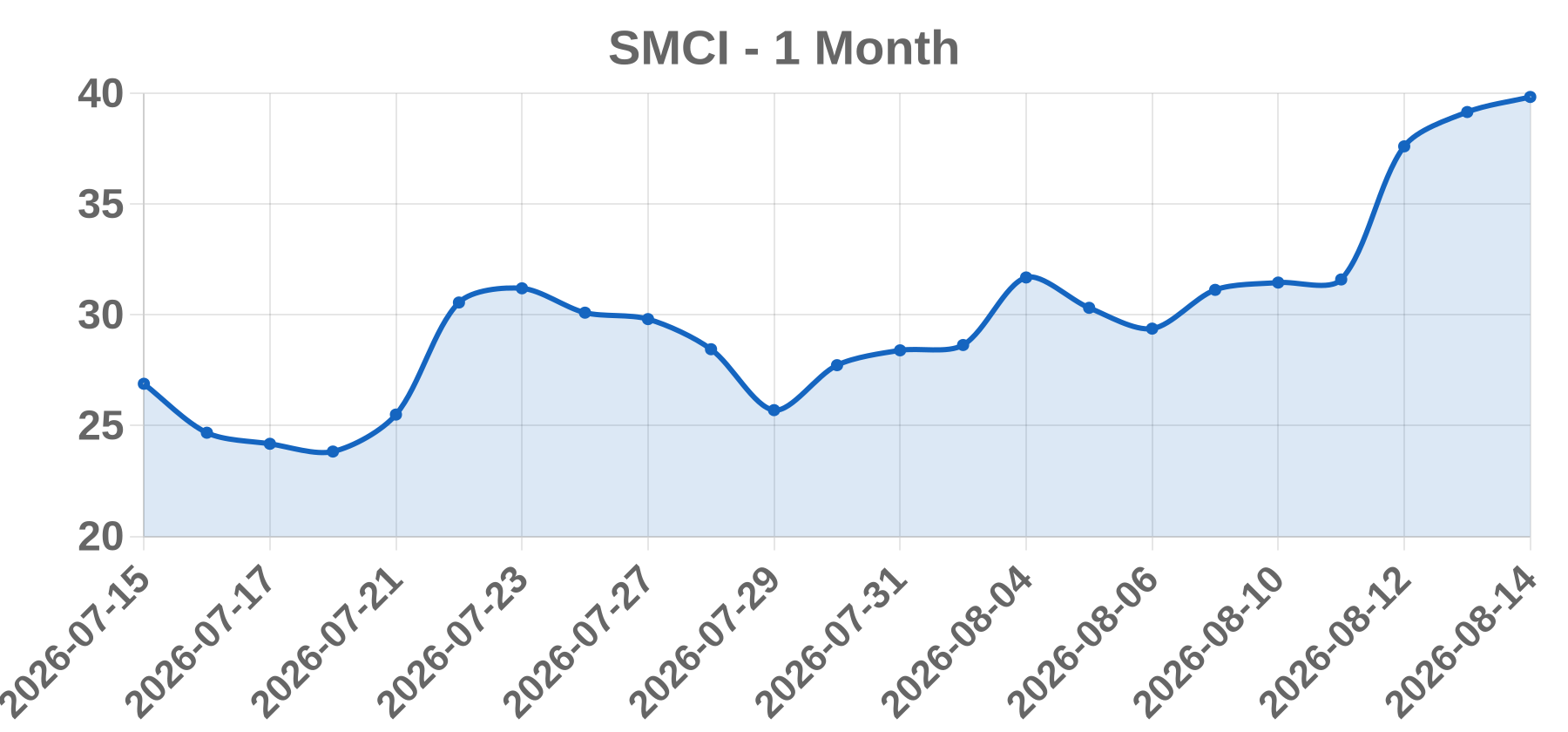
Today’s take SMCI closed at $39.84 (+1.74%) on Aug 14, continuing a massive post-earnings surge that began Aug 11 after Q4 FY2026 results. Non-GAAP EPS of $1.70 beat consensus ($0.68-$0.92) by ~139%, revenue reached $11.12B, and non-GAAP gross margin surged to 17.6% vs. 8.2%-8.4% guidance. Management guided FQ1 FY2027 revenue to $14.5-$15.5B (vs. ~$12.1B consensus) and FY2027 revenue to $65-$72B (vs. ~$52-54B consensus), disclosing a record $60B order backlog including a gigawatt-scale AI data center co-build with SpaceX. Rosenblatt raised its price target to $51 from $45 (Buy) on Aug 12. The stock rallied 60%+ from early August, opening at $39.16 and intraday-highing at $40.60 before pulling back to $39.84, as Benzinga flagged $40 as key technical resistance (a gap-down zone from June) with the stock overbought at 2+ std-Dev above the 20-day MA. Softer-than-expected July PPI (flat m/m) reinforced Fed rate-cut expectations, supporting the broader AI/storage rally that lifted the S&P 500 to records.
Business Wetour Robotics Limited (NASDAQ: WETO) is a Cayman Islands-incorporated Physical AI infrastructure and wearable robotics company headquartered in Hangzhou, China. It is developing Orchestra, a portable edge-AI operating system that coordinates wearable sensors, computer vision, and connected physical devices, with commercial agreements in U.S. warehouse automation.
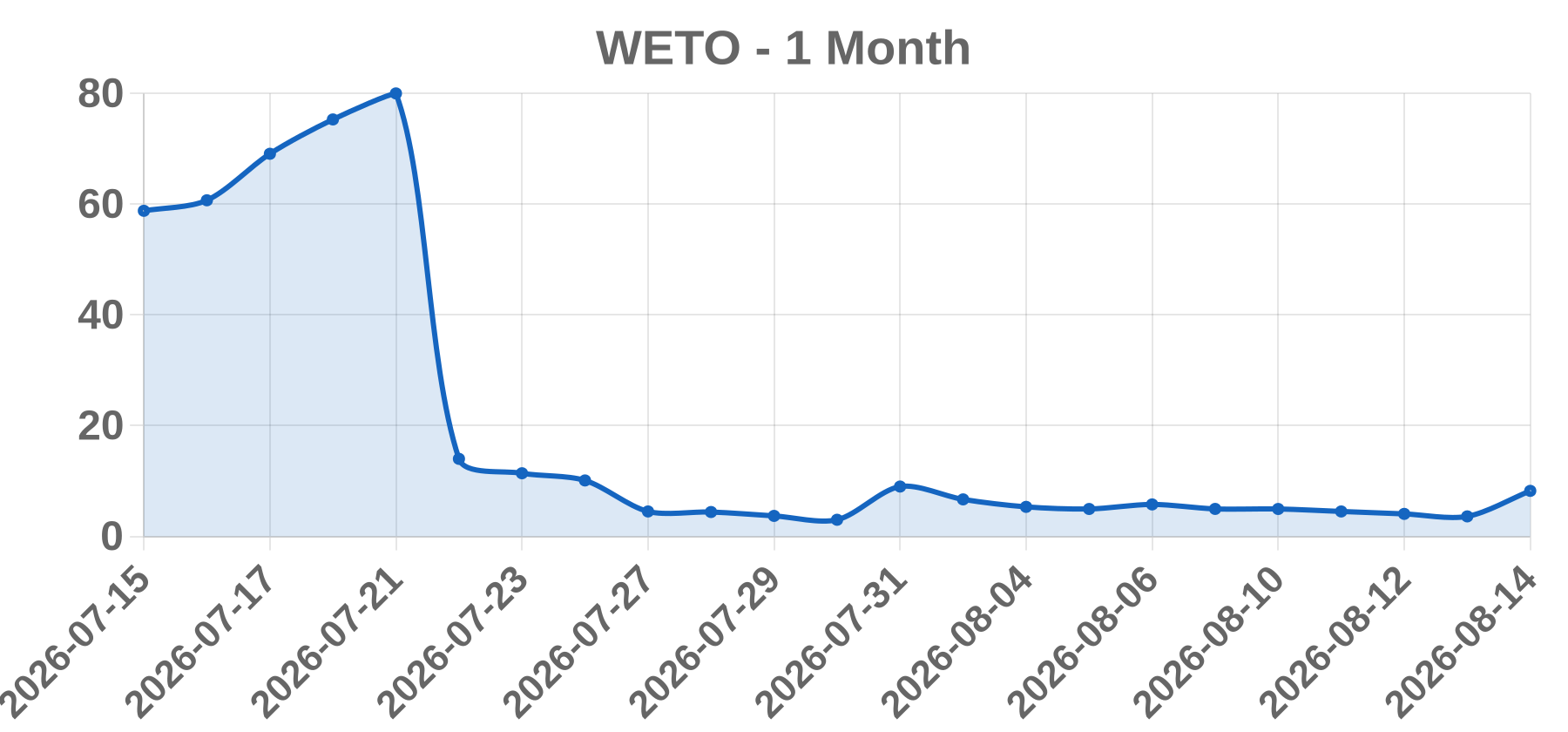
Today’s take On 2026-08-14 (Friday), WETO closed at $8.22, up +127.70% (+$4.61), after trading in a $7.26-$12.95 range. The primary trigger was the August 12 Form 6-K disclosing a $1.8 million Regulation S PIPE financing: 2,000,000 shares at $0.90 to seven non-U.S. investors, with Chairman Zheng Jiahua personally buying 500,000 shares for $450,000, closing expected ~August 27. This was amplified by an Extraordinary General Meeting on August 24 to vote on a 100-for-1 reverse split and authorized-capital expansion — a binary catalyst. The micro-cap's ultra-thin float (~820,000 shares after the 1-for-100 consolidation effective August 3) and short interest of 88.62% of float (as of July 31) drove a short-squeeze dynamic, following Thursday's 11.08% decline. Trading was halted intraday. The major-market backdrop was neutral (Nasdaq +0.2%), confirming this was a WETO-specific event driven by the capital raise, restructuring vote, thin float, and elevated shorts.
Business CBL International Limited (NASDAQ: BANL) is the Nasdaq-listed marine fuel logistics and bunkering facilitator of Banle Group, providing one-stop vessel refueling (bunkering) solutions across 65+ major ports in Malaysia, Hong Kong, China, Singapore, South Korea and internationally, serving nine of the world's top twelve container liner companies.
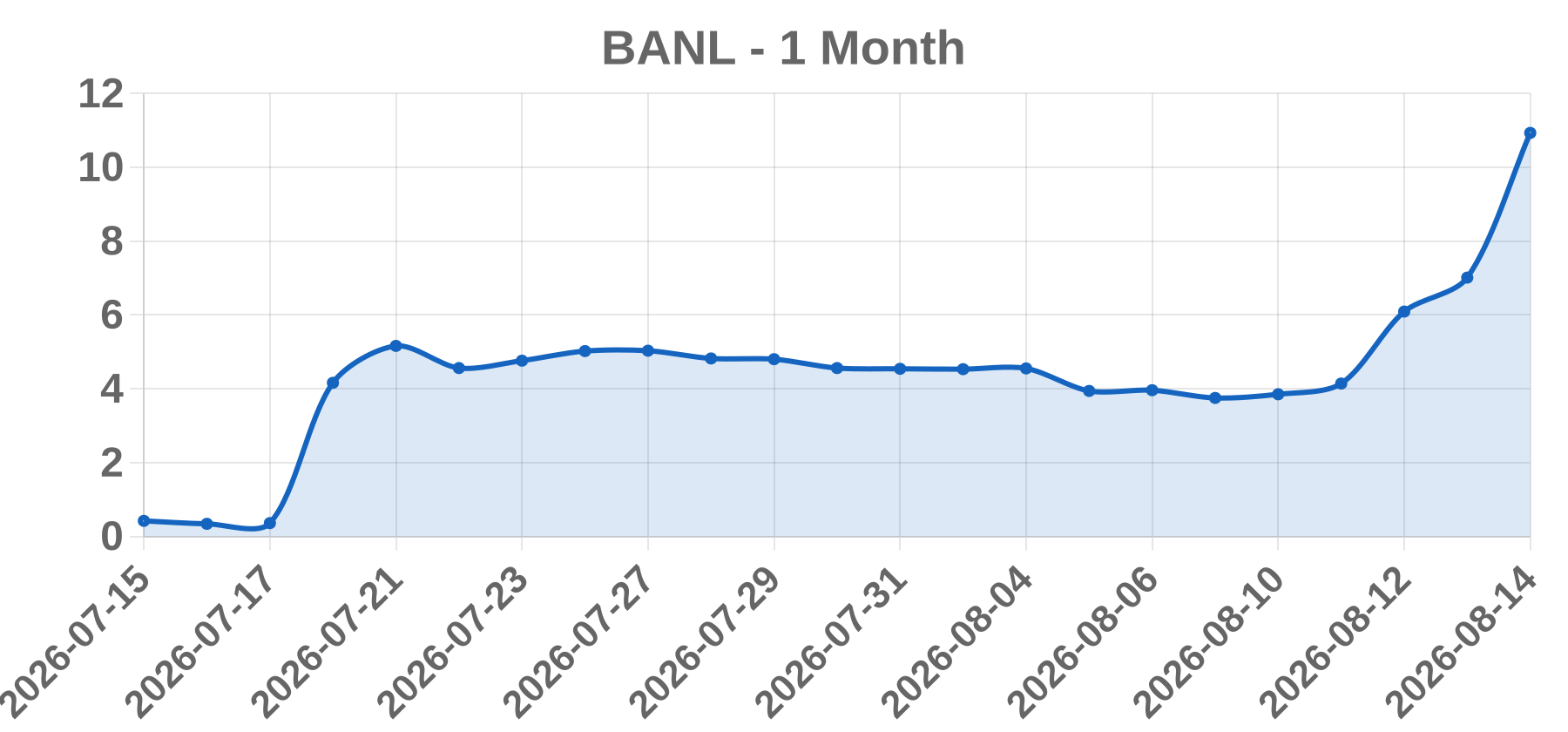
Today’s take On August 14, 2026, CBL International (BANL) surged +55.92% to close at $10.93 (intraday high $12.10), extending a multi-day parabolic run on an extremely thin float. After its 1-for-13 reverse split (announced Jul 16, effective Jul 20) cut shares outstanding to ~2.12 million, the stock had already jumped +47.28% on Aug 12 (to $6.09 on ~2.9M shares) and +15.11% on Aug 13 (to $7.01) before the +55.92% move on Aug 14 on ~514K volume. The fundamental trigger was the Aug 4 announcement that CBL regained Nasdaq minimum bid price compliance after 10 consecutive sessions at/above $1.00 (notified Aug 3). With a market cap near $23M, ~$538M TTM revenue and negative EPS (-$1.40), this reflects a low-float, high-volume speculative short-squeeze dynamic in which modest buying pressure generates outsized percentage gains, reinforced by retail momentum; the stock topped out near a 52-week high of $12.71 before settling.
Business Harte Hanks, Inc. (NASDAQ: HHS) is a global customer experience company headquartered in Chelmsford, Massachusetts, operating through three segments: Marketing Services, Customer Care, and Fulfillment & Logistics Services. The company delivers data-driven CX strategy, marketing, sales, customer care, and fulfillment solutions for brands seeking stronger customer relationships.
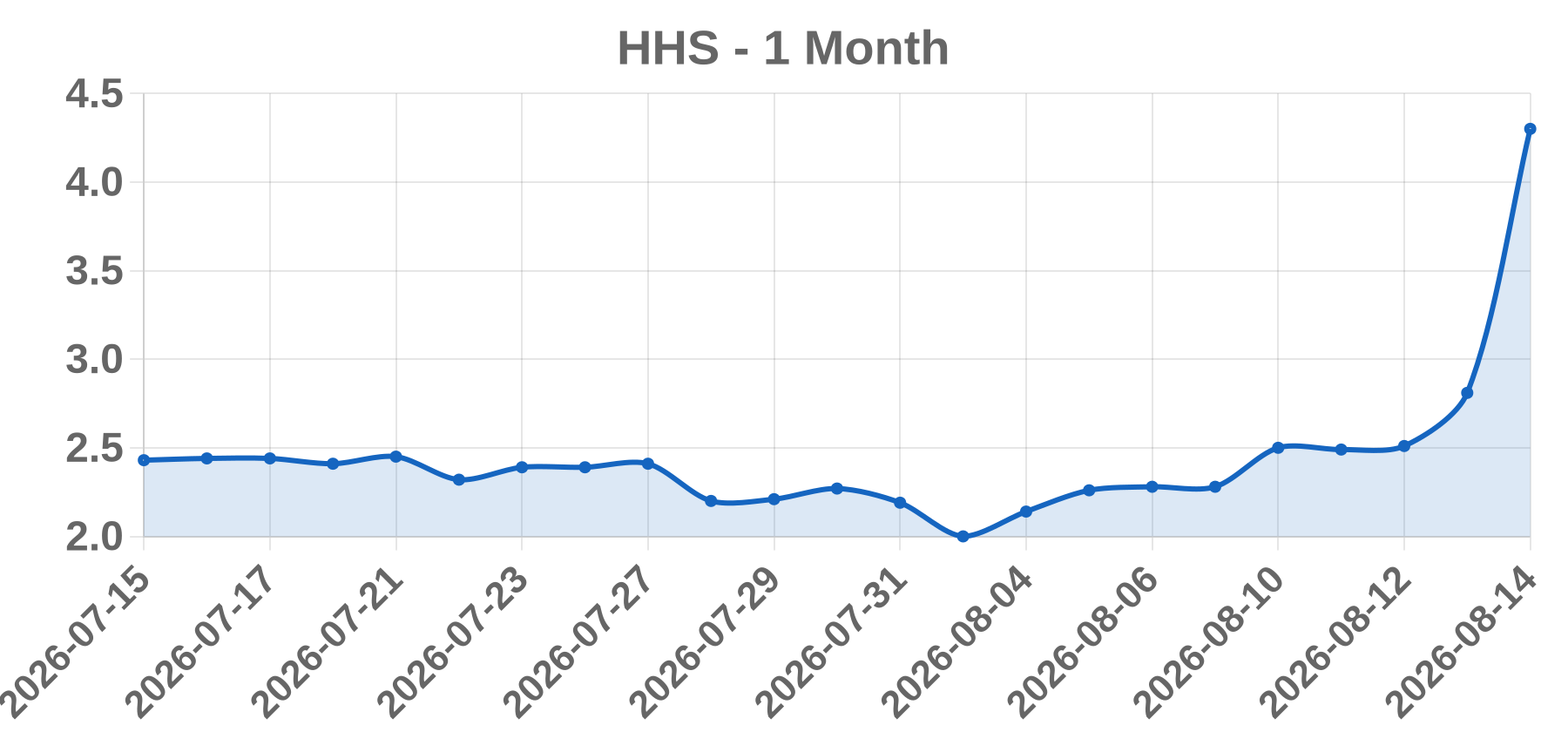
Today’s take HHS surged +53.02% to $4.30 on August 14, 2026, after the company announced a definitive agreement to be acquired by Star Equity Holdings (NASDAQ: STRR) for $5.00 per share, or approximately $38.4 million in aggregate equity value. Shareholders may elect to receive either $5.00 in cash (capped at 50% of total consideration, ~$19.2M) or 0.50 shares of Star Equity's 10% Series A Cumulative Perpetual Preferred stock per HHS share. The deal represented roughly a 100% premium to HHS's unaffected share price of ~$2.50 and was unanimously approved by the Harte Hanks board. The transaction involves a 30-day go-shop period expiring September 13, 2026, and is expected to close within 60-90 days subject to stockholder approval and customary conditions. The stock closed at $4.30, below the $5.00 offer, reflecting typical deal-spread/arbitrage discounting given go-shop competition, the cash-and-preferred-stock mix complexity, and deal-close uncertainty. Prior to the announcement, HHS had reported weak Q2 2026 earnings (revenue $38.0M, down ~1.7% YoY) which had pressured the stock, making the takeover premium the dominant catalyst for the sharp move.
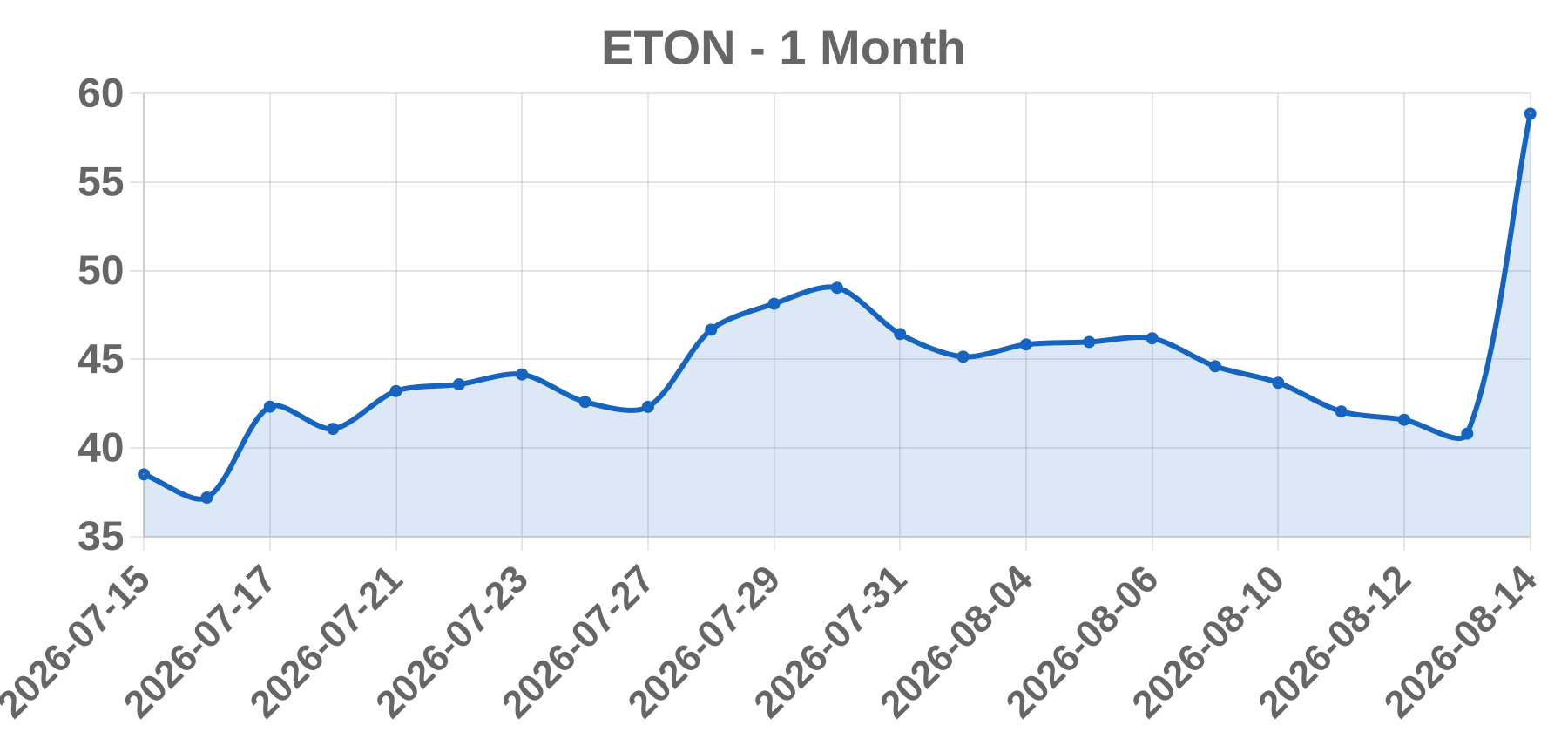
Business Eton Pharmaceuticals, Inc. (NASDAQ: ETON) is a specialty pharmaceutical company focused on developing and commercializing treatments for rare diseases. Its commercial portfolio includes more than 10 products such as HEMANGEOL (infantile hemangioma), INCRELEX (short stature), DESMODA (central diabetes insipidus), GALZIN, and PKU GOLIKE, supported by a focused pediatric/rare-disease commercial sales force.
Today’s take ETON soared +44.26% to $58.86 on Aug 14, 2026, its best-ever single-day gain, after reporting a blowout Q2 2026 (released after the close Aug 13). Adjusted EPS of $0.43 crushed the $0.15 consensus (a ~187% beat), while Q2 net revenue of $37.6M jumped ~99% YoY versus ~$26.9-27.1M expected. The company swung from a $0.10/share GAAP loss in Q2 2025 to a $0.35 GAAP profit. Hemangeol, relaunched in May 2026, drove the revenue surge, with patient conversion completing ahead of schedule. Management raised FY2026 revenue guidance to exceed $145M (from >$120M) and lifted adjusted EBITDA margin outlook to at least 35% (from 30%). Analysts reacted positively: B. Riley raised its target to $70 (from $40), H.C. Wainwright to $70, and Canaccord to $68, all with Buy ratings, calling guidance 'conservative.' The move was amplified by a ~4.8x volume surge (~2.29M shares vs. ~472K daily average). The stock is up over 235% YTD 2026.
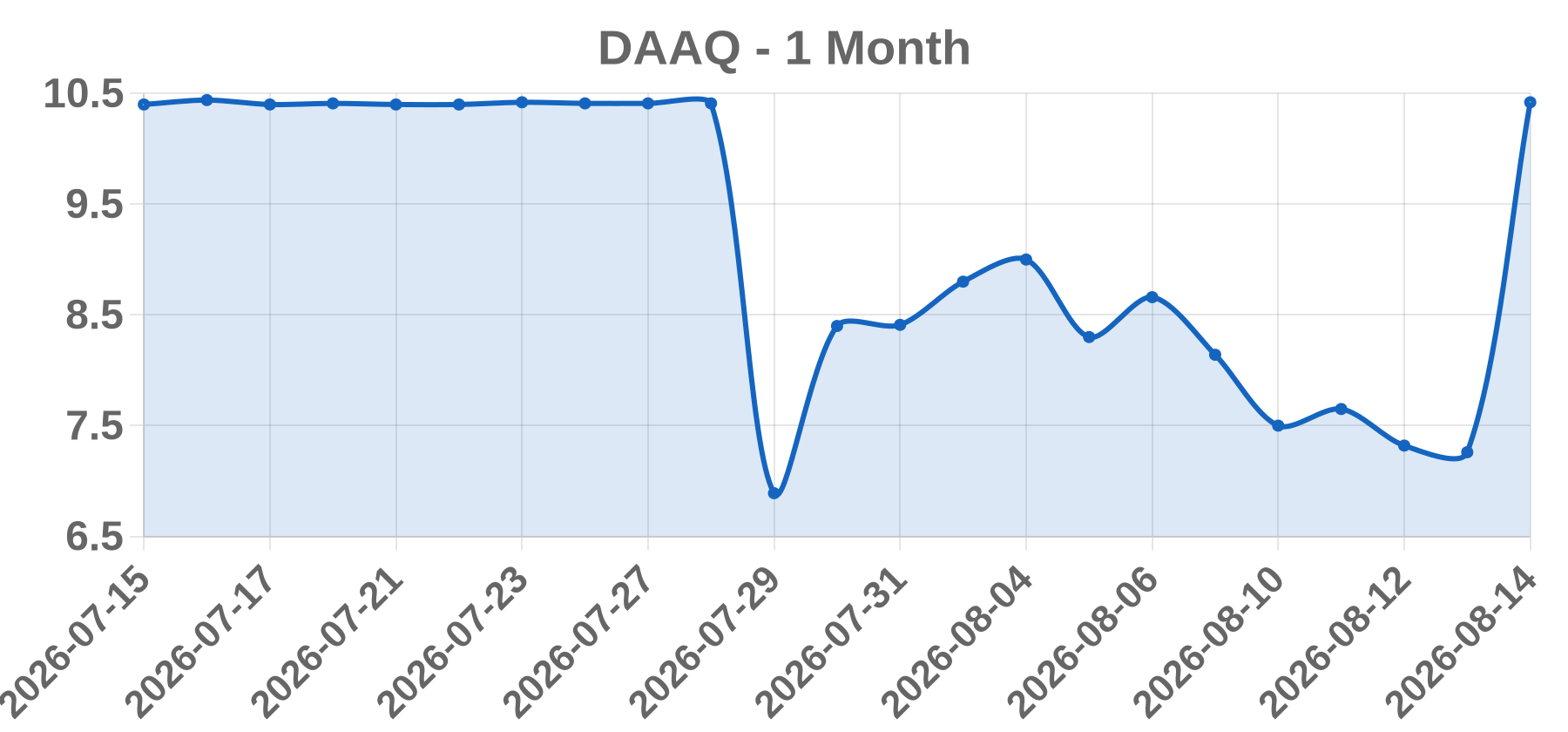
Business Digital Asset Acquisition Corp. is a Cayman Islands-incorporated special purpose acquisition company (SPAC) headquartered in Princeton, New Jersey, formed to effect a merger or business combination, with a stated intent to target the digital asset and cryptocurrency sectors. Its Class A ordinary shares trade on the Nasdaq under ticker DAAQ.
Today’s take On August 13, 2026 (after market close), DAAQ disclosed via SEC Form 8-K that it and Old Glory Holding Company had entered a Mutual Termination and Release Agreement, terminating their planned business combination in its entirety with no termination fee or further liability. The extraordinary general meeting scheduled for August 14, 2026 to approve the merger was postponed indefinitely. The news sparked a premarket surge that carried into the August 14 session: shares gapped from the prior close of $7.26 to open at $10.41 and closed at $10.42, up +43.53% (+$3.16) on volume of 114,600. The move represents a re-rating of the SPAC toward its trust-account redemption value (approximately $10.27–$10.40 per share), which acts as the liquidation floor. With the deal terminated and no announced alternative transaction (though DAAQ must complete a combination by January 2027), the shares converged from a mid-$7 deal-uncertainty discount to near trust value in a single session.
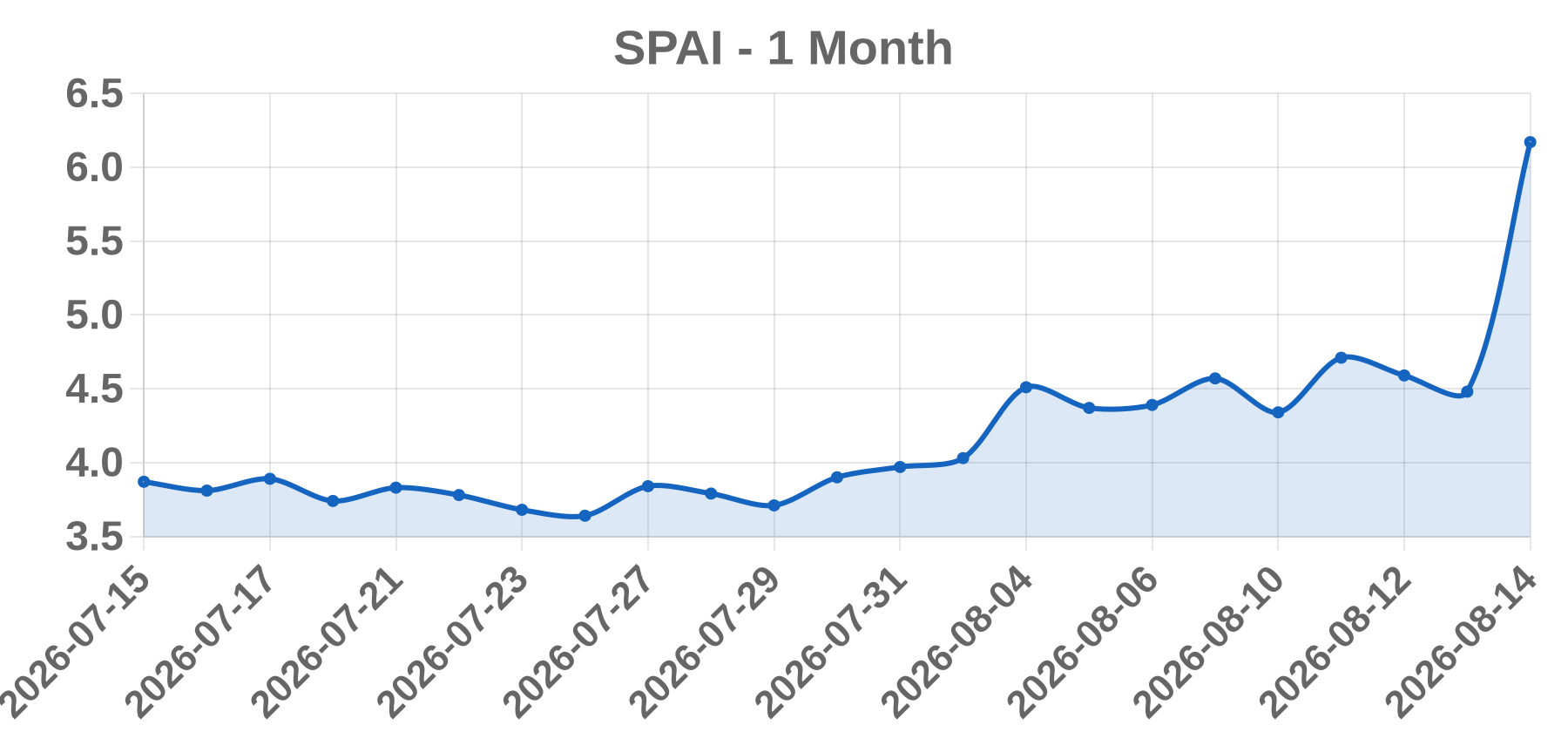
Business Safe Pro Group Inc. (Nasdaq: SPAI) is a Delaware-incorporated, mission-driven technology company delivering AI-enabled security and defense solutions. Headquartered in Aventura, Florida, it operates through Safe Pro AI (AI-powered drone imagery threat detection via its SPOTD platform), Safe-Pro USA LLC (ballistic protective equipment), and Airborne Response Corp (aerial UAS services), serving defense, homeland security, law enforcement, and humanitarian markets.
Today’s take SPAI surged +37.72% to $6.17 on August 14, 2026 when the company reported blowout Q2 2026 results. Quarterly revenue hit a record $1,332,074, up 1,336% YoY from $92,753, driven by U.S. Army-contracted purchases of its edge-compute NODE device plus services and support. AI subsidiary sales surged over 3,084% YoY, and AI gross margin reached 75%, reflecting the scalability of high-margin software and edge compute. The company completed its stock repurchase program (637,084 shares total, including 474,630 in H1 2026), and 2026 AI-related orders surpassed $5 million with eight contracts across the U.S. Army, U.S. Air Force, and multiple defense primes. Momentum built from prior-session catalysts: a CRADA with the U.S. Army ERDC (Aug 12), a $780K purchase order (Aug 6), and a $730K government subcontract (Aug 4). While the absolute revenue base is small, the 1,336% growth rate and 75% AI margin signal rapidly accelerating government adoption of SPOTD drone-imagery threat-detection, which has analyzed 2.9 million images and identified 54,328 threats in Ukraine.
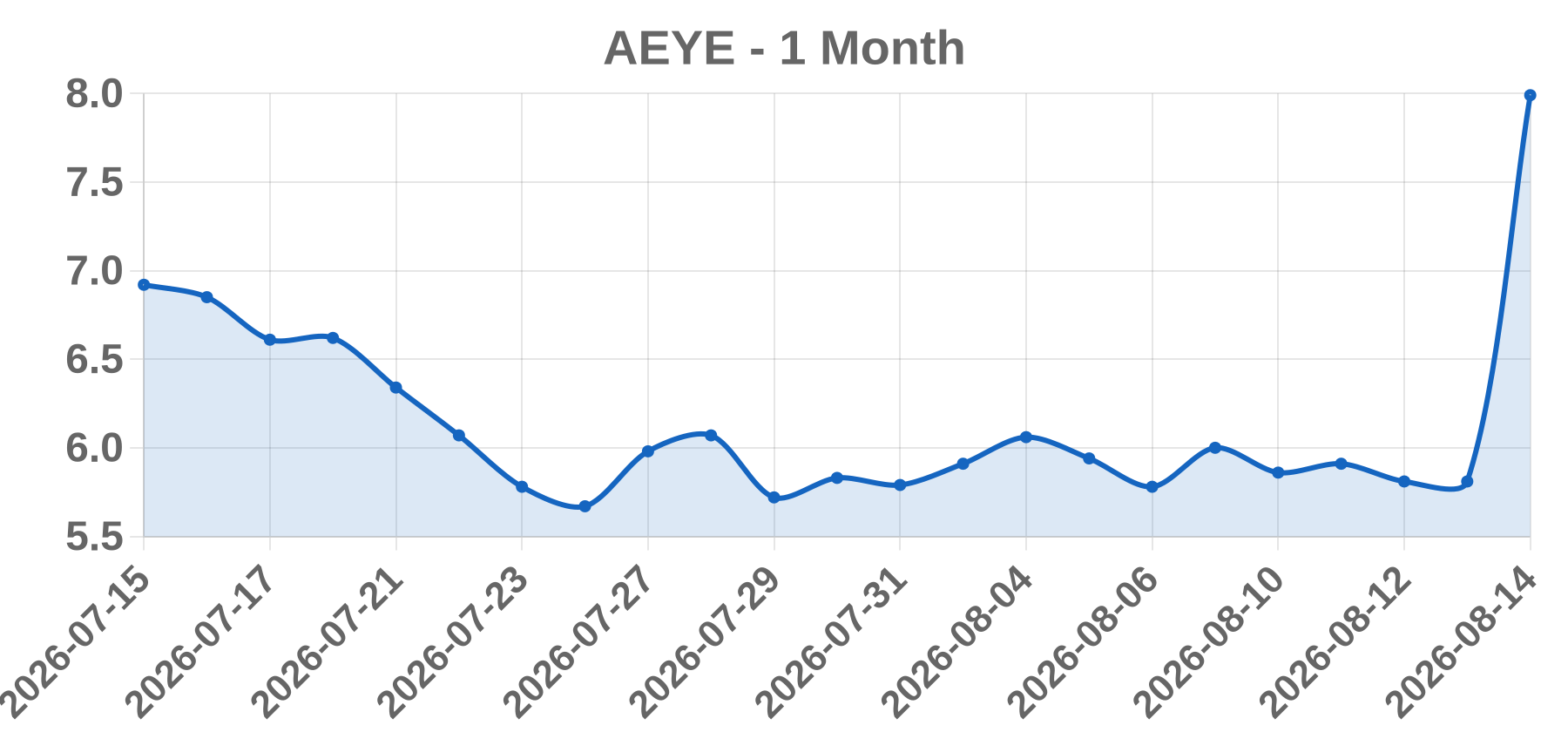
Business AudioEye, Inc. (NASDAQ: AEYE) is a Tucson, Arizona-based provider of digital accessibility technology solutions. Its cloud-based SaaS platform detects and remediates accessibility barriers across websites and mobile apps, helping organizations comply with WCAG and ADA standards, serving roughly 129,000 customers.
Today’s take On August 13, 2026 after market close, AudioEye reported Q2 2026 results: revenue of $10.7M (+9% YoY), its 42nd consecutive quarter of sequential revenue growth; adjusted EPS of $0.23 beating consensus of $0.21 (~9.5% beat); record adjusted EBITDA of $3.0M (28% margin, +54% YoY); ARR of $42.3M (+11% YoY); and adjusted free cash flow of $2.6M. The company raised FY2026 adjusted EBITDA guidance to at least $12.7M and narrowed revenue guidance to $43.5M-$44.0M. Management cited declining litigation expense as an FCF accelerator, the European Accessibility Act enforcement driving record EU ARR contribution in Q2, and evaluation of share buybacks, dividends, and M&A. On the same day, Needham analyst Joshua Reilly reiterated a Buy rating with a $15 price target (~90%+ upside). The stock had closed flat at $5.81 on Aug 13, then gapped up to $6.19 at the Aug 14 open, rallied to an intraday high of $8.19, and closed at $7.99, up +37.52% on volume of ~950K shares — roughly 15x its ~65K average.
Business HeartFlow, Inc. is a commercial-stage medical technology company on NASDAQ (HTFL) that develops AI-powered, non-invasive software for diagnosing and managing coronary artery disease (CAD). Its HeartFlow Platform builds a personalized 3D model of a patient's coronary arteries from a single CCTA scan, with products including FFRCT Analysis for blood-flow assessment and Plaque Analysis for quantifying coronary plaque.
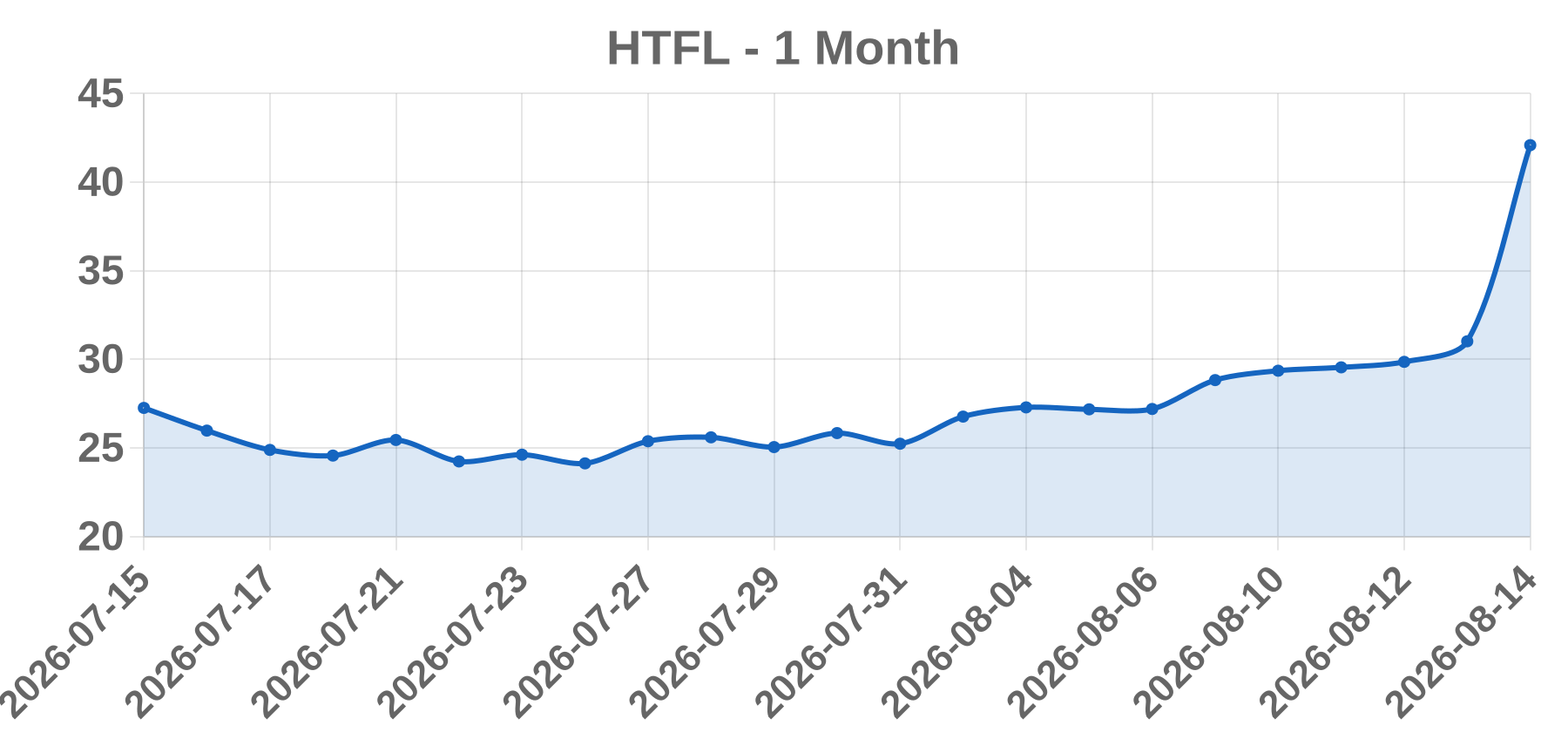
Today’s take HeartFlow reported Q2 2026 results on August 13 (8-K filed), delivering a substantial beat: adjusted EPS of $(0.07) vs. $(0.22) consensus, and revenue of $64.08M (+47.7% YoY from $43.42M), roughly $8M above expectations. US revenue hit $59.6M (+51% YoY). Plaque Analysis revenue of $7.8M was ~$4M ahead of estimates, signaling accelerating traction. Gross margin expanded to ~83% from ~75.5%. Management raised full-year 2026 revenue guidance to $246-250M (40-42% YoY growth) and plaque guidance to $29-31M. On August 14, three sell-side firms raised price targets: Stifel $40 to $45 (Buy), JPMorgan $35 to $45 (Overweight), and Wells Fargo $37 to $39 (Overweight). The stock gapped up to open at $39.06, traded $36.04-42.99 (a new all-time high), and closed at $42.08, up +35.7%, as institutions repositioned post-earnings.
Business Evolution Metals & Technologies Corp. (EM&T, Nasdaq: EMAT) is a U.S.-based critical-materials and advanced-manufacturing company formed through the January 2026 business combination of Welsbach Technology Metals Acquisition Corp. and Evolution Metals LLC. HQ in Miami, FL, it produces sintered neodymium-iron-boron (NdFeB) rare-earth permanent magnets, battery materials, and operates critical-minerals recycling aimed at building a vertically integrated non-China supply chain.
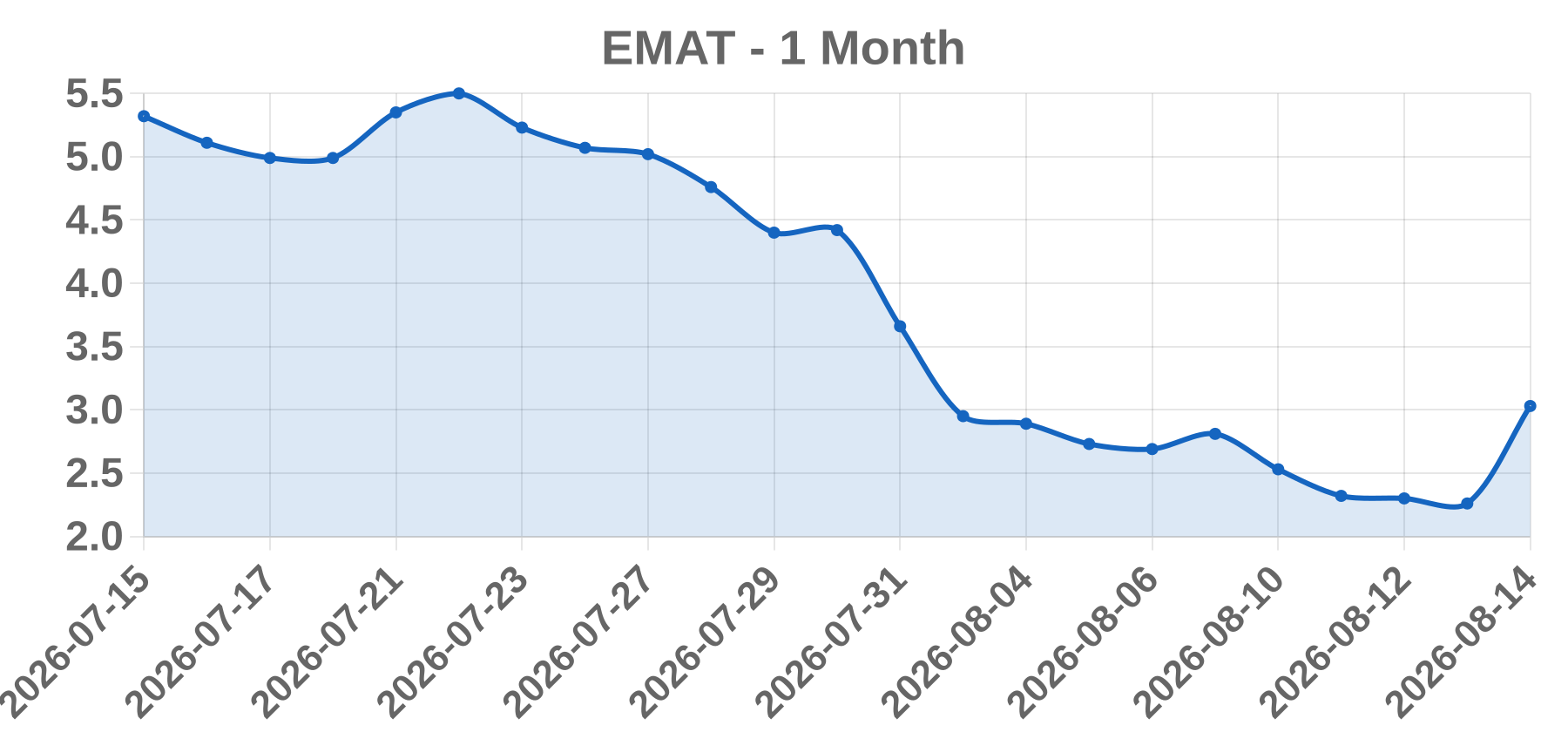
Today’s take EMAT surged +34.07% to close at $3.03 on Aug 14, 2026, after opening at $2.44 and trading as high as $3.52. The primary catalyst was the Aug 13 Trump administration announcement of 100% tariffs on imported drones over 25kg and thermal-imaging models (effective in ~21 days), plus defense supply-chain onshoring directives. As a U.S. producer of non-China sintered NdFeB magnets used in drone/defense motors, EMAT was a direct beneficiary, leading a sector-wide rare-earth rally: MP Materials +8%, USA Rare Earth +9%, NioCorp +3%. A secondary catalyst was the Aug 13 board appointment of retired U.S. Air Force four-star General Thomas A. Bussiere, former Commander of Air Force Global Strike Command, tied to the company's DFARS-compliant 10,000 MT annual magnet capacity expansion ahead of the Jan 2027 defense sourcing deadline. The stock had fallen from a July peak ~$7 to $2.15-$2.26 (near its 52-week low of $2.15) before this event.
Business Innventure, Inc. (NASDAQ: INV) is an Orlando, Florida-headquartered industrial growth conglomerate that identifies, funds, and operates transformative, sustainable technology companies spun out of multinational R&D. It manages three operating businesses: Accelsius (two-phase direct-to-chip liquid cooling for AI and high-performance data centers), AeroFlexx (sustainable liquid packaging), and Refinity (plastic-to-olefins recycling). Founded in 2015, Innventure incubates technologies licensed or acquired from large corporations and scales them toward commercialization. Its flagship growth engine is Accelsius, which generates most of group revenue, targeting hyperscale data-center cooling for AI infrastructure.
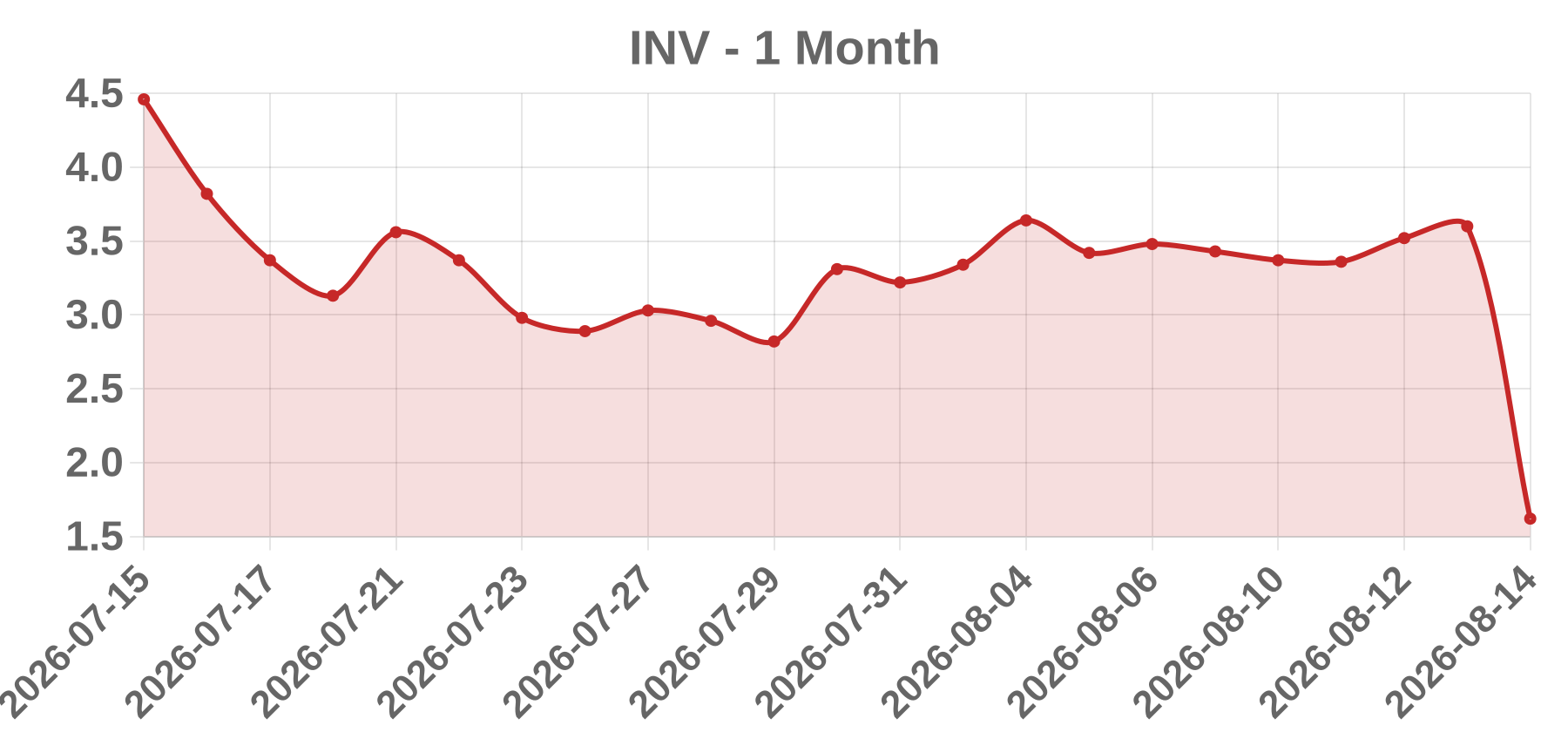
Today’s take Innventure's shares collapsed 55.14% on the August 14, 2026 session ($3.60 to $1.62 close) as a follow-through to the August 13, 2026 Q2 2026 earnings release, which missed top and bottom lines and, critically, prompted management to withdraw prior commercial guidance. Q2 revenue was just $0.953M versus a ~$1.99M analyst estimate, and GAAP EPS came in at -$0.32 (missed by $0.06–$0.09). The most damaging headline was the suspension/withdrawal of 2026 revenue and cash-flow-breakeven targets for Accelsius, citing AI infrastructure constraints — power availability, GPU access, and site-allocation/deployment timing for smaller early adopters. Management removed its prior expectation to exit 2026 near breakeven at an ~$100M annualized Accelsius revenue run rate and no longer expects consolidated positive cash flow in 2028, pivoting instead to milestone-driven reporting. Analysts cut targets (Northland to $5 from $13), reinforcing the panic, with intraday lows of ~$1.51 and an all-time low. The market read the withdrawal as a material derating of the Accelsius growth thesis and the company's cash-consumption profile, triggering a high-volume selloff.
Business KinderCare Learning Companies, Inc. (NYSE: KLC) is the largest private provider of early childhood education and care in the United States by center capacity, headquartered in Lake Oswego, Oregon. It operates ~1,600 community-based early childhood development centers and before/after-school sites serving children from six weeks to 12 years old under brands including KinderCare Learning Centers, Crème School, and Champions.
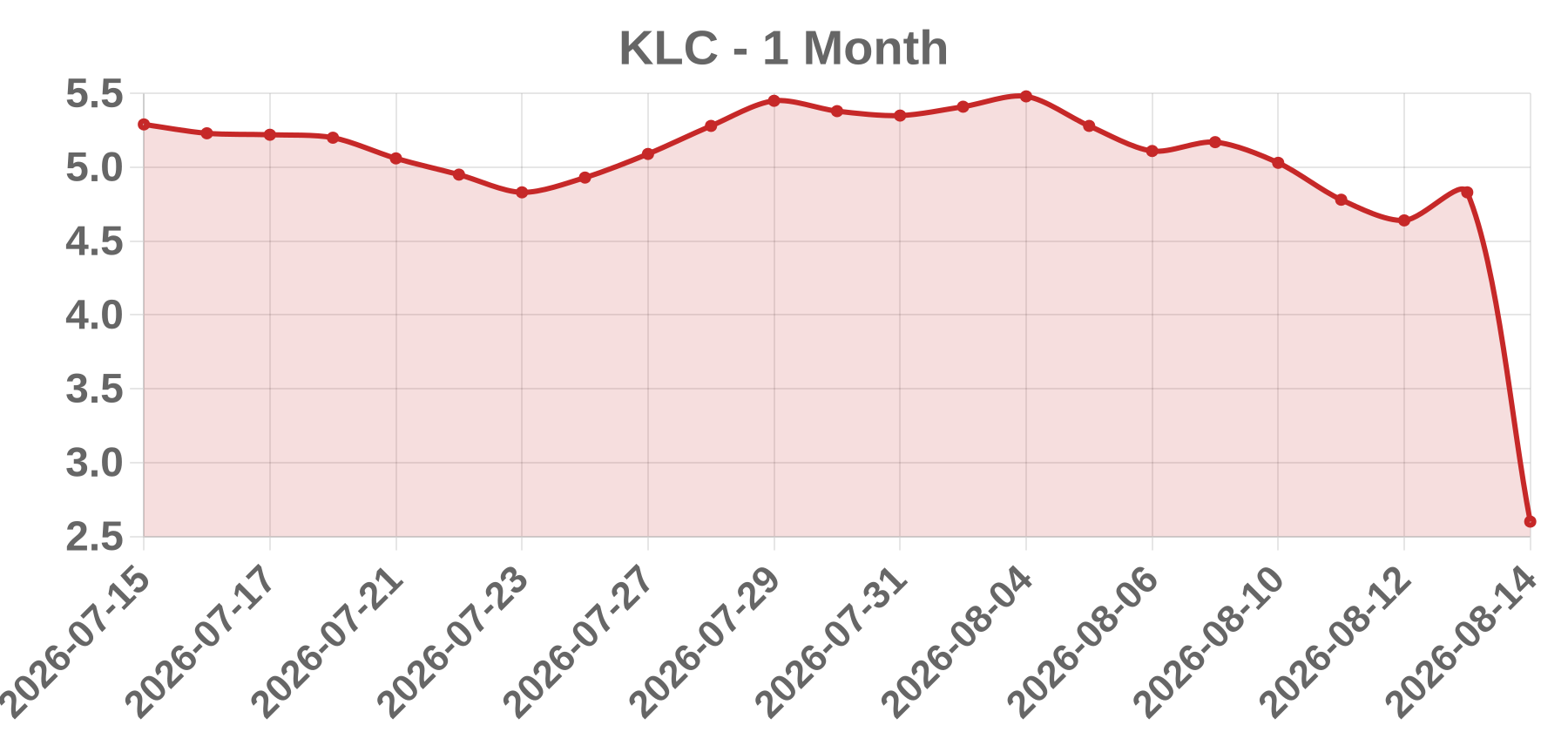
Today’s take KLC cratered -46.17% to close at $2.60 on Aug 14, 2026 — its biggest one-day drop on record — after reporting Q2 FY2026 earnings after the close on Aug 13. The company missed on adjusted EPS of $0.08 vs $0.10 consensus and posted revenue of $697.5M (-0.4% Y/Y), slightly below estimates. Adjusted EBITDA collapsed 23.6% Y/Y to $63M, hit by a 4% enrollment decline, 240bp occupancy drop to 68.6%, and 49 center closures. Management slashed FY2026 revenue guidance to $2.66-2.70B (from $2.70-2.75B), cut adjusted EPS to $0.05-0.15 (from $0.15-0.25), and cut adjusted EBITDA to ~$200-220M vs ~$290M consensus, citing slower state subsidy reimbursement and an $8M insurance reserve adjustment. JPMorgan downgraded to Underweight from Neutral; UBS cut PT to $4.50 from $5.00; Goldman trimmed to $2.50 from $2.90. The session printed ~6.87M shares vs ~1M average. Market cap fell to ~$308M.
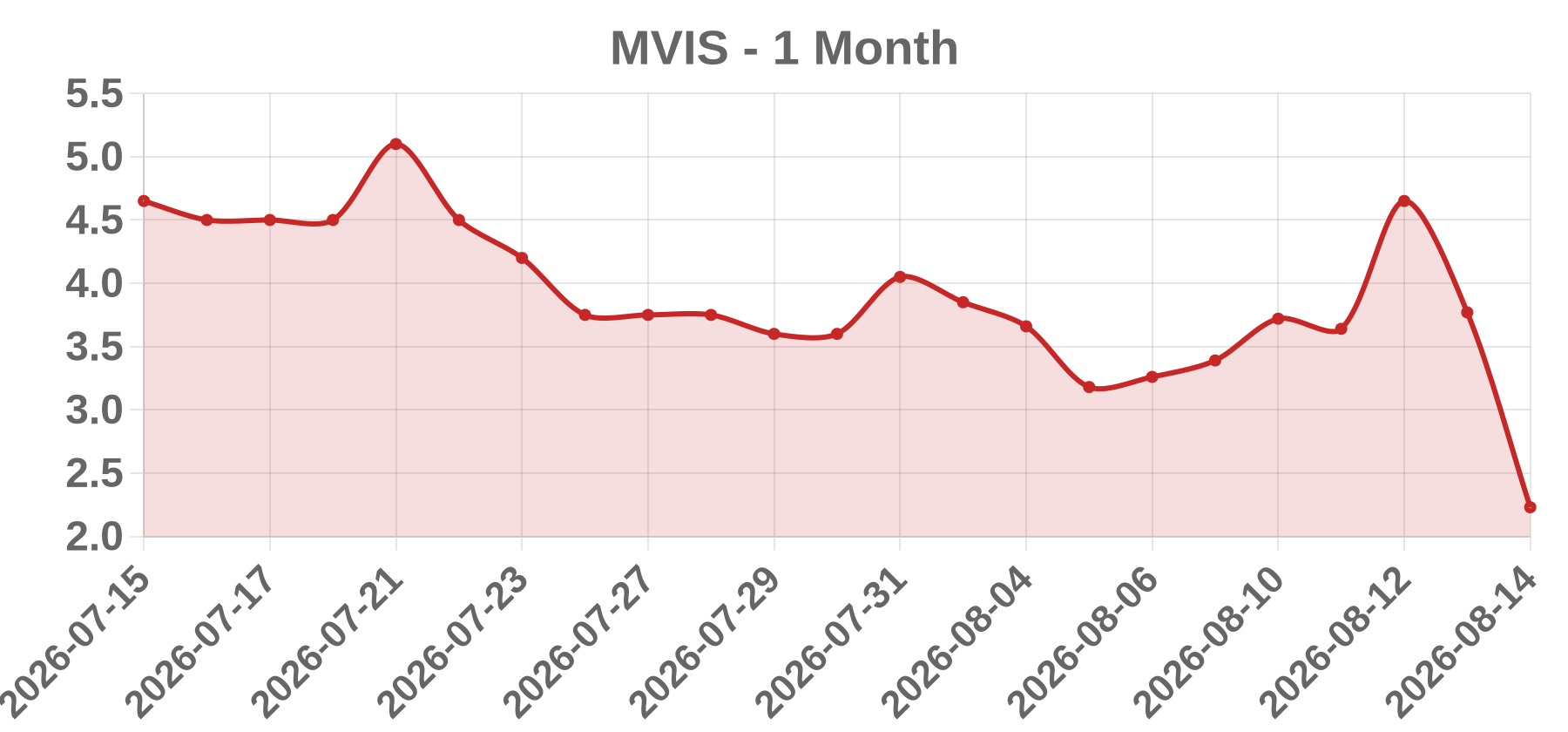
Business MicroVision, Inc. is a NASDAQ-listed (MVIS) developer and supplier of MEMS-based laser beam scanning lidar hardware and software for advanced perception across automotive (ADAS/autonomous), industrial, and security & defense applications. Headquartered in Redmond, WA, it commercializes 'Lidar 2.0' solid-state sensors following 2026 acquisitions.
Today’s take MicroVision fell ~40% to $2.24 on August 14, 2026 after pricing a dilutive $17.0 million public offering of 6.8 million units at $2.50 per unit — a steep discount to the prior close of $3.77. The units comprise common stock and warrants. The offering was launched August 13 and priced August 14 (ACCESS Newswire/Reuters). Intraday low was $1.96. This is a textbook dilutive secondary write-down: issuing shares/warrants below market directly destroys per-share value and signals acute cash needs. Volume spiked to ~13.5 million shares versus ~0.3–1.9 million on prior sessions. Context: the chronically unprofitable lidar firm had just implemented a reverse split (effective Aug 3, 2026) and applied to transfer to the Nasdaq Capital Market, while Q2 2026 showed an EPS miss of -$1.66 vs -$0.75 consensus. The raise is intended to fund operations and capital spending amid negative equity and deeply negative margins.
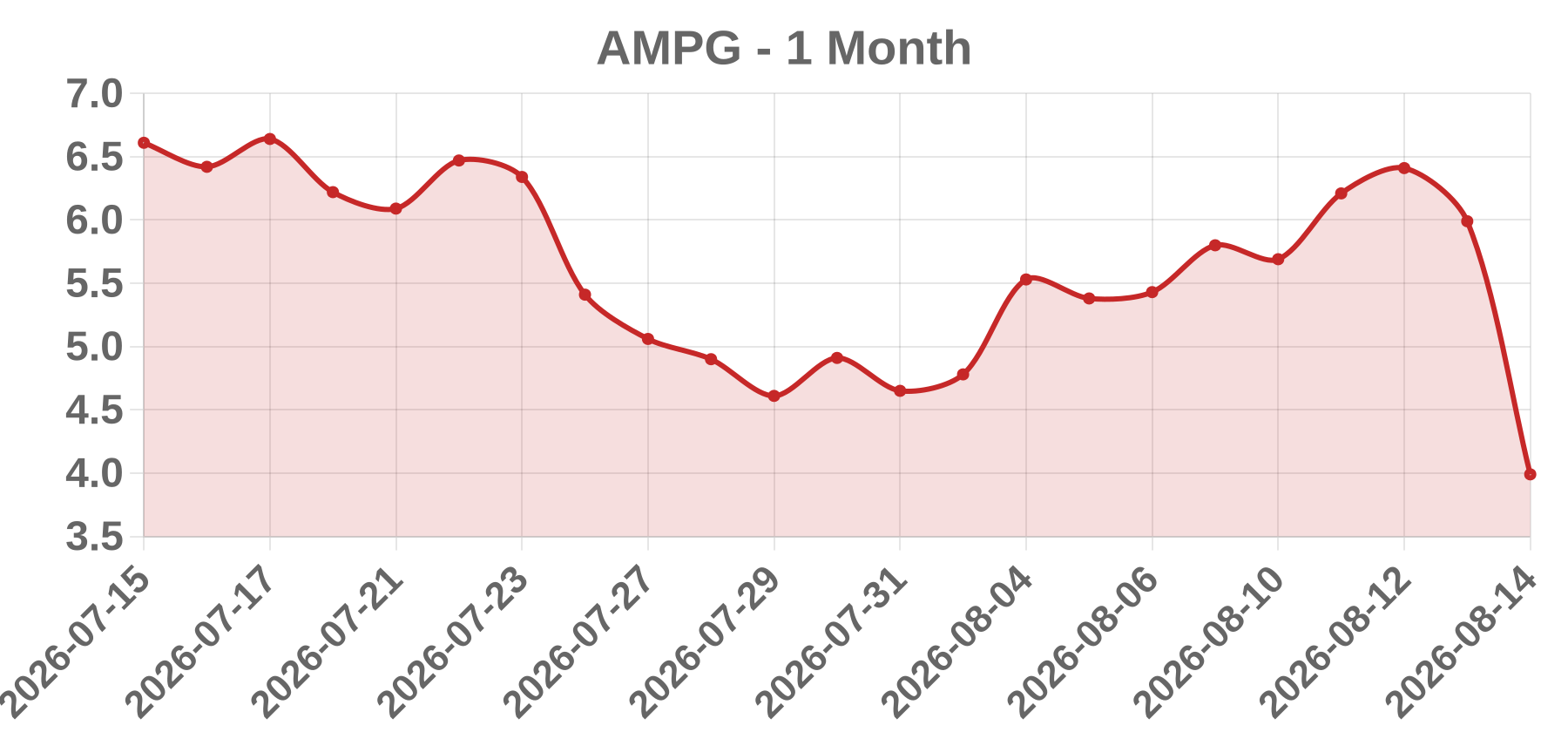
Business AmpliTech Group, Inc. (NASDAQ: AMPG) designs, develops, and manufactures advanced radio frequency (RF) and microwave signal-processing components and systems, 5G communication systems, semiconductor solutions, and cryogenic low-noise amplifiers for quantum computing. Its operations include AmpliTech Inc., Specialty Microwave, Spectrum Semiconductor Materials, MMIC Design Center, and True G Speed Services, serving 5G/telecom, SATCOM/space, defense/aerospace, and semiconductor/quantum end markets.
Today’s take AMPG plunged 33.31% to $4.00 on Aug 14, 2026, after reporting Q2 2026 results (released after the close on Aug 13) that badly missed Wall Street consensus. EPS came in at -$0.12 versus the +$0.11 estimate (a $0.23 miss), while revenue of $8.07M fell far short of the ~$13M consensus widely cited by Investing.com, despite growing 50.9% sequentially from $5.35M. The net loss widened to $3.09M from $1.77M a year ago as R&D spending more than doubled to $1.37M on 5G and MMIC development, compounded by higher SG&A, legal fees, and stock-based compensation. Critically, management withdrew its prior ~$50M full-year revenue guidance, citing timing shifts on an international 5G program and limited order visibility. Gross margin did expand to 27.9% from 7.8% year-over-year, and the company ended the quarter with ~$12.95M in cash and $22.93M working capital following its ~$21.92M Series A Rights offering closed July 22, 2026. However, the guidance withdrawal combined with the top-line miss triggered a violent after-hours repricing that carried into the Aug 14 session.
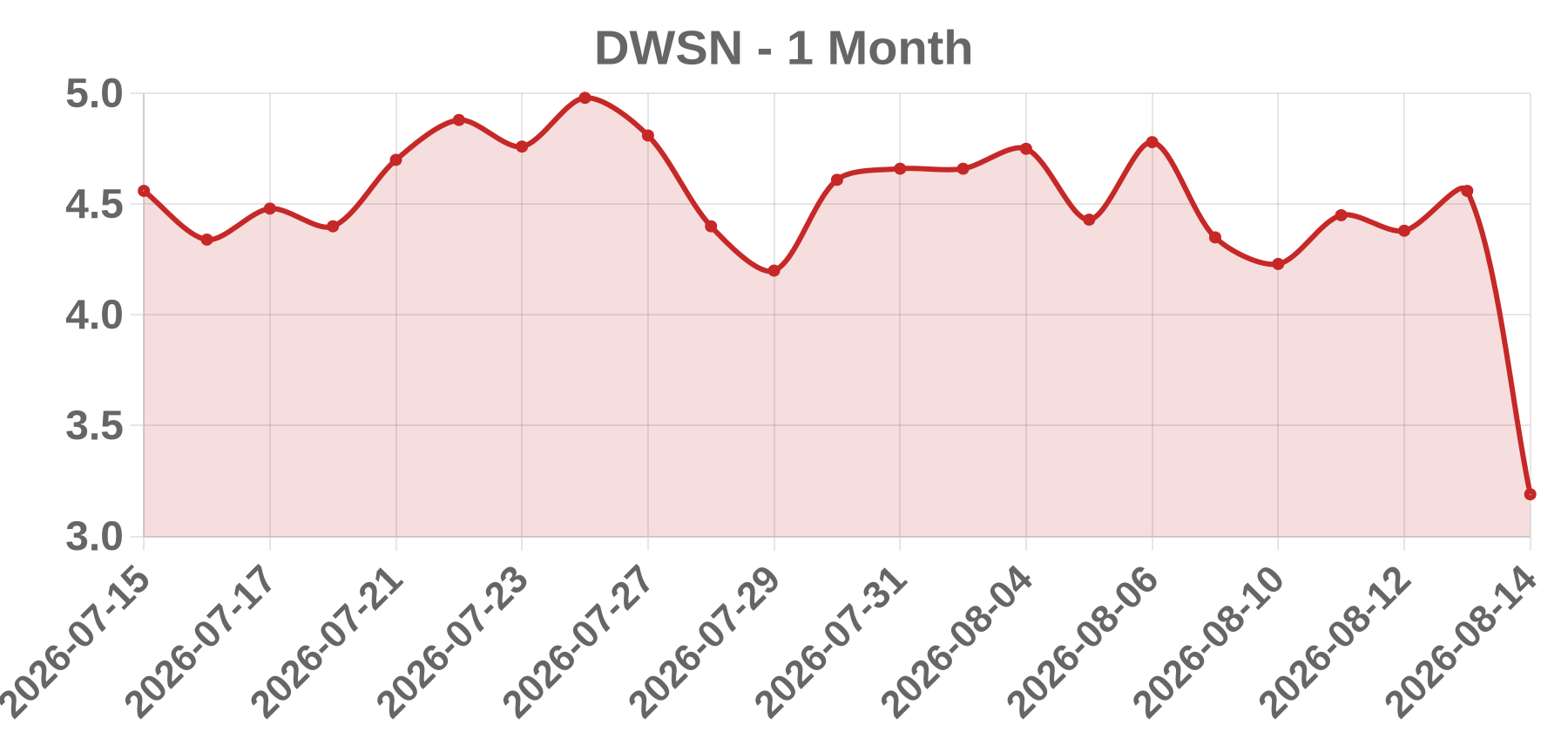
Business Dawson Geophysical Company (NASDAQ: DWSN) is a Texas-based onshore seismic data acquisition and processing provider serving the oil and gas exploration industry in North America. The company uses its crews and specialized equipment to gather and process 2D/3D seismic data for exploration and development projects.
Today’s take DWSN collapsed 29.93% to close at $3.20 on Aug 14, 2026, after opening at $4.38, with volume of 514,399 (roughly 3-4x the ~55k-150k daily average). The move came the day after Q2 earnings released Aug 13: revenue rose 81.8% YoY to $17.9M and gross profit more than doubled to $2.6M, yet the company still posted an operating loss of $3.0M and a net loss of $3.4M ($0.11/share), albeit beating the consensus EPS loss estimate of $0.13. The stock had enjoyed a massive speculative run in July 2026, peaking at $7.85 on Jul 10 before crashing 41.61% on Jul 13 to $4.42, then oscillating in the $4-7 range. Aug 14's 30% drop represents a classic 'sell-the-news' unwind of that speculative rally, compounded by investor realization that losses persist (including $1.7M strategic transaction costs) despite strong revenue growth. Heavy volume of 514K confirmed a broad institutional/retail liquidation.
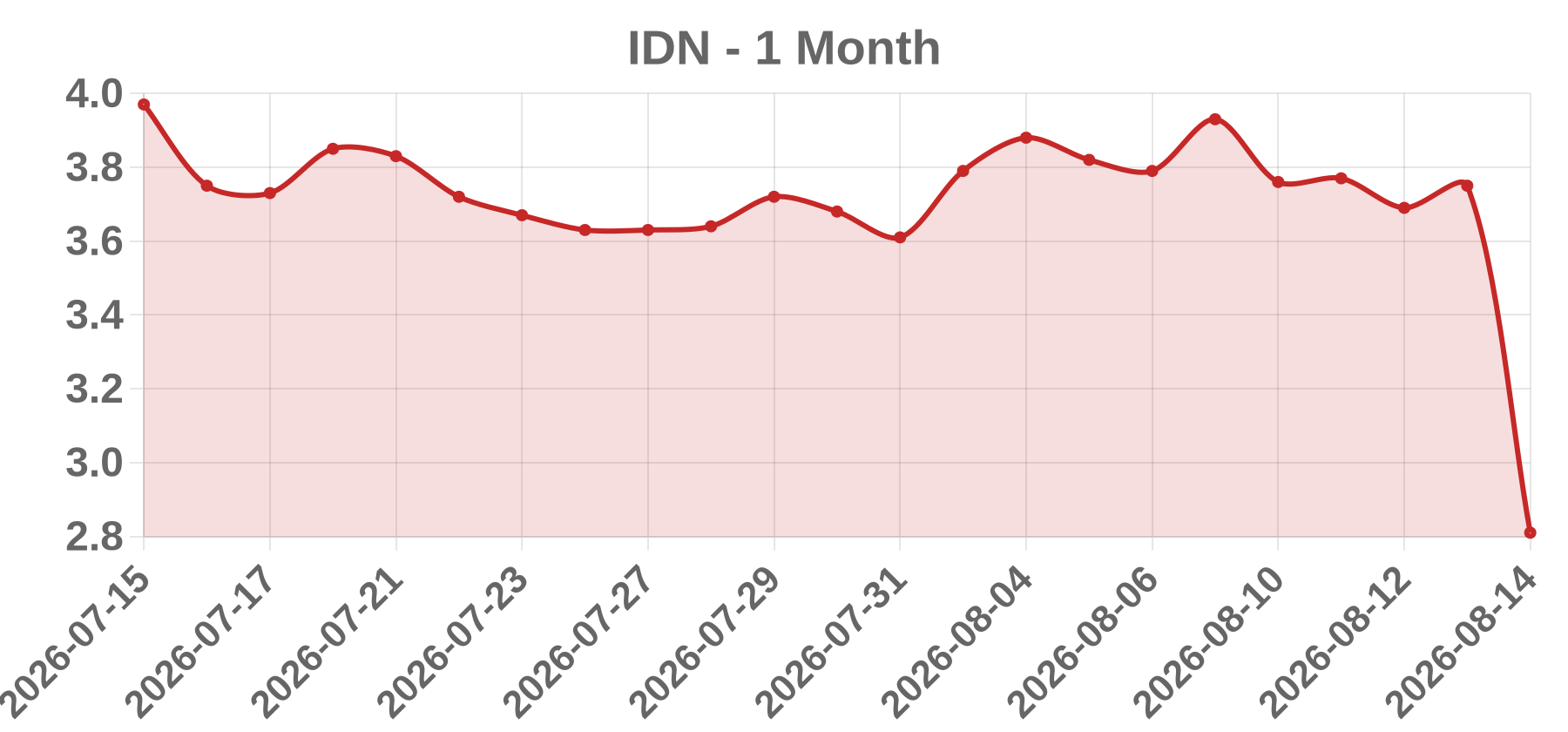
Business Intellicheck, Inc. (NASDAQ: IDN) is an industry-leading identity-verification company headquartered in Melville, New York that delivers proprietary, on-demand digital and physical identification-validation (IDV) SaaS solutions for Know-Your-Customer (KYC), fraud prevention, and age verification. Its customers span banking/lending (~48% of Q2 revenue), retail (~29%), and emerging verticals including cargo/freight, auto dealer scanning, stadium concessions, and background checks.
Today’s take IDN plunged 25.20% to close at $2.80 (down $0.94) on Aug 14, 2026, near its 52-week low of $2.70, on a classic post-earnings negative reaction. Reported Q2 2026 (released Aug 13 after close) actually beat estimates: EPS $0.03 in-line, revenue $5.94M topped the $5.92M consensus, with 16% Y/Y growth, 91% gross margin, net income of ~$0.66M, fifth consecutive positive adjusted EBITDA quarter, and $11.8M cash with no debt. The selloff was driven by a forward-looking 'Customer Update': a customer representing ~29% of H1 2026 revenue is shifting from a sole-source to a multi-source (multi-vendor) architecture and is testing an alternative solution, expected to negatively affect transaction volumes. Management noted the main phase of the transition began in late July but had not yet produced the planned volume reductions by Aug 12, creating visible H2-2026 revenue uncertainty and exposing severe customer-concentration risk. DA Davidson's Rudy Kessinger kept a Buy rating but slashed the price target from $7.50 to $5.00 on Aug 14, amplifying the move.
Business SoundThinking, Inc. (Nasdaq: SSTI) is a Fremont, California-based public safety technology company that delivers AI- and data-driven solutions for law enforcement, security teams, and civic leadership. Founded in 1996 and listed on NASDAQ since June 2017, the company serves more than 300 direct customers and has worked with roughly 2,100 agencies. Its SafetySmart platform encompasses ShotSpotter (the leading acoustic gunshot detection system), CrimeTracer (law enforcement search engine), CaseBuilder (investigation management), ResourceRouter (patrol/resource deployment software), PlateRanger powered by Rekor (automated license plate recognition), Field Agent (an AI data-intelligence layer), and SafePointe (AI-based weapons detection). The company employs about 305 people with ~12.95 millio
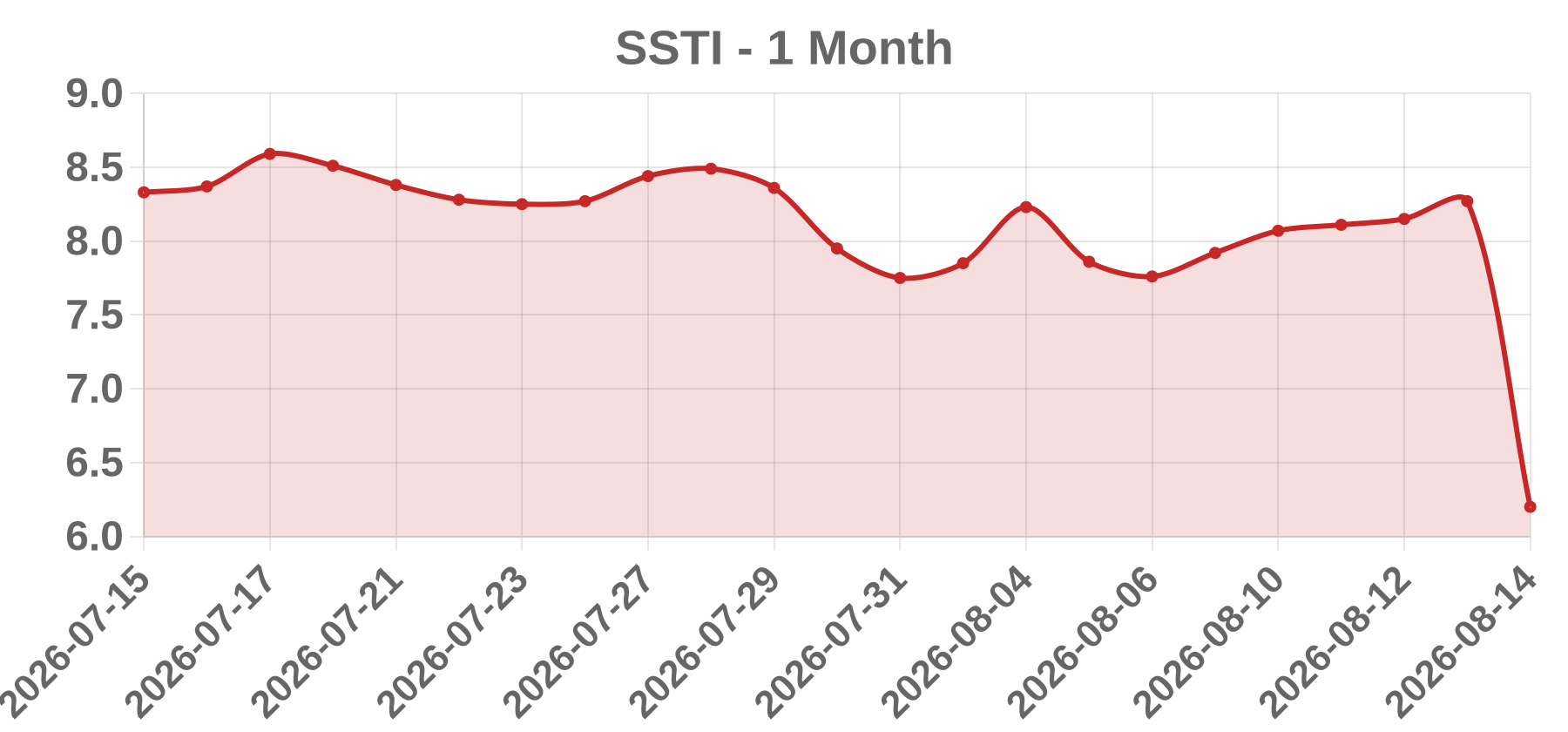
Today’s take The -25.03% crash on Friday, August 14, 2026 (close $6.20, down $2.07) was the full-market repricing of SoundThinking's disastrous Q2 FY2026 results, released after the market close on Thursday, August 13. During the Aug 13 session the stock actually closed up 1.47% at $8.27. On Aug 14 it gapped down to open at $6.19, traded a day range of $5.82-$6.66, and closed at $6.20 on ~876K shares — roughly 12x its ~73K average daily volume. The earnings miss was severe: Q2 revenue fell 8% YoY to $23.9M vs. ~$25.77M consensus (EPS adjusted loss of $(0.37) vs. $(0.25) consensus, a $0.12 miss); gross margin compressed to 48% from 53%; GAAP net loss widened to $4.8M from $3.1M; and adjusted EBITDA fell to $1.2M (5% of revenue) from $3.4M. Most damaging was the guidance: FY2026 revenue guidance was slashed to $99-100M from $109-111M, adjusted EBITDA margin to 8-9% from 16-18%, and ARR guidance lowered from ~$110M to just over $100M by the start of 2027. Management attributed the weakness to contract non-renewals/delays ($2.2M), reduction in catch-up revenue, elongated sales cycles, and a challenging public procurement environment, while also noting it 'continues to monitor the Chicago procuremen
Business Enhanced Group Inc. (NYSE: ENHA) is a New York-based performance medicine and sports entertainment company that operates the Enhanced Games, the first global sporting competition conducted under medically supervised performance enhancement protocols. It also runs the Live Enhanced platform offering supplement products, telehealth services, and longevity-related protocols to consumers.
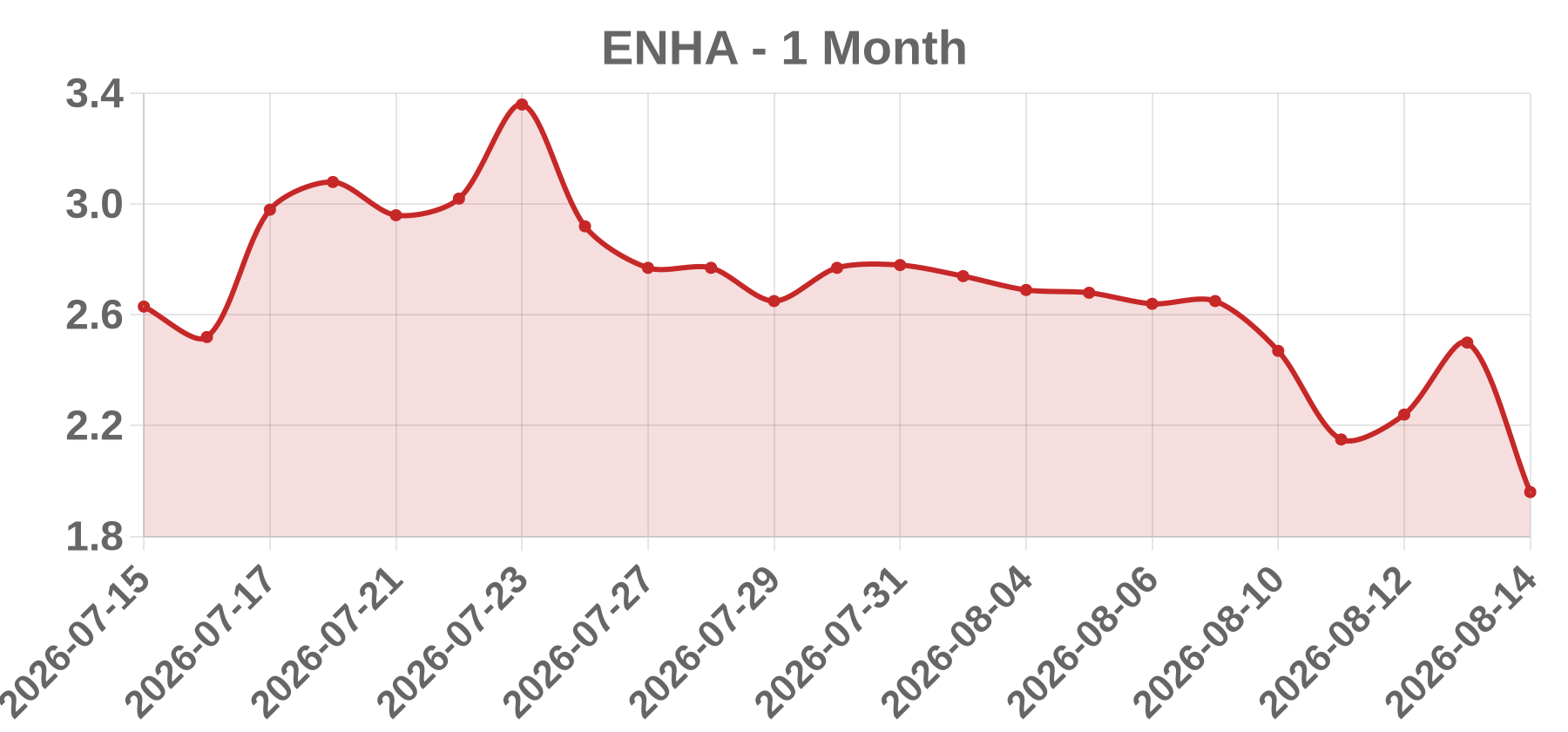
Today’s take ENHA plunged -21.6% on Aug 14, 2026, closing at $1.96 after Q2 earnings released post-market Aug 13 badly missed expectations. Revenue came in at $17.7M vs. $24.6M consensus (miss of $6.89M), with GAAP EPS of -$0.53 vs. -$0.18 expected. Net loss was $61.9M and Adjusted EBITDA loss was $42.7M. The stock had rallied +11.6% to $2.50 into the print on Aug 13 but gapped down to $2.31 at open Aug 14 and sold off all day to a new 52-week low of $1.66 before closing at $1.96. Compounding the disappointment, the company had only $19.6M cash vs. $44M H1 cash burn, with the third PIPE tranche of $13.3M (priced at $3.89/share, far above market) expected to arrive on/about Aug 14 — raising dilution concerns. Volume surged to 3.87M shares, roughly 7-10x normal. The stock did not trade above its open all day, reflecting relentless post-earnings selling pressure.
Business TSS, Inc. (NASDAQ: TSSI), formerly Fortress International Group, is a data-center and high-performance computing (AI infrastructure) services company headquartered in Georgetown, Texas (founded 2004). It operates three segments — Procurement, Facilities Management, and Systems Integration — specializing in AI server/rack integration (including servers for Dell's AI backlog) plus data-center operations and maintenance.
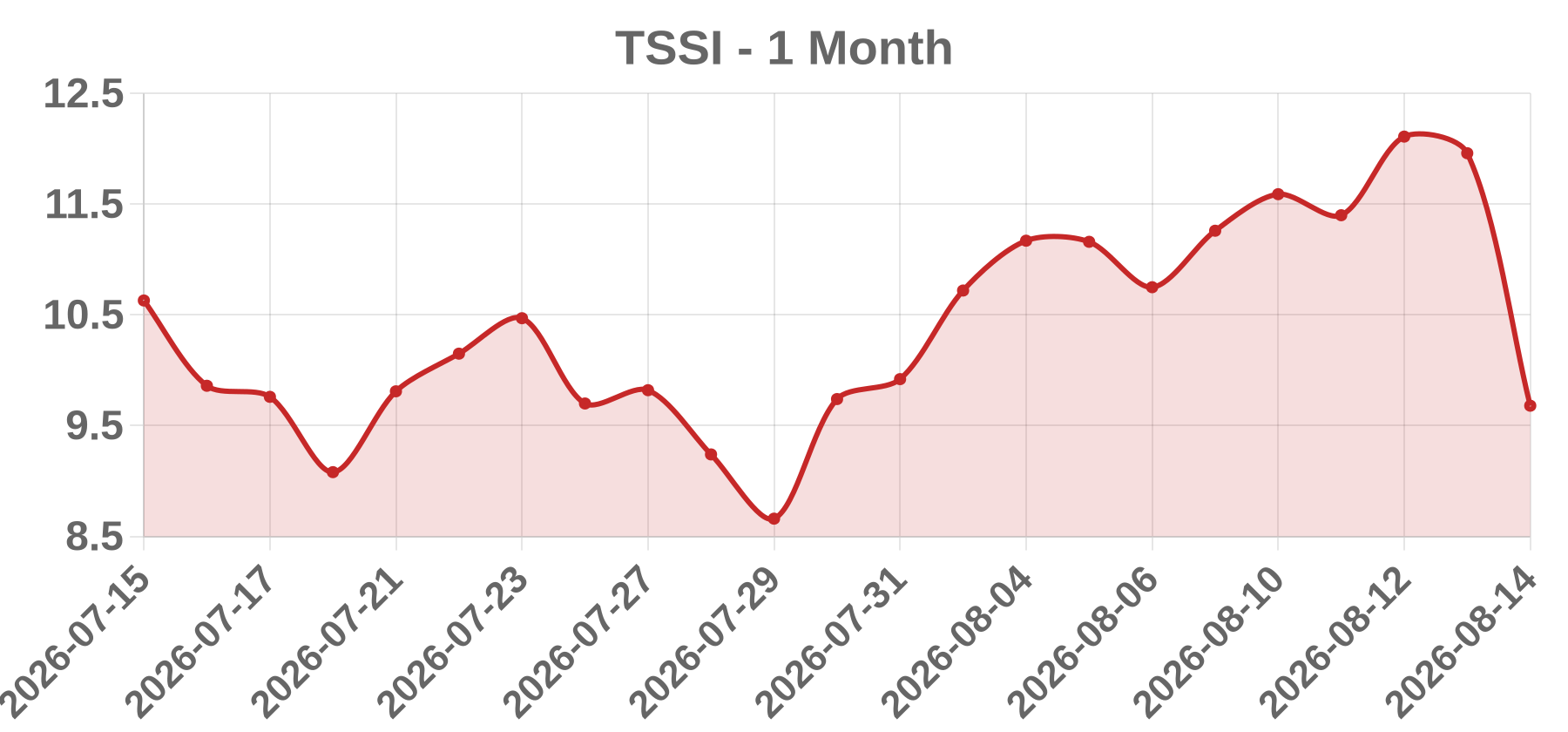
Today’s take TSS shares plunged 19.06% to close at $9.68 on Aug 14, 2026, on ~3.23M shares, after Q2 2026 earnings (released Aug 12 after market close) badly missed expectations. Revenue fell 20.1% YoY to $35.14M versus ~$44.7–48M consensus (a ~$9.6M miss), and diluted EPS of $0.05 trailed the $0.08–0.06 consensus, while net income slipped to $1.4M from $1.5M. Lower-margin procurement revenue dropped ~45% to $18.2M, though high-margin systems integration (AI/rack) rose 46% to $13.9M (39% of revenue). Shares fell ~23.5% after-hours to ~$9.15 on Aug 12 and another 20.2% pre-market to $9.55 on Aug 13, settling at $9.68 on Aug 14. On that day Needham (Matthew Calitri) cut its price target from $16 to $13 while maintaining Buy. The market repriced the small-cap on the magnitude of the top-line miss despite the favorable mix shift, reaffirmed $20–22M FY EBITDA guidance, and a ~$17M investment toward NVIDIA Vera Rubin readiness.
Business Xos, Inc. (NASDAQ: XOS) is a Los Angeles-based leading provider of energy storage and fleet electrification solutions. The company designs, manufactures, and sells Class 5-8 battery-electric commercial vehicles (stepvans, stripped chassis) alongside the Xos Hub movable battery energy storage system and the Power Hub containerized unit targeting data-center and grid-constrained power demand.
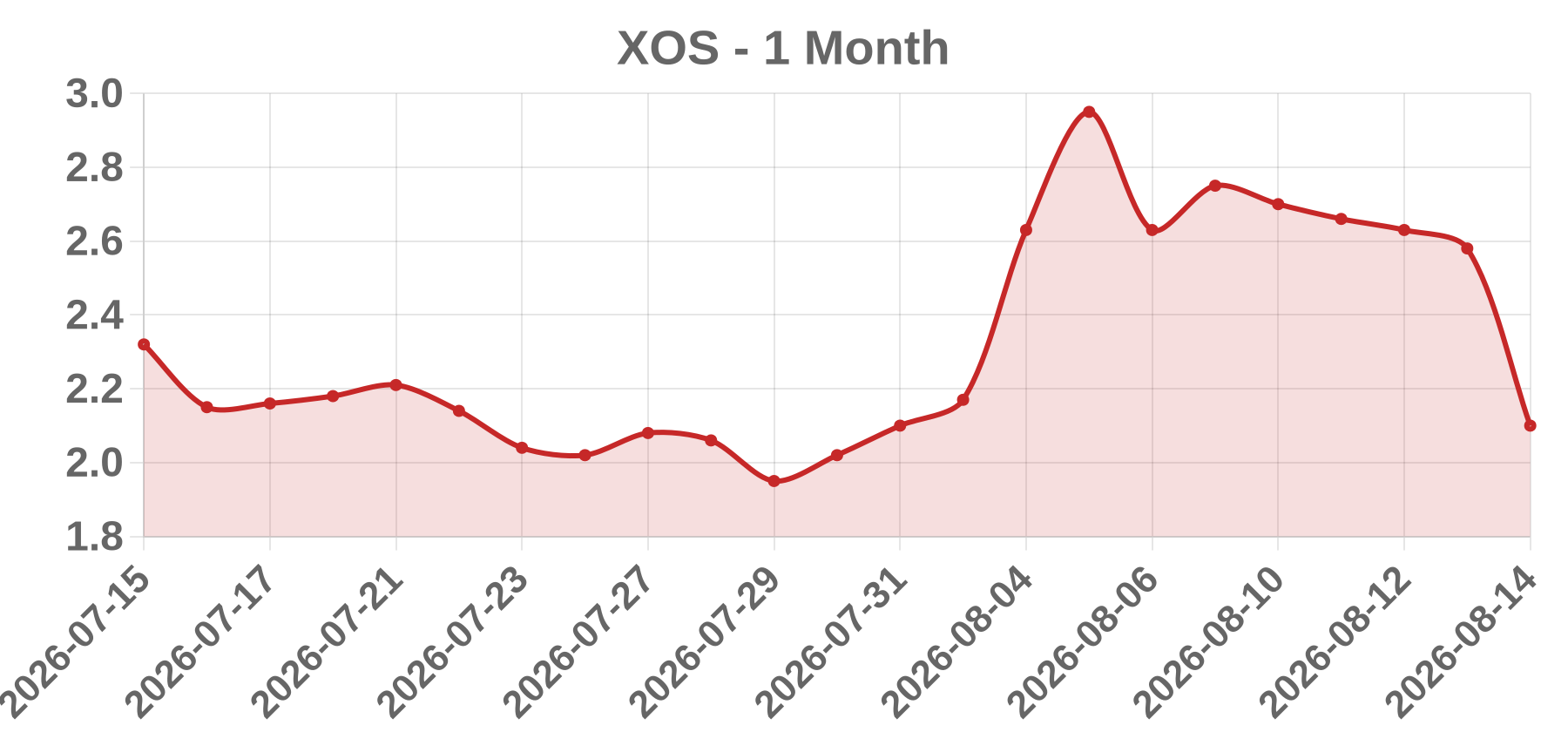
Today’s take Xos reported Q2 2026 results after market close on Aug 13, 2026, and the Aug 14 session (-18.8% to $2.095 from $2.58 prior close) was the market's first full reaction. The results contained three negative catalysts: (1) Revenue of $4.7M plunged 74.2% YoY from $18.4M in Q2 2025 and ~58% sequentially from $11.2M in Q1 2026, versus analyst consensus of ~$12.15M — a dramatic shortfall driven by order deferrals, with deliveries dropping to 30 units from 135 a year prior. (2) Management cut FY2026 revenue guidance to $35-43M (from prior ~$40-50M), well below the $47.05M analyst consensus, and lowered unit-delivery guidance to 250-350 units. Although management characterized softness as 'deferrals, not cancellations,' the top-line downgrade pressured shares. (3) Dilution overhang: the company raised ~$7.6M net in Q2 via its ATM program and a registered direct offering (including a $6M offering at $5.50/share). Offsetting positives — record gross margins, Power Hub launch momentum, and a $3M follow-on Xos Hub order — were insufficient to stem the double-digit single-session decline.