US common stocks / ADRs: top 10 by volume; top 10 gainers (by % change, volume as tie-breaker); top 10 losers (by % change, prefer liquid names). Deep notes cover the de-duplicated set across the three boards.
30 names on this page · volume 10 · gainers 10 · losers 10
Order: volume board → gainers → losers; each ticker appears once. Summaries of public information only — please verify primary sources.
1/10NVDA NVDA
+1.80%
Close 228.45 · Vol 133.74M · Type: Other
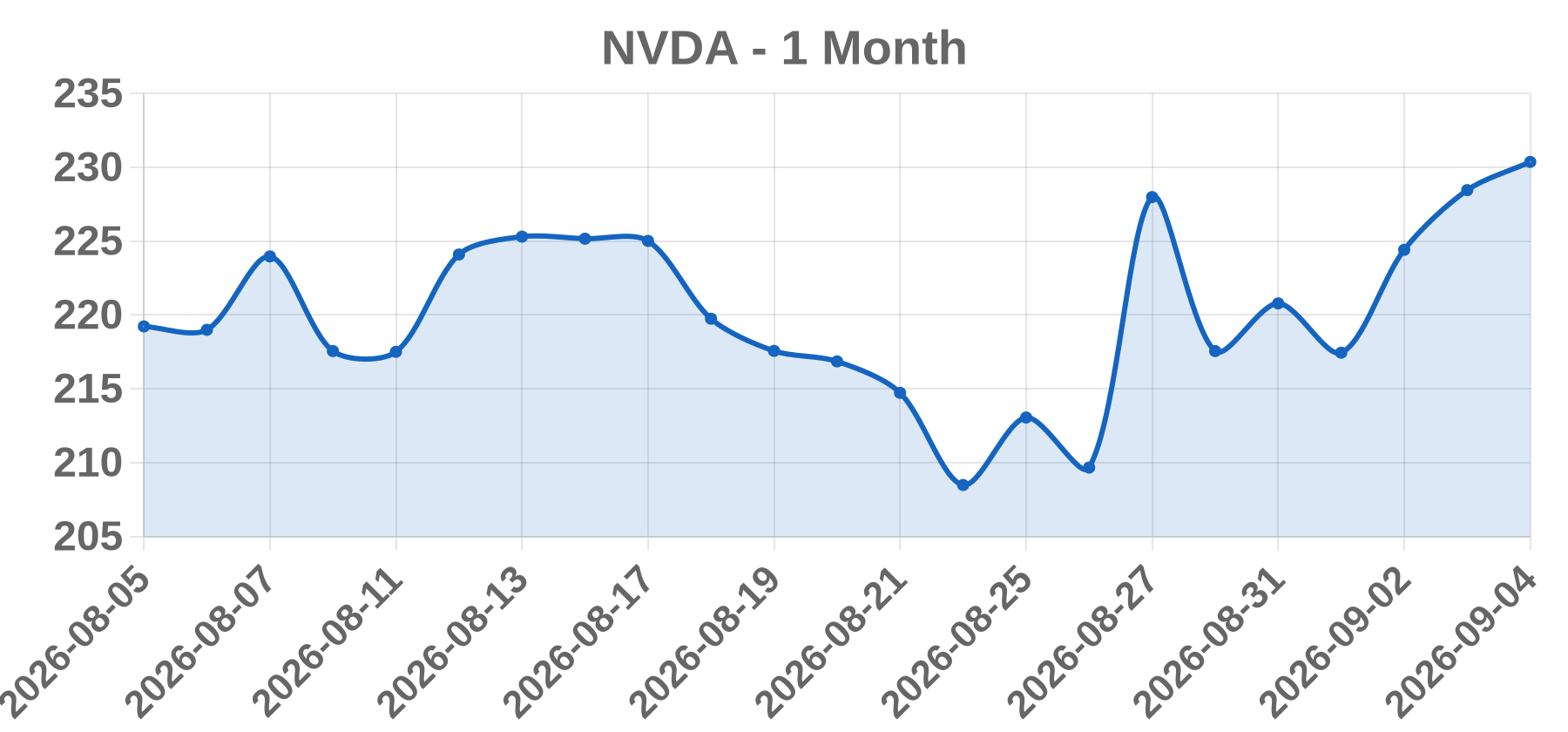
Approx. 1-month price (illustrative)
Business NVIDIA Corporation is a US fabless semiconductor company listed on the Nasdaq Global Select Market (part of the S&P 500 and Nasdaq-100). It designs and sells GPUs, system-on-chip products, and software/platforms serving gaming, professional visualization, data center and edge/AI computing. In fiscal 2026 its current-gen Vera Rubin platform entered full production, and Data Center is its dominant growth engine.
Today’s take NVDA rose +1.80% (+$4.04) to close at $228.45 on Sept 4, 2026, the day after Nvidia agreed (Sept 3) to acquire open-source AI model hub Hugging Face for ~$12.93B ($11.9B to shareholders plus ~$1B retention). Analysts digested the deal positively through Sept 3-4: Rosenblatt reaffirmed Buy/$390, Needham reiterated Buy/$300, Raymond James held Strong Buy, William Blair called it outperform, and StoneX kept Buy/$335, viewing the acquisition as securing control of a critical AI developer entry point. NVDA was up ~2.5% intraday before closing +1.8%. Tailwinds included a ~3% Philadelphia Semiconductor Index rally (memory names +3-6%) and a dovish Fed (Gov. Waller signaling a possible rate hold), lifting the Dow +1.18% and Nasdaq +1.4%. NVDA also rode the afterglow of blow-out fiscal Q2 (rev $96.2B, +106%; data-center $89B; Vera Rubin shipping; a record $26B returned to shareholders). The stock reached a ~2-month high.
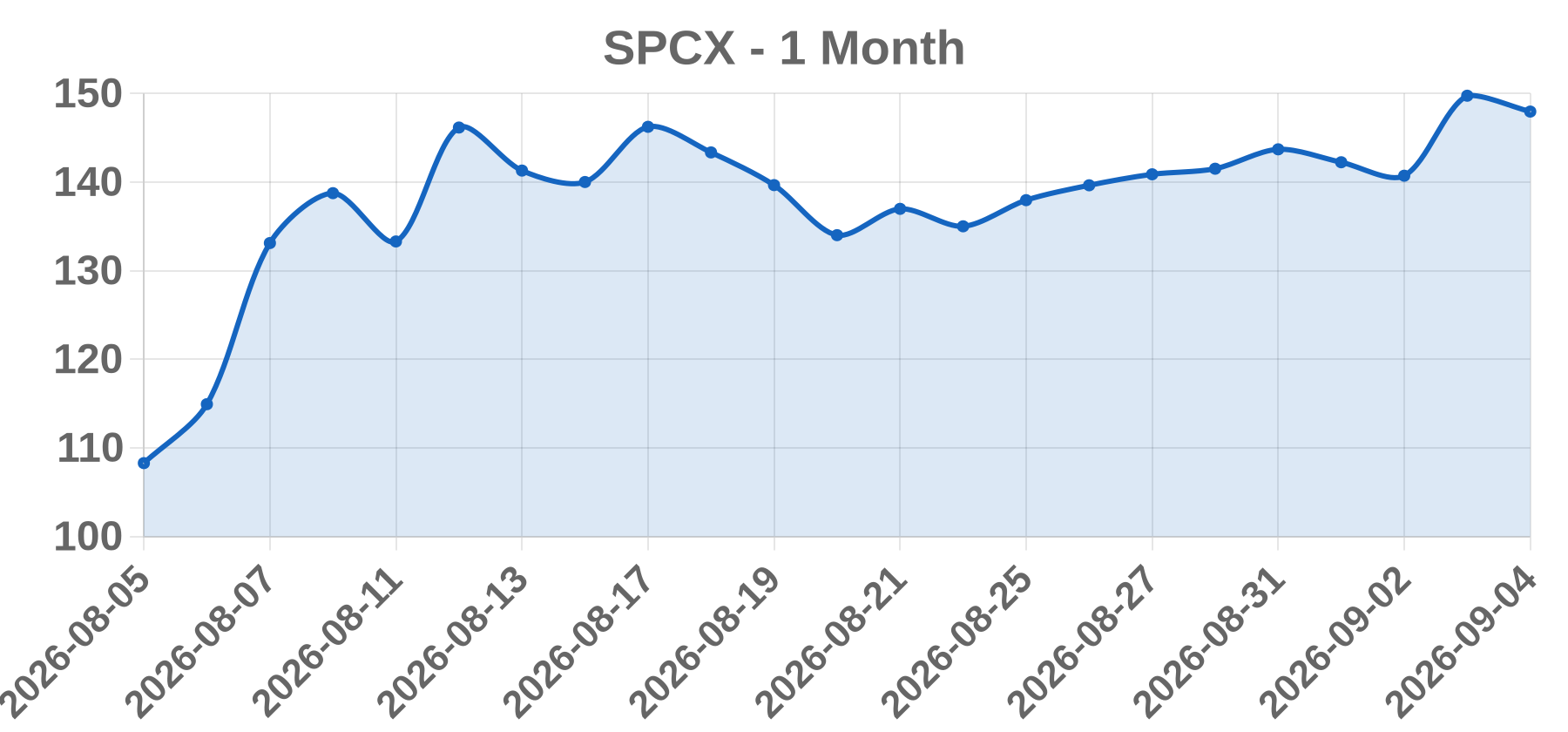
Business Space Exploration Technologies Corp. (SpaceX) is a vertically integrated aerospace and AI-infrastructure company listed on Nasdaq under SPCX (IPO June 12, 2026 at $135). Its Space segment designs and launches reusable rockets, the Connectivity segment operates the Starlink low-earth-orbit satellite broadband network, and it is stacking AI cloud compute onto the same balance sheet.
Today’s take SpaceX surged +6.42% (+$9.03) to close at $149.74 (session was Sept 3, 2026, captured in the Sept 4 end-of-day feed), reclaiming $150 intraday (high $152.30) for the first time since early July and regaining ~$2 trillion market cap. The primary trigger was Oppenheimer's Timothy Horan raising the price target to $280 from $250 (Outperform) on Sept 2, arguing SpaceX's vertically integrated AI stack (data, Nvidia GPUs, Grok, and the ~$60B Cursor deal) is uniquely positioned amid an AI compute/resource supply shortage — reframing SPCX as an AI-infrastructure play rather than a pure launch company. Supporting catalysts: Q2 revenue +92% to $7.81B (adjusted EBITDA +191% to $3.5B; AI segment +248%); an FCC filing to carry Starlink terminals on Starship Flight 14 (first fully orbital attempt, targeted ~Sept 15); Musk's Cybercab-Starlink integration momentum (Tesla +5.4%); and Musk confirming in-house gas-turbine blade casting feeding a 20GW AI data-center project. One-month gain expanded to ~29%.
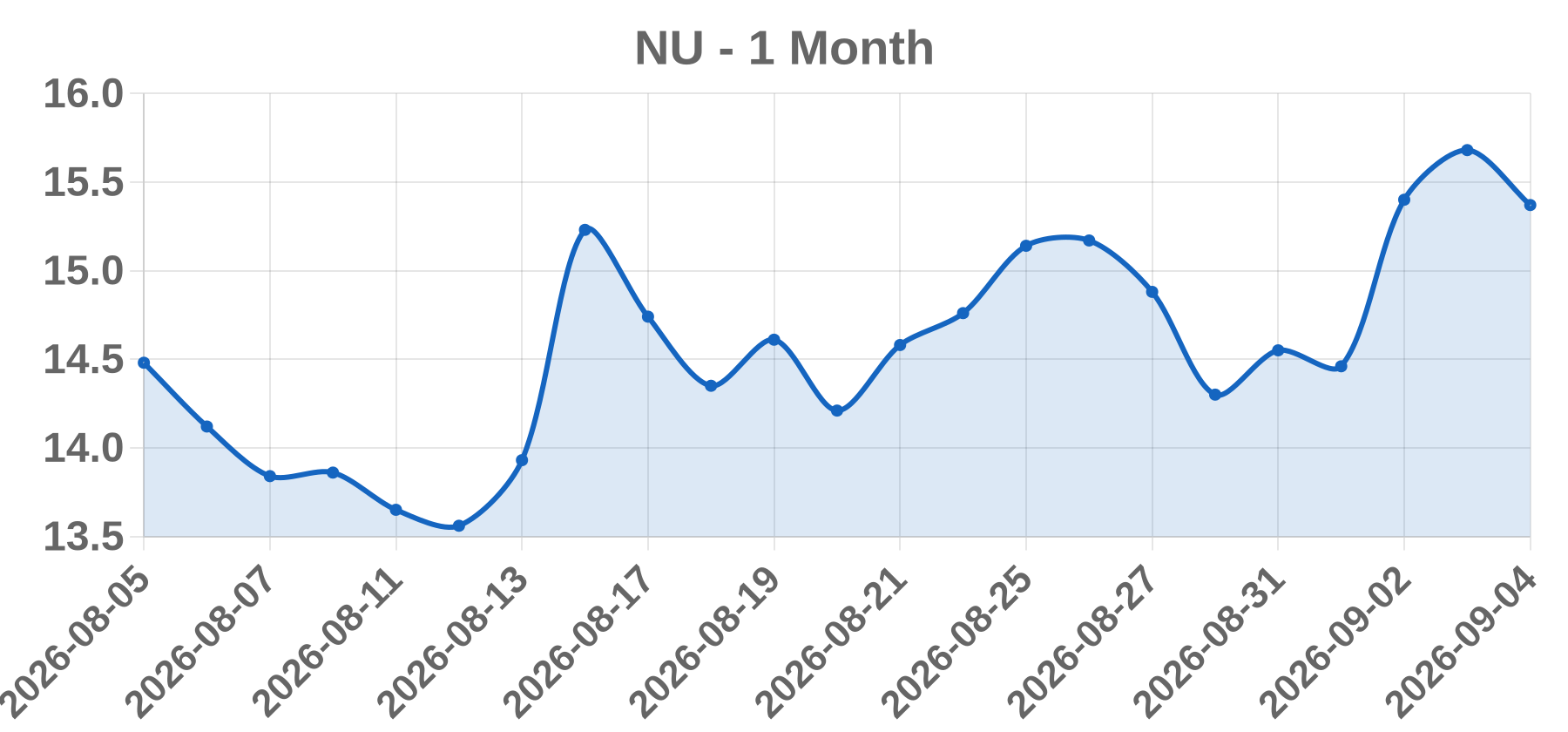
Business Nu Holdings Ltd. (NYSE: NU) is the largest digital bank in Latin America, operating as Nubank across Brazil, Mexico, Colombia, and the U.S. It serves about 139 million customers through digital accounts, credit cards, and lending, with roughly 118 million customers in Brazil.
Today’s take On the analyzed session (matching the reported close of $15.68, +1.82%, ~81.8M shares), Nu Holdings extended a multi-day rally rooted in record Q2 2026 results reported Aug 13 — net income of $1.1B (+49% YoY), its first quarter above $1B, with 33% ROE and revenue up ~39% to nearly $5.9B. The move was a spillover of the prior session's +6.5% surge driven by heavy foreign capital inflows into Brazilian equities (turnover R$40.9B vs ~R$32B average), which lifted the entire Brazilian bank complex. Reinforcements included a $1B share buyback, bullish analyst actions (UBS to $18.20, Needham to $19, and a fair-value estimate raised to $23), and consensus 'Buy' rating with an average $18.78 target, ~20% above price. Note the user's reported session (15.68, +1.82%) corresponds to the Sept 3 US session; the actual Sept 4 session closed at $15.37 (-1.98%), so feed/labeling conventions explain the date discrepancy.
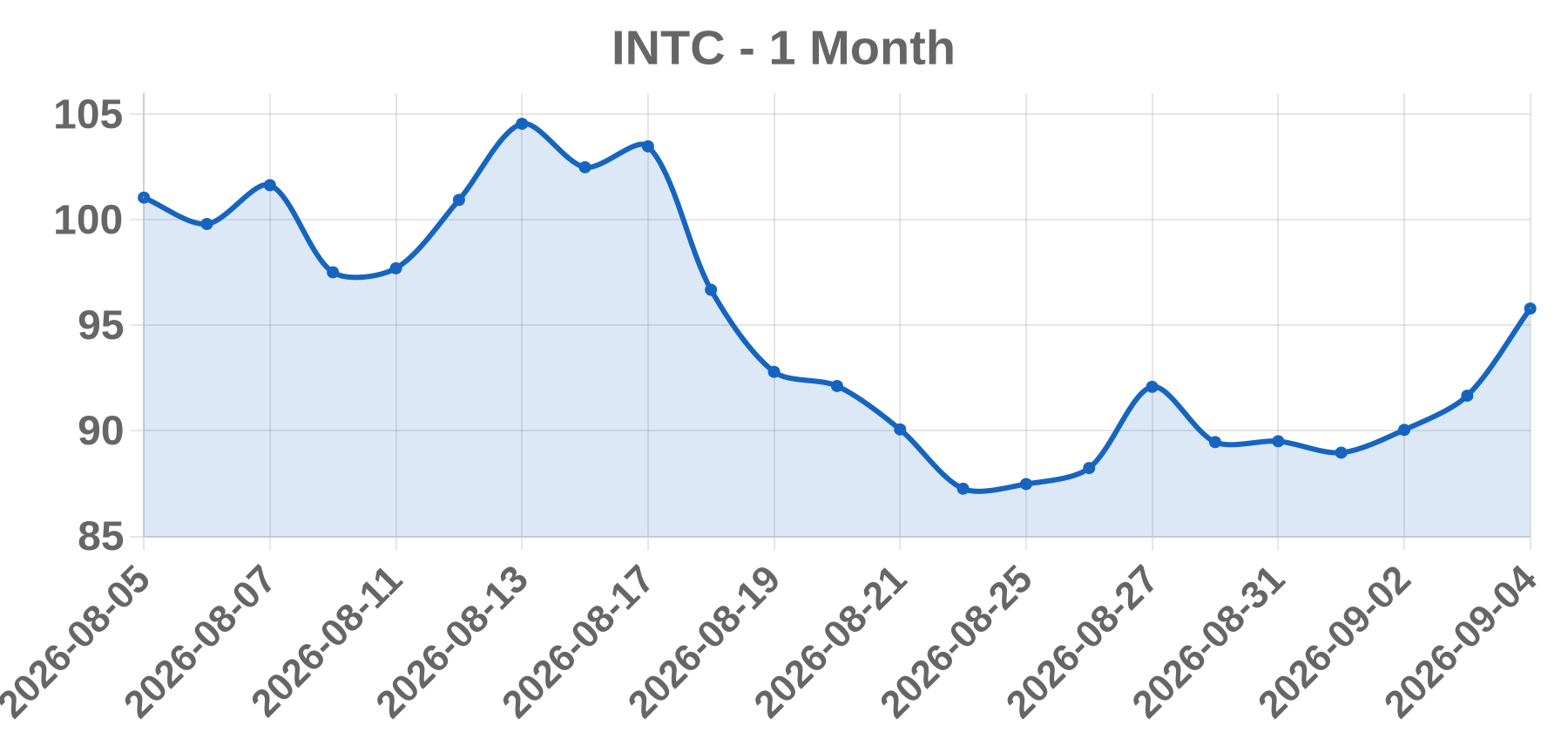
Business Intel Corporation (NASDAQ: INTC) is a US-based multinational semiconductor designer and manufacturer, making processors for PCs, servers/data centers, and AI infrastructure. The company is mid-transition, driving its foundry turnaround and AI data-center CPU strategy under CEO Lip-Bu Tan.
Today’s take Intel closed at $91.67 on Sept 3, 2026 (+1.80%) on ~76M shares, lifted by a bullish bull-case from Global Equities Research's Trip Chowdhry. Citing Dell's 122% year-over-year traditional-server revenue surge, Chowdhry argued Intel CPUs face a 16-fold YoY demand expansion from AI/agentic video-audio workloads, setting a $200 price target (2031 EPS of $20). The call complemented a sector-wide chip rally (NVDA, AMD up ~1.5% premarket) despite rising Fed rate-hike odds from a strong jobs report. A clear bearish counterweight: Mizuho's Vijay Rakesh trimmed its target to $92 from $109 (Neutral/Hold) on near-term multiple compression among agentic-AI names — the Street consensus remained 'Hold' with ~$114.88 average target. The date field (2026-09-04) is a data-labeling artifact; providers attribute the $91.67 close to Sept 3, 2026.
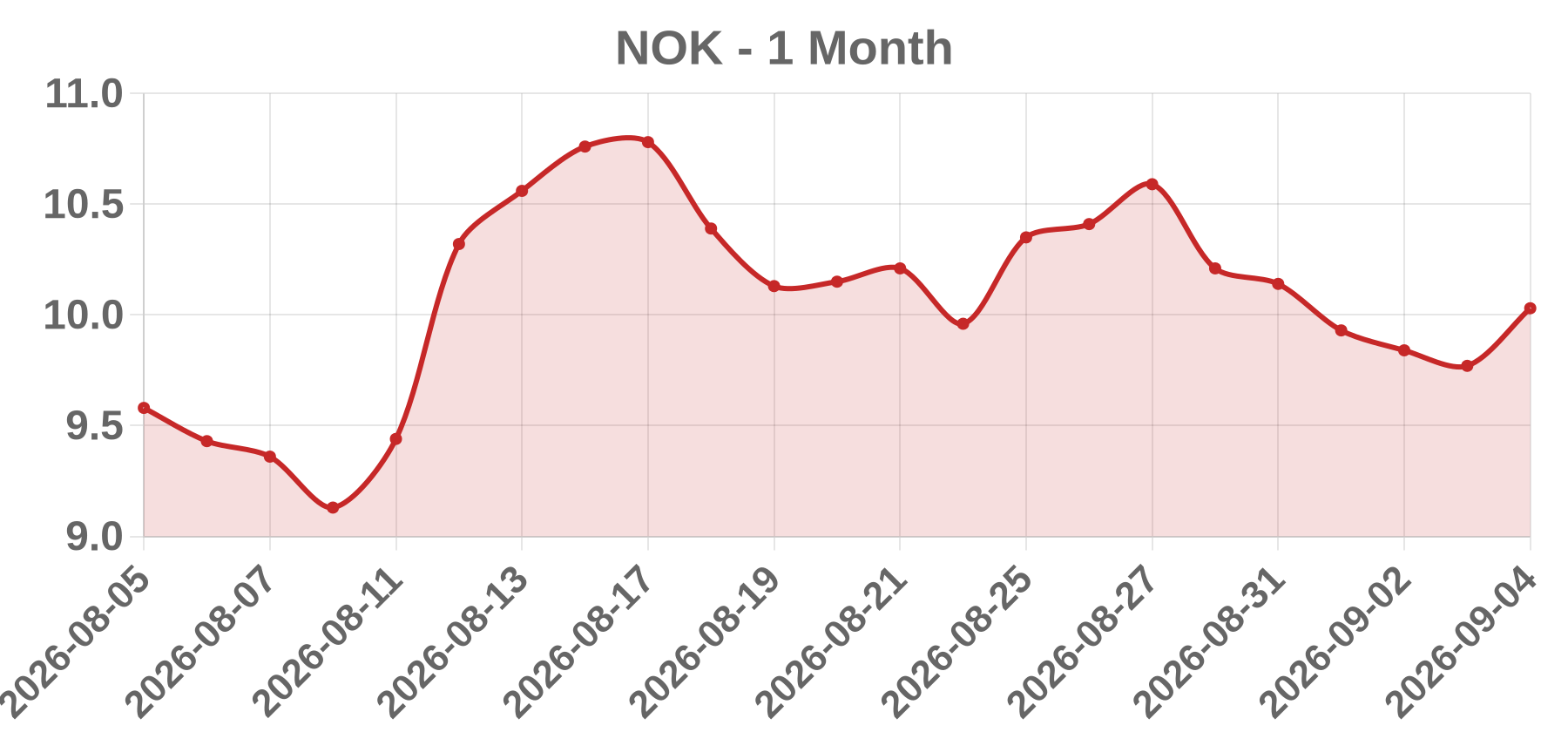
Business Nokia Oyj (NYSE: NOK), a Finnish multinational, designs and sells fixed, mobile, and IP/cloud network equipment and software for telecom carriers and enterprises, with growing AI-data-center and optical-communications exposure. Shares trade on the NYSE as ADRs.
Today’s take NOK slipped 0.71% to $9.77 on the Sept 3, 2026 session (turnover up ~64.6% day-over-day), even as its widely anticipated re-entry into the EURO STOXX 50 (replacing Volkswagen, effective Sept 21) was confirmed on Sept 1-2. The drop reflected 'buy-the-rumor/sell-the-news' profit-taking after a big 2026 rally - the stock still sits ~44% below its 52-week high of ~EUR 14.97 reached in June - plus consolidation below the 50-day average (down ~4.8% week-over-week). Negative catalysts dominated: Nokia is winding down virtually all mainland-China operations, closing its Hangzhou R&D center (~1,600 jobs) and facilities across Peking, Chengdu, Qingdao and Shanghai by year-end, with 2026 restructuring costs now guided to ~EUR 800M. Separately, Celestial Acquisition Corp terminated its Modulate Space acquisition agreement, another strategic setback. The stock subsequently rebounded ~2.7% to ~$10.03 the following session (Sept 4).
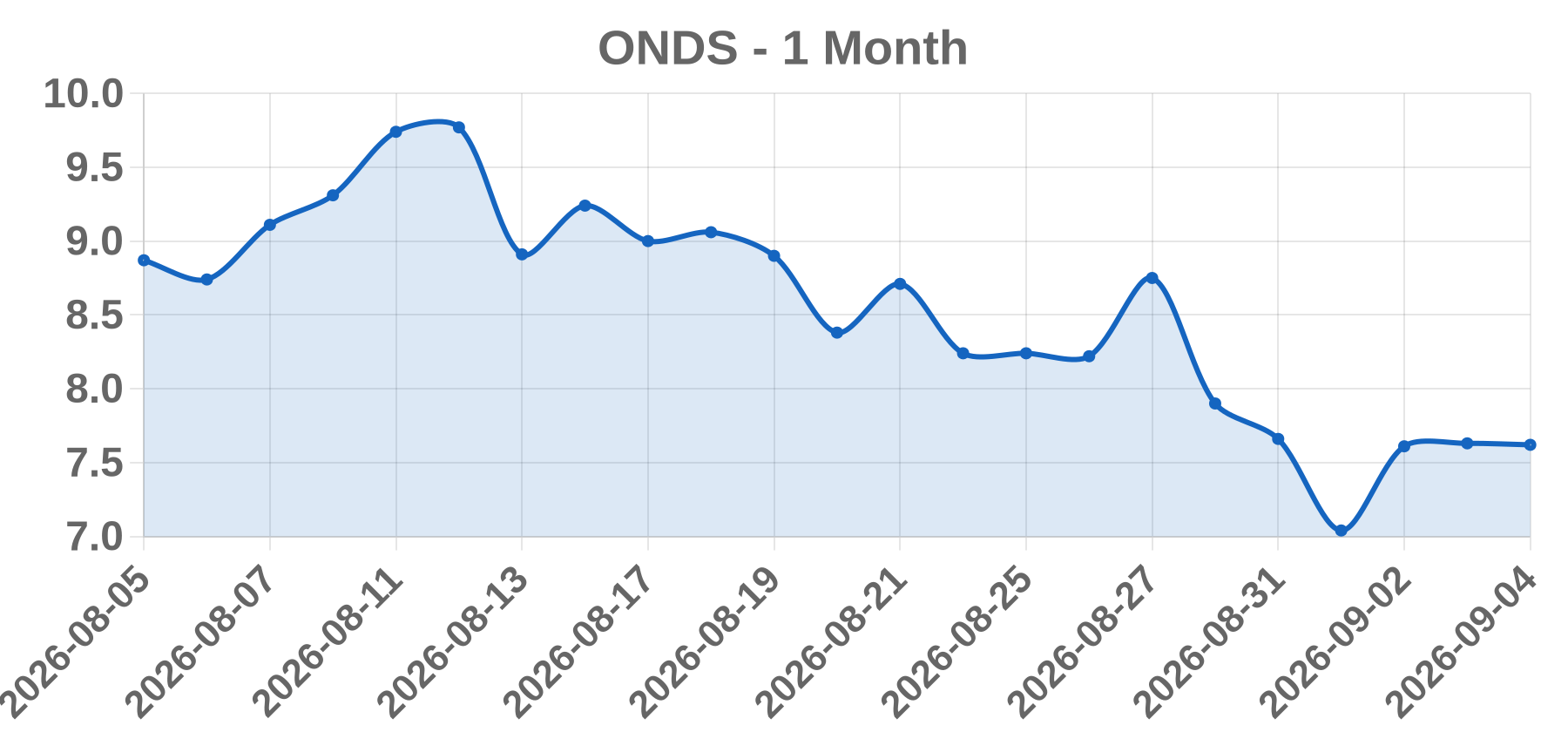
Business Ondas Holdings Inc. (NASDAQ: ONDS) is a US-based provider of private wireless, drone, and automated data solutions operating through two segments: Ondas Networks (FullMAX software-defined-radio platform for secure wide-area broadband) and Ondas Autonomous Systems (autonomous drones and counter-drone suites, via acquisitions of Mistral, DZYNE Technologies, and Cyberhawk). The company serves government, defense, and critical-infrastructure customers.
Today’s take The featured heavy-volume data point (close $7.63, +0.26%, ~72.9M shares) matches the September 3, 2026 session, the final day of a highly volatile, holiday-shortened week (a source-date offset explains the 2026-09-04 label, whose own close was $7.62 on ~43M). Sept 3's ~73M-share churn extended Sept 2's sharp +8.10% surge (79.7M vol) driven by Trump's new 100% tariff on imported drones/UAS taking effect plus AI-defense momentum. It followed Sept 1's 8% selloff to $7.04 as investors weighed the steep implied Q4 2026 revenue target (~$256M, +74% q/q) from management's raised $525-$550M full-year guidance. Q2 2026 set a record $83.8M revenue (+67% q/q, +1,236% y/y) but an adjusted EBITDA loss of $50.6M (~60% of revenue) beat nothing and spooked shorts. Supporting catalysts include a $6.9M Australian Defence Force counter-drone order and the recruitment of ex-Mossad chief David Barnea to lead an AI-defense pivot. The session's heavy volume on a flat price reflects intense churn as ~40% short interest (roughly 41% of float per sell-side notes) fuelled squeeze-and-retrait volatility near a key level.
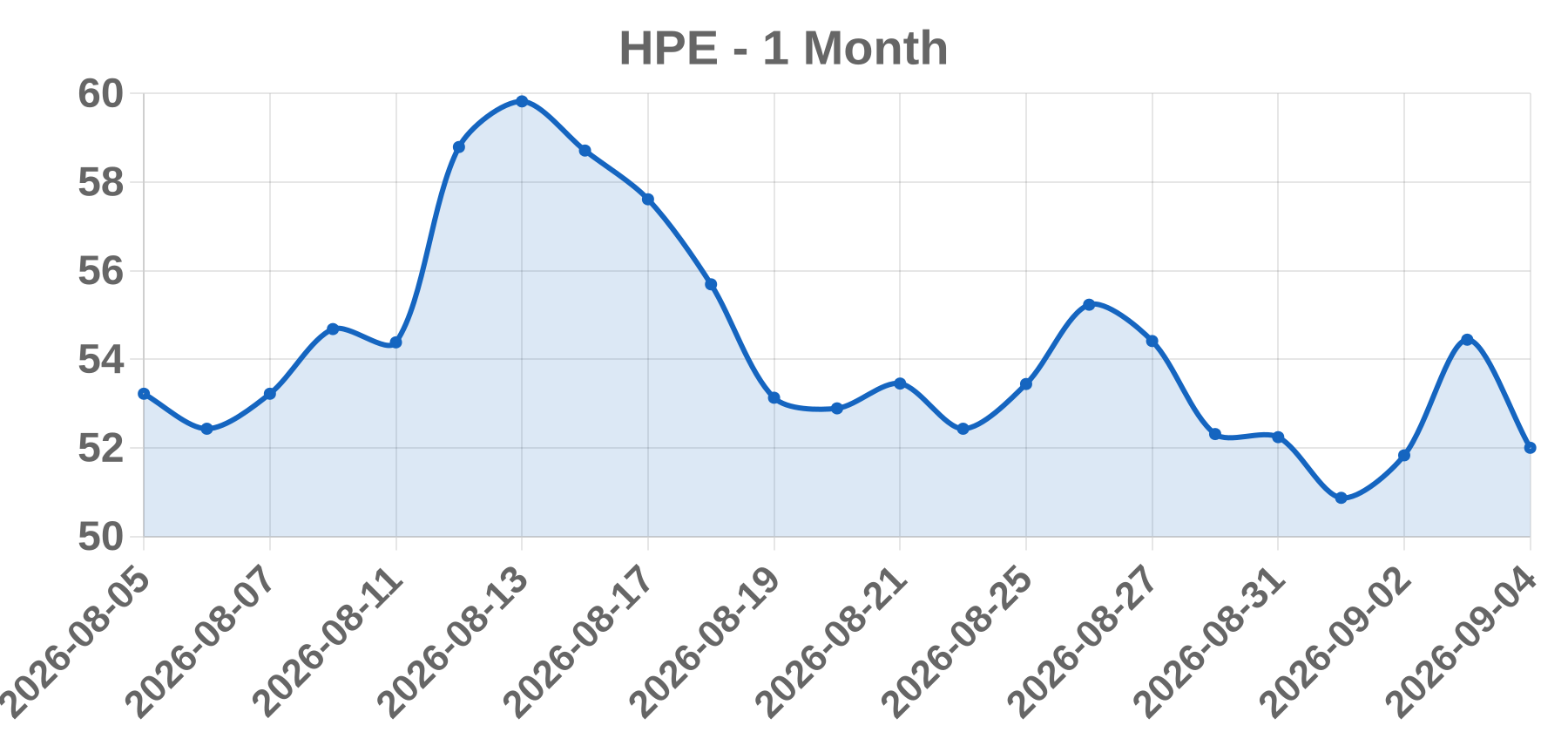
Business Hewlett Packard Enterprise Company (NYSE: HPE) is a Houston, Texas-based global technology company delivering edge-to-cloud infrastructure including AI servers, storage, and networking (Juniper Networks). Its segments span Cloud & AI, Networking (data-center and campus switching/routing), and hybrid cloud via the HPE GreenLake platform.
Today’s take HPE climbed +5.04% to close at $54.44 on abnormally heavy volume (~72M shares, roughly 3.6x its ~20M average) in the session following its Sept 2 fiscal Q3 FY26 earnings. The company posted a beat-and-raise quarter: record revenue of $12.2B (+34% YoY, top-and-bottom beat vs ~$12B consensus) on record AI server demand, adjusted EPS of $1.11 (vs $0.93 est), AI systems orders of $3.1B, and a record ~$7.6B AI backlog. Management lifted FY26 revenue growth guidance to 34%-37% and FY27 to 13%-17%, set Q4 EPS guidance of $1.20-$1.30 on revenue of $13.9B-$14.8B (both above consensus), and announced an expanded Oracle multi-year deal to deploy HPE Juniper networking in Oracle's AI data centers. After-hours on Sept 2 the stock slipped ~5-8% on supply/margin concerns (DRAM/NAND memory constraints to 2028), but bulls re-engaged Sept 3, reinforced by a Deutsche Bank Buy (target lifted to $68) and BofA target hikes, powering the +5% surge to $54.44.
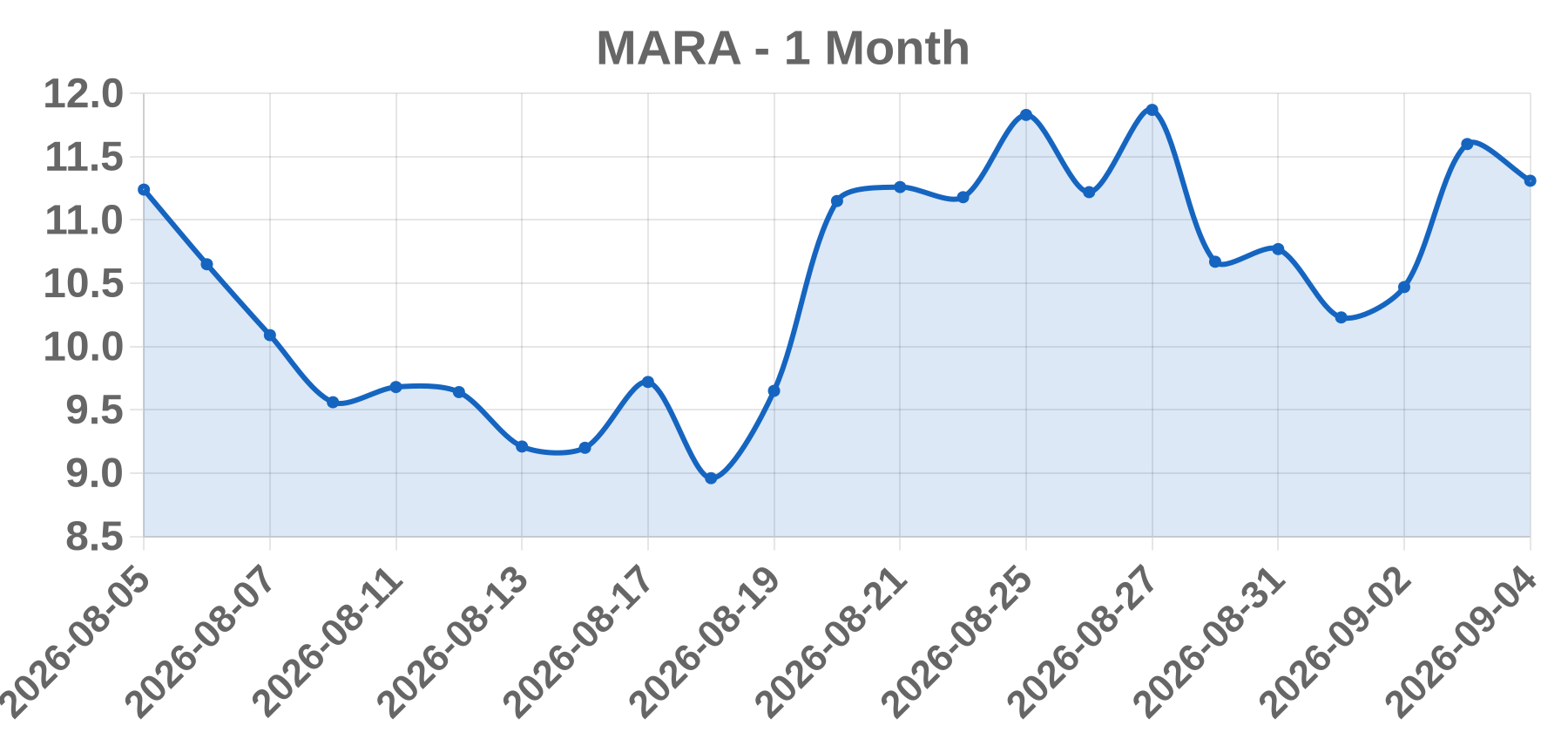
Business MARA Holdings, Inc. (NASDAQ: MARA) is a Miami/Hallandale Beach-based energy and digital-infrastructure company that mines bitcoin with its own low-cost power and is pivoting into AI / high-performance-computing (HPC) compute and data-center leasing. Formerly Marathon Digital Holdings, it changed its name to MARA Holdings in August 2024 and is one of the largest publicly traded bitcoin miners.
Today’s take MARA closed +10.79% at $11.60 on 68.8M shares on the session reported as 2026-09-04 (the US trading day of Sep 3). The move was not company-specific (no earnings/filings that day) but a broad crypto-equity rally driven by Bitcoin rebounding above the psychologically key $80,000 level and briefly exceeding $82,000 — its first time back above $80K since Aug 28 and a three-month high. The surge was amplified by a dovish signal from Fed Governor Christopher Waller, who said cooling inflation data could support holding rates steady in September, sending Treasury yields and the dollar down and pulling money into high-beta 'hard asset' names. Entire crypto complex rallied (Coinbase +10%, Circle +16%, Riot +11%, Bit Digital +16%, Canaan +23%). As a high-beta BTC proxy, MARA outperformed. Context: the stock had fallen ~56% from July highs and reported weak Q2 earnings (Aug 6, ~$174.9M revenue, still loss-making), so this was momentum/macro relief rather than fundamentals.
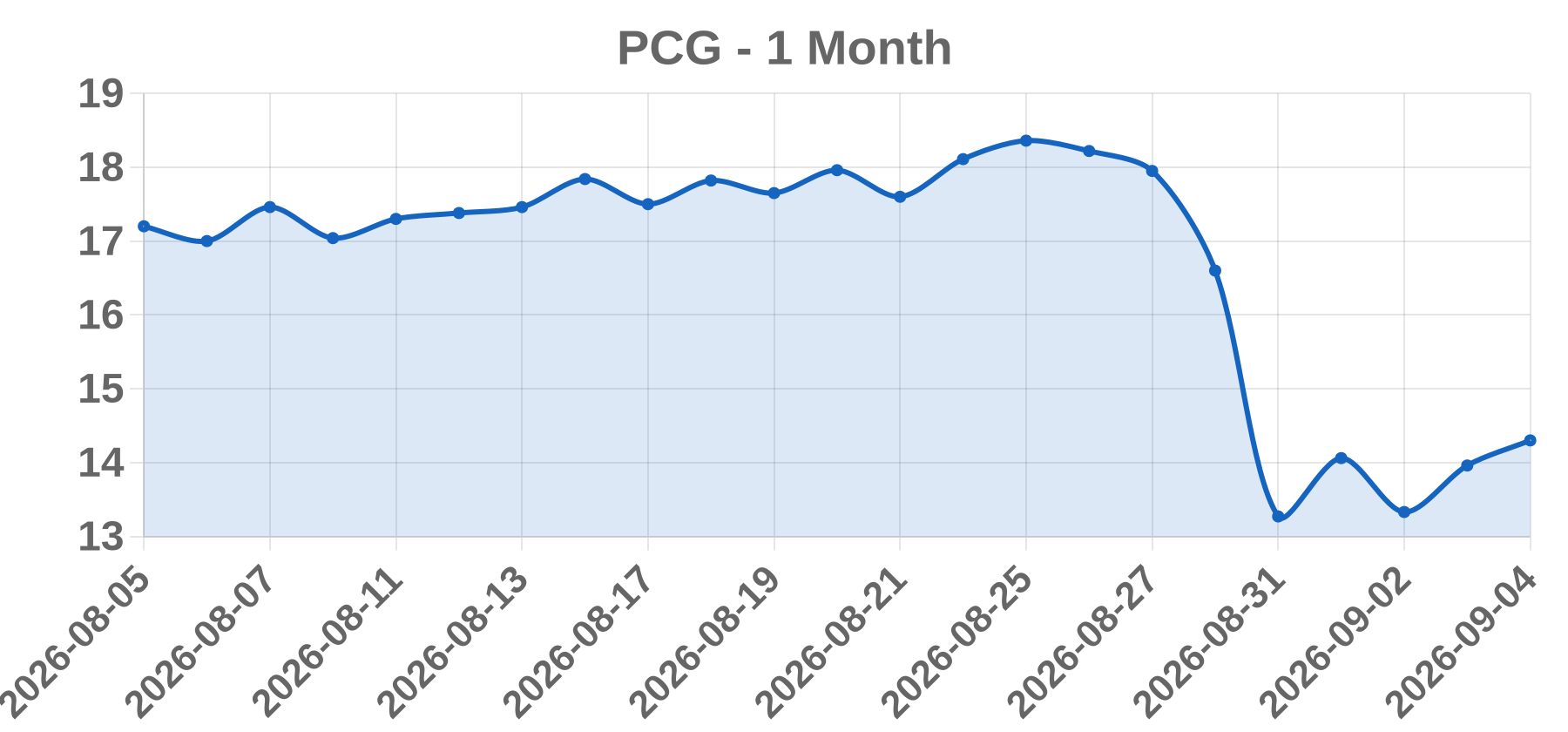
Business PG&E Corporation (NYSE: PCG) is a holding company whose main subsidiary, Pacific Gas and Electric Company, is a regulated investor-owned utility supplying electricity and natural gas to roughly 16 million people across northern and central California. It operates amid heavy regulatory scrutiny and wildfire liability exposure.
Today’s take The analyzed session closed up +4.73% at $13.96 on ~65.6M shares as PCG rebounded hard from a violent multi-day selloff that took it from ~$18 to a low near $12.59. California effectively shelved SB 492 without new wildfire-liability reform, removing a near-term shock and driving a utility-sector relief bounce. Management reaffirmed FY2026 core EPS guidance of $1.64-$1.66 and issued FY2027 guidance of $1.78-$1.82, while creating a Strategic Review Committee and deferring ~$2B of 2027 capex to trim borrowing needs. Around this session BofA Securities raised its price target to $14 from $13, while Truist downgraded to Hold ($17) and JPMorgan cut its target from $25 to $18 but stayed Overweight. Analyst targets now range from ~$13 to the low-$20s, reflecting unresolved wildfire-liability risk.
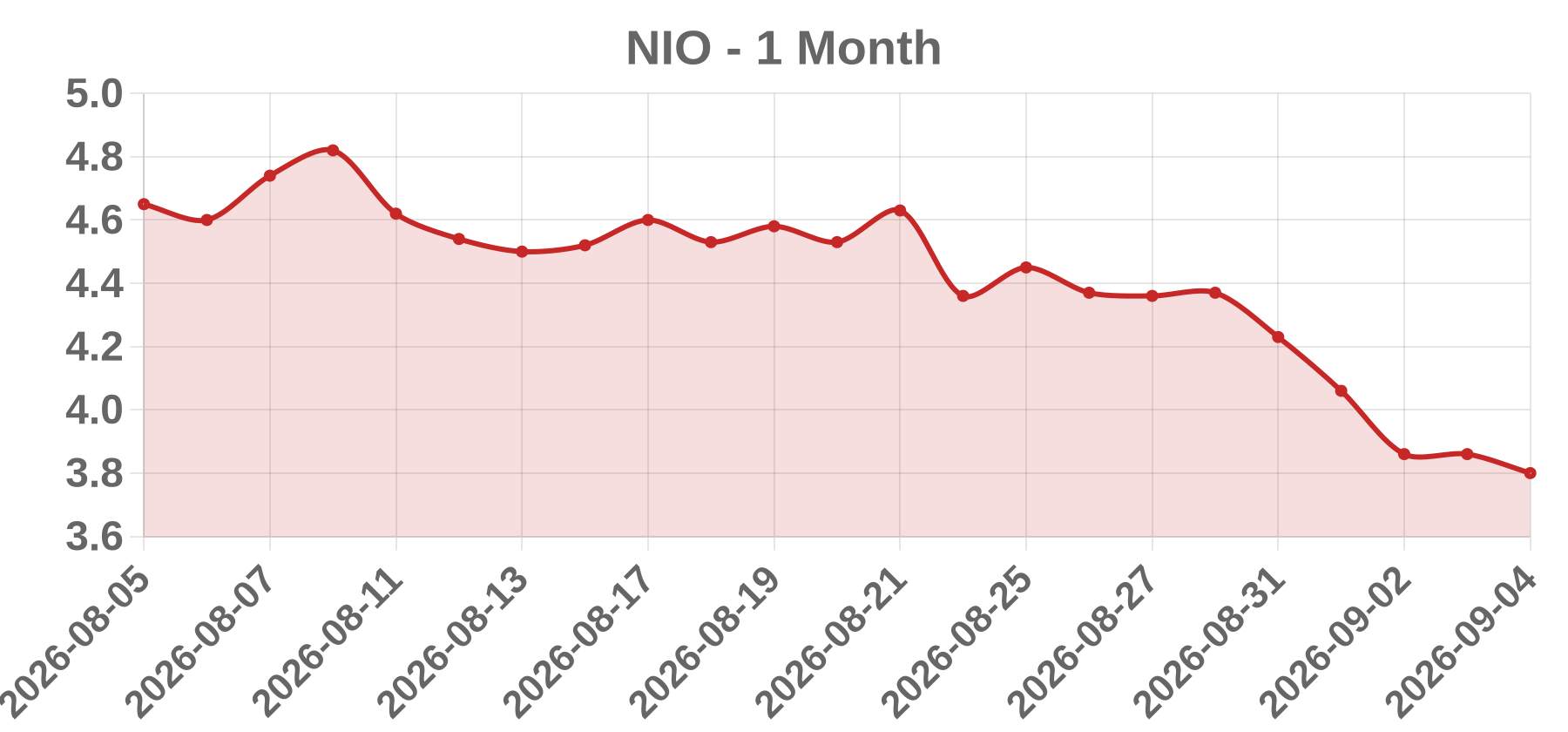
Business NIO Inc. is a Cayman Islands-incorporated Chinese smart electric vehicle maker whose American Depositary Shares (1 ADS = 1 Class A share) trade on the NYSE under NIO. It designs, manufactures and sells premium and mass-market battery EVs across a three-brand matrix (NIO, Onvo, Firefly) and is known for its battery-swapping network and in-house autonomous-driving platforms; it also holds a Hong Kong H-share listing (9866.HK).
Today’s take The snapshot (close $3.86, +0.00%, ~63M shares) corresponds to the September 3, 2026 U.S. session, where NIO carved an intraday 52-week low of $3.71 (range $3.71-3.90) but recovered to close flat. Pressure stemmed from the Sept 1 Q2 miss (revenue RMB 32.14bn/$4.74bn vs ~RMB 33.4bn consensus despite +69.1% y/y; deliveries 107,658, +49.4% y/y) and soft Q3 guidance (108k-111k deliveries). The week saw a wave of downgrades: J.P. Morgan cut NIO to Neutral with a target slashed to $4.50 (Sept 1-2), and Freedom Broker downgraded to Hold with a $4 target (Sept 2-3), following which Freedom/Bernstein and later Goldman Sachs (cutting to $6.10 from $7.00 on Sept 4) trimmed targets. The flat close masked a steep intraday flush below $3.80 on heavy volume, reflecting post-earnings de-rating and weak-demand concerns even as adjusted net profit turned positive (non-GAAP income RMB 26.1M).
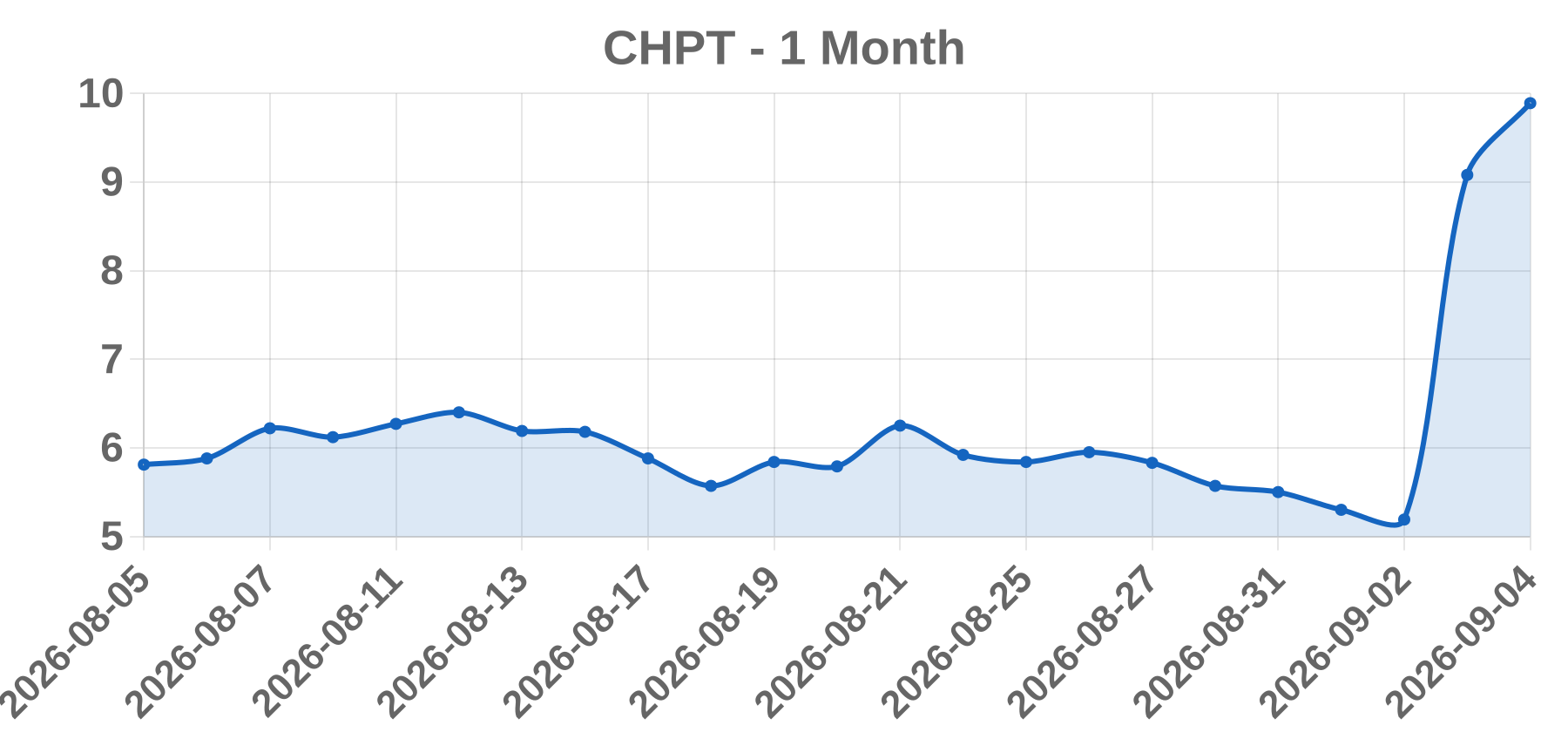
Business ChargePoint Holdings, Inc. (NYSE: CHPT), headquartered in Campbell, California, is a leading provider of electric vehicle (EV) charging network software and networked charging hardware. The company operates one of the largest open EV charging networks with solutions spanning home, fleet, and public/DC fast charging, including its next-generation Express Solo DC fast-charging platform.
Today’s take ChargePoint surged +74.95% to close at $9.08 on a volume of ~44.1M shares (vs. ~1.3M average), its biggest single-session move since last year's reverse split, after reporting Q2 FY2027 results late on Sept 2. Revenue reached $116.1M, up 18% YoY and beating the ~$105M consensus and the $100-110M guidance range, driven partly by stronger North American home-charging sales. Adjusted EPS of -$0.35 comfortably beat expectations of -$0.85. Non-GAAP gross margin hit a record 38% (35% normalized ex-tariff refund), adjusted EBITDA loss narrowed 78% to $4.8M, and the company cited near-zero cash burn—marking what management calls a turning point as it ramps DC fast chargers. CEO Rick Wilmer told CNBC the move is 'the beginning of the momentum.' Fiscal Q3 guidance of $105-115M revenue only brackets estimates, capping further upside. Note: the +74.95%/$9.08 close corresponds to the US Sept 3 session, which Asian-oriented tapes label as Sept 4.
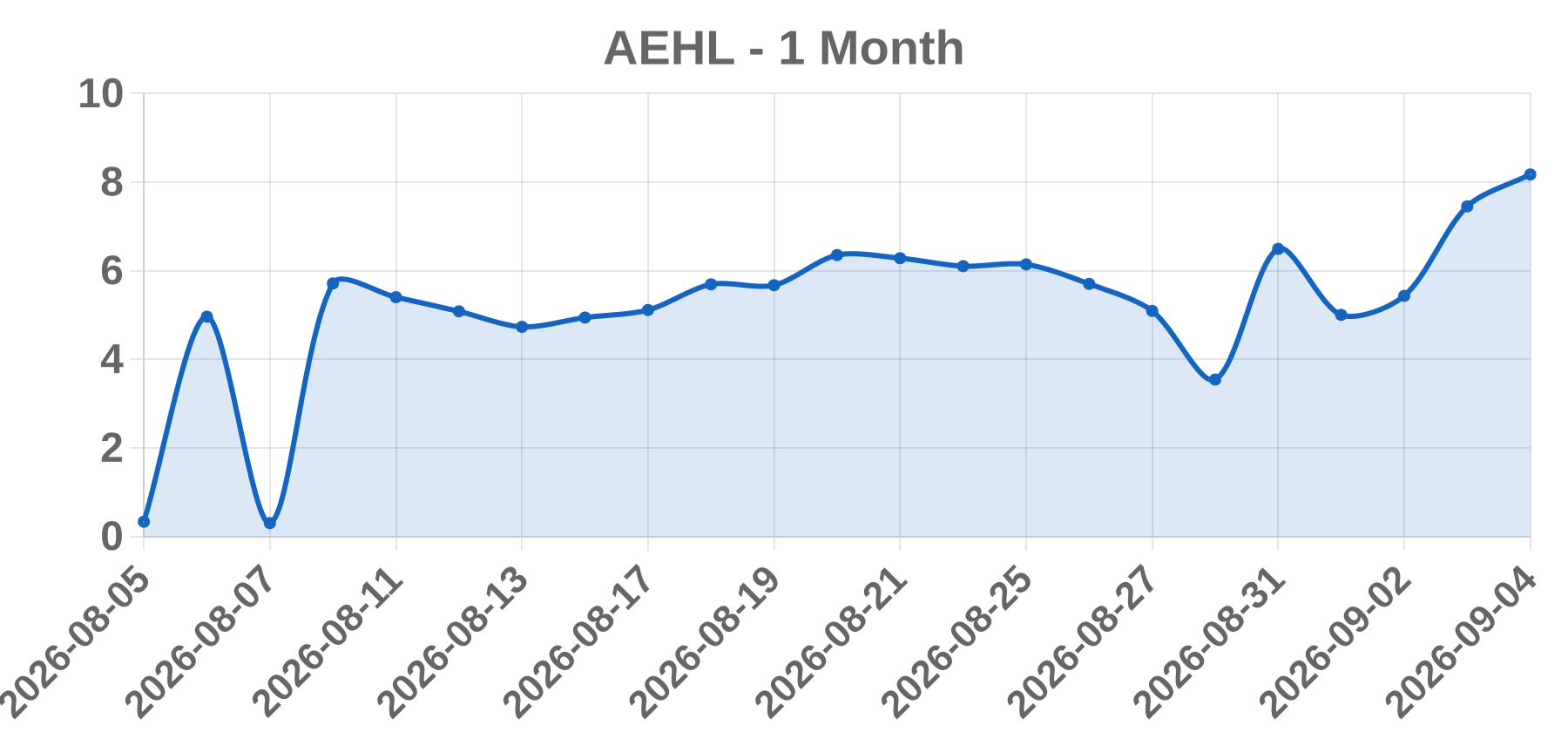
Business Antelope Enterprise Holdings Limited (NASDAQ: AEHL) is a Jinjiang, China-based manufacturer of ceramic tiles for exterior cladding and interior flooring. Its revenue comes largely from livestreaming e-commerce (~98%) plus business management/consulting, and it has pivoted toward a Bitcoin treasury strategy ('Genius Plan') via its subsidiary AEHL BTC Inc.
Today’s take On the Sept 3, 2026 US session (rendered as 9/4 in Asian time zones), AEHL jumped +37.20% (+$2.02) to close at $7.45 on huge volume of ~21.4M shares (open 8.05, high 8.30, low 6.55). The driver was a powerful sector-wide crypto-concept rally after SEC Chair Paul Atkins told the media he expects Congress to advance the CLARITY Act to President Trump for signature, with a key Senate procedural vote scheduled Sept 15. AEHL trades as a Bitcoin treasury holder (its Feb 2026 'Genius Plan' deployed $1M into Bitcoin, booking ~$190K realized gains and authorizing a $95K buyback), so it rallied ~+34% intraday alongside Robinhood (+10.64%), Circle (+7.16%), Coinbase, and Strategy. Compounding the move is an ultra-low float of only ~1.3M shares after the 1-for-16 reverse split (Aug 7, 2026), making the ~21.4M-share turnover many multiples of float and enabling violent momentum swings. The stock is a highly speculative, low-priced micro-cap with a history of parabolic volume-driven squeezes.
Business bioAffinity Technologies, Inc. (Nasdaq: BIAF) is a San Antonio, Texas-based oncology diagnostics company whose lead product, CyPath Lung, is a noninvasive flow-cytometry and AI test for early detection of lung cancer in high-risk patients. Commercialized as a laboratory-developed test by its CLIA/CAP-certified subsidiary PPLS, it also advances porphyrin-based cancer-therapy research.
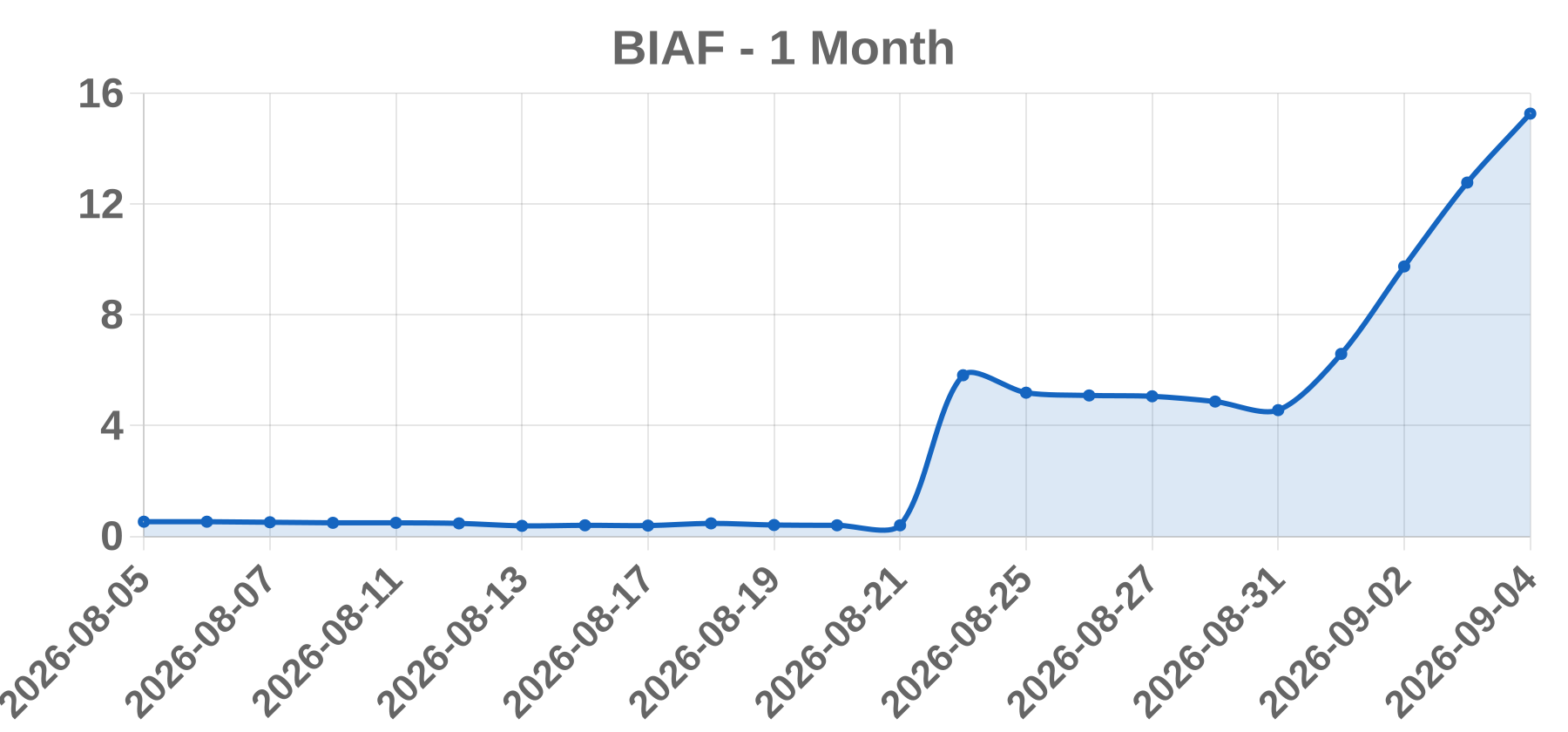
Today’s take On the session in question (Sept 3, 2026 US close, reported Sept 4 Beijing/IST; +3.03/+31.08% to $12.78 from ~$9.75, ~19.25M shares), BIAF's third straight double-digit surge tracked the Sept 1 announcement advancing CyPath Lung into post-curative surveillance of lung-cancer survivors—expanding an addressable population of 680,000+ US survivors. Momentum was amplified by Q2 metrics (CyPath test volume +216% YoY; H1 revenue ~$835K, +159%; 122% physician-account growth), an H.C. Wainwright conference slot (Sept 14-16), and an AvMEDICAL federal (incl. VA) distribution pact. The low ~592K-share float after the 1-for-15 reverse split (effective Aug 24, to cure Nasdaq bid-price noncompliance) plus unresolved short interest created squeeze conditions; volume of ~19.25M dwarfed its ~2M average, driving the parabolic repricing near prior 52-week lows despite a flat S&P 500.
Business Focus Universal Inc. (NASDAQ: FCUV), headquartered in Monterey Park, California, develops and commercializes universal smart technologies and instruments, including smart-home IoT devices, the Ubiquitor sensor/gateway platform, SEC financial-reporting software and an AI-powered business document engine. The company operates through a Corporate & IoT segment, the latter supporting environmental and smart-home sensing and monitoring solutions.
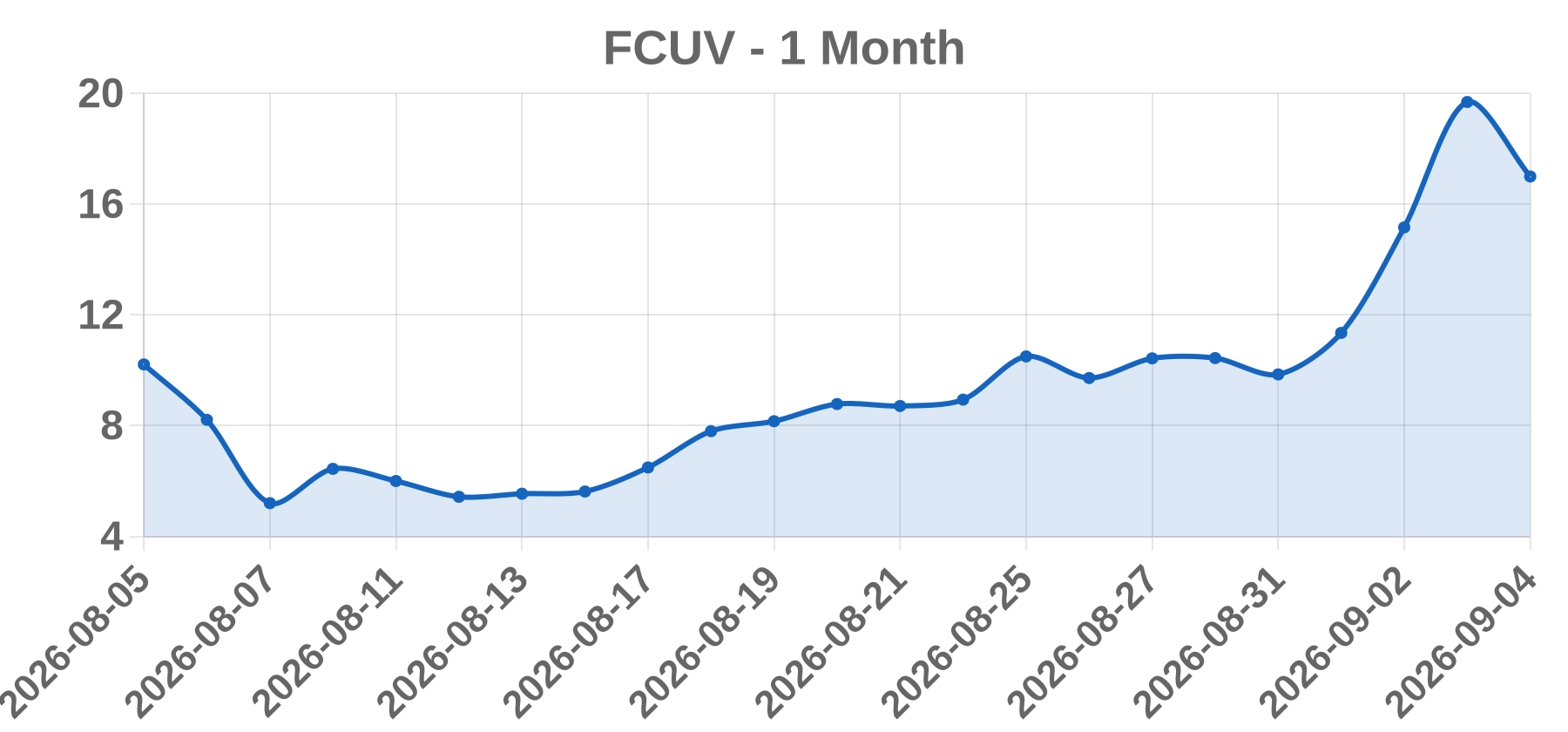
Today’s take FCUV closed the session at US$19.69, up +29.88% (+$4.53), after trading intraday between $15.31 and $19.95 on volume of roughly 389K-393K shares, versus a ~278K average. Note: the cataloged close date 2026-09-04 reflects Beijing-time reporting; the underlying +29.88% to $19.69 print corresponds to the US session of Wednesday, September 3, 2026. The move was not tied to any company-specific fundamental announcement. Rather, it extended a violent speculative run that dominated the micro-cap all summer: FCUV had already gained +33.57% the prior session (Sep 2), +15.23% before that, and surged ~517% on July 31 after the launch of the 'Deterministic AI Forms Auto-Populate Engine.' Volatility controls were active, with multiple exchange trading halts/'volatility trading pause' notices around this date. The stock also carried an extreme 52-week range ($1.84-$210) after two 2026 reverse splits (1-for-10 effective Feb 9 and 1-for-4 effective June 23) undertaken to retain Nasdaq listing. Wall Street coverage remained bearish (consensus 'Sell'), reinforcing that the session spike was short-term momentum/retail speculation without fundamental support.
Business System1, Inc. (NYSE: SST) is an omnichannel customer acquisition marketing platform headquartered in the U.S. It operates flagship internet brands including MapQuest, Info.com, Startpage, and CouponFollow, monetizing traffic through owned-and-operated advertising and partner networks.
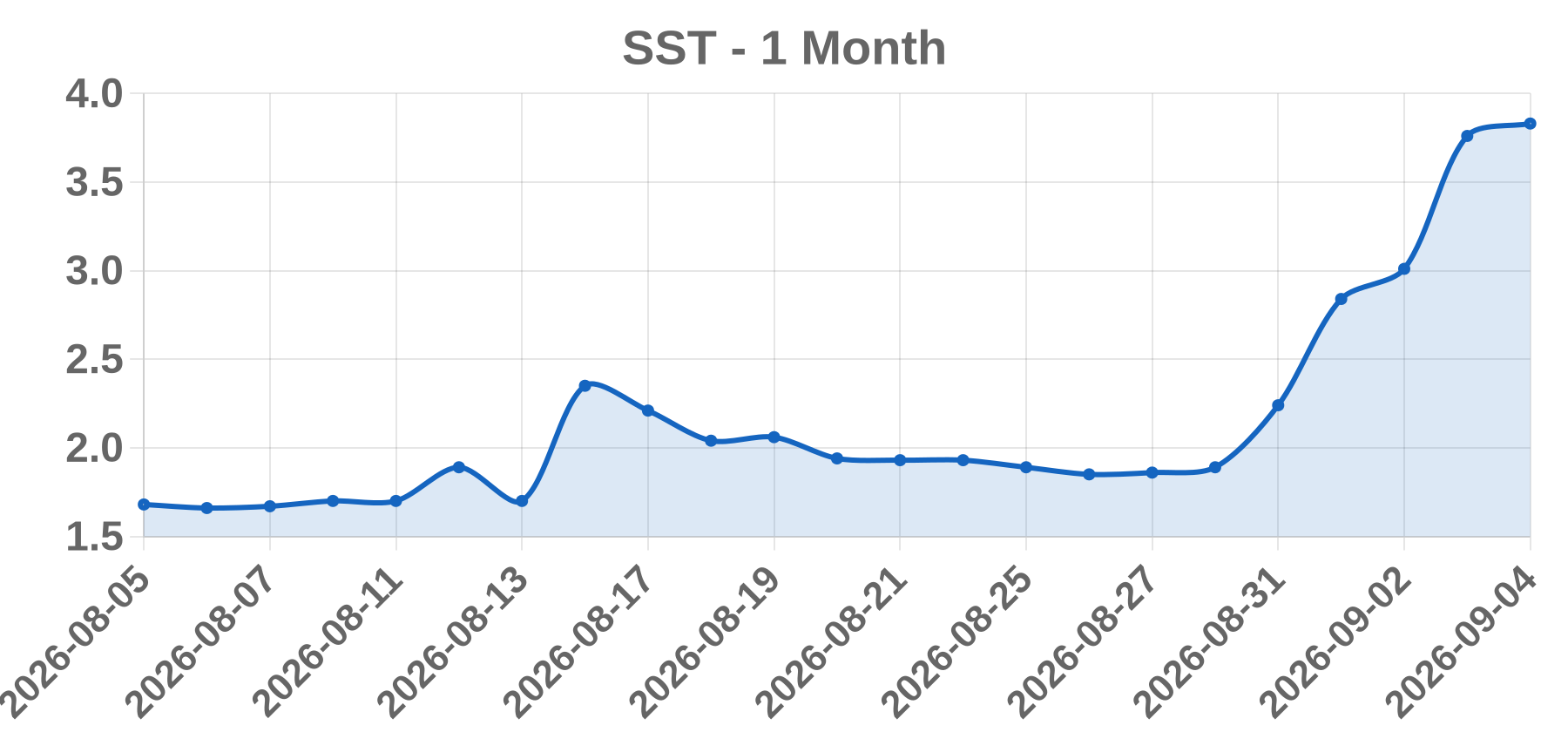
Today’s take The session's ~25% surge (documented as a $3.76 close, +24.92%) belongs to a viral retail-driven run on September 3, 2026, within the same catalyst wave culminating the week through Sept 4 (+1.86%, close $3.83). The driver: a politically-charged consumer backlash story where MapQuest refused to rename Lake Ontario to 'Lake America' (as Google/Apple did after a Trump executive order), catapulting MapQuest from ~#80 to the No. 1 free app in both U.S. and Canadian Apple App Stores. Downloads surged hundreds of thousands, pushing usage to ~50x normal. The move began Aug 31 (+18.52% on a massive 9.17M shares), extended Sep 1 (+26.79%), Sep 2 (+5.99%), Sep 3 (+24.92%), and Sep 4 (+1.86%), taking SST from ~$1.89 (Aug 28) to a $3.83 close (+100%+). This is a low-float (~10.5M shares), high-beta (1.58) microcap with substantial losses (TTM net margin deeply negative). No fundamentals re-rating occurred — momentum was purely news/meme-driven off viral app-download rankings. Sustainability risk is high if downloads normalize.
Business Duluth Holdings Inc. (dba Duluth Trading Company), listed on NASDAQ as DLTH, is a lifestyle apparel brand headquartered in Mount Horeb, Wisconsin. It sells men's and women's workwear, casual wear, outdoor apparel, and accessories through its content-rich website, catalogs, and 'store like no other' retail locations.
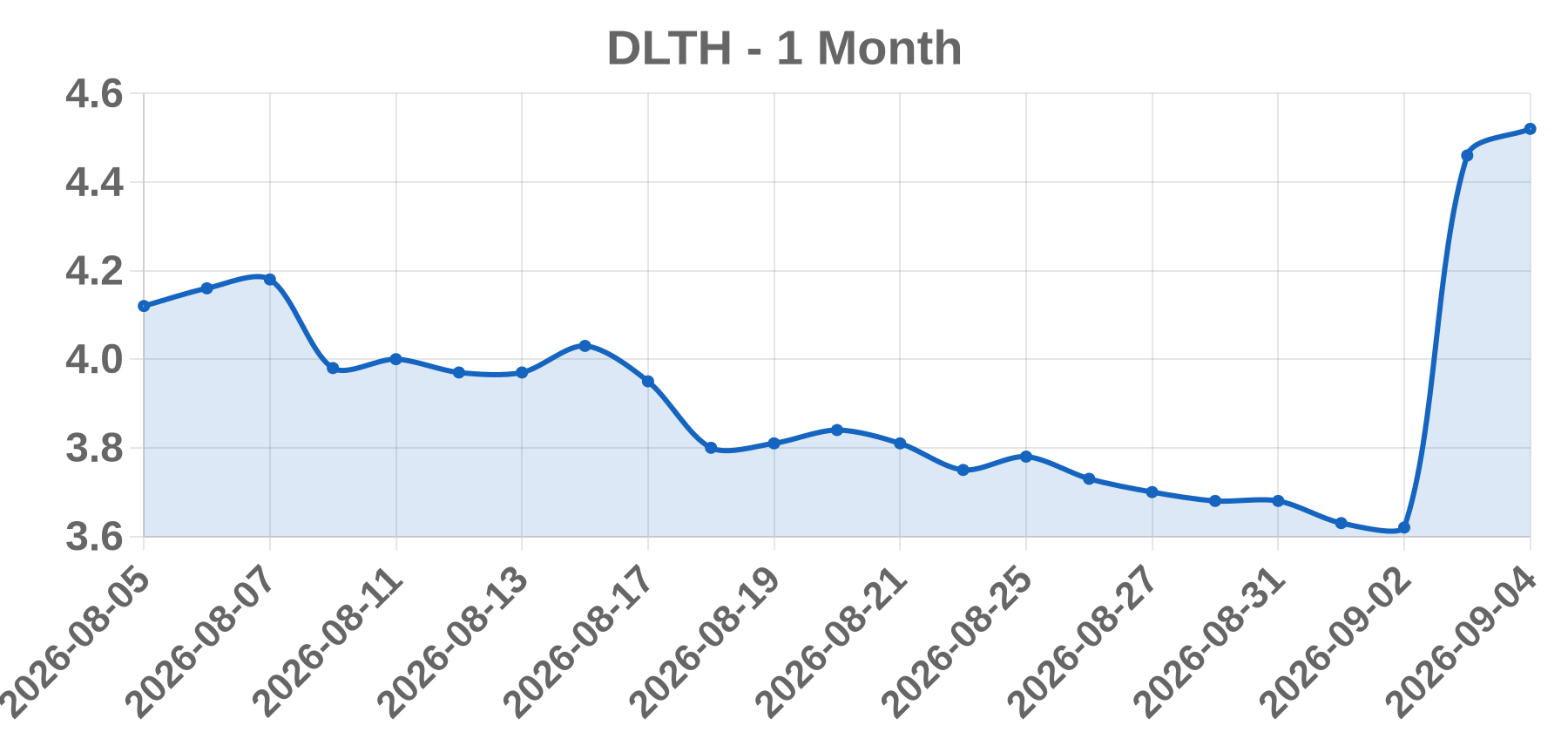
Today’s take Duluth Holdings surged ~23%, opening near $4.46 in Friday's session, driven by its blockbuster Q2 FY2026 earnings reported on Sept 3, 2026. EPS of $0.50 crushed the $0.01 consensus by ~$0.49, though $0.44 of that reflected $16.3M in one-time tariff refunds booked against cost of goods sold. Net sales fell 7.8% to $121.4M as the firm deliberately trimmed promotions and clearance activity, lifting gross margin by 1,810 basis points to 72.8% (59.6% excluding refunds) and boosting net income to $18.4M versus $1.3M a year earlier. Management raised full-year 2026 adjusted EBITDA guidance to $38M-$42M from $28M-$32M. This earnings beat plus the upward EBITDA guidance was the primary catalyst for the double-digit move. On Sept 4, Robert W. Baird downgraded the stock to Neutral, which may have capped further upside. Caveats: top-line revenue still declined, and the EPS surprise was substantially tariff-refund-driven rather than organic.
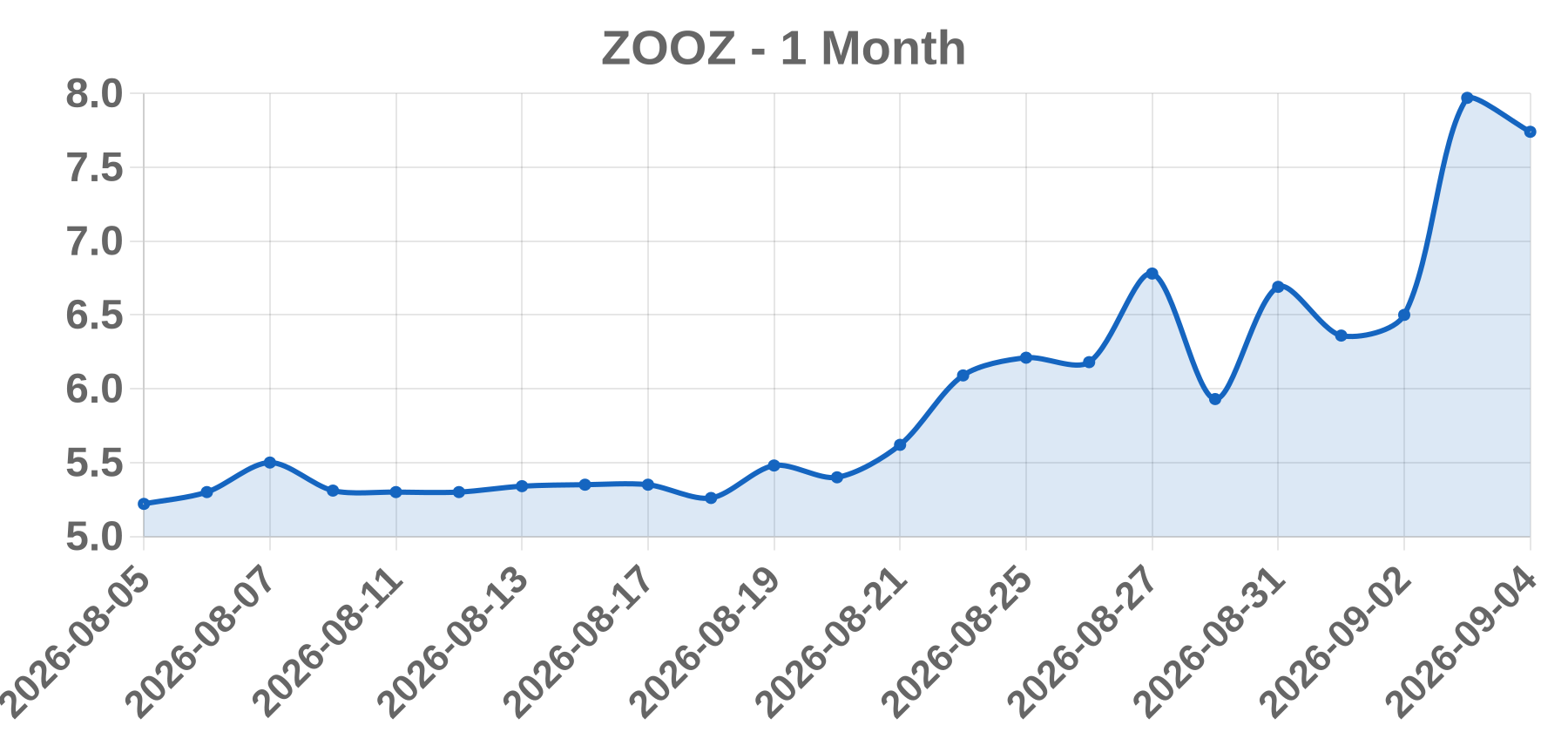
Business ZOOZ Strategy Ltd. (Nasdaq & TASE: ZOOZ), formerly ZOOZ Power Ltd., is an Israeli company that originally developed kinetic flywheel-based power boosters enabling ultra-fast EV charging. In 2025 it pivoted to become the first Nasdaq and TASE dual-listed firm to adopt Bitcoin as its primary treasury reserve asset, amassing roughly 1,000+ BTC (~$100M) to give shareholders leveraged, directional Bitcoin exposure.
Today’s take Note a date-label discrepancy: the tab's close-2026-09-04 price (7.97, +22.62%) actually matches the Sep 3, 2026 session (opened 6.61, spiked to 8.27, closed 7.97 from 6.50 prior), while Sep 4, 2026 saw the stock give back -2.89% to 7.74. The big up-move was driven by a macro/Bitcoin catalyst: on Sep 3 Fed Governor Christopher Waller signaled he would back holding rates steady if inflation kept cooling, slashing September rate-hike odds and triggering a crypto short-squeeze (over $415M liquidated). Bitcoin jumped ~5% back above $80k/$81k, and all Bitcoin-treasury names soared — Strategy (MSTR) surged 13-18% and Coinbase ~11%. As a Bitcoin treasury company (~1,047 BTC), ZOOZ tracks BTC closely and amplified the sector rally plus its own thin float/low liquidity, closing +22.62% on ~196k shares (roughly 7x normal volume). No company-specific news drove the move.
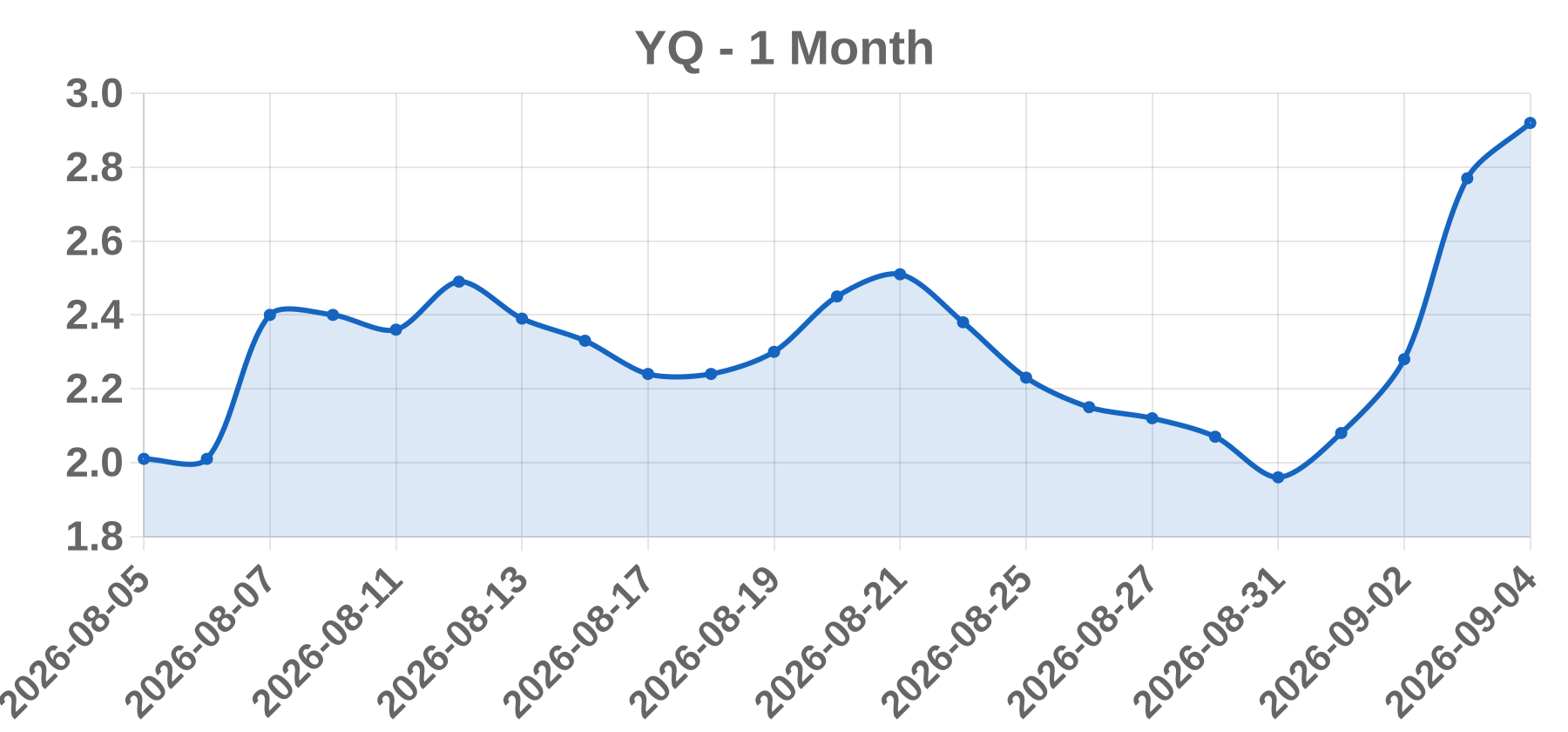
Business 17 Education & Technology Group Inc. (NASDAQ: YQ), aka 17EdTech, is a leading China-based AI-powered education platform company focused on personalized K-12 learning, providing SaaS classroom/teaching products and premium content subscriptions for students, schools and educational authorities.
Today’s take YQ surged ~21.5% to close at $2.77 on the session ending 2026-09-04 after 17EdTech's board announced (Sept 3) a new share repurchase program authorizing up to US$10 million of ordinary shares/ADS over 12 months starting September 3, 2026, funded from existing cash. The buyback — a clear value/capital-return signal for a beaten-down small-cap (market cap ~$31.7M) — drove the sharp single-day rally from ~$2.28. It was reinforced by concurrent insider accumulation: 10%+ holder Liu Chang bought 10,000 shares on Sept 3 at $2.38 (and was a frequent buyer in late August at $2.05-2.46), signaling confidence near 52-week lows ($1.68-6.45 range). Momentum also drew anticipation of Q2 2026 results due Sept 8, following Q1 revenue +359% YoY on its AI transformation. Shares continued higher to ~$2.92 (additional +5.4%) before pulling back in after-hours toward $2.82.
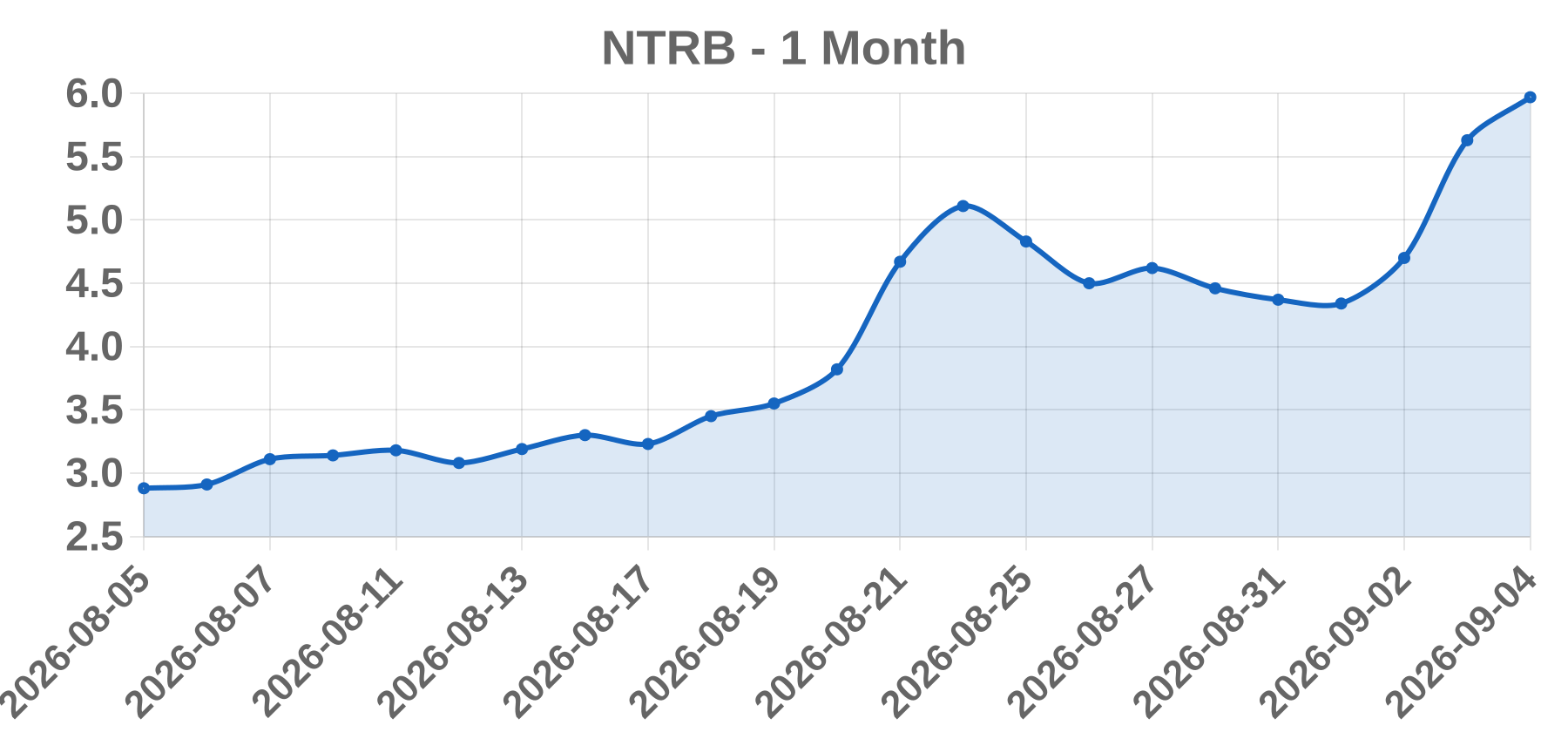
Business Nutriband Inc. is an Orlando, Florida-based pharmaceutical company developing transdermal drug-delivery products. Its lead asset, AVERSA Fentanyl, is an abuse-deterrent fentanyl patch incorporating proprietary AVERSA technology intended to deter misuse, diversion and accidental exposure to opioids, with regulatory work proceeding under a 505(b)(2) path (one Human Abuse Potential study) in partnership with Kindeva Drug Delivery, targeting an NDA filing in 2026. The company also advances AVERSA Buprenorphine, AVERSA methylphenidate and a kinesiology/wellness tape line, and operates legacy manufacturing through its Pocono Pharmaceutical unit.
Today’s take On the session the screener labels Sep 4, 2026 (whose price data - close $5.63, +19.79% - actually matches the September 3, 2026 close; Sep 4 itself added ~6% to $5.97), Nutriband shares surged roughly 20% on heavy volume. The backdrop was a sustained late-August re-rating driven by AVERSA Fentanyl pipeline catalysts (successful FDA Type-C/CMC feedback, Kindeva manufacturing scale-up, a registration trial slated to begin around late fall 2026 and an NDA filing targeted for 2026). The session-specific catalyst was the release of the fiscal Q2 report for the quarter ended July 31, 2026, which showed revenue falling ~30% to roughly $437K (driven by Pocono manufacturing customers shifting volume to Asia) but a dramatically narrowed operating loss (~$890K) and net loss (~$880K, ~$0.07/share) versus prior-year losses of over $2.0M, as the company slashed R&D and SG&A. Despite the top-line decline, traders focused on the much lower cash burn and management's assertion that ~$3.4M in cash supports ~12 months of runway to fund AVERSA Fentanyl development. The move amplified an already momentum-driven, high-beta micro-cap in speculative biotech mode, reflecting bullish positioning around the
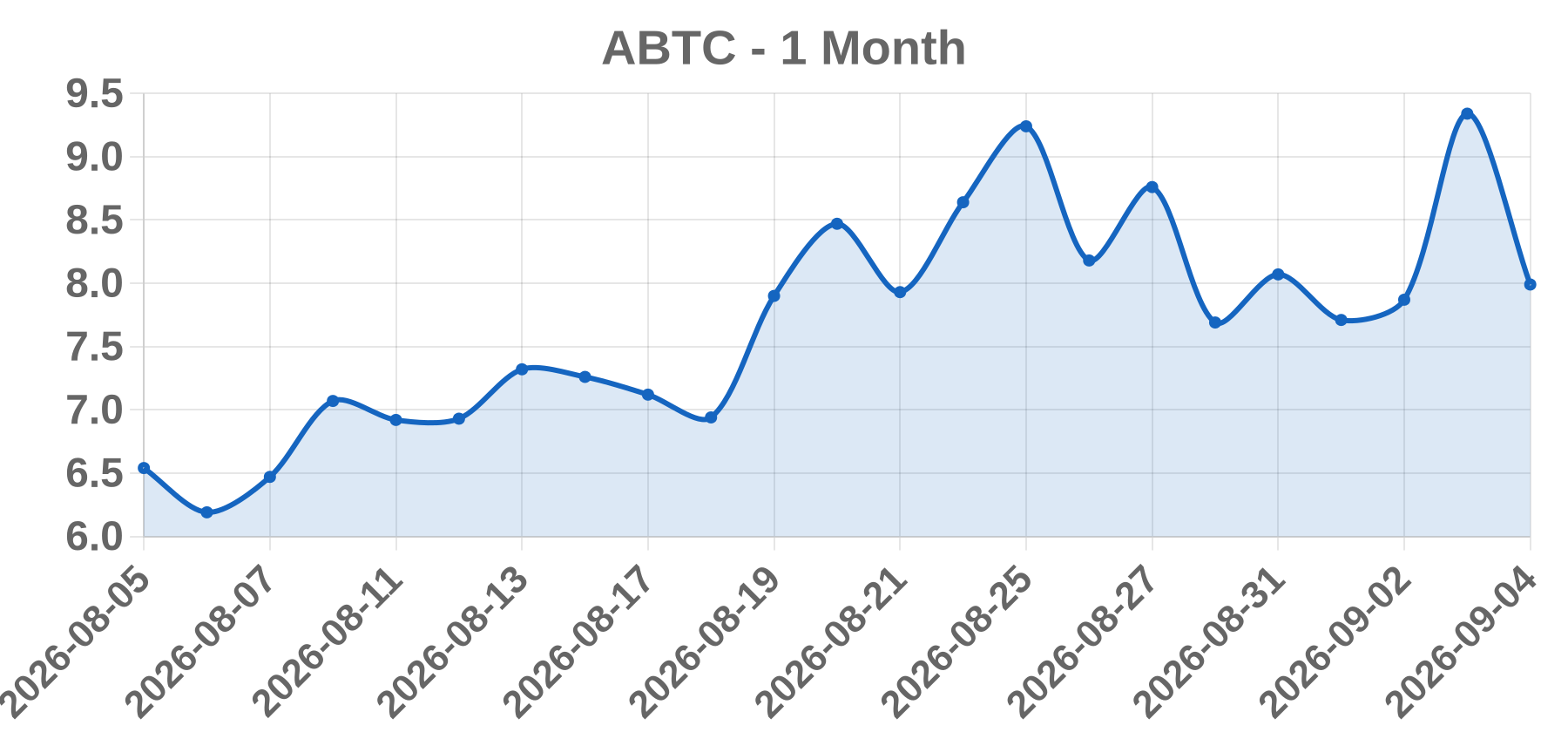
Business American Bitcoin Corp (ABTC) is a Nasdaq-listed Bitcoin mining and treasury-management company headquartered in Miami, founded in 2025 by Eric Trump and Donald Trump Jr. and majority-owned (~80%) by digital-infrastructure firm Hut 8 Corp. It accumulates Bitcoin by mining with Hut 8's ASIC fleet (nearly 90,000 machines) plus market purchases, holding about 8,300 BTC and targeting near-50% mining margins.
Today’s take ABTC closed the session up +18.68% at $9.34 (vs $8.18 open, high $9.47) on roughly 2.53M shares traded. The rally was driven by two forces. Macro first: Fed Governor Christopher Waller at a Reuters NEXT event signaled willingness to hold rates steady in September if inflation cools, cutting hike odds on CMEGroup FedWatch from 63.2% to 50.4%. Bitcoin reclaimed $80,000 (up ~4.8% to $80,510) and a short squeeze liquidated >$415M of short crypto positions (>$500M total, 119,000+ traders), lifting crypto names broadly. Company-specific: Eric Trump's X post on the one-year Nasdaq IPO anniversary touted a balance sheet of 8,300 BTC (~$670M, 15th-largest corporate holder), a fleet of ~90,000 miners, near-50% mining margins, and record quarterly output, plus an August gain chart he called 'a hell of a month' (+60%). Note the stock remains ~90% below its debut, with a 63% YTD loss and Q2 net loss of $57.2M on $67M mining revenue; Roth Capital, H.C. Wainwright and Maxim Group all initiated Buy ratings at a consensus ~$8 target.
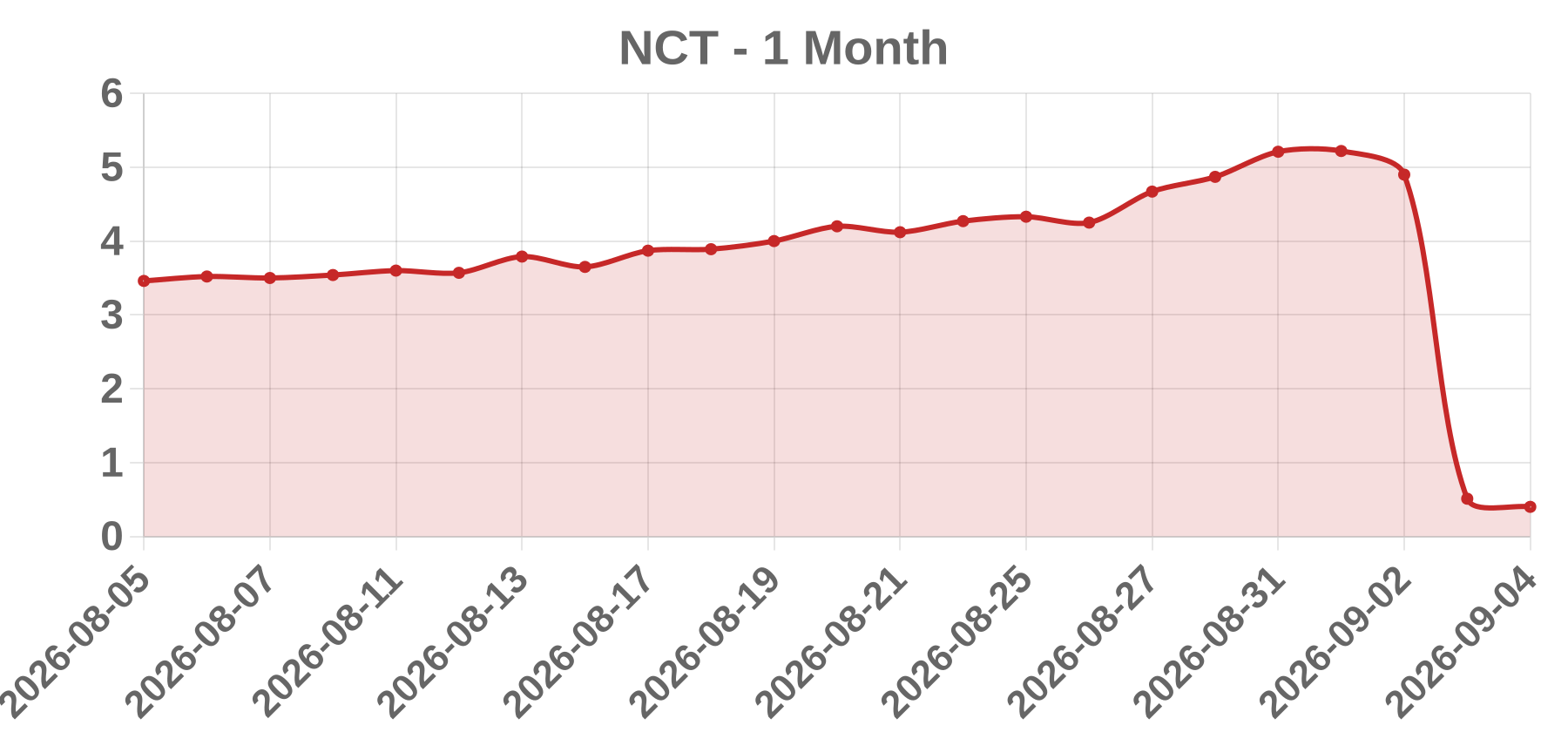
Business Intercont (Cayman) Limited is a global maritime shipping enterprise (dewu shipping / ) headquartered in Singapore/Hong Kong, listed on the Nasdaq Capital Market under ticker NCT, with plans for seaborne pulping operations providing efficient, environmentally friendly transportation solutions.
Today’s take NCT collapsed -89.66% in the session ending around Sep 3-4, 2026, plunging from a prior close of ~$4.90 to $0.51 on extreme volume of ~22.9M shares (vs. a typical ~1M daily float). The session opened at $4.92, ranged $0.50-$4.95, and closed at $0.51; the following session (Sep 4) closed at $0.40, down another -21%. Retail Chinese-concept () micro-cap had run up from ~$2.8 in July to the $4-6 area, but faced relentless structural pressure: a 25-for-1 reverse split effective April 2, 2026 to regain Nasdaq's $1.00 bid compliance, plus a dilutive best-efforts $6.32M public offering priced July 6, 2026 ($0.79/unit of 8M units). Multiple volatility trading halts occurred Sep 1 (15:51 EDT), with resumed trading. With only ~1.64M shares outstanding and market cap collapsed to ~$657K, the move is a textbook micro-cap pump/flush unwind on massive churn rather than a single categorical fundamental event, lacking company-specific PR news tied to the Sep 3 dump.
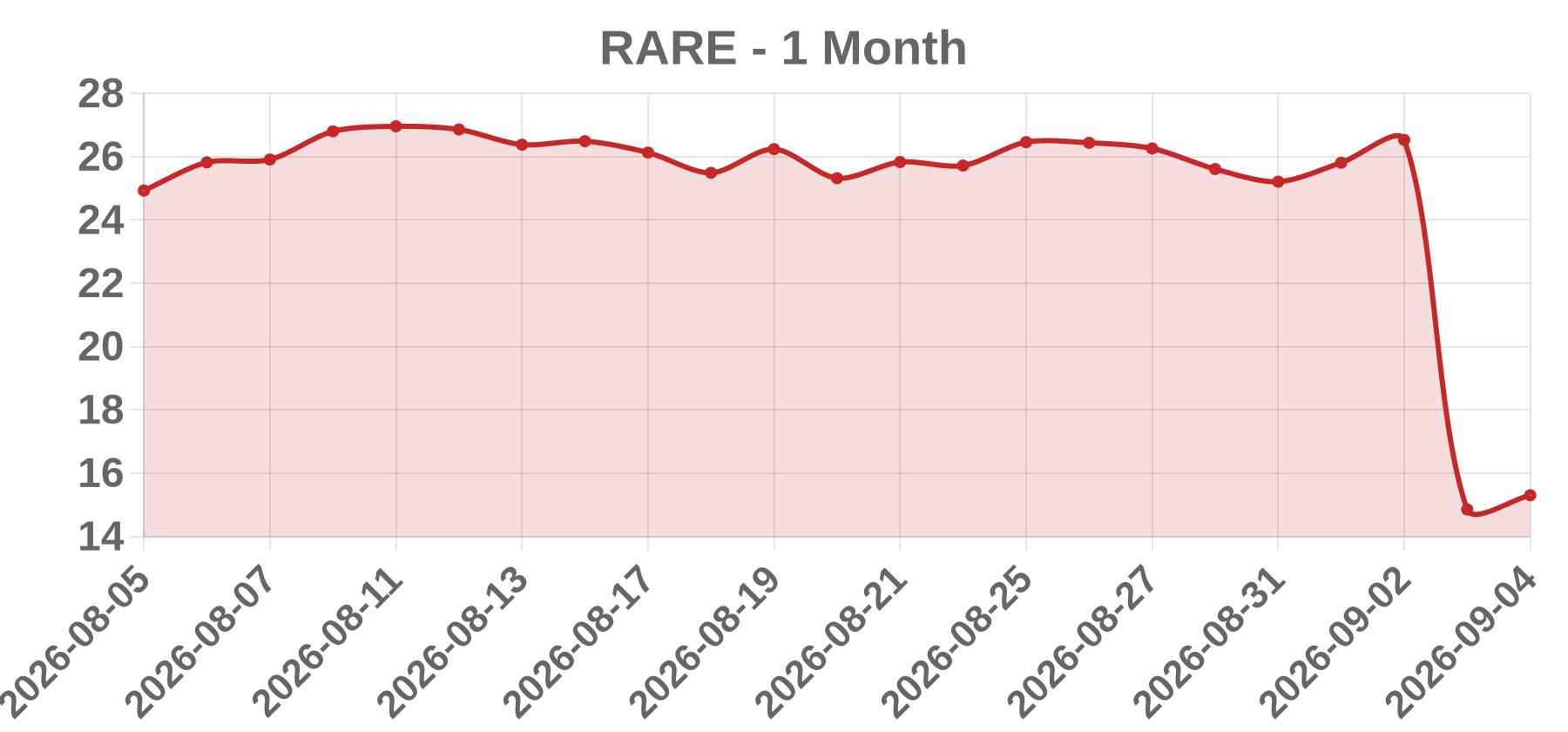
Business Ultragenyx Pharmaceutical Inc. (NASDAQ: RARE) is a Novato, California-based biopharmaceutical company developing and commercializing therapies for rare and ultra-rare genetic diseases. Its pipeline includes apazunersen (GTX-102) for Angelman syndrome, the gene therapy GENGLYCOS (recently approved for GSDIa), and UX111 for Sanfilippo syndrome.
Today’s take Ultragenyx's stock collapsed -44.03% on Sept 3, 2026, closing at $14.85, after the company announced on Sept 2 that its Phase 3 ASPIRE trial of apazunersen (GTX-102) in Angelman syndrome missed both the primary endpoint (change in Bayley-4 cognitive raw score) and the key secondary endpoint (MDRI net response). The failure — the company's second consecutive late-stage miss — forces a strategic reassessment of the apazunersen program and 'significant expense reductions' while focusing on the growing commercial business (GENGLYCOS approval, potential UX111 approval). On Sept 4, a wave of downgrades followed: RBC cut to Hold, William Blair to Market Perform, Goldman Sachs lowered its price target from $28 to $19 (Neutral), plus trims from Citi, H.C. Wainwright, and Wedbush, although several kept Buy ratings. Note: user-labeled close date 2026-09-04 with close $14.85/-44.03% corresponds to the Sept 3 crash session; Sept 4 actually closed at $15.30 (+3.03%).
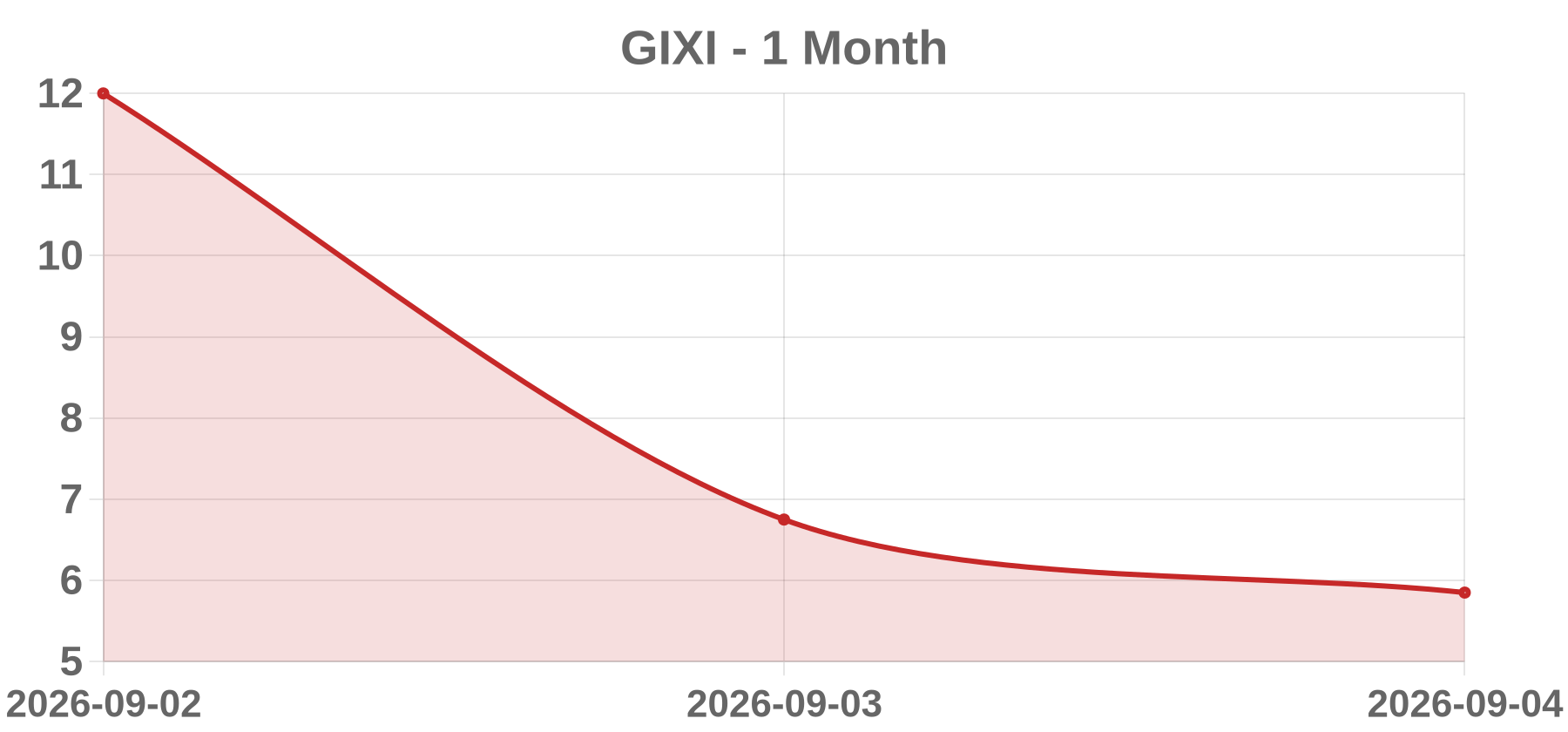
Business Gix Internet Ltd. is an Israeli marketing-technology company (incorporated 1978, HQ Ramat Gan; dual-listed on Nasdaq starting Sept 2026 after trading on Tel Aviv/TASE) that operates through wholly-owned subsidiary Deliverz.ai, which supplies advanced logistics-automation software integrating with third-party autonomous robots for navigation across multi-building/multi-floor pharma, lab-sample and medication delivery. It also provides software, editing and multi-language digital-content marketing services.
Today’s take GIXI is a microcap that debuted on the Nasdaq around 2026-09-01/02, opening near $8.49, spiking to an intraday high of $15.50, and closing at $12.00 (+41%) within its first session(s). The -$5.25 (-43.75%) collapse to a $6.75 close—reported in the WSJ decliners list for the session (data label 2026-09-04 corresponds to the Sept 3 US session; Yahoo history shows Sep 3 open 7.65/high 7.90/low 5.70/close 6.75, with a further drop to $5.85 on Sep 4)—was a violent unwinding of that unsupportable debut spike in an extremely weak company. Fundamentals are dire: TTM revenue only ~$8.6M, down ~72.7% YoY (revenue fell from $95.6M in 2022 to $79.6M/2023, $26.9M/2024, ~$7.9M/2025), with a TTM net loss of ~$9.0M (EPS -$5.19), a ~$14M market cap on just ~2.08M shares, and prior going-concern concerns tied to the former Cortex/Viewbix advertising downturn. With only ~81k shares traded on Sep 4 and total float near 2.5M, thin liquidity amplified the move; no fresh operating catalyst drove the drop—it was purely the post-listing pop unwinding.
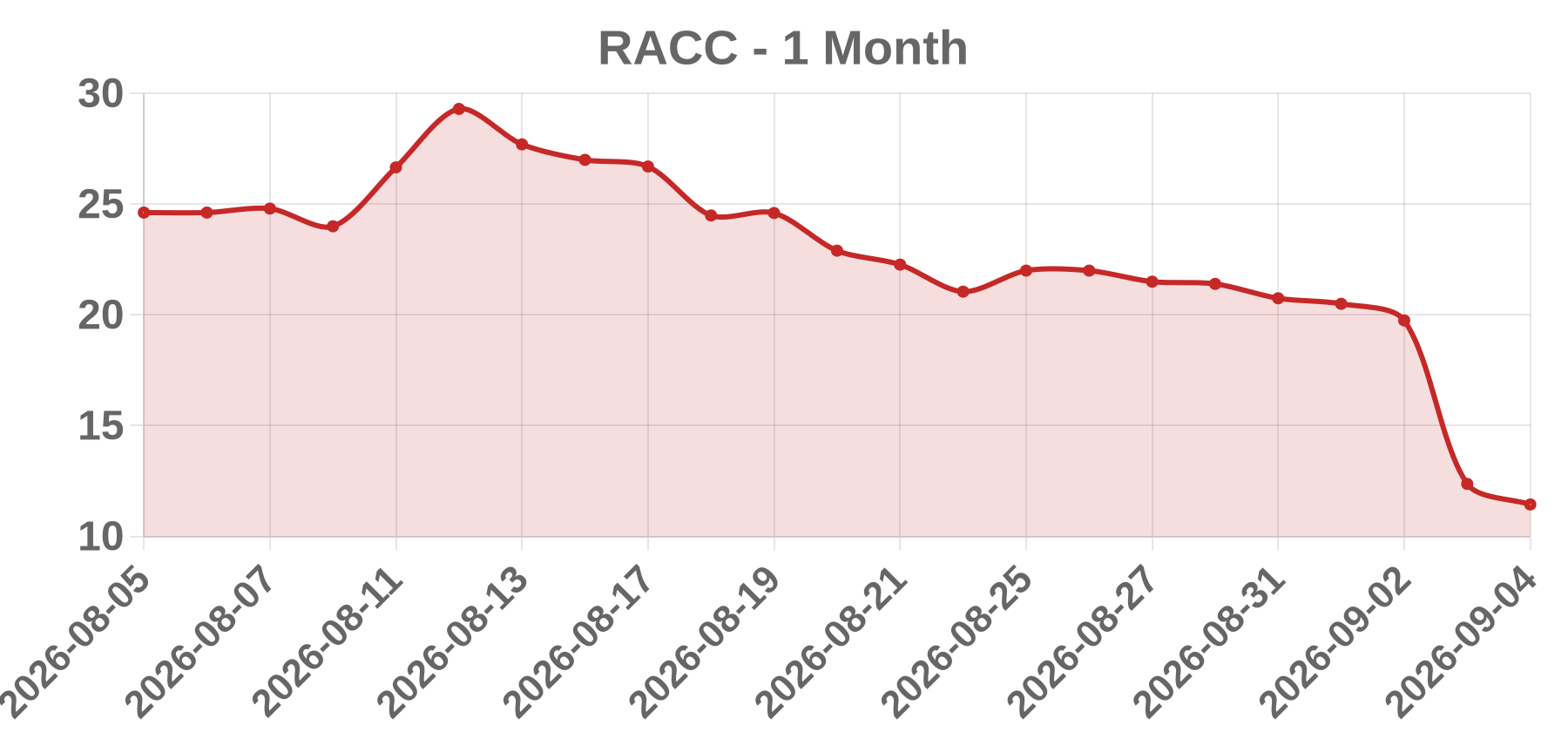
Business Research Alliance Corporation III (Nasdaq: RACC) is a Cayman Islands-incorporated special purpose acquisition company (SPAC) sponsored by RA Capital Management, formed to effect a business combination. In July 2026 it agreed to a ~$160 million reverse merger with rare-disease biotech Oak Hill Bio (OHB Pediatrics Ltd.), whose lead asset rugonersen is in Phase 3 for Angelman syndrome; the deal, providing ~$175M in gross proceeds, is expected to close by end-2026 with the combined entity trading as OAKH.
Today’s take The -37.37% one-day crash (from $19.75 prior close to $12.37, intraday band $12.25-$17.90, ~833K shares — these figures match the Sep 3, 2026 session per Yahoo/stockanalysis, with a further ~7.5% slide to ~$11.44 the next day) was a 'class-effect' read-through. On Sep 2, 2026 Ultragenyx announced its Phase 3 Aspire study of apazunersen (GTX-102) in Angelman syndrome missed primary and key secondary endpoints; RARE plunged ~45%. Apazunersen is an intrathecal antisense oligonucleotide that, like rugonersen (Oak Hill Bio's lead asset in RACC's pending ~$175M merger), targets the UBE3A-ATS silencing mechanism, so the failure cast doubt on the entire UBE3A approach and on endpoint sensitivity in this disease. RACC had earlier run up from its ~$10 per-share trust backstop after the Jul 26 deal announcement to a $33.50 intraday high, so the collapse unwound a large speculative premium on thin clinical footing.
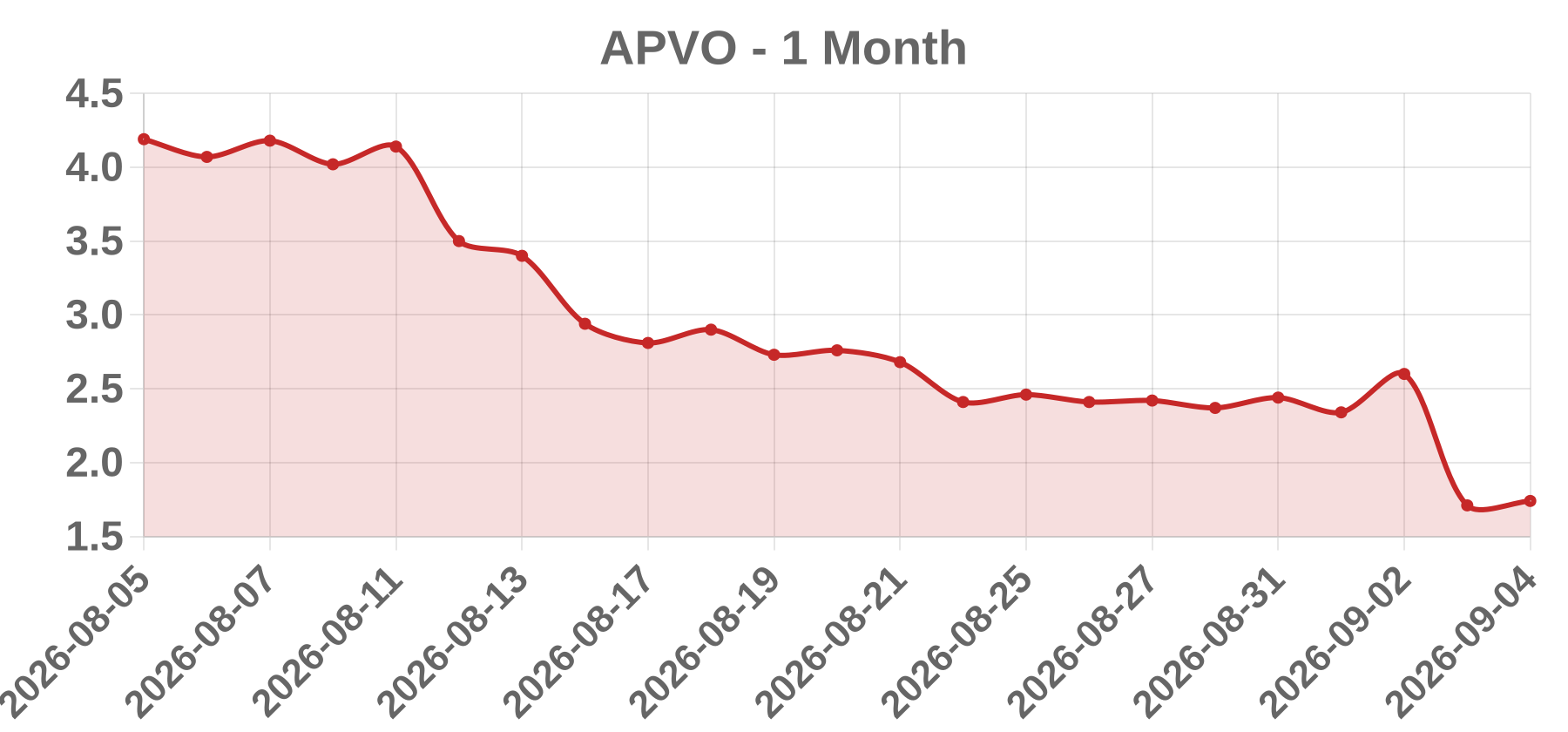
Business Aptevo Therapeutics Inc. (Nasdaq: APVO) is a clinical-stage biotechnology company developing novel bispecific and trispecific immunotherapies for cancer, built on its ADAPTIR and ADAPTIR-FLEX protein platforms. Its lead candidate, mipletamig (CD123xCD3 T-cell engager), is being evaluated in the RAINIER Phase 1b/2 study in frontline acute myeloid leukemia, with additional solid-tumor and radiopharmaceutical programs.
Today’s take APVO plunged 34.23% to $1.71 on the session (real volume 1.66M vs ~27K average) in a classic 'sell-the-news' move despite positive clinical data. On Sept 2-3, Aptevo announced interim RAINIER results in frontline TP53-mutated AML: among 14 evaluable patients, 13 (93%) saw clinical benefit and 11 (79%) achieved CR/CRi, versus a published 41% venetoclax+azacitidine benchmark. Yet shares collapsed because (1) the data were widely anticipated and come from a small 14-patient cohort; (2) a massive dilution overhang loomed - Aptevo registered up to 6,444,858 resale shares (from pre-funded, common and inducement warrants) versus only ~1.8M shares outstanding, a >3.5x potential share expansion following the Aug 2026 $4.5M warrant-exercise/PIPE; (3) the company flagged going-concern and possible Nasdaq-delisting risks; (4) at ~$3M market cap and near its 52-week low of $1.37 (down from $48.78), momentum and technicals were decisively negative.
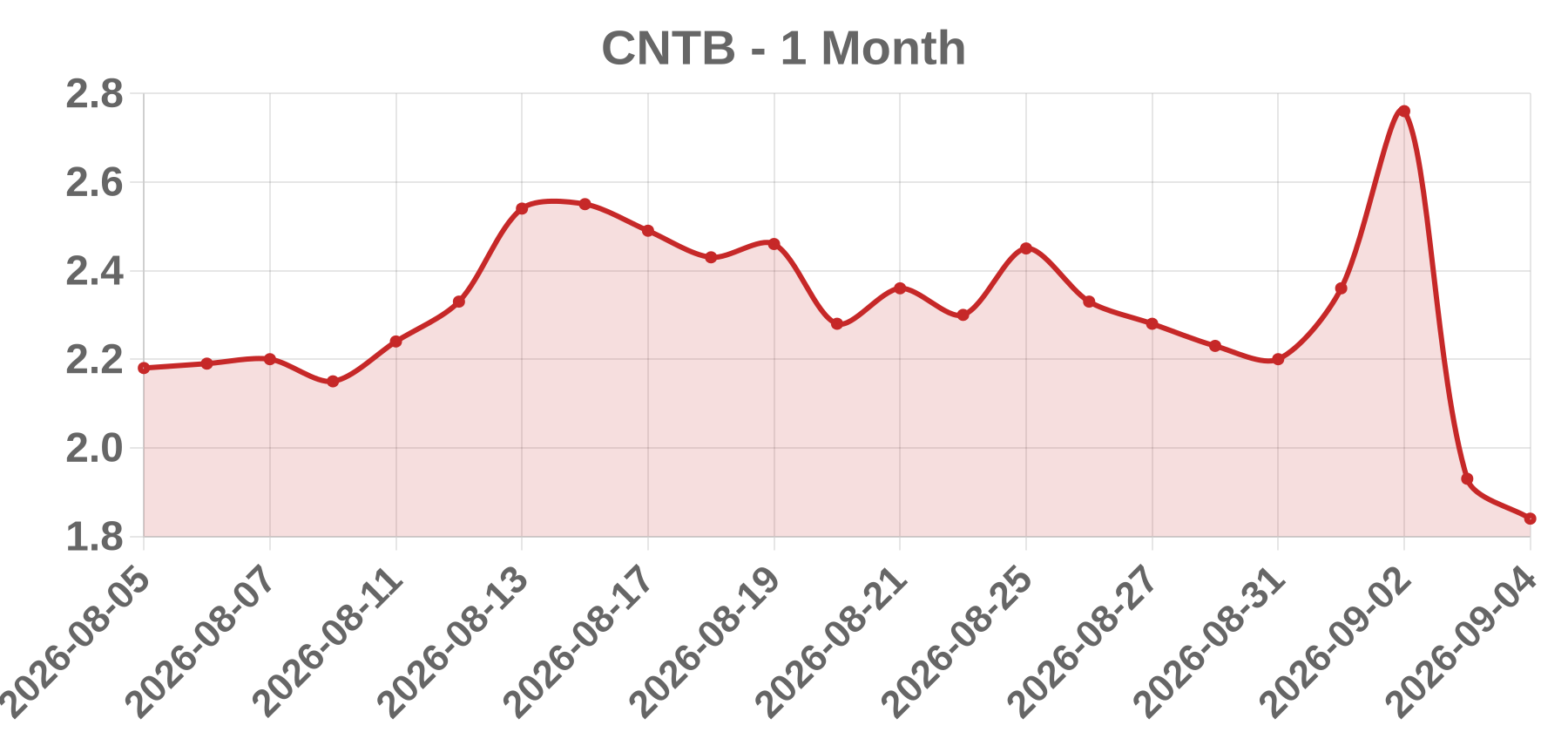
Business Connect Biopharma Holdings Limited (Nasdaq: CNTB) is a San Diego-headquartered, clinical-stage biopharmaceutical company focused on transforming care for inflammatory diseases, chiefly asthma and COPD. Its lead candidate rademikibart (CBP-201), a next-generation anti-IL-4Rα monoclonal antibody, is in two global Phase 2 studies (Seabreeze STAT) for acute exacerbations of asthma and COPD, with codevelopment/operating base in China.
Today’s take CNTB collapsed -30.07% to $1.93 on the September 3, 2026 US session (logged as Sept 4 on Asian/Beijing feeds) after a ~+27% speculative run-up over Aug 31-Sep 2 (2.20→2.76, including +16.95% on Sep 2). The volatile move reflected the unwind of binary positioning built up ahead of the highly anticipated Phase 2 'Seabreeze STAT' asthma topline data readout for rademikibart, which management had guided for 'early September 2026.' Critically, no confirming positive topline press release materialized on that session — the only official release was a benign Sept 3 H.C. Wainwright conference appearance notice. The stock therefore executed a sharp 'sell-the-news'/de-risk reversal as impatient bulls exited when the long-expected catalyst failed to deliver bullish confirmation within the guided window. A further -4.66% drift to $1.84 followed on Sept 4, leaving the stock down ~31% YTD with consensus 'Strong Buy' but no validated late-stage data.
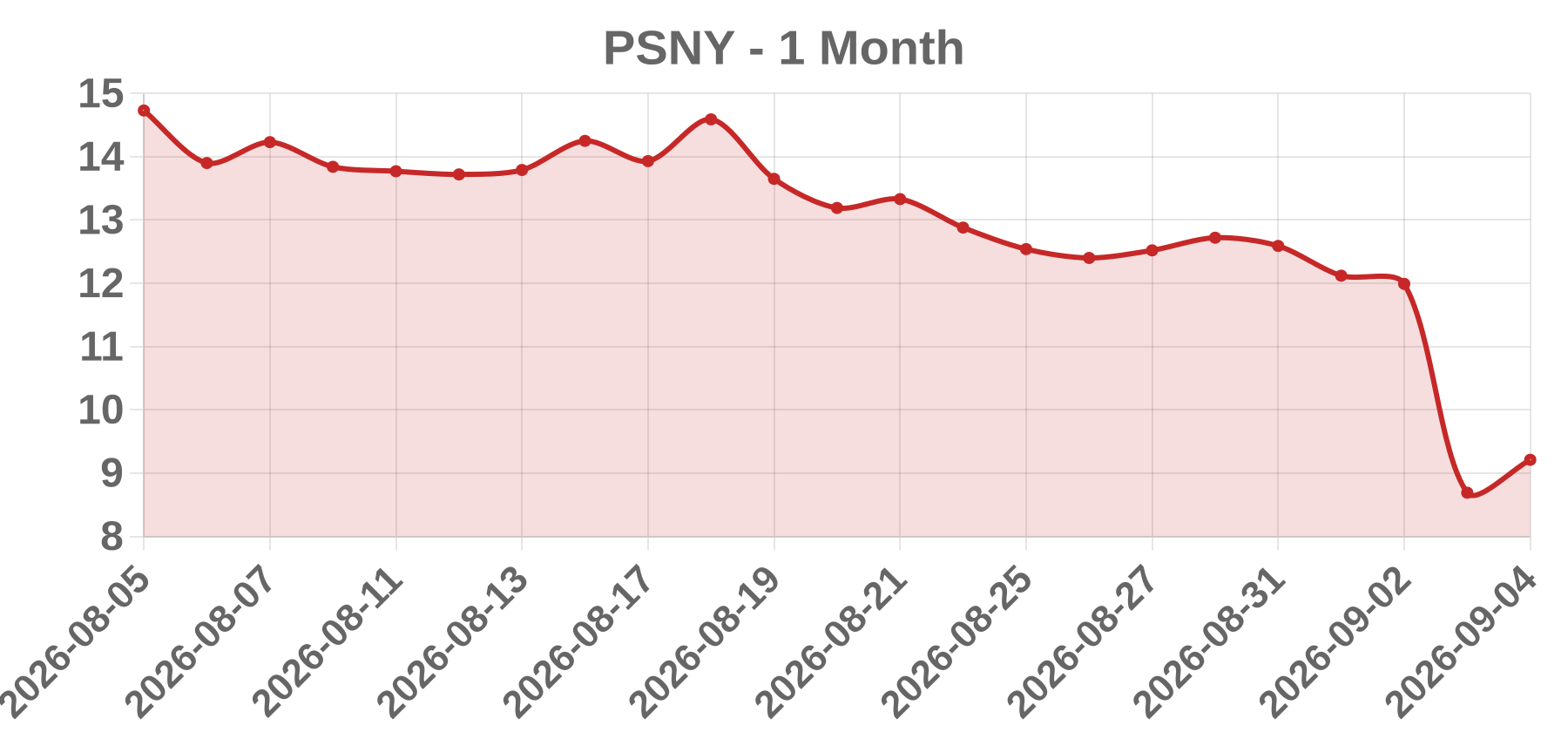
Business Polestar Automotive Holding UK PLC (NASDAQ: PSNY) is a Swedish electric performance car brand majority-owned by China's Geely. It produces premium EVs including the Polestar 2, 4, and 5, selling across Europe, North America, and international markets.
Today’s take PSNY's decline session was driven by its September 3, 2026 H1/Q2 2026 earnings release, which missed expectations on multiple fronts. Q2 EPS came in at -$2.19 vs. the -$1.81 consensus (a $0.38 miss); H1 revenue fell 4.4% YoY to $1.36B. Compounding the miss, management slashed full-year 2026 volume guidance from low-double-digit to just low-to-mid-single-digit growth, citing competition, market volatility, and the Polestar 2's end-of-life transition. CEO Michael Lohscheller confirmed on the call the company will NOT appeal the U.S. BIS connected-vehicle ban, effectively abandoning new-car sales in America from model year 2027 — a roughly $130M impact on H1 operating loss with more charges expected. Europe now represents ~78% of volume. The selloff (about -29%) put the stock near a record low with a market cap around $1.7B, and Cantor Fitzgerald reiterated its Underweight rating on Sept 4, modeling ~$5.5B of additional capital needs. This was a fundamentals-driven crash to roughly an all-time low.
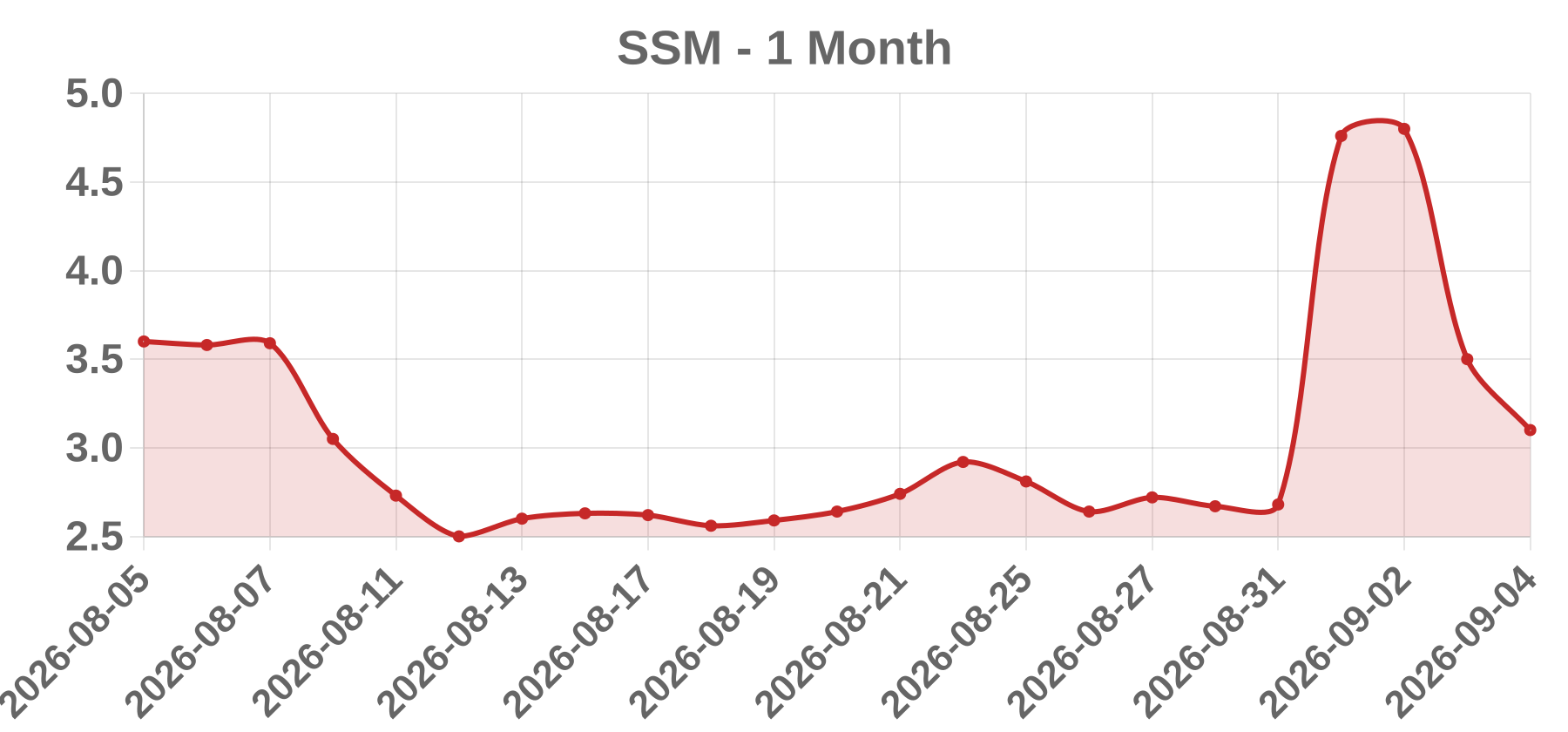
Business Sono Group N.V. (NASDAQ: SSM) is a Dutch public company originally founded as Sono Motors GmbH in 2016, which developed the solar-powered Sion EV until discontinuing that program in 2023 and exiting its solar business in May 2026. It now operates primarily as a digital asset treasury focused on Bitcoin covered-call yield strategies, and is pursuing a non-binding business-combination LOI with Sports One to become a sports-equity holding company.
Today’s take Sono Group crashed -27.08% to close at $3.50 on the Sept 3 session (captured in the Sept 4 decliners table as the #2 US decliner, with the Sept 4 close falling another -11.43% to $3.10). The collapse was the unwind/dilution phase of a +77.43% merger-driven spike on Sept 1 (which surged to $4.76-$5.40 intraday on ~34M shares after the Aug 31 announcement of a non-binding LOI to combine with Sports One). Delivered on Sept 2 was a registered direct offering of 283,500 shares at $2.67 (~$756,945, ~19.9% of shares outstanding, classified within Nasdaq's sub-20% cap), filed via Form 424B5 dated Sept 2. Adding supply-side pressure, 10%+ holder Bambino 255 V V UG disclosed on Sept 3 (Form 4, transactions dated Sept 1) sales of ~11,410 shares at $3.67-$3.75, noting it fell below the 10% threshold. The stock then reverted toward pre-spike valuation as speculative momentum from the early-stage, non-binding, shareholder-approval-pending Sports One deal faded, compounded by dilution and insider selling.
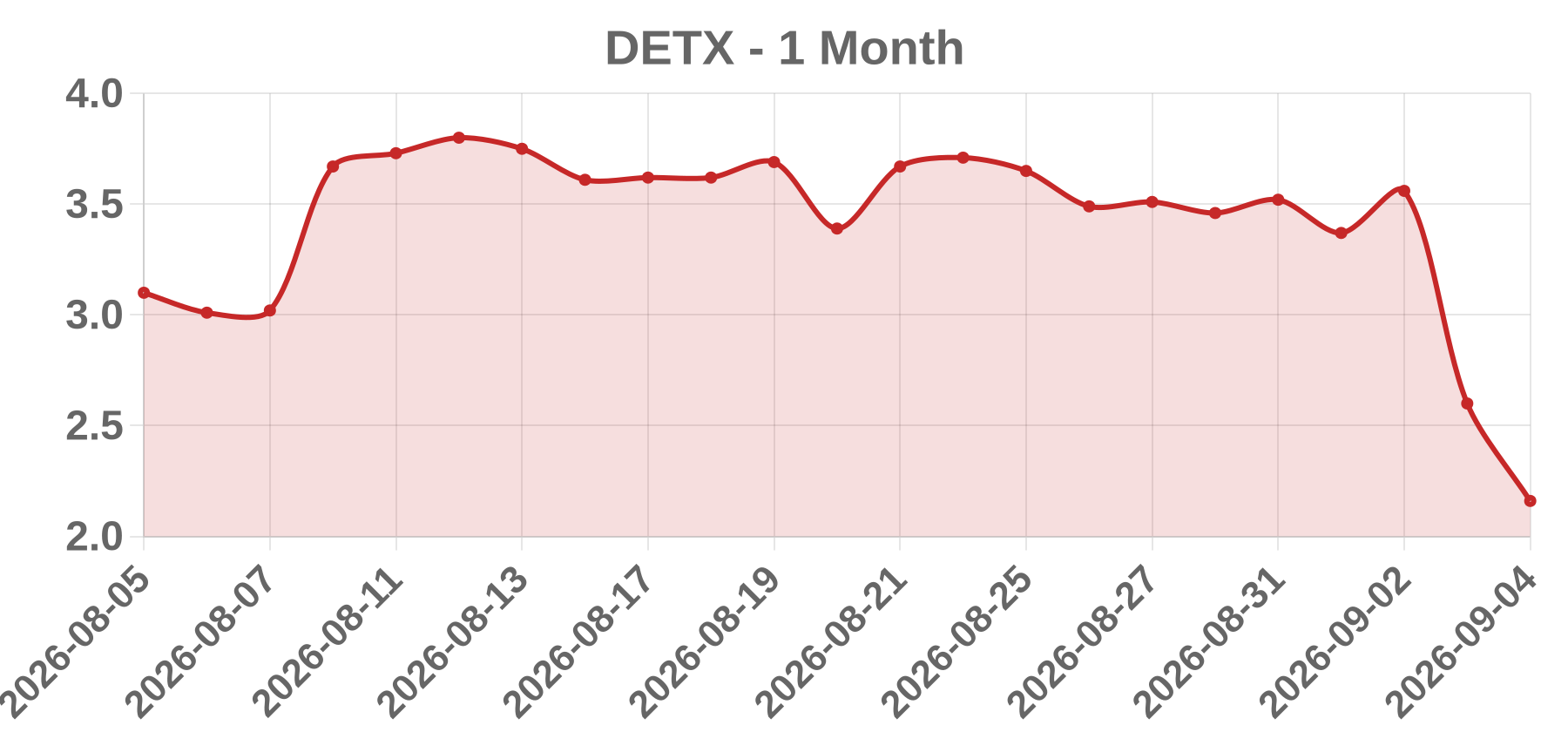
Business Liberty Defense Holdings, Ltd. (NASDAQ: DETX; TSXV: SCAN) develops and commercializes security detection technologies, most notably the MIT-licensed HEXWAVE millimeter-wave/3D-imaging system for concealed weapons detection at airports, stadiums and checkpoints, alongside HD-AIT body/scanner products. A distressed micro-cap that completed its U.S. IPO in April 2026.
Today’s take DETX collapsed about 27% (to $2.60) on heavy volume as persistent equity-dilution concerns, weak results and leadership turnover rattled this small security-tech name. Consolidated quotes attribute the -26.98%/-0.96 move to the Sep 3 session (close $2.60, volume 185,768), which matches the supplied figures; the next session (Sep 4) faded further to $2.16 (-16.92%). The plunge follows a securities-offering registration statement the company filed with the SEC on Aug 14, 2026, atop Q2 2026 results (reported Aug 14/17) showing revenue collapsing ~90% YoY to $42,202, HEXWAVE deliveries of just 6 units, and a $2.21M net loss. Management has repeatedly funded operations via private placements and shares-for-debt settlements (e.g., 23,306 shares issued Jul 27 at $4.55), has lost money for eight straight quarters (TTM net income -$11.52M on ~$975K revenue), and saw President Bryan Cunningham depart effective Jul 22, 2026. With market cap only ~$15M, continued funding needs imply further dilution overhang that pressured the stock.
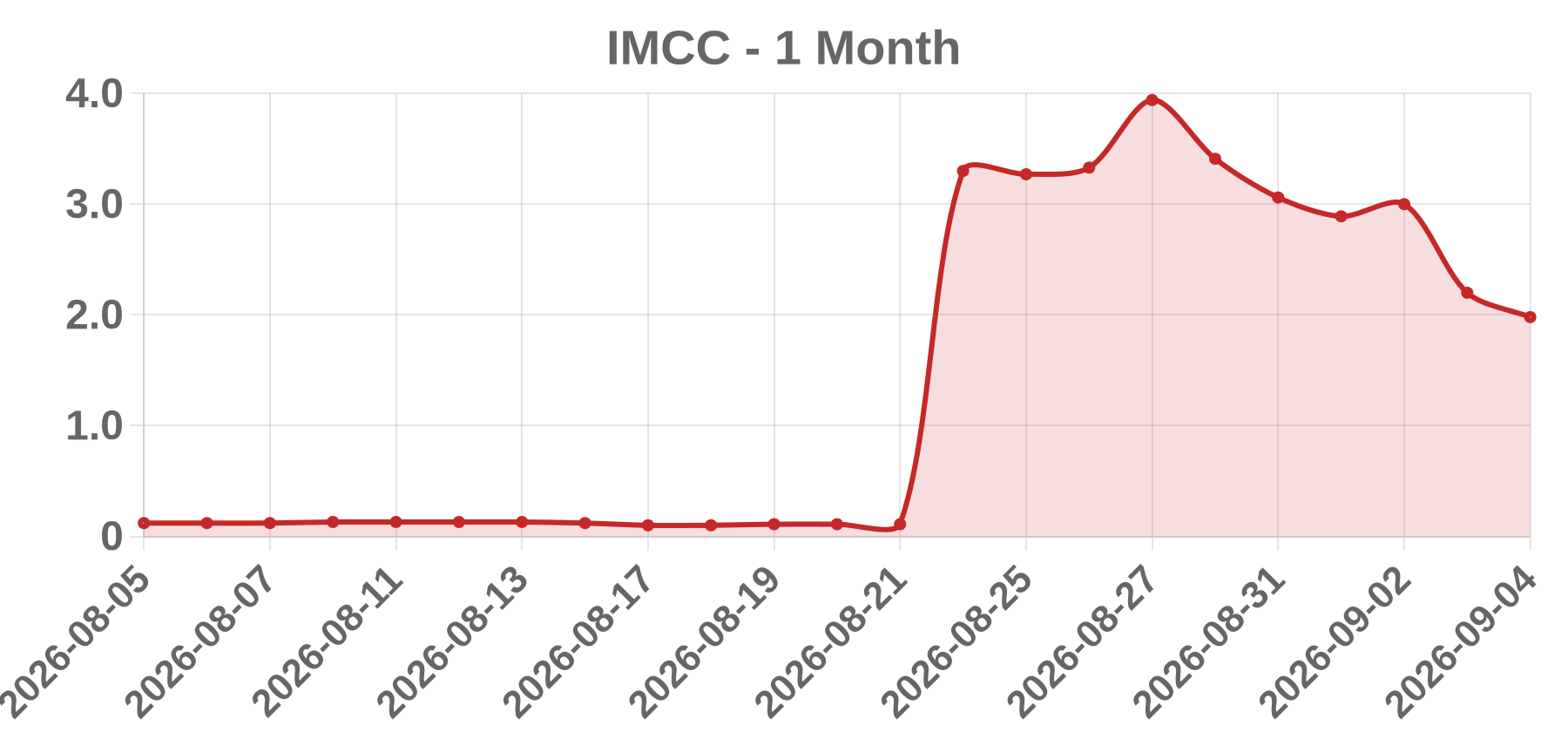
Business IM Cannabis Corp. (Nasdaq: IMCC), headquartered in Toronto/Vancouver, Canada, is an international medical cannabis company importing, distributing and retailing medical cannabis products through operations in Israel (with retail pharmacies and online platforms) and Germany (via Adjupharm GmbH). It serves medical patients under brands including IMC, BLKMT and LOT420.
Today’s take IMCC collapsed ~26.67%, dropping from the prior $3.00 close to $2.20 (-$0.80) on the session dated 2026-09-04 in the WSJ feed (labeled Sep 3 by Yahoo/stockanalysis), immediately after the Company on Sept 2, 2026 announced it had closed a deeply dilutive US$225,000 convertible note private placement with an institutional investor. The note carries a 10% original-issuance discount, 8% interest (rising to 14% on default), is NOT cash-repayable (settled solely in common shares on conversion), and converts at the lower of a fixed US$3.328 or 90% of the lowest 20-day VWAP, with a floor of US$0.6657 — all-level at or below market, signaling heavy shareholder dilution. It also issued warrants for 77,855 shares. Coming on top of a 30:1 reverse split effective Aug 27 (to satisfy Nasdaq's $1 minimum-bid rule, deadline Oct 6), Q2-2026 losses of C$0.47/share, going-concern warnings, and a repeated pattern of small dilutive convertible taps, the financing amplified fears of solvency and further dilution. IMCC closed the following session (Sep 4) down another ~10% to $1.98 on modest volume of ~127.6K shares for the crash day.