US common stocks / ADRs: top 10 by volume; top 10 gainers (by % change, volume as tie-breaker); top 10 losers (by % change, prefer liquid names). Deep notes cover the de-duplicated set across the three boards.
22 names on this page · volume 10 · gainers 10 · losers 10
Order: volume board → gainers → losers; each ticker appears once. Summaries of public information only — please verify primary sources.
1/10NVDA NVDA
-4.57%
Close 217.55 · Vol 194.10M · Type: Earnings
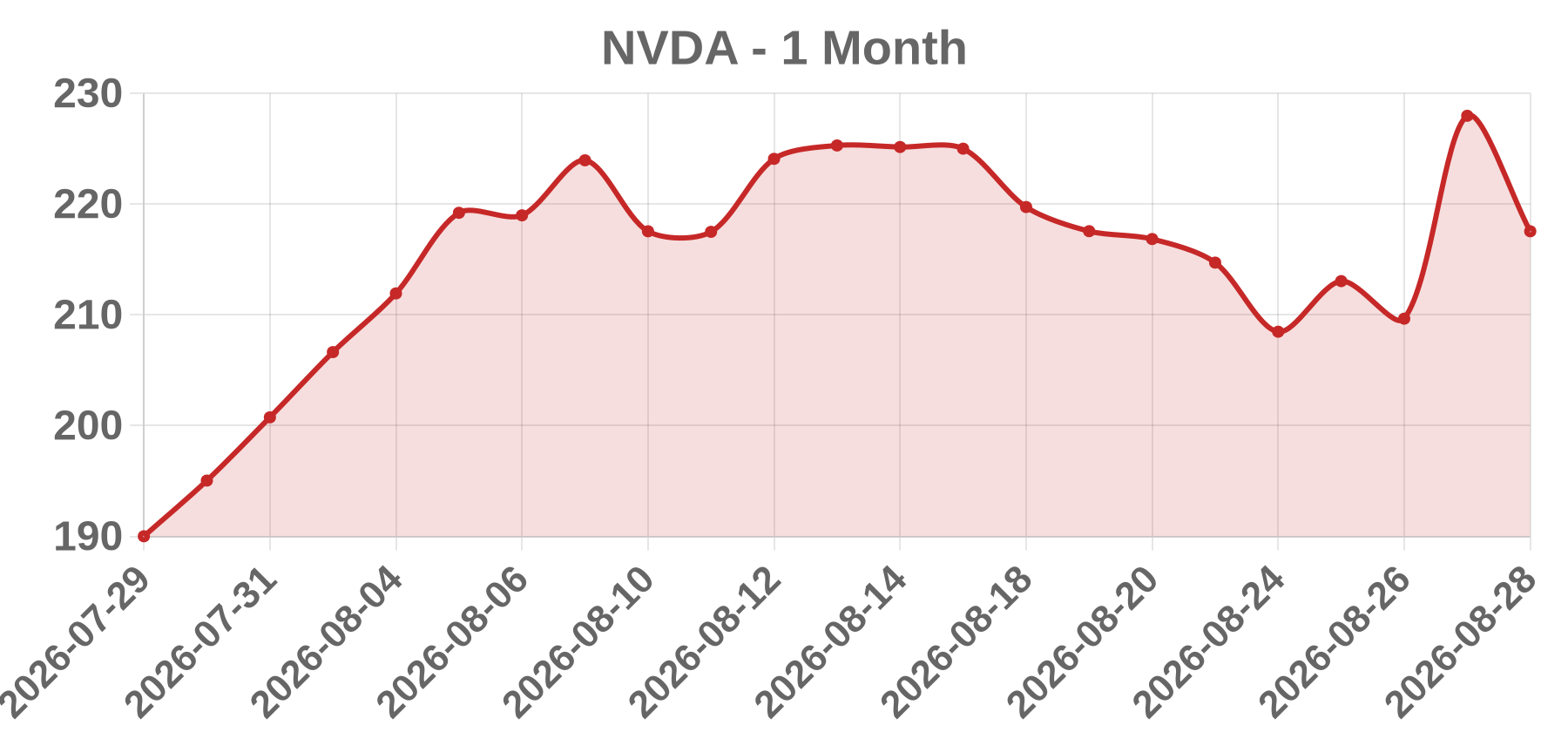
Approx. 1-month price (illustrative)
Business NVIDIA Corporation (NASDAQ: NVDA) designs and sells high-performance GPUs and full AI-factory systems (Blackwell, Vera Rubin, networking, software) for data centers, gaming, and edge computing. It is the dominant global supplier of AI-accelerator chips.
Today’s take On Aug 26 NVDA reported stellar Q2 FY2027 results after close: revenue $96.2B (+106% YoY, beating ~$92.2B), non-GAAP EPS $2.22 (+120%, beating ~$2.10), and data-center revenue $89B (+117%). Management guided Q3 revenue to a record ~$108B (first quarter above $100B) and FY2028 growth of ~70% vs ~45% consensus, sending the stock up ~8.7% to $227.98 on Aug 27. On Aug 28 the stock gave back gains, sliding -4.57% to close $217.55 on classic profit-taking/sell-the-news after the parabolic rally. The pullback was compounded by a WSJ report that Nvidia paused parts of its AI Compute Partnership revenue-sharing financing program for smaller cloud providers over internal antitrust concerns, weighing on growth optics.
Business PG&E Corporation (NYSE: PCG) is a California-regulated public utility holding company whose principal subsidiary, Pacific Gas and Electric Company, delivers electric and natural gas service across northern and central California. The company operates major portions of California's power grid, generation assets (including the Diablo Canyon nuclear plant), and gas infrastructure under a regulator-approved capital investment program to upgrade and harden the grid.
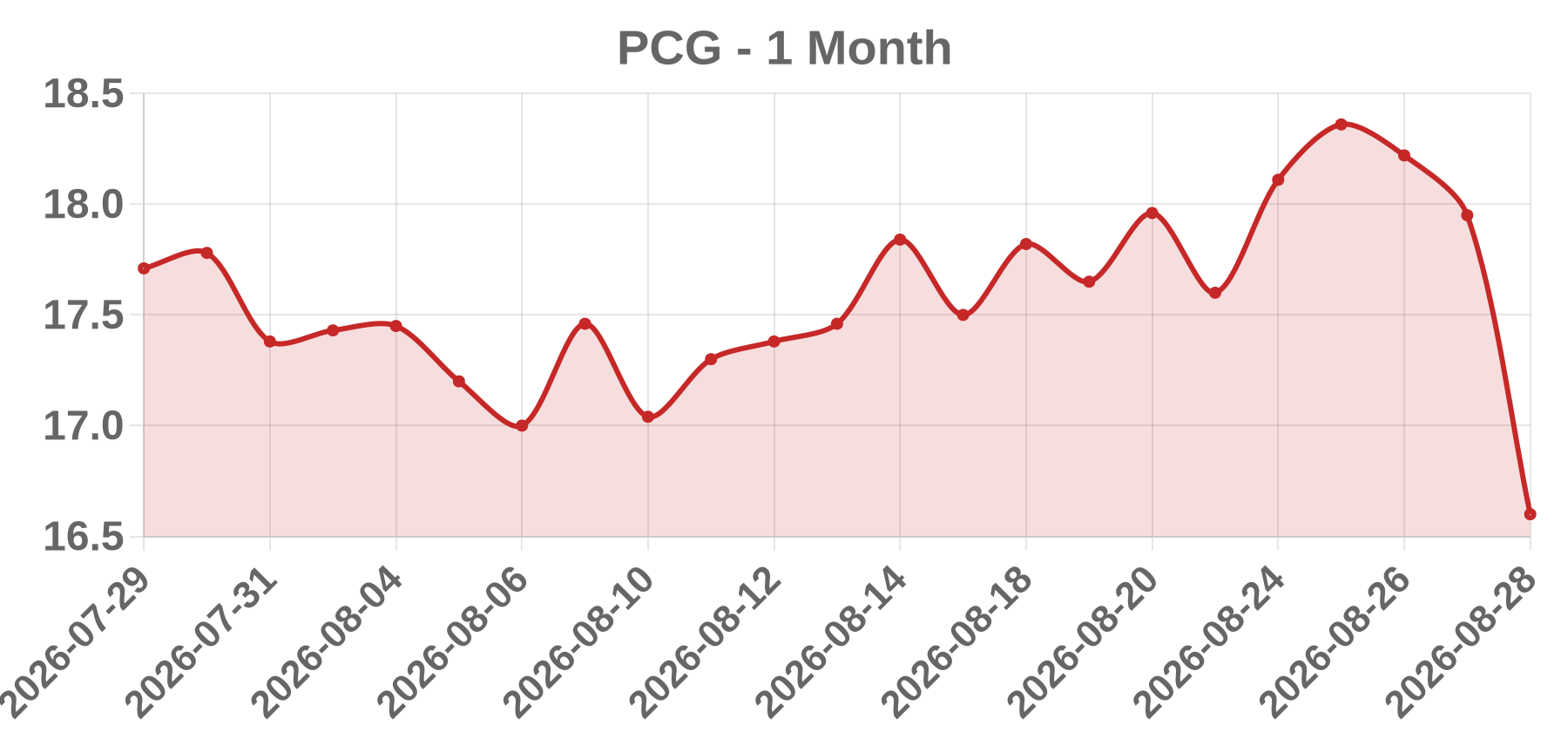
Today’s take PCG fell 7.52% to $16.60 on Aug 28, 2026 after California lawmakers blocked Governor Gavin Newsom's proposal to eliminate or curtail insurers' ability to sue utilities for wildfire-related payouts (the legal process of subrogation). PG&E management, per CEO Patti Poppe, had explicitly stated that its entire capital investment plan through 2030 was contingent on favorable wildfire-liability legislation, so the bill's collapse removed a key de-risking catalyst priced into the stock. The move was compound by a hawkish Jackson Hole speech from Fed Chairman Kevin Warsh that pressured rate-sensitive utilities broadly, and by heavy bearish options positioning (put volume ~4x normal), with Morgan Stanley having trimmed its target to $22 from $23. The sell-off extended sector-wide: Edison International fell 4.79% to $70.15 and Sempra also declined, confirming a market reading of systemic California wildfire-risk repricing.
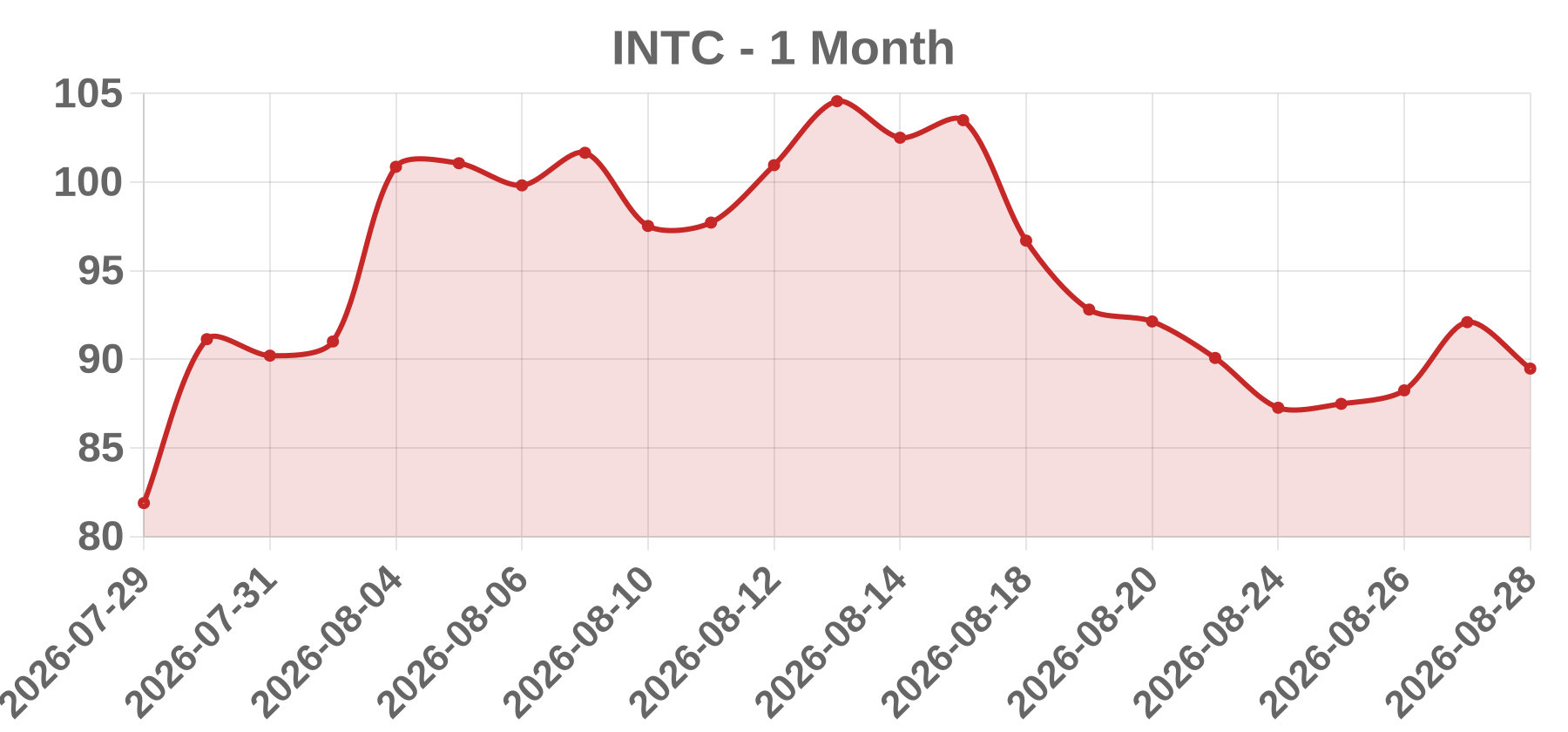
Business Intel Corporation (INTC) closed at $89.47 on August 28, 2026, down 2.85% on 85.84 million shares traded. The company had recently completed a $20 billion upsized secondary equity offering (Aug 11), priced at $95 per share, issuing approximately 210.5 million new shares representing roughly 4.2-4.9% dilution to existing shareholders. CEO Lip-Bu Tan had made a $10 million discretionary insider purchase at $95 per share concurrent with the offering, which was now underwater. Intel's market capitalization stood at approximately $473-484 billion with roughly 5.25 billion shares outstanding, following a year of significant AI-driven re-rating of the semiconductor sector.
Today’s take Intel's 2.85% decline on August 28, 2026 was primarily driven by a macro catalyst: Federal Reserve Chair Kevin Warsh's hawkish first Jackson Hole address, which signaled the possibility of rate hikes to combat persistent inflation. This triggered a broad semiconductor selloff, with the Philadelphia Semiconductor Index (SOX) falling approximately 3% and the Nasdaq Composite dropping 0.5% to 26,402. Intel's decline was amplified by company-specific overhang: the stock continued trading below its $95 equity offering price, keeping dilution concerns front and center. The CEO's $10M insider buy at $95 was now underwater, further undermining sentiment. Notably, Intel's 85.84M shares traded was actually below its average daily volume (~105-125M), indicating this was not a high-volume panic selloff but rather a broad risk-off move exacerbated by lingering post-offering dilution overhang.
Business Nu Holdings Ltd. (NYSE: NU) is a Guernsey-incorporated holding company whose subsidiary, Nubank, is Latin America's largest digital bank, serving roughly 139 million customers across Brazil, Mexico, and Colombia with digital banking, credit cards, lending, insurance, and investment products.
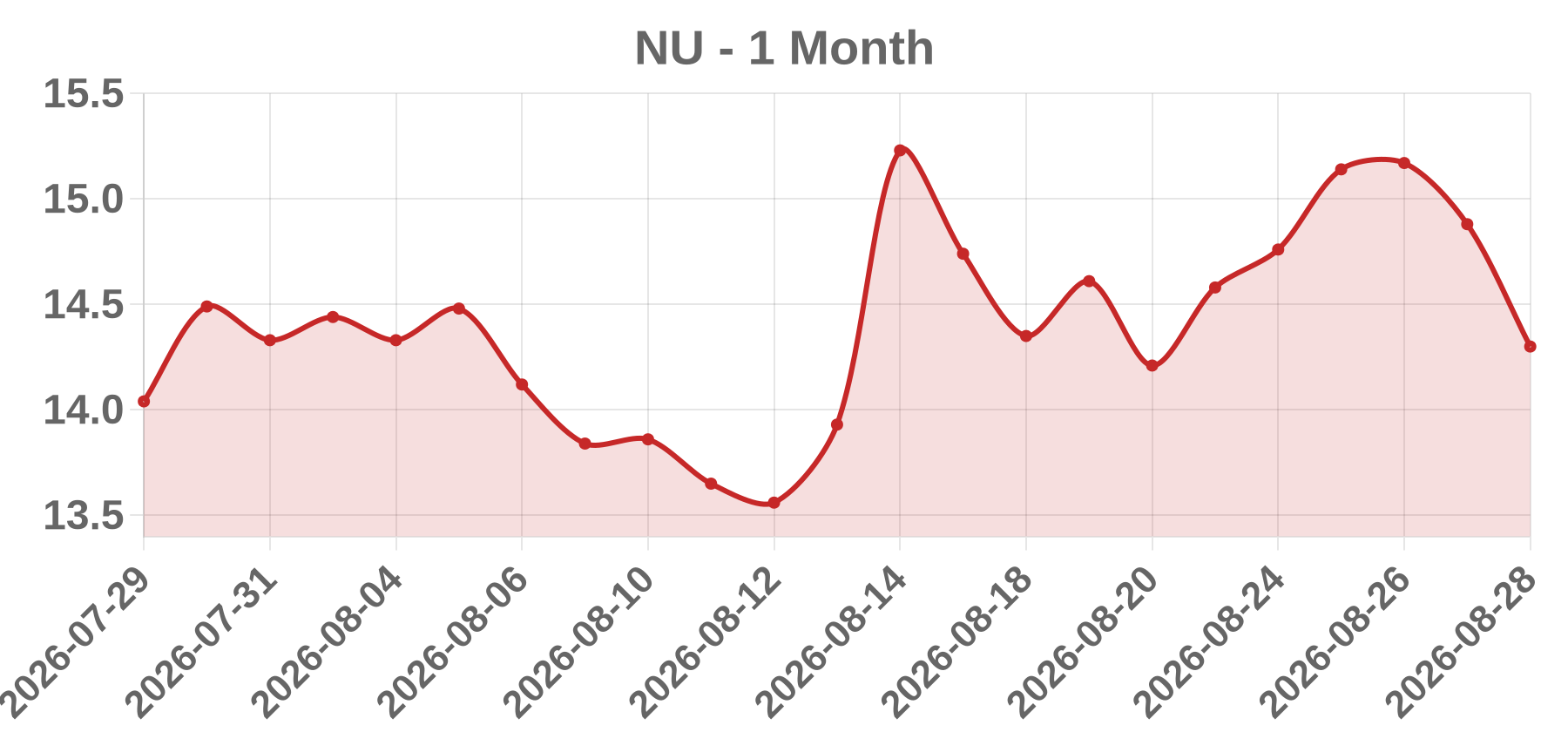
Today’s take On August 28, 2026, NU fell 3.90% to $14.30 (open $14.86, high $14.91, low $14.22) on ~79.1M volume. There was no company-specific fundamental event that day; the decline was a technical pullback/digestion following a sharp post-earnings rally. On Aug 13, NU reported record Q2 net income of $1.1B — its first-ever quarter above $1B (up 49% YoY) — on ~$5.88B revenue, causing a spike that pushed shares from the low-$13s to an intraday high above $16.20. By Aug 28, shares had rolled over from the $15.70–$16.20 zone to the mid-$14s, forming lower highs/lower lows. The pullback was compounded by weakened sentiment on Latin American fintech growth and an analyst overhang from BofA's June downgrade to Underperform with a $10 target (citing Brazilian credit-cycle deterioration and the CFO's departure). Intraday, NU consolidated in a tight $14.25–$14.35 band, with traders watching $14.20 as key technical support.
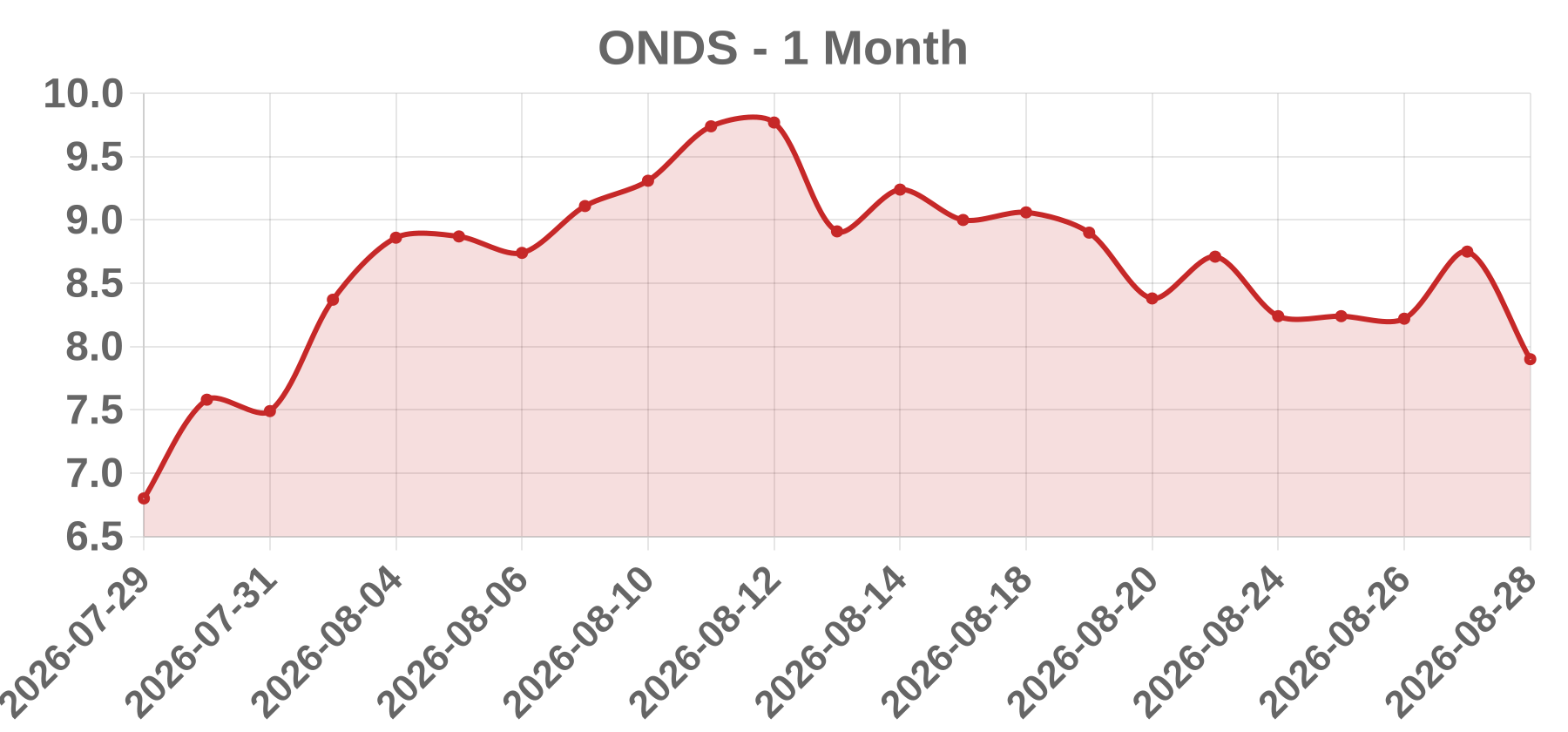
Business Ondas Inc. (ONDS, formerly Ondas Holdings Inc., renamed in January 2026) is a provider of private wireless, drone, and automated data solutions operating through two segments: Ondas Networks and Ondas Autonomous Systems. Ondas Networks offers FullMAX, a software-defined radio (SDR) platform for wide-area broadband networks serving rail, electric utilities, oil and gas, and other mission-critical industries. Ondas Autonomous Systems delivers an AI-powered defense and security portfolio including Counter-UAS (CUAS) systems, the Iron Drone Raider autonomous interceptor drone, Sentrycs radio-frequency counter-drone technology, ISR capabilities, and stratospheric persistent surveillance via World View. Backed by heavy recent acquisitions (DZYNE Technologies, Cyberhawk, Aran Defense), the compan
Today’s take Ondas fell 9.71% to $7.90 on Friday August 28, 2026 (open 8.56, high 8.71, low 7.87), as the entire drone/autonomous-defense complex sold off in a coordinated, profit-taking unwind of the August rally. The move was sector-driven rather than company-specific: no earnings, M&A, contract award, regulatory action, or rating change was announced for Ondas that day. In the prior session (August 27), ONDS had risen 6.45% to $8.75 on defense-drone momentum tied to the Department of War's 'Drone Dominance' initiative and NDAA tailwinds. On Friday, investors took profits across the group into the weekend despite a rising S&P — Unusual Machines fell ~9%, Red Cat ~5%, and Ondas was down ~6% at midday before the selloff accelerated into the close, ending at -9.71%. The move partly retraced a steep month-long advance (ONDS was up ~11% over the prior month at the prior close). Underlying technical stress included a wider-than-expected Q2 net loss (-$0.19 vs -$0.09 consensus) delivered on August 13 despite a 13x revenue surge, heavy cash consumption from acquisitions (~$325M in Q3), notable share dilution from financing, and persistent short interest near 35-40% of the float, all of which amplifie
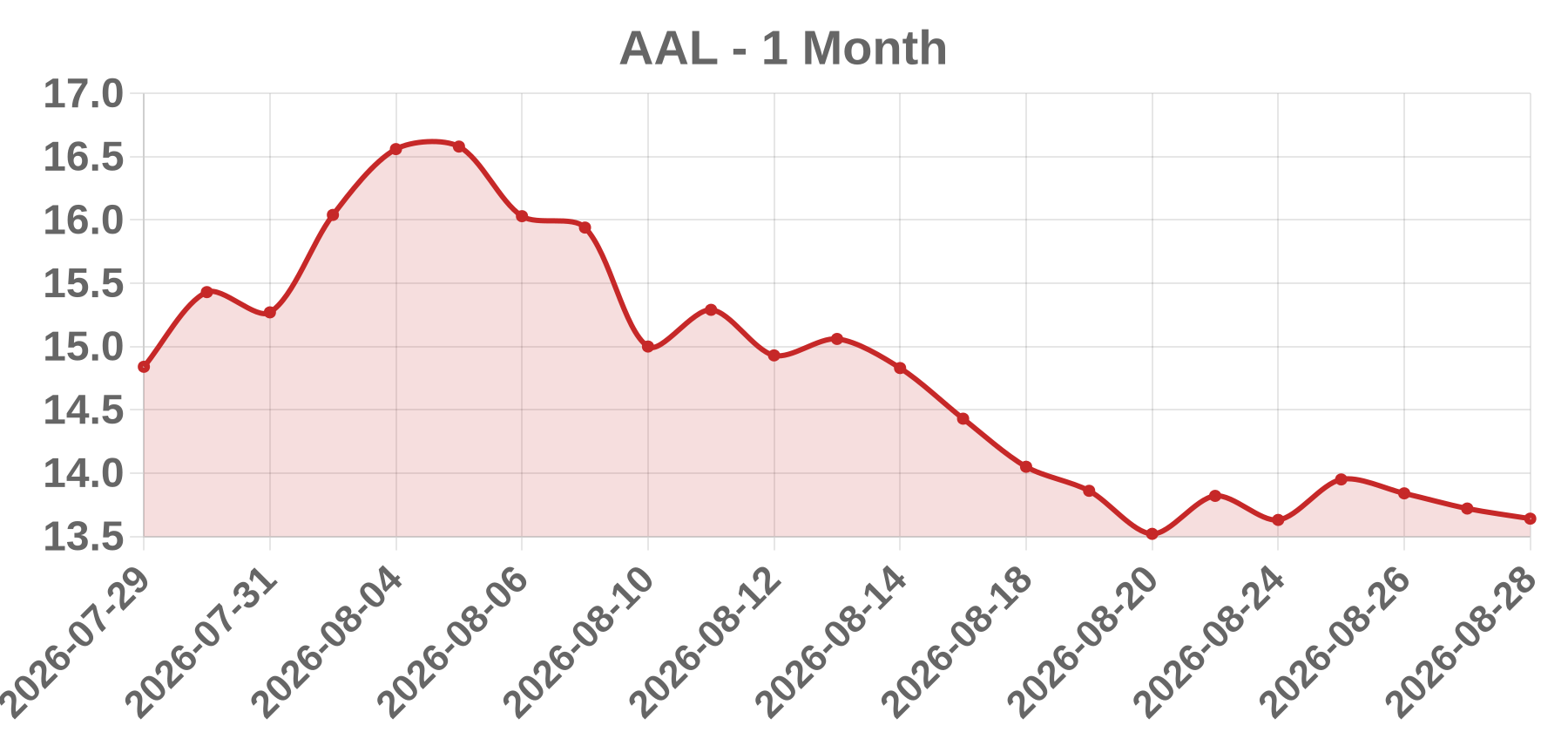
Business American Airlines Group Inc. (NASDAQ: AAL) is one of the world's largest passenger airlines and the largest airline in the world by fleet size, employees, and scheduled revenue passenger miles. Headquartered in Fort Worth, Texas, it operates an extensive domestic and international network through hubs in Dallas, Charlotte, Chicago, Miami, and other cities.
Today’s take On 2026-08-28, AAL closed at $13.64, down -0.58%, a modest continuation of a prolonged August downtrend rather than a company-specific catalyst session. No earnings, M&A, or rating action was published that day. The primary driver was macro: jet fuel costs soared amid the U.S.-Iran war (fuel can be ~30% of airline expenses), driving Q2 fuel expense up ~83% YoY (>$2.2B) and forcing American to suspend several summer routes. Management cut FY26 adjusted EPS guidance to a -$0.65 to +$0.65 range (breakeven midpoint) for the second time this year. This eroded the stock from a July 2 high of $18.79 to $13.64 (52-week range $10.09-$18.79). Recent analyst de-ratings compounded the pressure: BofA cut its PT to $17 from $19 (Aug 17), Wells Fargo reiterated Hold at $17 (Aug 19), and Zacks lowered its Q3 EPS estimate to -$0.17 (Aug 13). The rejected United merger (April-May) removed a strategic upside catalyst. The -0.58% session was part of the broader airline/commodity-driven weakness.
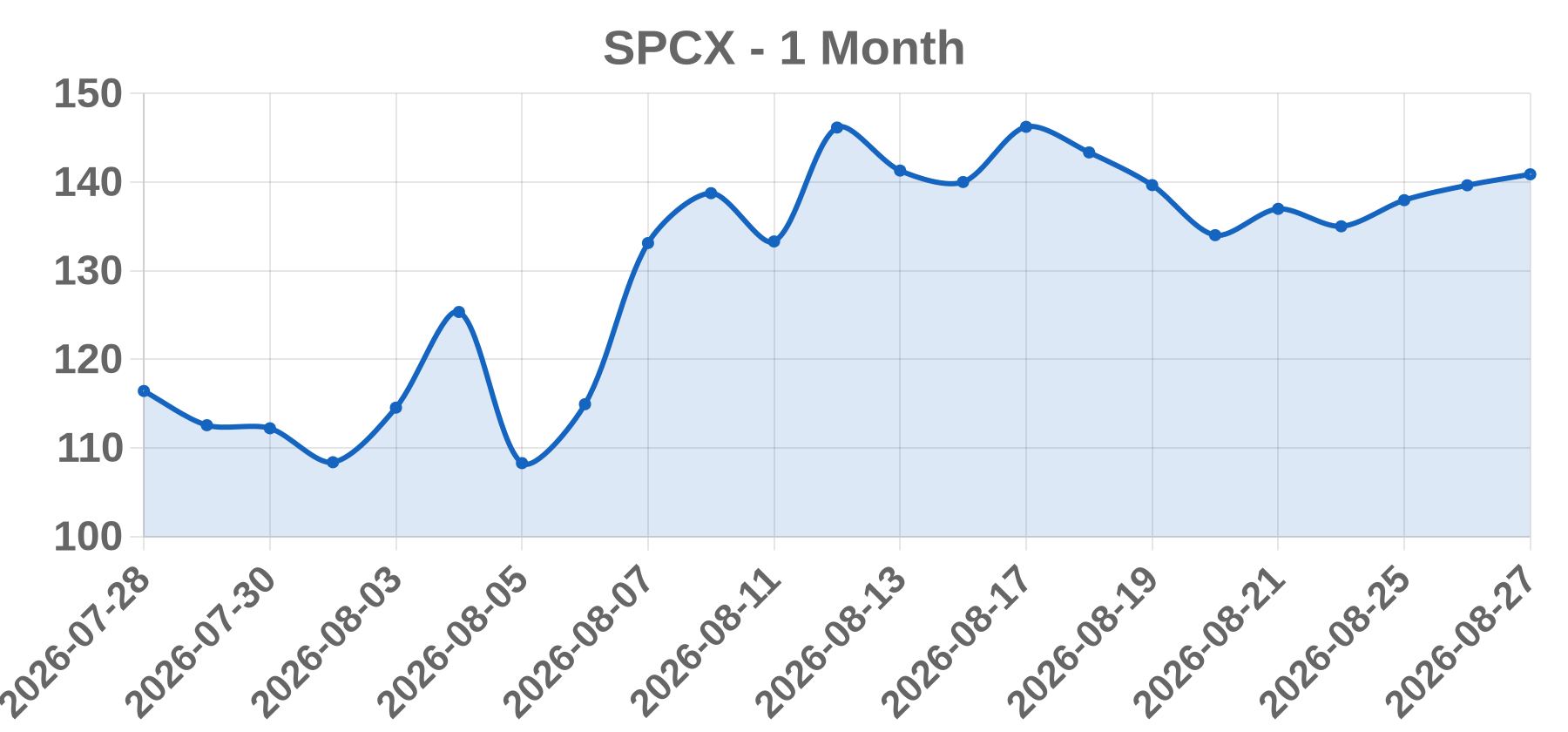
Business Space Exploration Technologies Corp. (SpaceX; NASDAQ: SPCX) is a vertically integrated aerospace manufacturer, launch service provider, and satellite communications company, listed on June 12, 2026 in the largest IPO ever ($75B raised). It operates three segments — Space (reusable rockets/Starship, Falcon 9/Falcon Heavy), Connectivity (Starlink satellite broadband), and AI (Cursor coding assistant, orbital compute).
Today’s take On Aug 28, 2026, SPCX rose +0.45% to $141.50 (range $137.90–$143.29). The primary same-day catalyst was the UAE's TDRA granting Starlink a 10-year General Satellite Services License to build and operate a public satellite telecom network across the Emirates (individuals, enterprises, government, aviation/maritime). Supporting drivers included Elon Musk's ~$3.5T revenue-by-2033 estimate (7 years ahead of Morgan Stanley's model), Morgan Stanley's Buy reiteration at $300 PT (Aug 26) plus Evercore ISI's Buy at $230 (Aug 27), and SpaceX's salvage recovery of its Starship from the Indian Ocean near Christmas Island, shipping it back to Texas. Sentiment was also aided by the ~$100B Louisiana Starbase expansion and a16z's $1.1B AI hardware fund. With a $1.92T market cap and TTM revenue of $23.04B (+121.9%), the stock trades near $141 while the consensus PT is $219.22 (Buy).
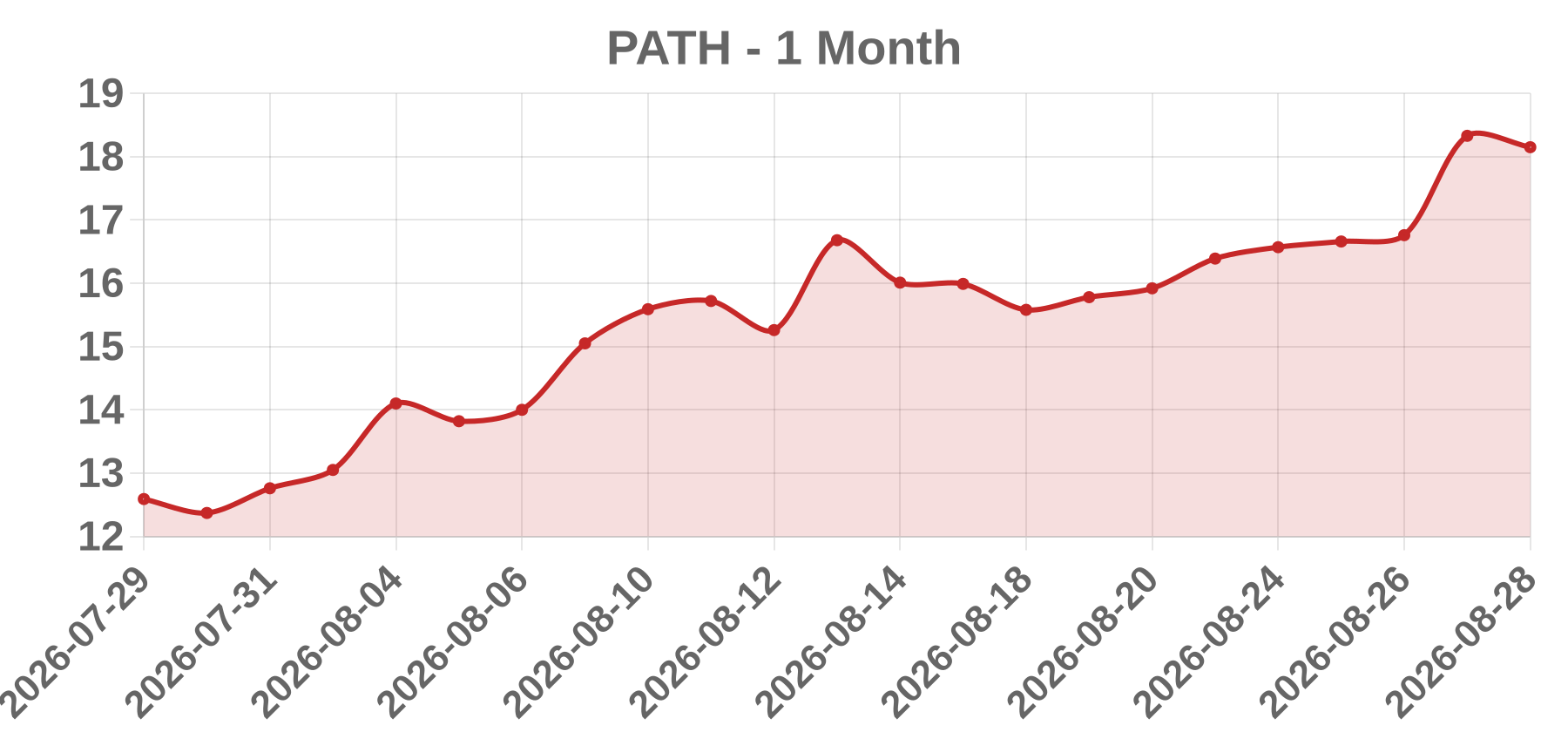
Business UiPath, Inc. is a NYSE-listed (ticker: PATH) global leader in agentic business orchestration and robotic process automation (RPA), providing the UiPath Platform that lets AI agents, robots, people and models work together in coordinated workflows. Revenue (TTM) is about $1.67B (+15.2% YoY), with roughly 3,981 employees, market cap around $9.4B, and an IPO date of April 21, 2021.
Today’s take PATH closed Aug 28, 2026 at $18.15, down 0.98% on ~53.1M shares (53,003,749 per stockanalysis), after touching an intraday high of $18.52. The session was a mild profit-taking/consolidation pause following an extended, peer-driven rally: 7 straight up-sessions cumulating ~18% (Trefis), +45.6% over the past month and +58.3% over 3 months, including a +9.4% surge on Aug 27 to $18.33. The underlying strength was not company news but a sector-wide software re-rating triggered by Salesforce's Aug 26 Q2 FY2027 beat — which raised full-year guidance and expanded its Anthropic partnership via ClaudeForce. Salesforce framed enterprise AI as an orchestration problem over trusted data/workflows/governance, precisely UiPath's pitch, so the bid spilled into non-reporters like UiPath (+9%) and Pegasystems (+4%). Aug 28's modest dip reflects profit-taking ahead of a binary event: UiPath's fiscal Q2 FY2027 earnings due after the close on Sept 3, 2026, plus its announced Investor Day (Sept 22, 2026).
Business Bitmine Immersion Technologies, Inc. (NYSE: BMNR) is a blockchain/digital-asset treasury company focused on the accumulation, holding, and staking of Ethereum (ETH) as its principal reserve asset, alongside Bitcoin mining treasury management and advisory/ecosystem services. It is one of the largest public corporate holders of ETH with roughly 5.8M tokens (~4.8% of circulating supply) and is chaired by Tom Lee (Fundstrat).
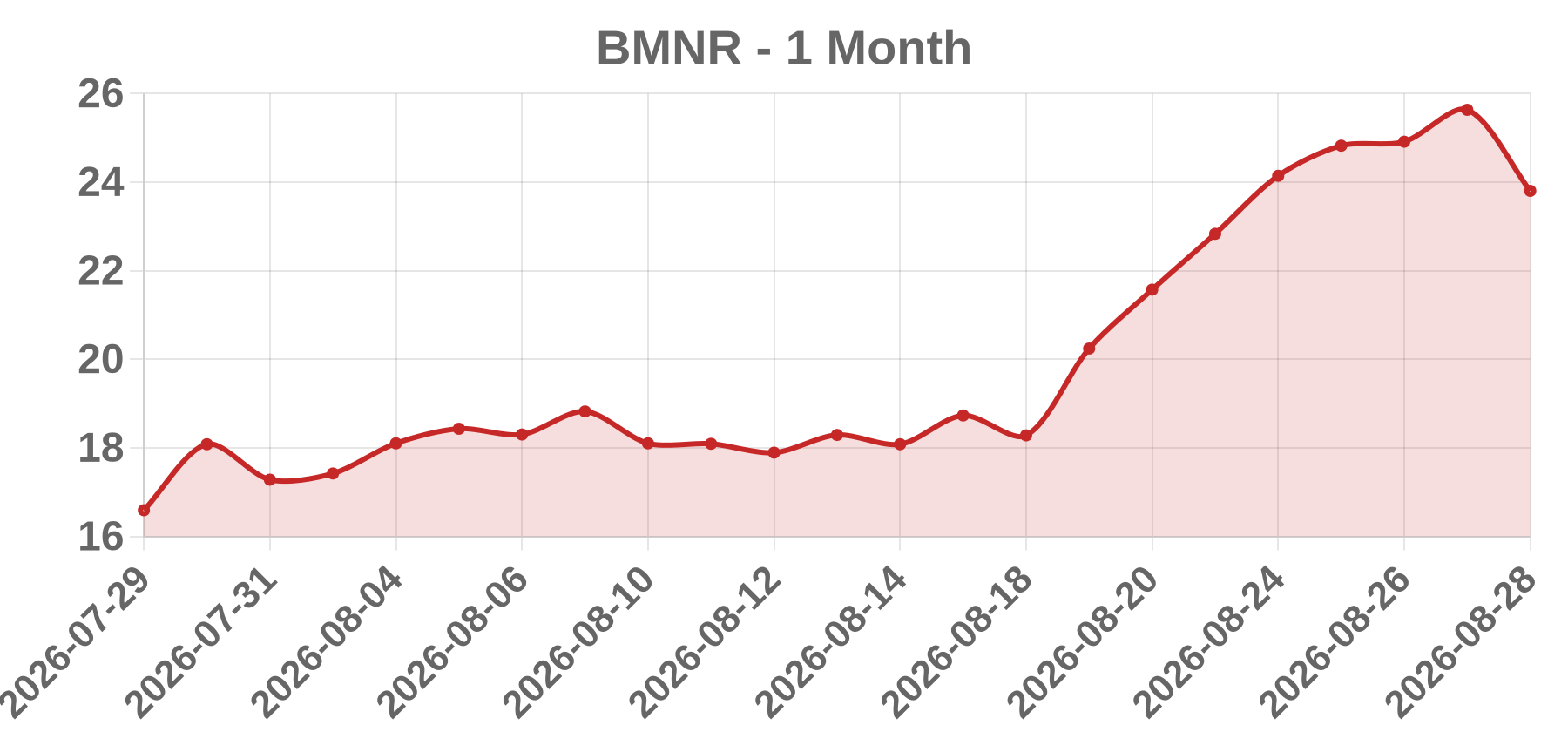
Today’s take BMNR fell 7.14% to close at $23.80 on Aug 28, 2026, with no company-specific fundamental news that day. The trigger was a sector-wide crypto/macro risk-off driven by Fed Chair Kevin Warsh's hawkish first Jackson Hole speech, in which he insisted inflation is not meaningfully slowing and the central bank has 'work to do,' pushing the implied probability of a September rate hike above 50% (from ~36%). Bitcoin tumbled below $80,000 to roughly $77,800 (down ~3% in 24h), dragging crypto-linked equities broadly: MSTR -4.32%, COIN -4.27%, CRCL -3.33%, MARA -6.23%, RIOT -5.8%, SBET -4.28%. Given BMNR's high-beta ETH treasury model, it correlated with this move and closed the session down 7.14%. Notably, the prior session (Aug 27) had seen a +2.89% gain, so Aug 28 represented a sharp reversal of momentum amid the hawkish Fed repricing.
Business Nokia Corporation (Nokia Oyj) is a Finnish multinational telecommunications and network infrastructure company headquartered in Espoo, Finland. Its NYSE-traded American Depositary Shares (ticker NOK, each ADS = one ordinary share) represent one of Europe's largest network equipment makers, with segments spanning Mobile Networks, Network Infrastructure (IP and Optical Networks), Cloud & Network Services, and Nokia Technologies.
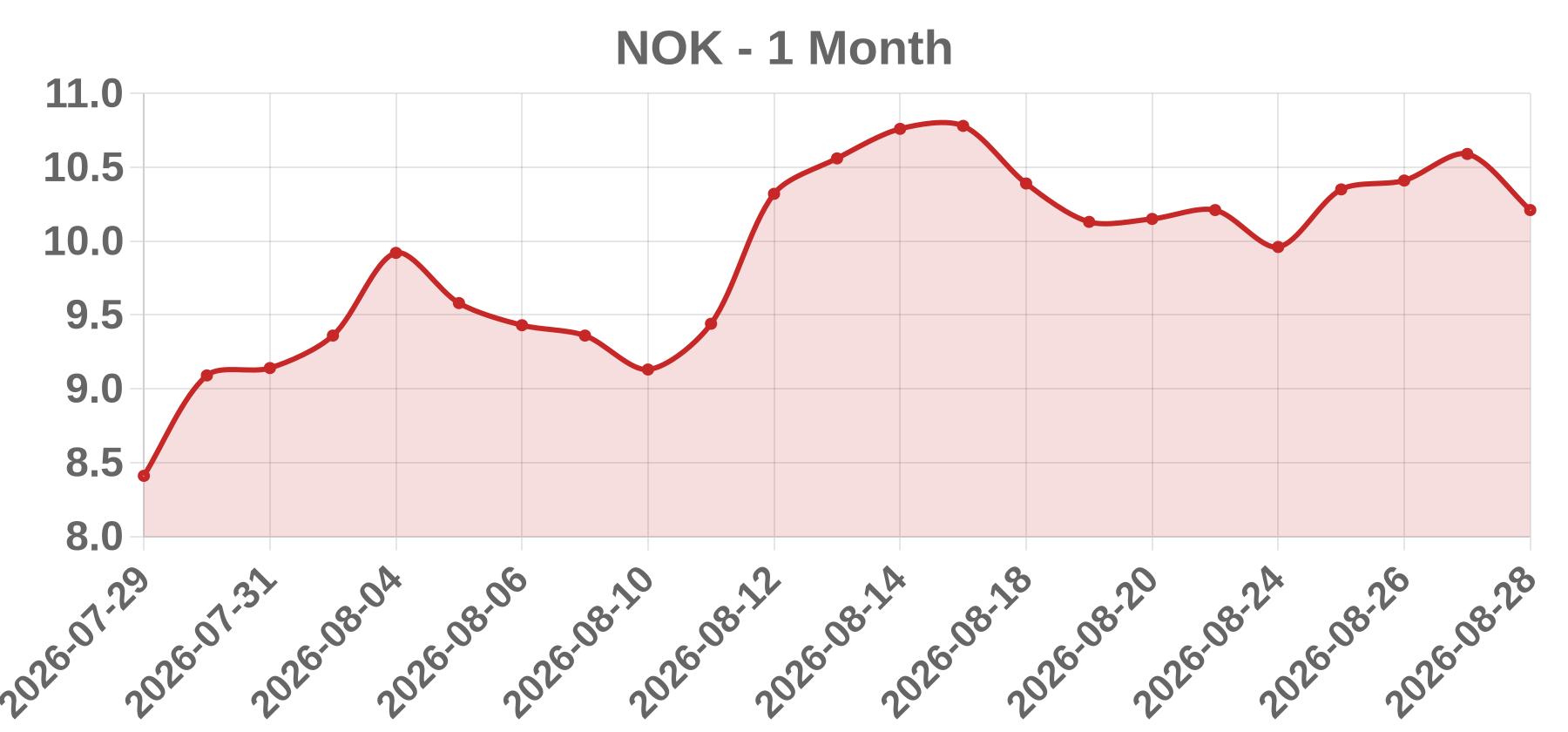
Today’s take On August 28, 2026, NOK fell 3.59% to $10.21 (opening $10.53, high $10.57, low $10.16), matching a same-day sector-wide selloff in optical module and storage/AI hardware equities, not a company-specific event. BlockBeats/BIT data confirmed that morning's pre-market declines across the basket: Marvell -8.02%, Applied Optoelectronics -3.12%, Lumentum -2.90%, Coherent -2.84%, plus storage names Western Digital -2.27%, Seagate -2.01%, SanDisk -2.94%, Micron -2.50%; Nokia was down 0.47% pre-market at $10.54. The China Fund/eastmoney report framed the move as NVIDIA's ~8% surge (following better-than-expected Q2 earnings and ~70% next-fiscal-year revenue guidance) absorbing liquidity away from other AI-hardware names, with commentary on AI capex sustainability and rotation. Nokia, an AI/optical infrastructure play (Q2 2026 saw Optical Networks +20% YoY and AI & Cloud net sales more than doubled to EUR 446M), was swept into the risk-off rotation. No earnings (last report Jul 23), M&A, or analyst action occurred on the session — the decline was sector-driven markdown.
Business Pasqal Holding SA (Nasdaq: PSQL) is a French neutral-atom quantum computing company that completed its de-SPAC listing on Nasdaq on August 28, 2026 after merging with Bleichroeder Acquisition Corp. II (BBCQ). Co-founded in 2019 by Nobel Prize-winning physicist Alain Aspect, Pasqal builds and operates neutral-atom quantum processing units (QPUs) delivered with a full software stack, available both on-premises and via cloud. The company has 7 QPUs deployed globally with 3 more in production, supporting 25+ commercial and research applications across energy, financial services, and materials science. Key customers and partners include Saudi Aramco, Crédit Agricole CIB, LG Electronics, NVIDIA, and the IBM Quantum Network. Pasqal reported 2025 commercial revenue of €16.5 million (up from €3.5M
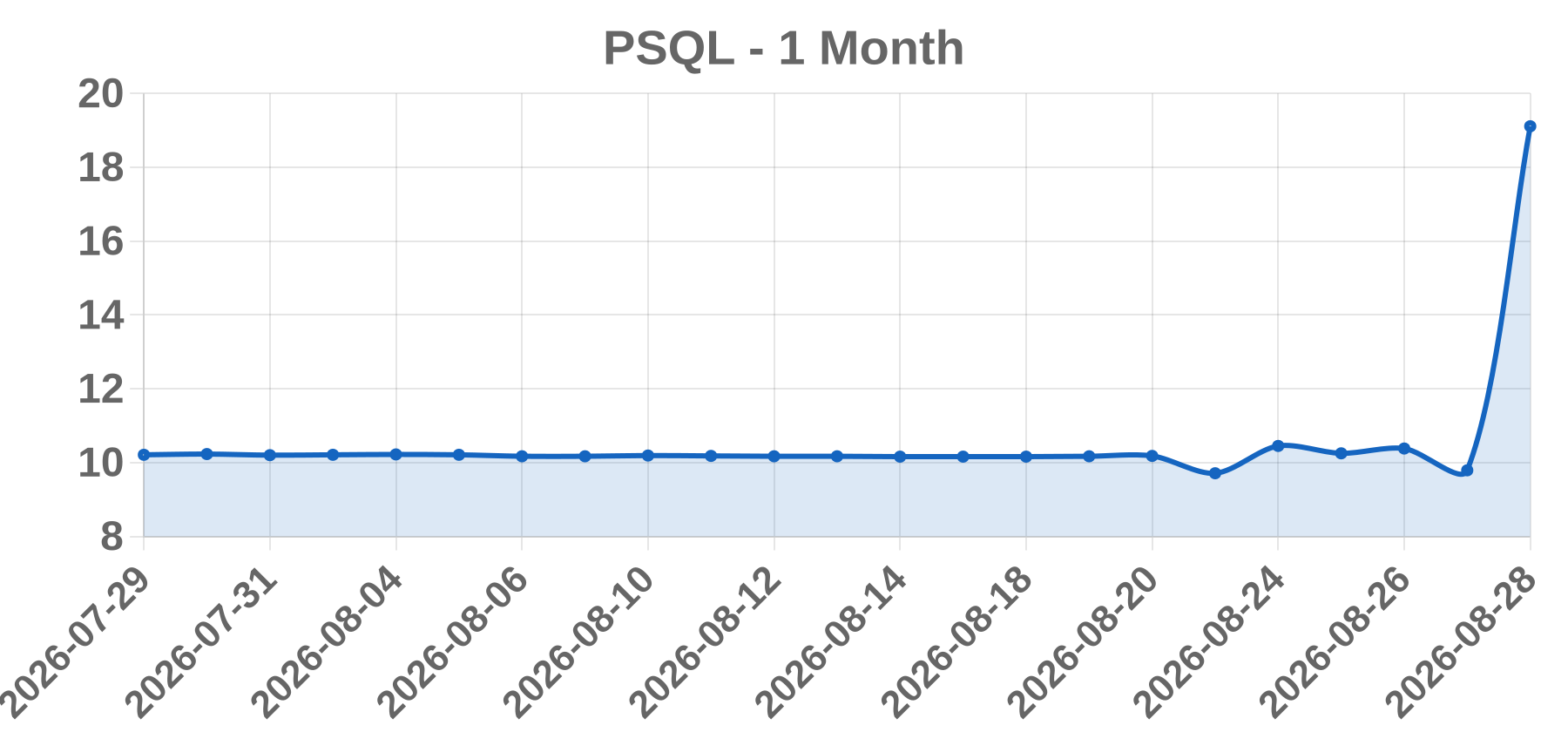
Today’s take PSQL's +95.20% move on August 28, 2026 to close at $19.11 is entirely a function of its first-day Nasdaq listing following completion of the reverse merger between Pasqal Holding SAS and Bleichroeder Acquisition Corp. II. Bleichroeder shareholders approved the combination on August 25, 2026; the surviving entity (Pasqal Holding SA) began trading under ticker PSQL on August 28 — the exact session in question. The day's percentage move is measured against the de-SPAC reference price (~$9.79), not a conventional prior-day close for this newly listed ticker. Intraday, shares surged as high as +73% before paring gains, closing +95% at $19.11. Key demand drivers included: (1) approximately $360M in fresh cash at closing, providing a well-funded runway toward fault-tolerant quantum computing; (2) prestige/premium as the first major French quantum pure-play on U.S. markets, co-founded by a Nobel laureate; (3) broader 2026 sector momentum in quantum computing, though peers (IonQ, Rigetti, D-Wave, QUBT) actually declined 2.7-7.7% on the same day, suggesting the debut premium was company-specific and float-driven rather than sector-wide; and (4) limited early float/low supply in a pre-profit,
Business Swvl Holdings Corp. (NASDAQ: SWVL) is a Dubai-based technology-driven mobility company providing mass transit and shared-mobility solutions for enterprises and governments across Egypt, Saudi Arabia, the UAE, Kuwait, Qatar, the UK, and the US.
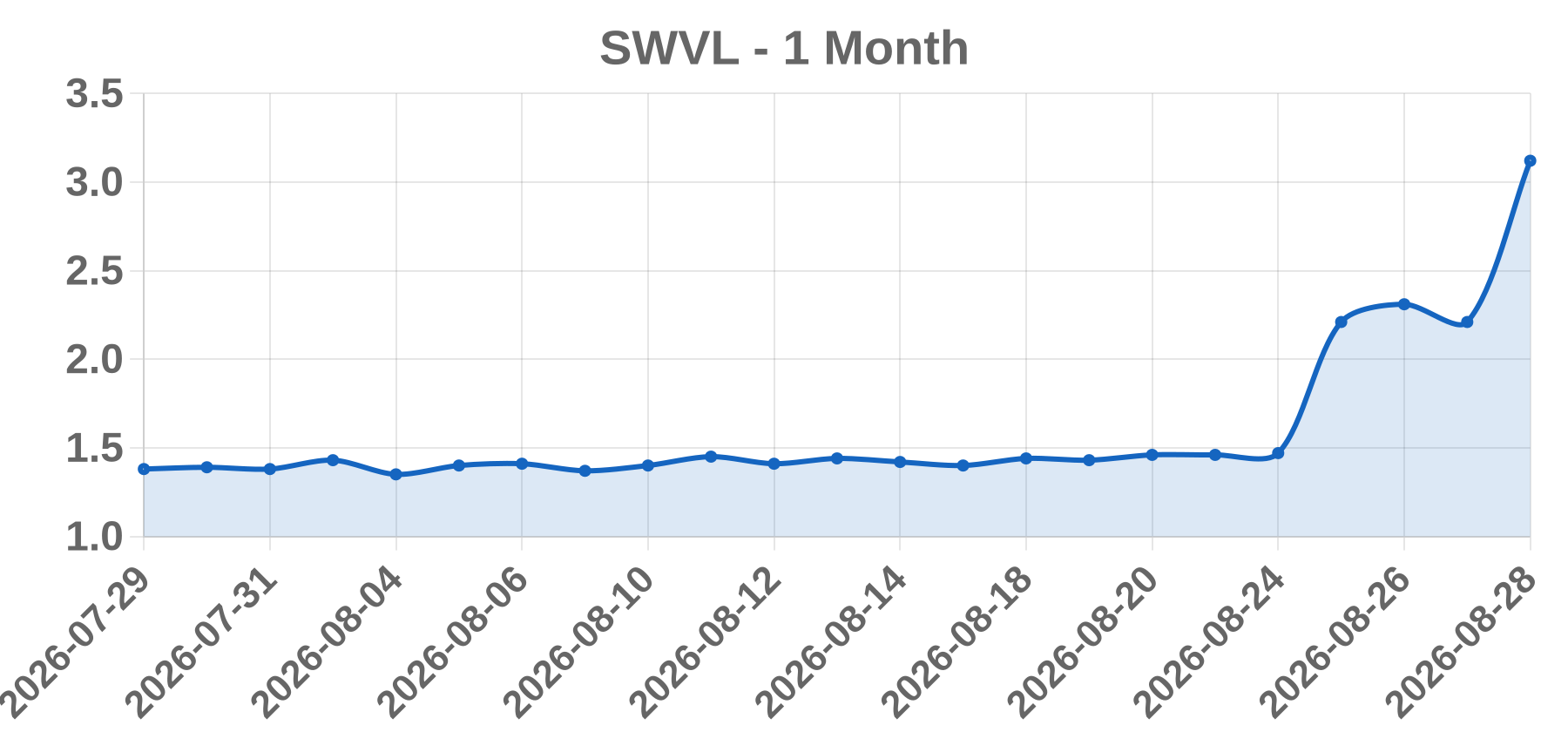
Today’s take SWVL surged +41.18% to close at $3.12 on Aug 28, 2026, capping a multi-session rally driven by a strategic private-placement financing. On Aug 25, the company announced a $13M PIPE led by Coefficient LP (backed by Egypt's Sawiris family), priced at $1.446/share for ~8.99M Class A shares; Coefficient committed $10M and its founder Abdalla Ali is set to join the board. On Aug 26, the round was upsized to $14.5M with an additional $1.5M Sofico Holdings placement at $1.46/share, expected to close on or around Aug 28 — the very session of this surge. The stock gapped from $2.21 to open at $2.29 and hit an intraday high of $3.15. Proceeds fund US expansion and a new transport-lending offering. The rally builds on improving fundamentals: FY25 revenue rose 41% to $24.2M with net income of $1.3M (vs. $10.3M loss in FY24), and Q1-26 revenue grew 68% YoY to $8.2M.
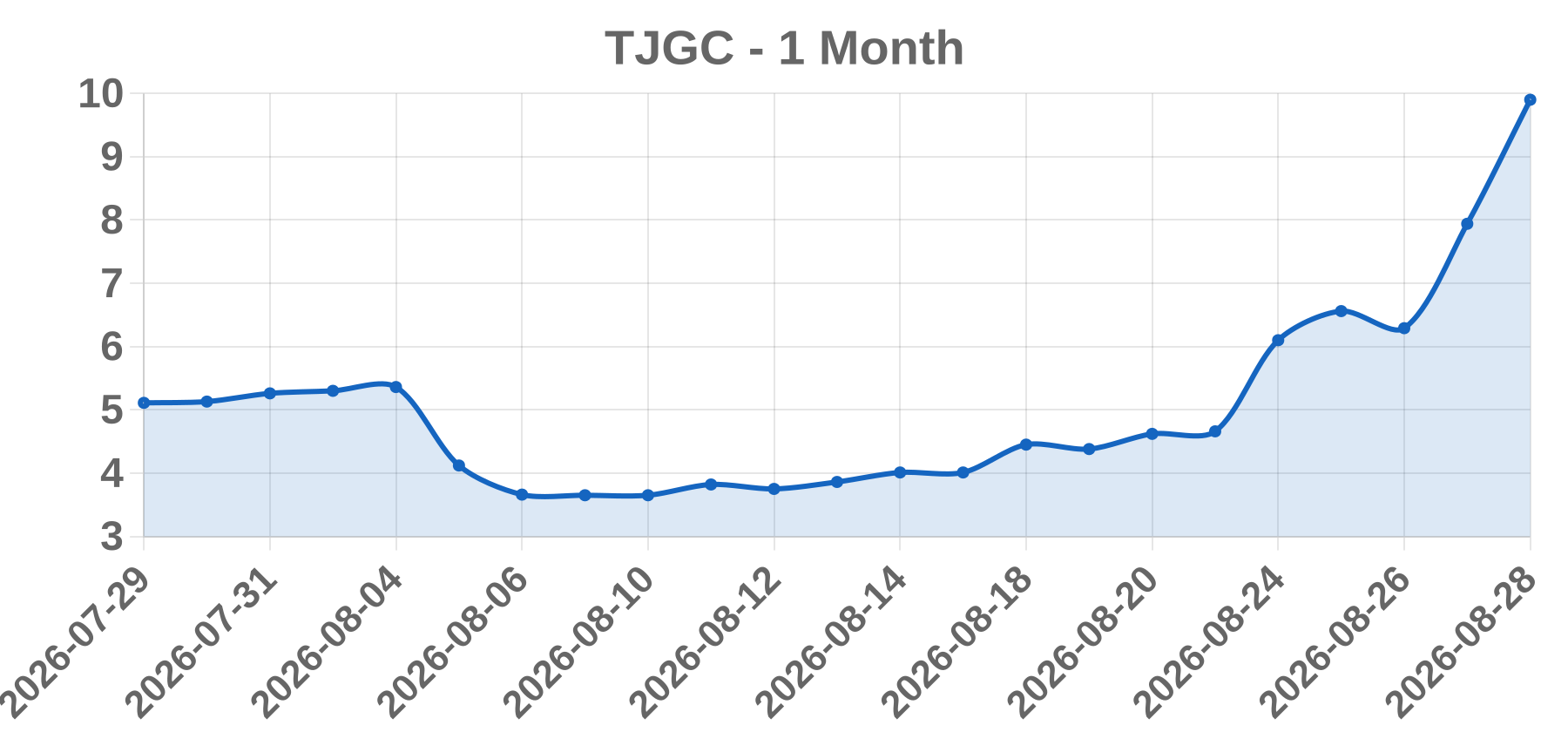
Business TJGC Group Limited (Nasdaq: TJGC), formerly Ctrl Group Limited, is a BVI-incorporated holding company based in Hung Hom, Hong Kong. Through its subsidiary Ctrl Media Limited, it provides integrated marketing and advertising services to mobile gaming developers, running digital ad campaigns across social media, websites, and search engines for apps distributed on Apple and Google stores. Listed on Nasdaq since January 2025.
Today’s take On 2026-08-28, TJGC closed at $9.90, up $1.96 (+24.69%), setting a 52-week high of $10.19 intraday (low $7.36) on ~560K shares. The session was the continuation of a dramatic multi-day speculative surge: Aug 24 +30.9% to $6.10 on 4.92M volume, Aug 27 +26.2% to $7.94, then Aug 28 +24.7%. The rally was ignited by the Aug 10 press release that TJGC is negotiating a potential AI and robotics technology IP license with a robotics provider (non-exclusive worldwide rights to commercialize certain AI/robotics tech in intelligent automation). No same-day earnings or M&A news on Aug 28 (CNBC shows no recent news). Momentum was reinforced by short-squeeze dynamics: S&P Global short interest jumped from ~163K to ~577.7K (settled Aug 14, disseminated Aug 25), about 8.46% of float, with days-to-cover near 1. With market cap near $100M and shares out ~10.1M after a 1-for-3 reverse split (May 26, 2026), the thin float amplified the move, which pulled back ~9% in after-hours to ~$9.01.
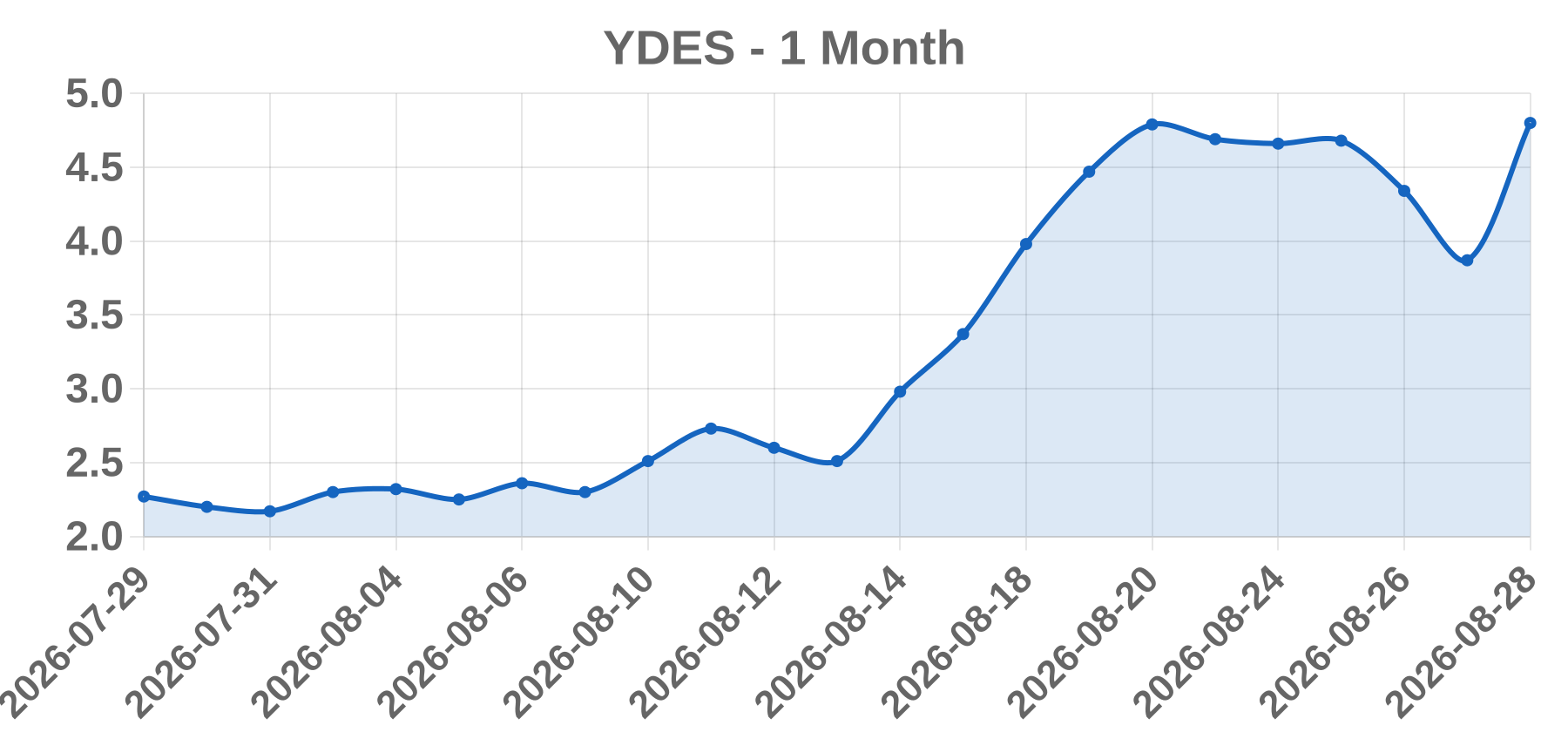
Business YD Bio Limited is a Taipei, Taiwan-headquartered biotechnology company listed on Nasdaq (YDES) that advances DNA methylation-based (OkaiDx) blood-based cancer detection, stem cell- and exosome-based ophthalmology therapeutics, and an integrated regulated-diagnostics/clinical-services platform.
Today’s take YDES closed at $4.80 on Aug 28, 2026, up +24.03% after a violent intraday reversal: it opened at $3.94, plunged to a low of $3.09 (~-20% below the prior $3.87 close), then rallied to close at the session high of $4.80. Volume of ~216,192 was roughly 8x the recent daily average (~9K-35K). The nearest fundamental catalyst was the Aug 25 peer-reviewed Nutrients publication co-authored with Taiwan CDHA/FHI physicians (following the Aug 11 Taiwan nutraceutical product launch), but the stock barely moved on the news day itself (+0.43%). The Aug 28 move is characteristic of a short/momentum-driven squeeze in an extremely volatile, thinly-traded low-float small-cap: 52-week range $1.70-$25.00, with prior sessions including +23.16% (Jul 6, 4.86M volume), +18.10%, +18.73%, and -17.75% swings. The stock dropped -10.83% on Aug 27 then reversed to +24.03% intraday, indicating speculative, retail/short-covering dynamics rather than a single company-specific event.
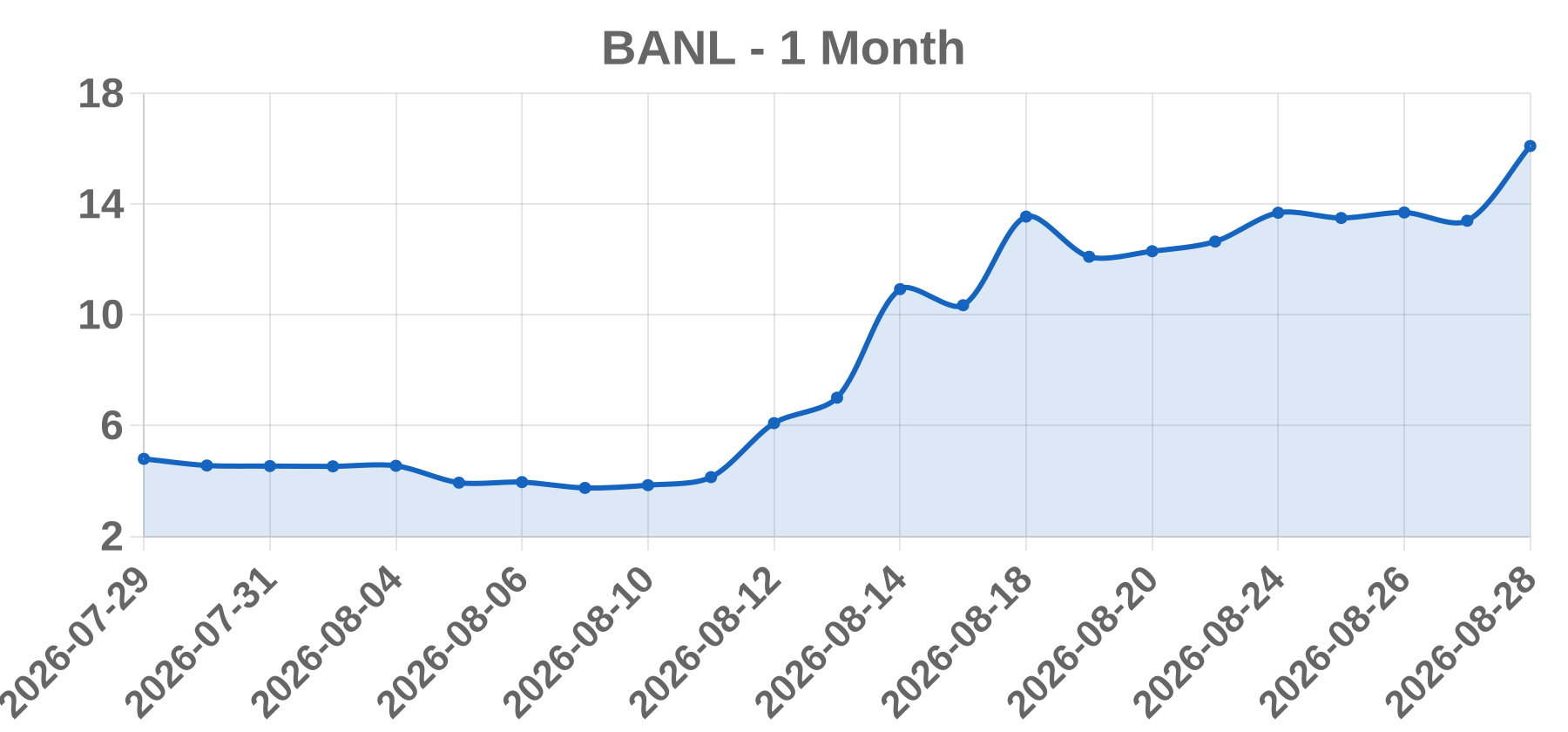
Business CBL International Limited is a marine fuel (bunker) logistics company listed on Nasdaq that facilitates vessel refueling for ship operators by purchasing marine fuel — including both conventional and alternative fuels — and coordinating local physical delivery across ports in Malaysia, Hong Kong, China, South Korea, Singapore, Ireland and more than 70 ports worldwide.
Today’s take On Aug 28, 2026 BANL surged +21.05% to $16.10 (intraday high $16.40, a fresh 52-week high) on 65,730 shares. The session coincided with the ex-dividend/record date for the $0.10 special cash dividend announced with the strong 1H 2026 results (Aug 18): revenue +49.2% YoY to $395.59M, gross profit +140.5%, and a return to profitability. The stock tripled from ~$5.23 (Jul 6) to $16.10 amid a sustained squeeze/momentum run enabled by the 1-for-13 reverse split (effective Jul 20) that cut float to ~2.12M shares. Short interest jumped 401.6% to 72,178 shares (3.4% of float) by Aug 14, fueling squeezed longs against a thin float. Supporting catalysts included regained Nasdaq compliance (Aug 3) and an at-the-market offering (up to ~$2.37M Class B shares) filed the same session. The ex-dividend date is normally price-negative, so the +21% surge points to short-covering/momentum dominating the session.
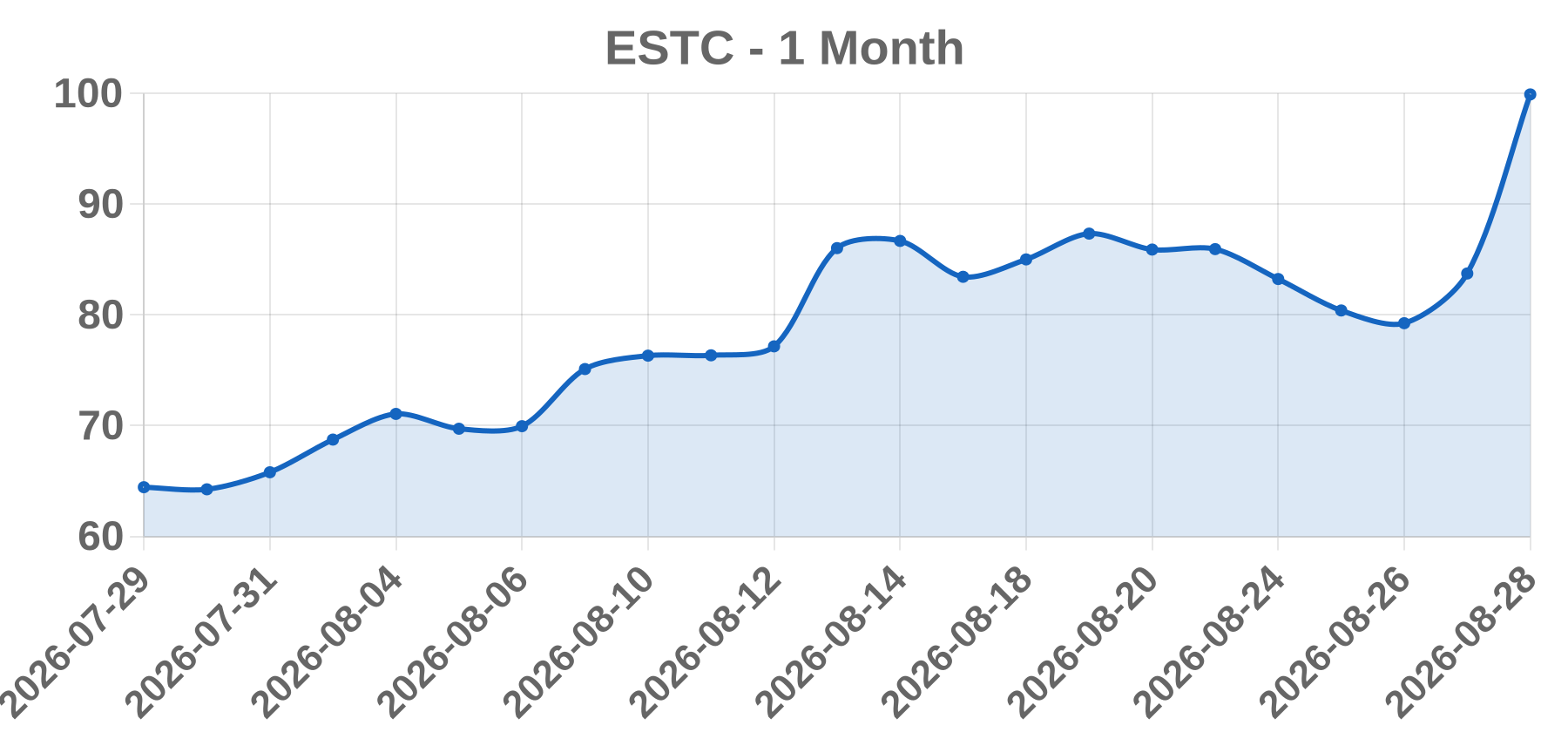
Business Elastic N.V. (NYSE: ESTC) is 'the Search AI Company,' a Dutch-incorporated software firm (headquartered in Amsterdam) whose Search AI Platform delivers AI-powered search, observability, and security solutions across hybrid, public, private, and multi-cloud environments via Elastic Cloud (SaaS) or self-managed software. Founded in 2012, it offers Elasticsearch (Search AI), Elastic Observability, and Elastic Security as its three core solutions.
Today’s take Elastic surged ~19.3% to $99.91 on Aug 28, 2026 after reporting a blowout Q1 FY2027 earnings (quarter ended July 31, 2026). Adjusted EPS of $0.70 crushed the $0.58 consensus (+19.9%), while revenue of $478.1M (+15% YoY) topped the ~$470M estimate. Sales-led subscription revenue rose 18% YoY to $399M, with cRPO up 21% to $1.2B and RPO up 27% to $1.9B, signaling durable forward demand. Management raised FY27 EPS guidance to $3.29-$3.37 and revenue guidance to $1.998B-$2.010B, above consensus. Non-GAAP operating margin hit 16.2%, exceeding guidance, and AI adoption accelerated—37% of $100K+ ACV customers now use Elastic for AI use cases (up from 21% a year ago). The stock hit a new 52-week high of $105.05 intraday. Analyst follow-through reinforced optimism: Piper Sandler raised its PT to $130 (Overweight) and BofA to $108 (Neutral). The rally was driven purely by company fundamentals—an earnings beat, guidance raise, margin inflection, and AI narrative—rather than sector momentum.
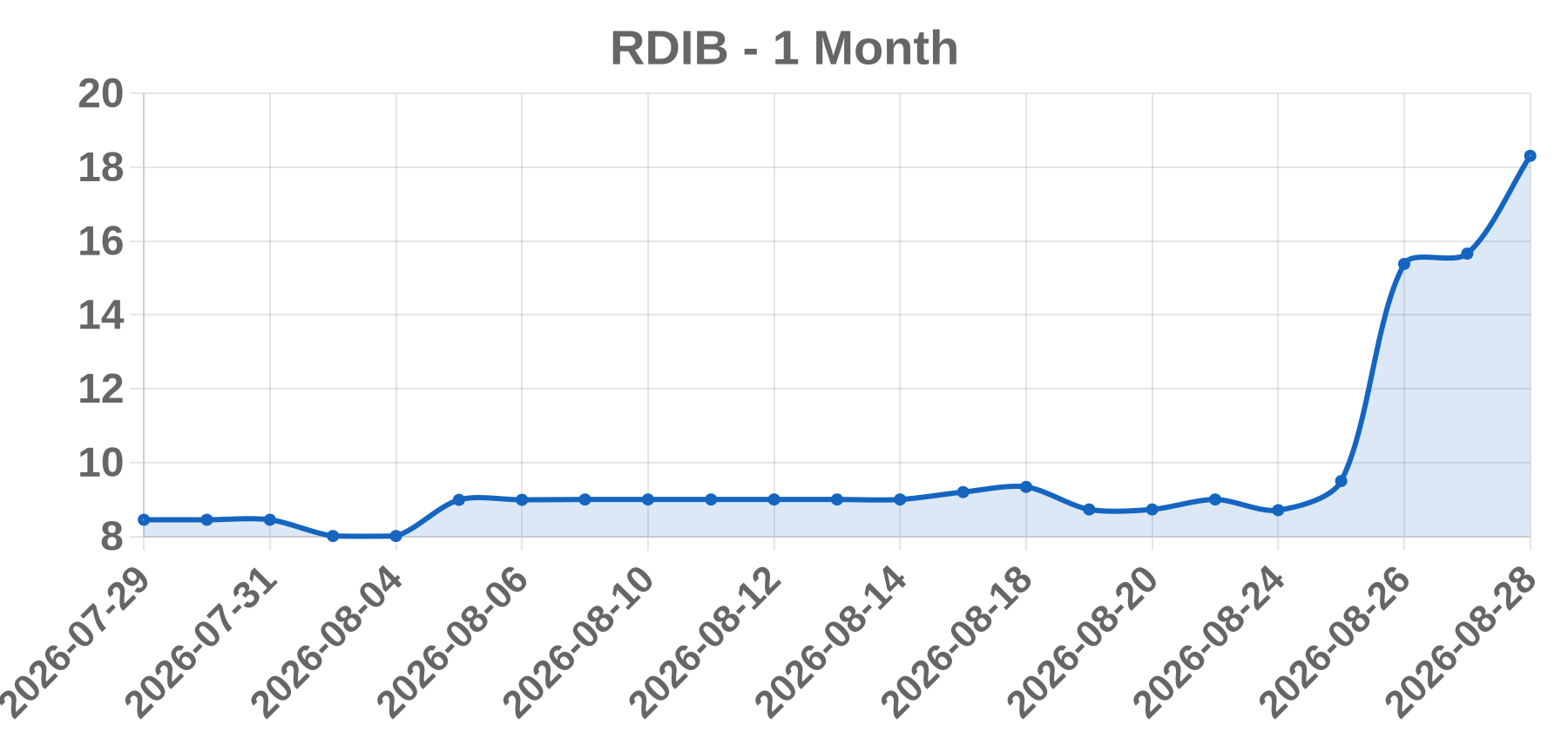
Business Reading International, Inc. (NASDAQ: RDIB) owns, develops and operates cinema exhibition and real estate assets in the United States, Australia and New Zealand. Its Cinema Exhibition segment operates under Reading Cinemas, Consolidated Theatres and Angelika Film Center brands, while its Real Estate segment develops and leases retail, commercial and live theater properties.
Today’s take On Aug 28, 2026, RDIB (Class B voting stock) closed at $18.31, up 18.90% ($2.91), after trading a massive range from $14.60 to a 52-week intraday high of $24.00. Volume of ~608,000-650,000 was several hundred times the typical average of ~1,800-19,700 shares. The move was a violent short squeeze on an extremely low-float security: only 1,680,590 Class B shares are issued/outstanding with a public float of just 299,247 shares (17.8%). The stock was designated 'Short sale restricted for 2026-08-28' by shortablestocks, indicating a Reg SHO threshold security with fails-to-deliver. The squeeze was ignited by a strong Q2 earnings beat on Aug 14 (EPS $0.10 vs. $0.06 est; Q2 revenue $66.9M, the best Q2 in 6 years; operating income $7.5M, +159% YoY). RDIB surged from ~$8-9 in mid-August to $24 intraday by Aug 28, while the Class A (RDI) shares only rose ~8% to ~$2.10, highlighting the extreme squeeze dynamics isolated to the thinly-traded voting class.
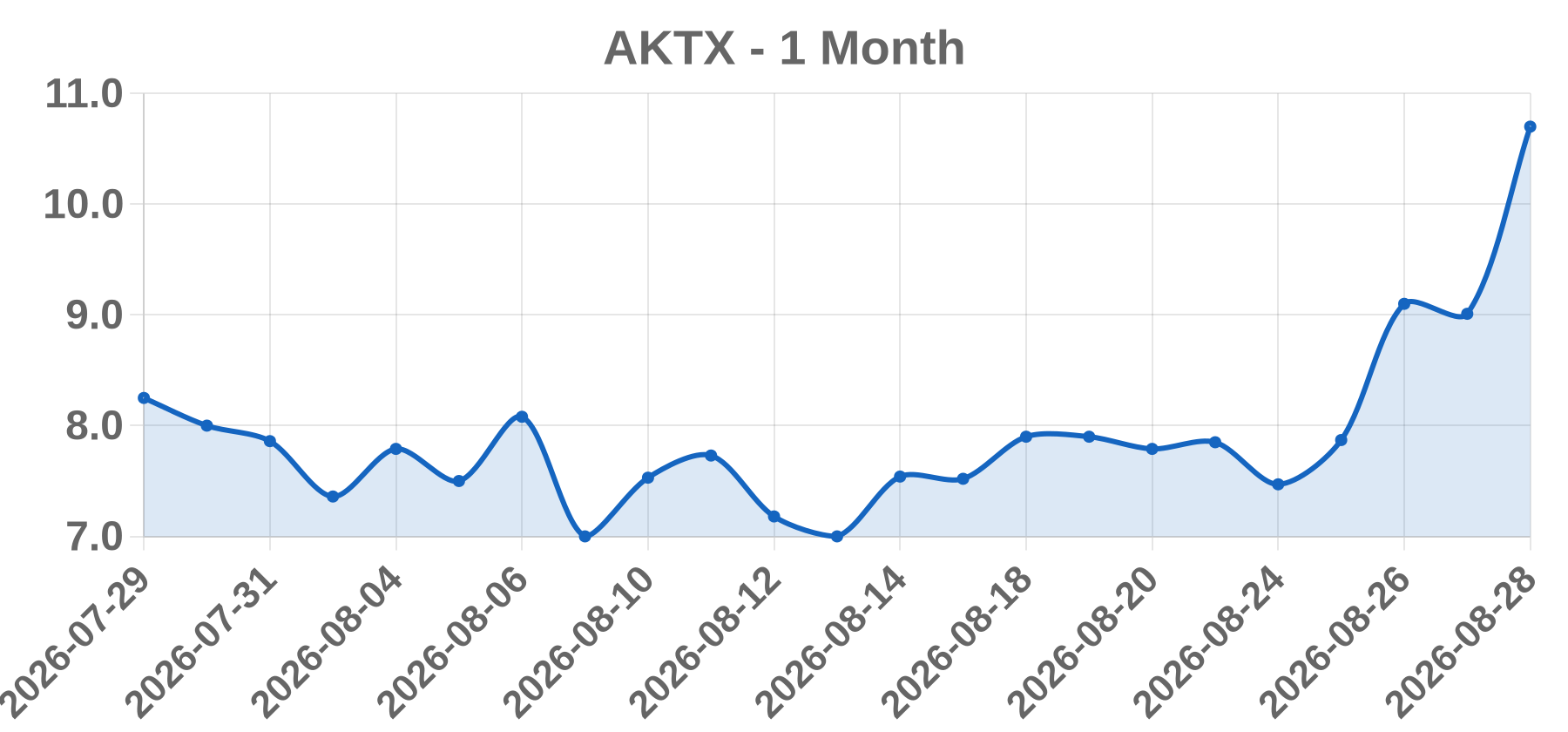
Business Akari Therapeutics, Plc (NASDAQ: AKTX) is an oncology biotechnology company developing next-generation antibody-drug conjugates (ADCs) built on a novel RNA-spliceosome-modulating payload, PH1. Its lead candidate, AKTX-101, is a TROP2-targeting ADC in preclinical IND-enabling development aimed at solid tumors, with a Phase 1 trial planned for mid-2027.
Today’s take AKTX jumped +18.76% on Aug 28, 2026 to close at $10.70 (from $9.01), on an intraday range of $8.80-$11.08 and volume of ~167.7K shares. This session was part of a broader week-long regulatory rally: the FDA granted Orphan Drug designation to nomacopan for hematopoietic stem cell transplantation (reported Aug 25), lifting shares ~13% premarket and fueling +5.35% (Aug 25) and +15.63% (Aug 26) gains on 254K heavy volume. The company also participated in the Virtual Investor "Why Now" conference on Aug 27, keeping the stock in the spotlight. On Aug 28, the stock opened at $8.93 (below the prior $9.01 close) but surged intraday to an $11.08 high on continued FDA-catalyst demand, close at $10.70 (+18.76%). Backing the move: an Aug 18 AKTX-101 urothelial-cancer preclinical-data release, an August WhiteHawk dual-payload collaboration, Maxim's Buy upgrade ($30 PT), and insider buying disclosed Aug 19. Analysts hold a Buy consensus with a $28.50 target.
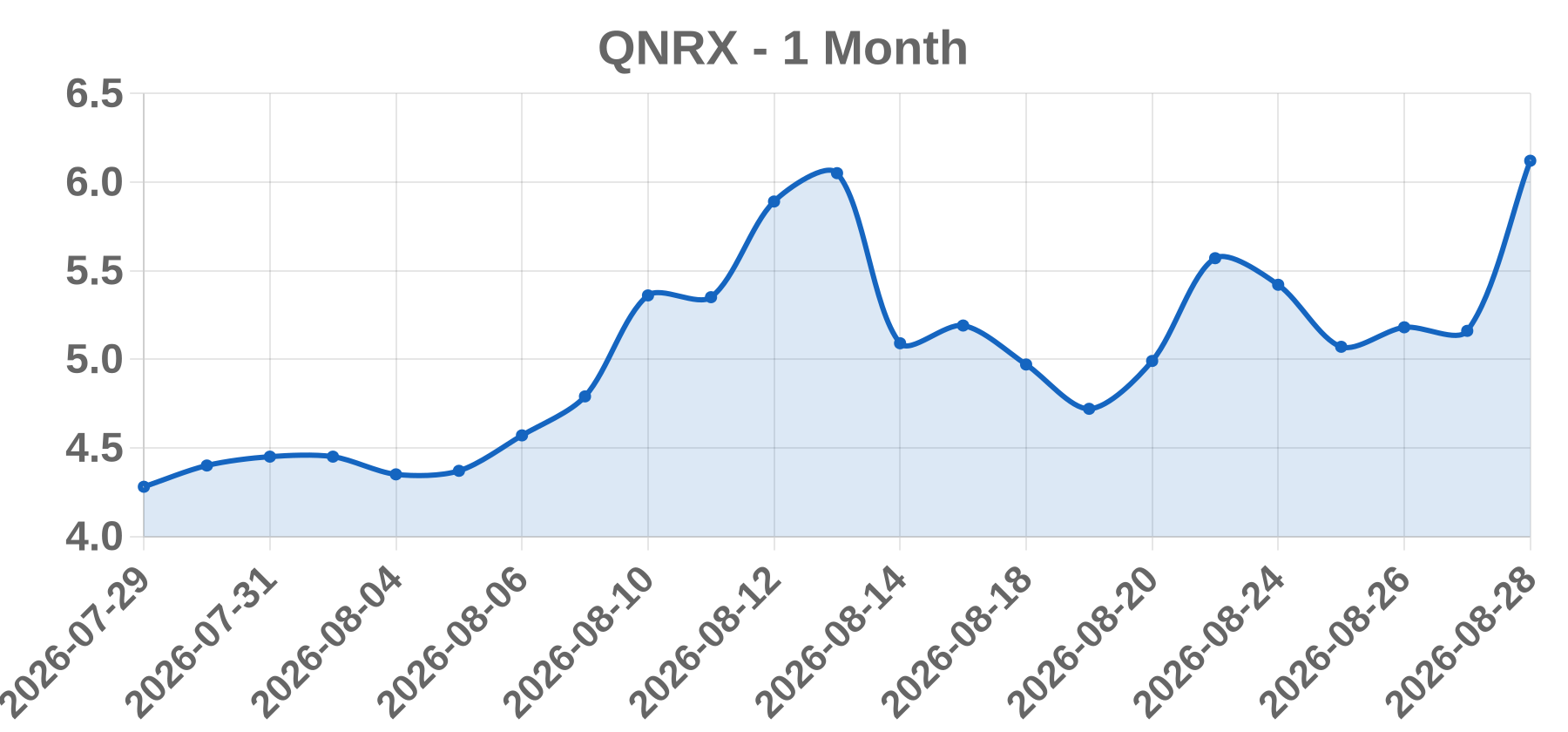
Business Quoin Pharmaceuticals, Ltd. (NASDAQ: QNRX) is a late clinical-stage specialty pharmaceutical company focused on rare and orphan dermatologic diseases. Its lead product QRX003 is a topical serine protease inhibitor in Phase 2/3 development for Netherton Syndrome, with pipeline platform QRX009 targeting additional orphan indications.
Today’s take On Aug 28, 2026, QNRX surged +18.72% to close at $6.12 after two pre-market catalysts. (1) Positive Phase 2/3 interim data (CL-QRX003-004): 4 of 6 patients (66.7%) achieved ≥1-grade IGA improvement at Week 12 (p=0.0087 vs pre-specified alpha 0.0215); key secondary endpoint Global Impression of Change also significant (p=0.0070); all 3 participants with moderate-severe itch achieved ≥3-grade WI-NRS improvement; no treatment-related SAEs. Full topline due Q2 2027, positioning QRX003 as potential first FDA-approved Netherton Syndrome treatment. (2) Up-to-$50M private placement (~$30.8M upfront + ~$19.2M warrant exercises; $4.88/ADS+warrant, warrants at $6.10) led by Leerink Partners, extending cash runway into 2H 2029 and removing bankruptcy overhang. Shares opened $7.22, hit intraday high $8.25 (~+59%), then faded to close $6.12 on profit-taking and warrant/dilution overhang.
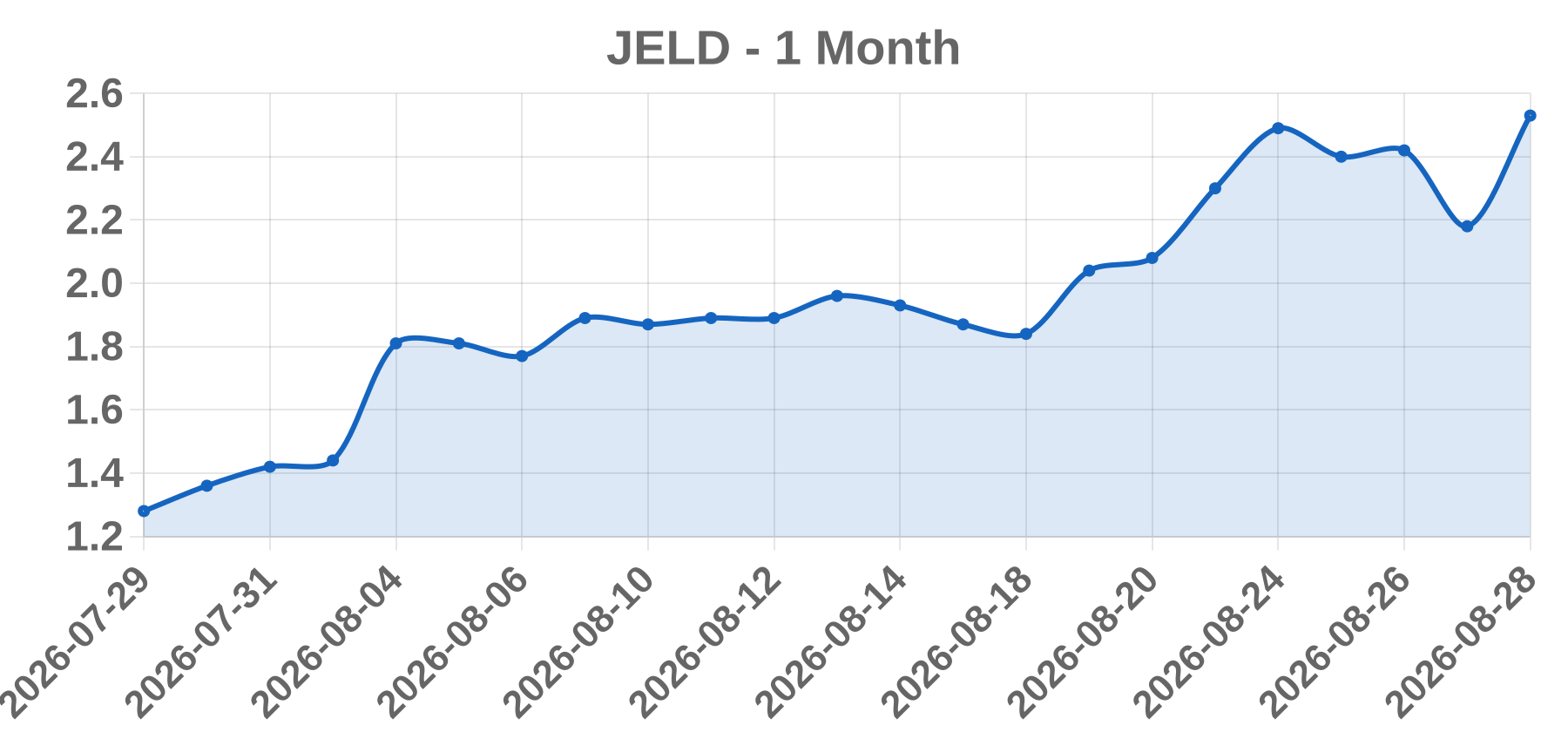
Business JELD-WEN Holding, Inc. (NYSE: JELD), headquartered in Charlotte, NC, is a leading global designer, manufacturer and distributor of high-performance interior and exterior doors, windows and related building products, serving the new construction and repair & remodeling sectors. It operates through North America and Europe segments, with brands including JELD-WEN, Swedoor and DANA.
Today’s take JELD closed +16.06% to $2.53 on 2026-08-28, a sharp V-shaped rebound immediately following a -9.9% selloff to $2.18 on Aug 27, with volume of ~2.60M shares versus the ~1.7M average. No fresh company-specific catalyst occurred that day (Q2 earnings were released Aug 4). The move reflects extreme volatility on a heavily-shorted name (~13% of float, 10.89M shares short as of 7/31/26). JELD had rallied from ~$1.84 on Aug 18 to $2.49 by Aug 24 (roughly +37%) on margin/profitability momentum after Q2 (revenue $818M, adjusted EBITDA $42M, first YoY EBITDA increase in ten quarters, raised 2026 guidance), setting up a squeeze profile. The Aug 27 drop on rate-fears was followed by short-covering and mean-reversion buying, amplified by a homebuilding/building-products sector tailwind after a court ruling struck down Trump tariffs on imported goods. A series of analyst PT hikes (Barclays and Goldman to $2.00, UBS $1.80) left the stock trading above consensus targets, reinforcing the unusual-move/squeeze character.
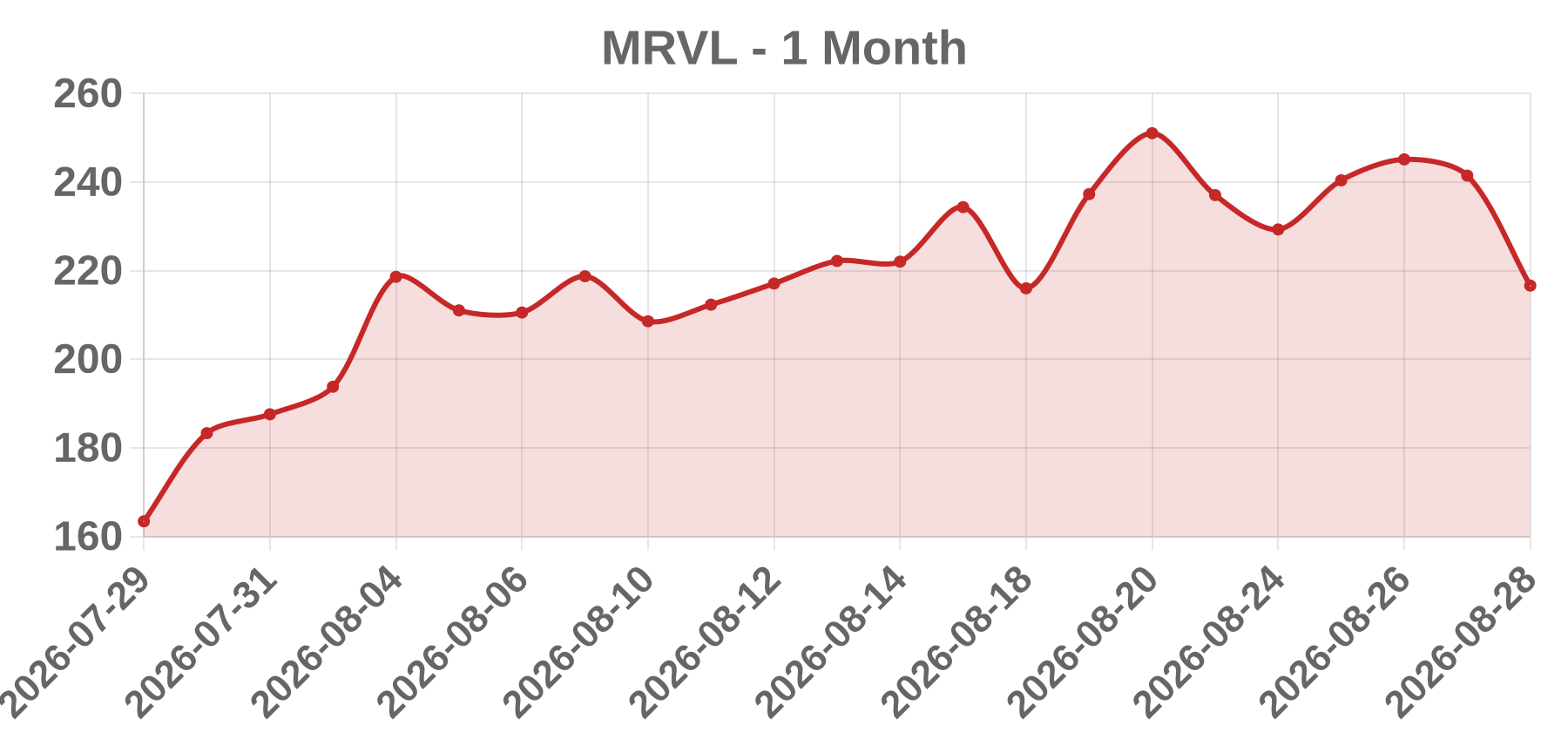
Business Marvell Technology, Inc. (NASDAQ: MRVL) is a fabless semiconductor company headquartered in Santa Clara, California, designing data infrastructure solutions spanning data center, carrier, and automotive end markets. Core products include data processing units (DPUs), Ethernet controllers/switches/PHYs, coherent DSP and optical modules, storage controllers, security, custom AI accelerators (XPU), and automotive silicon.
Today’s take MRVL fell 10.28% on 8/28/2026 to close at $216.62 (prior close $241.45), a classic 'sell the news' reversal despite beating Q2 FY2027 numbers reported after the close on 8/27. Record revenue of $2.739B (+37% YoY, Data Center +46% to ~$2.17B, ~79% of sales) and non-GAAP EPS of $0.94 both topped estimates; Q3 guidance of $3.15B (±5%) and EPS $1.10 also beat consensus. Management even raised FY27 revenue to ~$12B and FY28 to ~$18B. Yet investors repriced the near-term payoff of the Google custom-AI silicon partnership announced 8/19 (warrant for 58.97M shares at $206.58, ~$12.2B value, vesting tied to $500M purchase installments up to $120B by Jan 2033): CEO Matt Murphy said the deal's 'significant impact' only arrives in FY2029+, with Google revenue already embedded in FY28 guidance. Morgan Stanley framed it as guidance matching an already-modeled trajectory; Jefferies/Cantor/RBC echoed disappointment over lack of Google detail and back-loaded timing. Multiple brokers acted, including B. Riley cutting its price target $345→$315 (buy maintained, implying ~45% upside). The next catalyst is the Investor Day on Oct 6, 2026, expected to detail Google revenue ramp and custom-chip plans.
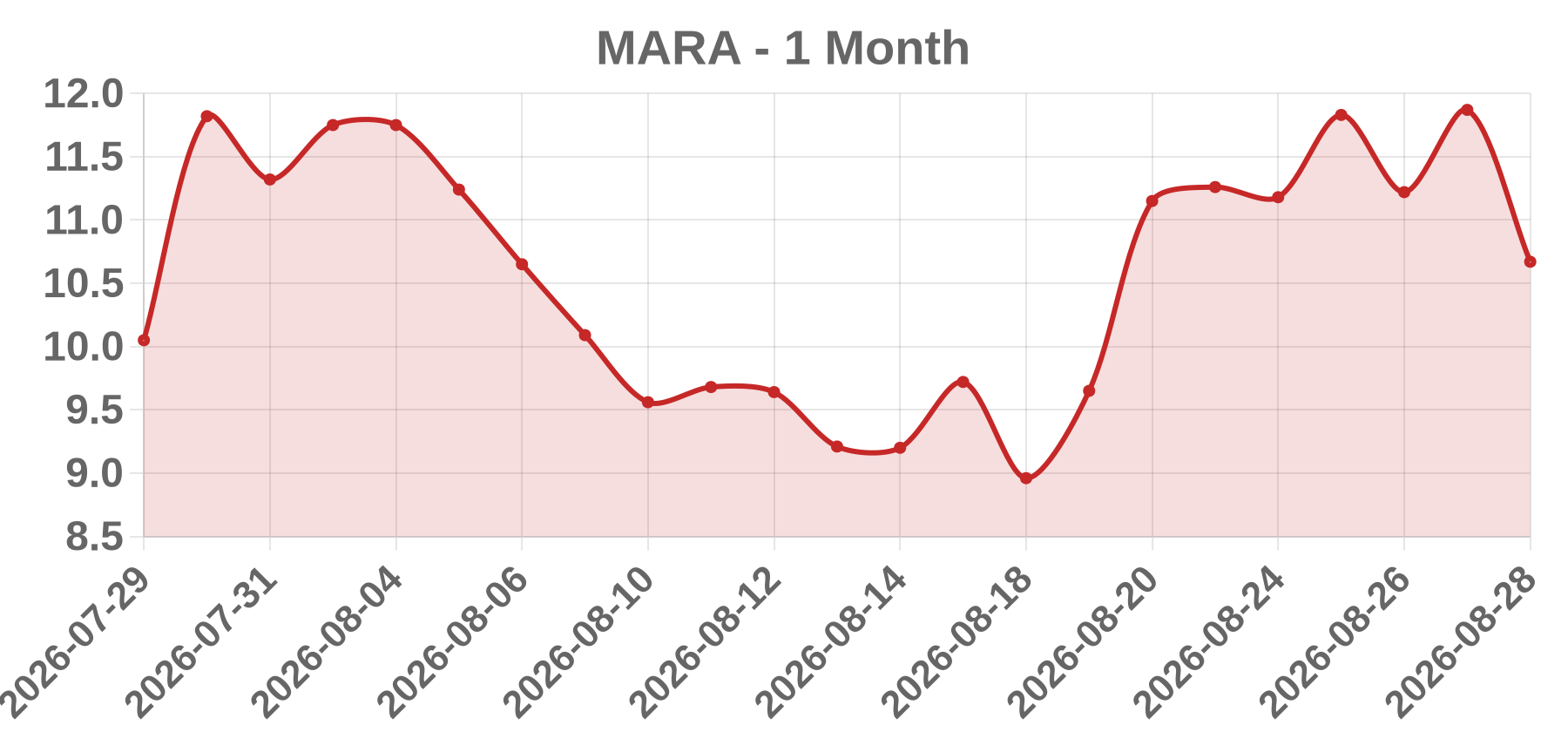
Business MARA Holdings, Inc. (NASDAQ: MARA, formerly Marathon Digital Holdings) is one of the world's largest pure-play Bitcoin miners, operating as an energy and digital infrastructure company with ASIC mining fleets (operational hash rate ~54.2 EH/s) and a Bitcoin treasury exceeding 50,000 BTC. Headquartered in Hallandale Beach, Florida, it also owns data centers across North America, the Middle East, Europe, and Latin America, and is pivoting toward AI/high-performance compute capacity.
Today’s take MARA fell 10.11% (-$1.20) to $10.67 on 2026-08-28 in a broad crypto risk-off move after Federal Reserve Chairman Kevin Warsh's hawkish Jackson Hole speech signaled inflation is not meaningfully slowing and policymakers 'have work to do' to reach the 2% target. This pushed two-year Treasury yields ~9bp higher to 4.32% and lifted the implied September rate-hike probability above 50%. Bitcoin broke below the key $80,000 level, falling ~3% into the mid-$77,000s, while dollar strength (tied to Treasury Secretary Scott Bessent's ESF yen/FX-intervention disclosure) added pressure. As a high-beta (~3) miner with high short interest (~24-28%), MARA declined far more than Bitcoin itself and in line with peer Riot Platforms (both ~8%). There was no company-specific news; Q2 2026 results (reported Aug 6) had shown revenue down 27% YoY to $174.9M and a $611M net loss, underscoring the operating leverage to BTC.