US common stocks / ADRs: top 10 by volume; top 10 gainers (by % change, volume as tie-breaker); top 10 losers (by % change, prefer liquid names). Deep notes cover the de-duplicated set across the three boards.
29 names on this page · volume 10 · gainers 10 · losers 10
Order: volume board → gainers → losers; each ticker appears once. Summaries of public information only — please verify primary sources.
1/10NVDA NVDA
-1.59%
Close 209.66 · Vol 158.89M · Type: Earnings
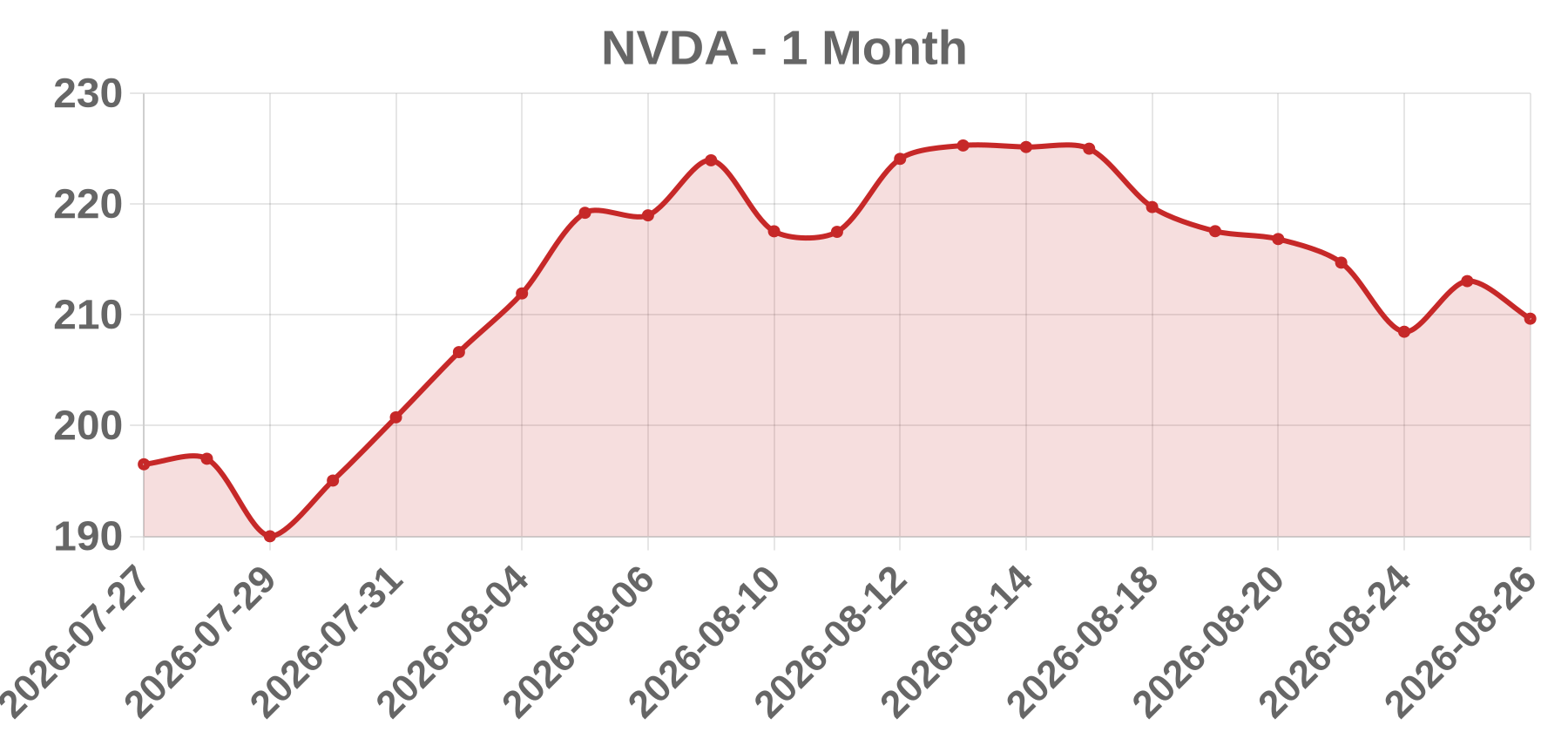
Approx. 1-month price (illustrative)
Business NVIDIA Corporation (Nasdaq: NVDA) designs and sells graphics processing units (GPUs) and accelerated-computing platforms for gaming, professional visualization, data centers, and automotive applications. It is the dominant global supplier of AI infrastructure chips across the Hopper, Blackwell, and Vera Rubin platforms, with its Data Center segment generating the overwhelming majority of revenue.
Today’s take NVDA closed down 1.59% at $209.66 on Aug 26, 2026 — its eighth decline in nine sessions — as investors positioned ahead of the fiscal Q2 2027 earnings release scheduled for after the bell. The stock had jumped ~19% from late July to mid-August before posting its worst losing streak since 2019, leaving earnings expectations largely priced in. The session tape was pressured by a sticky core PCE inflation print ahead of Fed Chair Warsh's Jackson Hole remarks, with the Dow, S&P 500, and Nasdaq finishing slightly lower. Adding caution, Morgan Stanley initiated a Neutral credit rating on NVDA the prior day, flagging ~$200B of potential credit exposure from its balance-sheet-as-a-service approach to funding AI infrastructure. After the close, NVDA reported record revenue of $96.22B (up 106% y/y, beating ~$92.2B consensus) and adjusted EPS of $2.22 (beat ~$2.10 estimate); shares initially dipped toward $209 then climbed ~4% in after-hours trade, confirming the regular-session decline was driven by pre-print positioning and macro overhang rather than fundamentals.
Business Plug Power (PLUG) is a leading provider of end-to-end green hydrogen solutions, spanning electrolyzer manufacturing, hydrogen production, storage and delivery, and fuel-cell systems for material handling and power generation. The company's core franchise is supplying GenDrive fuel cells to logistics customers such as Amazon and Walmart, with the emerging hydrogen production business (plants and electrolyzers) targeting scale economics. It is structured as a loss-making growth business undergoing an operational turnaround, aiming for its first positive-EBITDA quarter in Q4 and has raised full-year 2026 revenue guidance following its August 10 Q2 beat (revenue ~$178.3M, EPS -$0.07). On a macro level, Plug is a high-beta, long-duration clean-energy name heavily exposed to interest-rate and ri
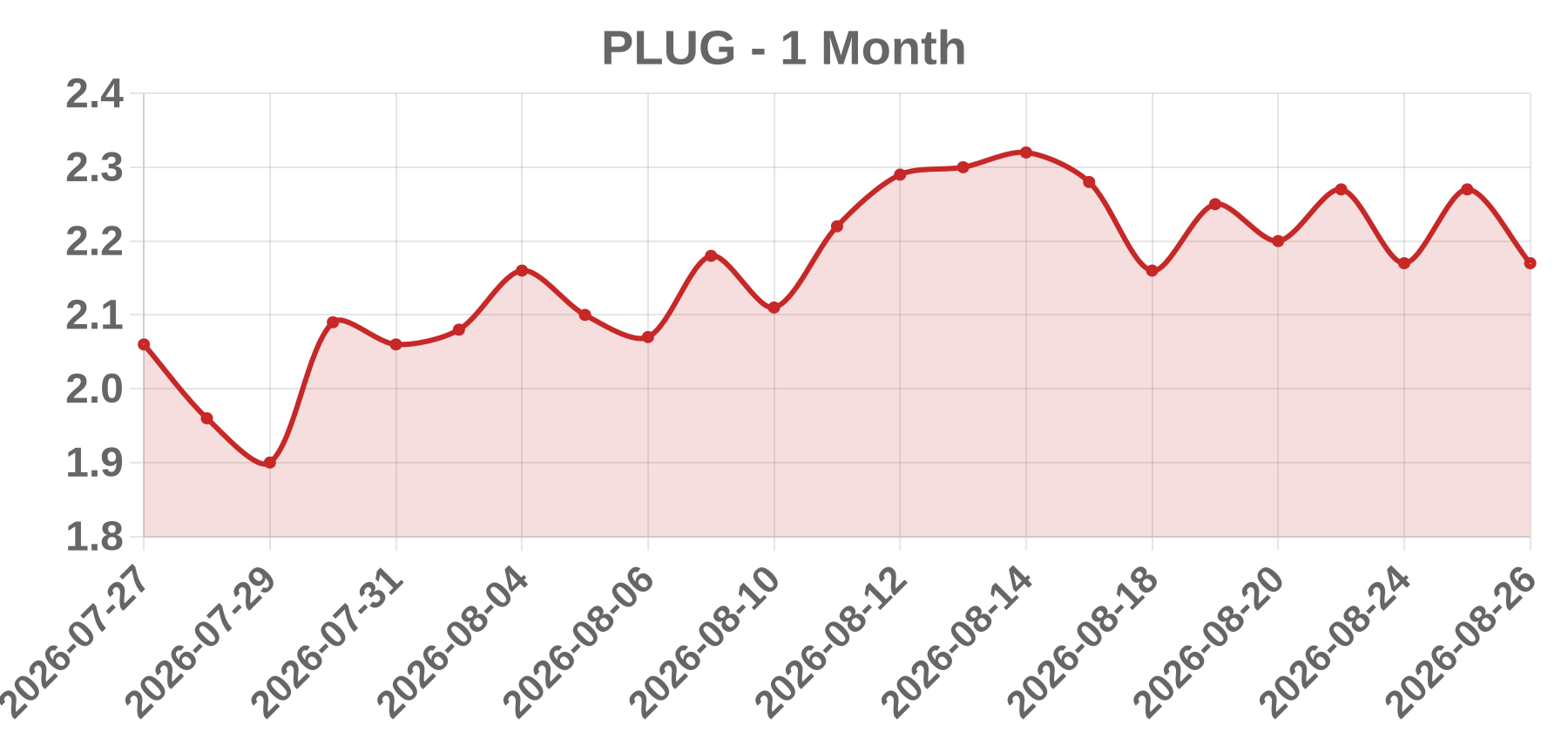
Today’s take On the 2026-08-26 session, Plug Power fell -4.41% to close at $2.17 (range $2.15-$2.30) on no company-specific news, leading a sector-wide pullback across the fuel-cell pure plays. The 24/7 Wall St headline that day, 'Plug Power Sinks 5%, Bloom and FuelCell Slip: Is the Hydrogen Trade Narrowing to One Name?', captured a move driven almost entirely by positioning and sentiment: profit-taking after a recent ~9% run from the post-earnings base, a rotation within the hydrogen basket toward the perceived stronger story (Bloom Energy), and persistent pressure from 10-year Treasury yields hovering near their 52-week high (~4.7%), which disproportionately hits long-duration, loss-making clean-energy equities. The session followed a choppy August that had already seen -5.26% (Aug 18) and +4.17% (Aug 19) swings, illustrating high volatility with no stable fundamental re-rating. Down roughly 48% from its year-to-date high of $4.33 and with elevated short interest, Plug remains a sentiment-driven trading vehicle in this phase of its turnaround.
Business Intel Corporation (NASDAQ: INTC) designs and manufactures semiconductor processors, including CPUs, GPUs, and networking products for data center, PC, and edge/AI markets. It is transforming into an integrated device manufacturer (IDM 2.0) with an advanced foundry business (Intel Foundry) ramping its 14A technology node.
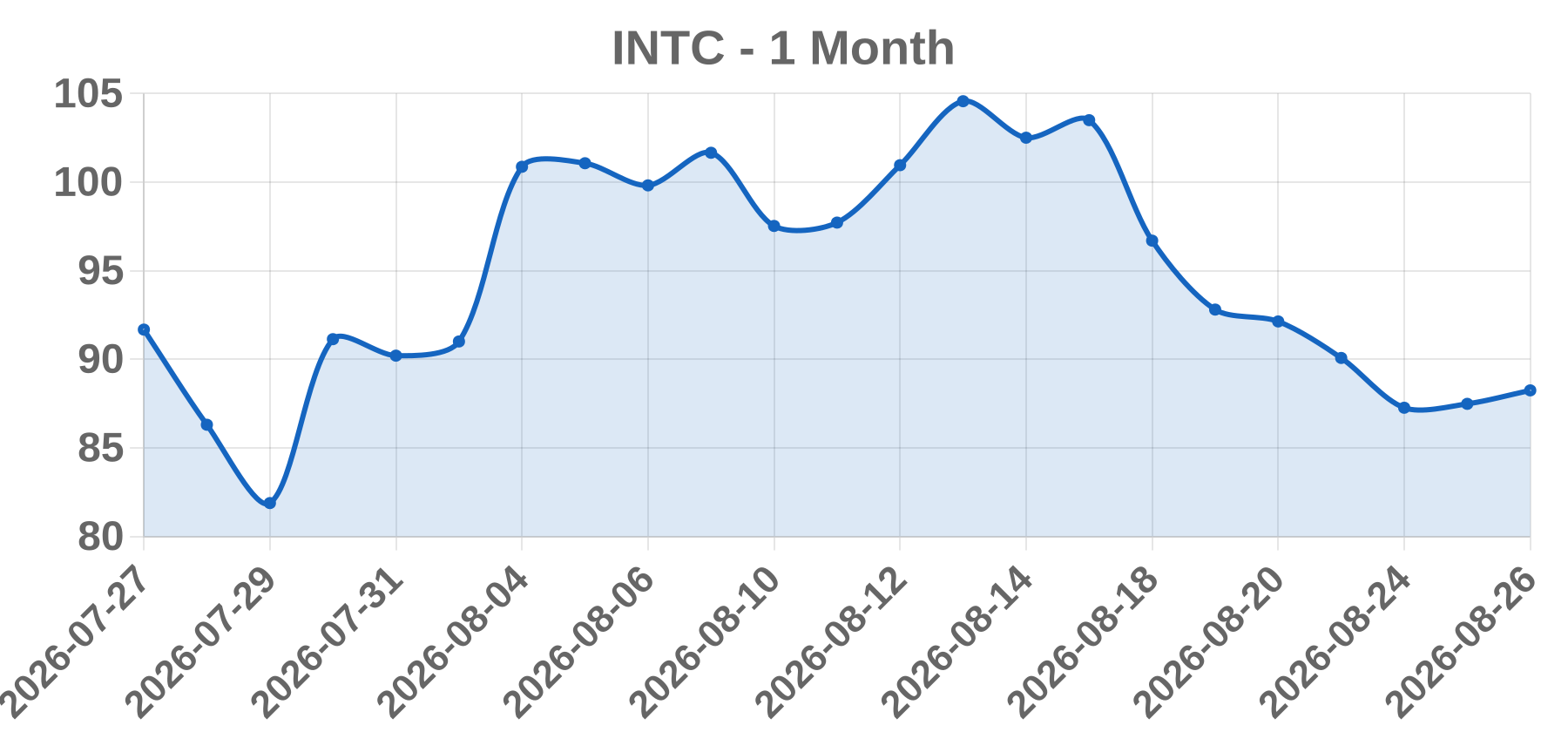
Today’s take On 2026-08-26, INTC closed at $88.24, +$0.76 (+0.87%), within a day range of 85.63-88.28 after opening at 86.81. The primary catalyst was CFO David Zinsner's fireside chat at the Deutsche Bank 2026 Technology Conference (10:35 a.m. PDT on the session date). Zinsner detailed the turnaround, raised 2026 capex guidance to ~$20B (from $18B), and said the ~$23B equity raise supports supplier commitments for the Intel 14A foundry ramp. This followed the $20B+ common-stock offering (~$95/share) priced around Aug 24, which pressured shares earlier in the week (INTC fell ~3% on Aug 24 after a -6.6% drop on Aug 18). Supporting sentiment: Wedbush's Matt Bryson flagged Arc Pro B70 GPU prices up as much as 48% in a month (strong demand/pricing power, ASRock version ~$1,299 vs $949 launch), and HSBC's Frank Lee doubled his price target to $200 (Street-high, Buy) after incorporating Intel Foundry Services into valuation. The modest +0.87% session gain reflects a bounce toward conference optimism following the prior offering-driven selloff.
Business American Airlines Group Inc. (NASDAQ: AAL) is the holding company for American Airlines, one of the world's largest passenger air carriers, operating an extensive domestic and international route network out of major hubs including Dallas/Fort Worth, Charlotte, Chicago O'Hare, Miami, and Phoenix. The group offers mainline passenger air transport, cargo services, and regional service through wholly owned affiliates.
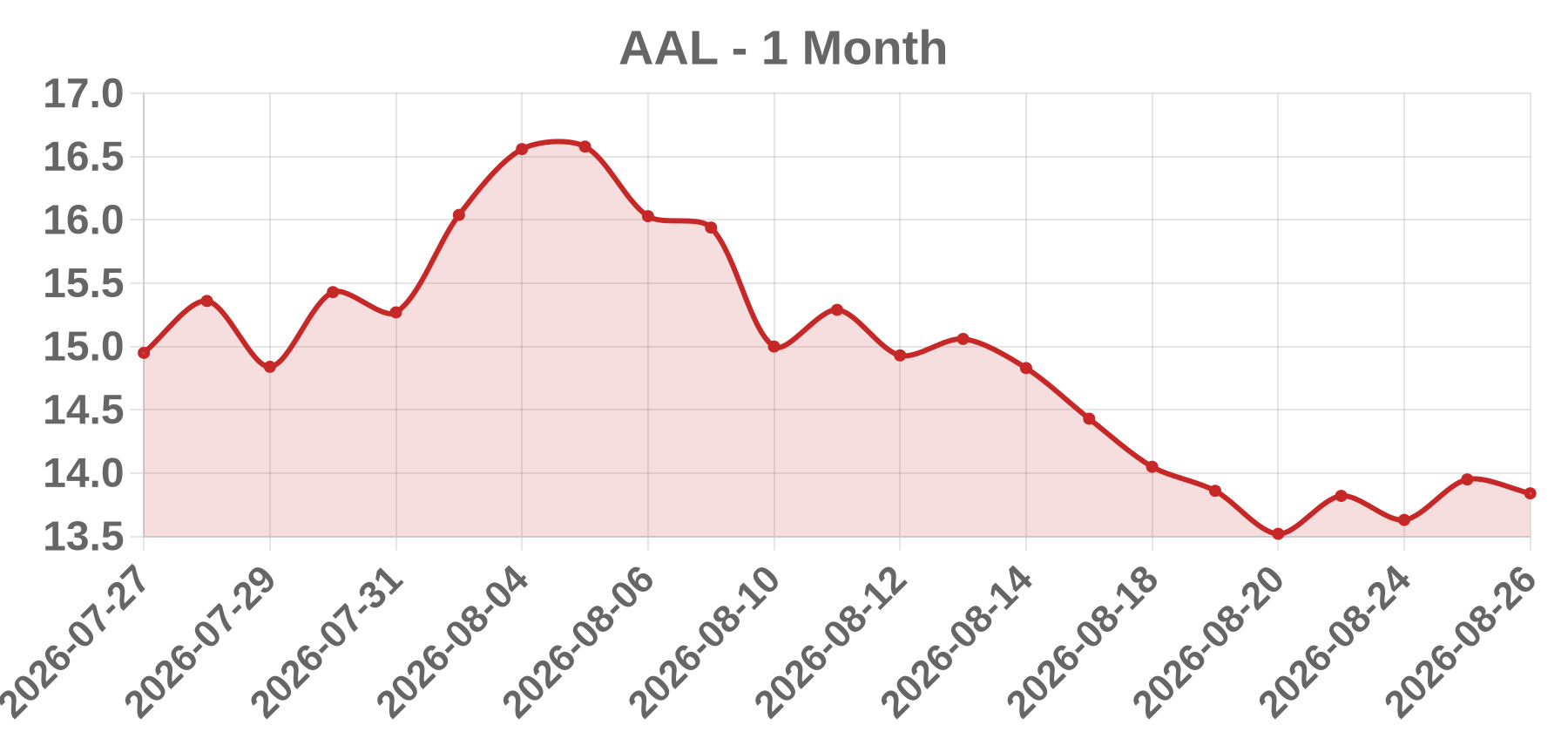
Today’s take AAL fell 0.79% to $13.84 on elevated volume (~72M shares, 1.34x the 20-day average of 53.8M) on August 26, 2026, extending a multi-week slide. The primary near-session catalyst was TD Cowen's sector-wide price-target cut (announced Aug 24-25): AAL's target was slashed 33% from $24 to $16 while maintaining a Buy rating — part of a broader re-rating covering Delta ($112→$105), United ($205→$192), Southwest ($53→$48) and Alaska ($59→$46). This followed a July 23 guidance cut when American lowered full-year 2026 adjusted EPS to a range of -$0.65 to +$0.65 (from -$0.40 to $1.10) citing ~$2.2B of increased fuel expenses driven by the Iran war pushing crude above $100/bbl. The consensus target remains $18.59 (25 analysts, Buy), but recent downgrades from BofA ($19→$17) and DBS (Hold $15) reinforce bearish sentiment. Technically, AAL closed below its 200-day MA ($13.92) with RSI at 39.7, and short interest of 64.1M shares (9.7% of shares outstanding, 0.51 days to cover) sets up a high-churn environment with beta of 1.35.
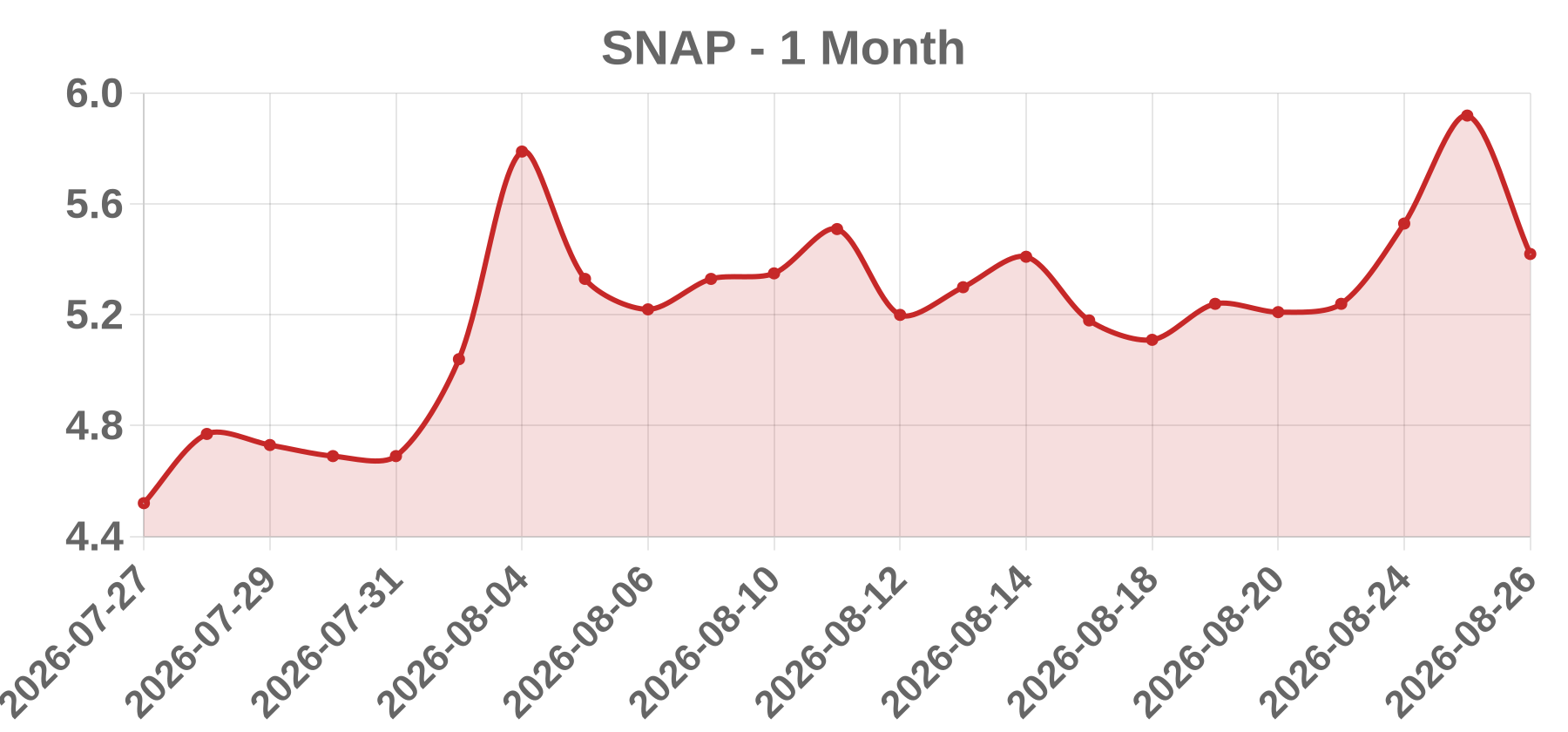
Business Snap Inc. (NYSE: SNAP) is a camera-first technology company headquartered in Santa Monica, California, and the operator of Snapchat, a visual messaging app used by hundreds of millions of daily users. The company monetizes through advertising and its premium Snapchat+ subscription tier, having IPO'd in March 2017.
Today’s take SNAP plunged 8.45% to $5.42 on Aug 26, 2026, driven by a fresh legal catalyst: Pennsylvania Attorney General Dave Sunday filed a three-count civil lawsuit against Snap on Aug 25, alleging Snapchat's design features — Snapstreaks (restorable for a fee), disappearing messages, infinite scrolling and its 'T for teen' rating — kept young users compulsively engaged while misleading parents about mature content. The suit seeks injunctive changes to app design and operations. Critically, the filing came less than a day before Meta agreed to a historic $17.1 billion settlement over similar child-safety claims, amplifying the perceived economic scope of Snap's own potential liability. This followed an earlier Ninth Circuit ruling (Aug 10) that Section 230 provides 'a defense to liability, not blanket immunity,' allowing ~2,400-3,000 federal youth-addiction lawsuits to proceed against Snap and peers. Shares had rallied sharply post-Q2 earnings (from $5.04 on Aug 3 to a $5.97 high), so Aug 26's drop compounded profit-taking after the ~18% run-up. Analysts remained split (Truist/BofA cut PTs to $7; UBS/Mizuho to $5.70-$6), all Neutral.
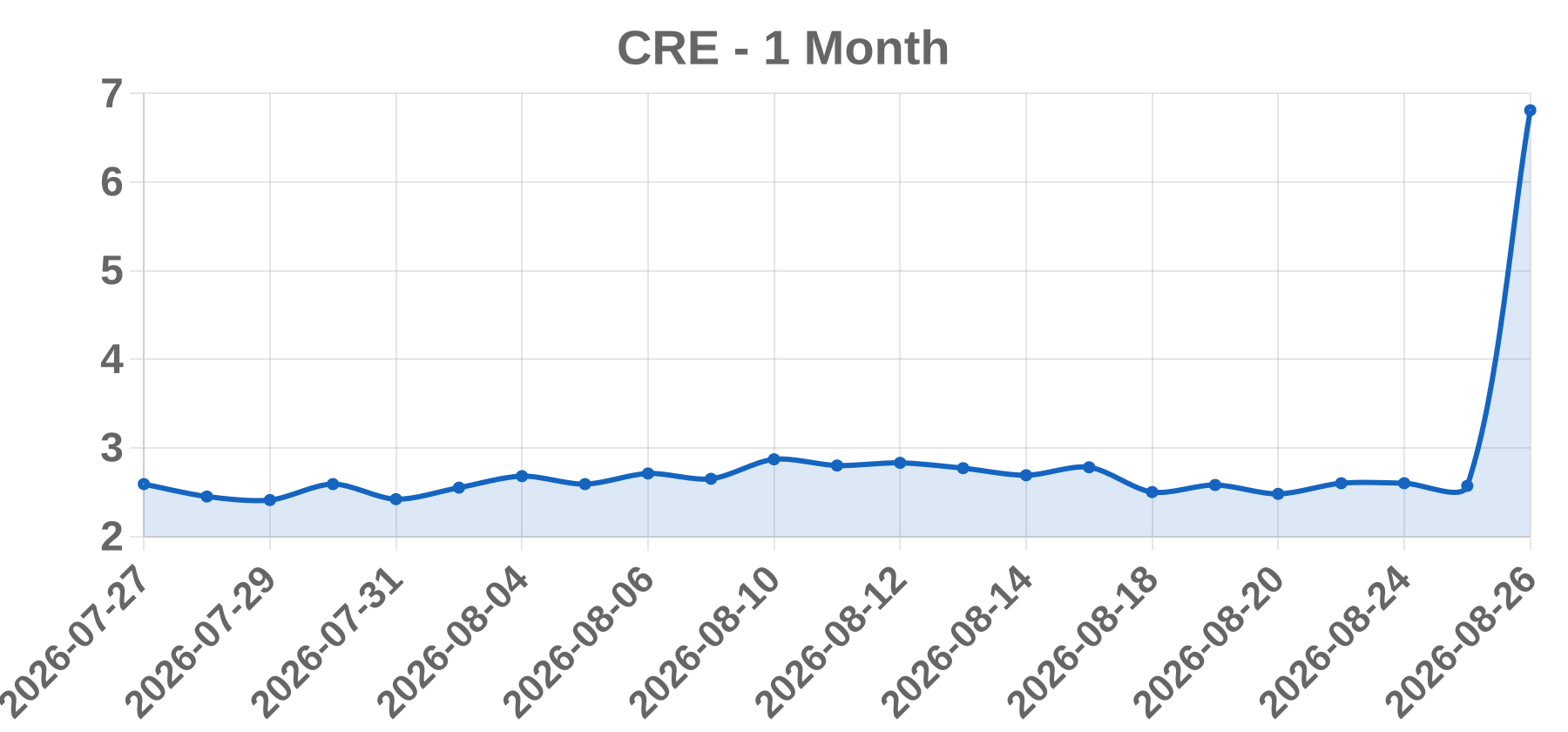
Business Cre8 Enterprise Limited (NASDAQ: CRE) is a Hong Kong-based financial printing company listed on the Nasdaq Capital Market on July 23, 2025. It provides integrated 24/7 financial printing, typesetting, translation, e-submission, and investor relations technology services to listed companies, IPO applicants, and private firms, primarily in Hong Kong with expansion into Japan.
Today’s take On August 26, 2026, Cre8 Enterprise issued a press release reporting record operational results for H1 2026. Customers served hit an all-time high of 550 as of June 30, up 17.8% from 467 at end-2025 and 34.8% from 408 a year earlier. Critically, IPO filing submissions to HKEX surged 482% (from 11 to 64 year-over-year), signaling a sharp pickup in Hong Kong capital markets activity driving demand for the company's prospectus and compliance printing services. Project backlog also reached record levels, providing forward revenue visibility. Shares exploded +164.98% to $6.81 (prior close $2.57), after opening at $6.10 and ranging $2.65-$8.60 intraday. The move was amplified by a micro-float of only ~1.10M shares outstanding-class float, with ~65M shares traded — roughly 59x the float. After-hours, the stock pulled back ~8% to $6.25, reflecting the speculative nature of the run.
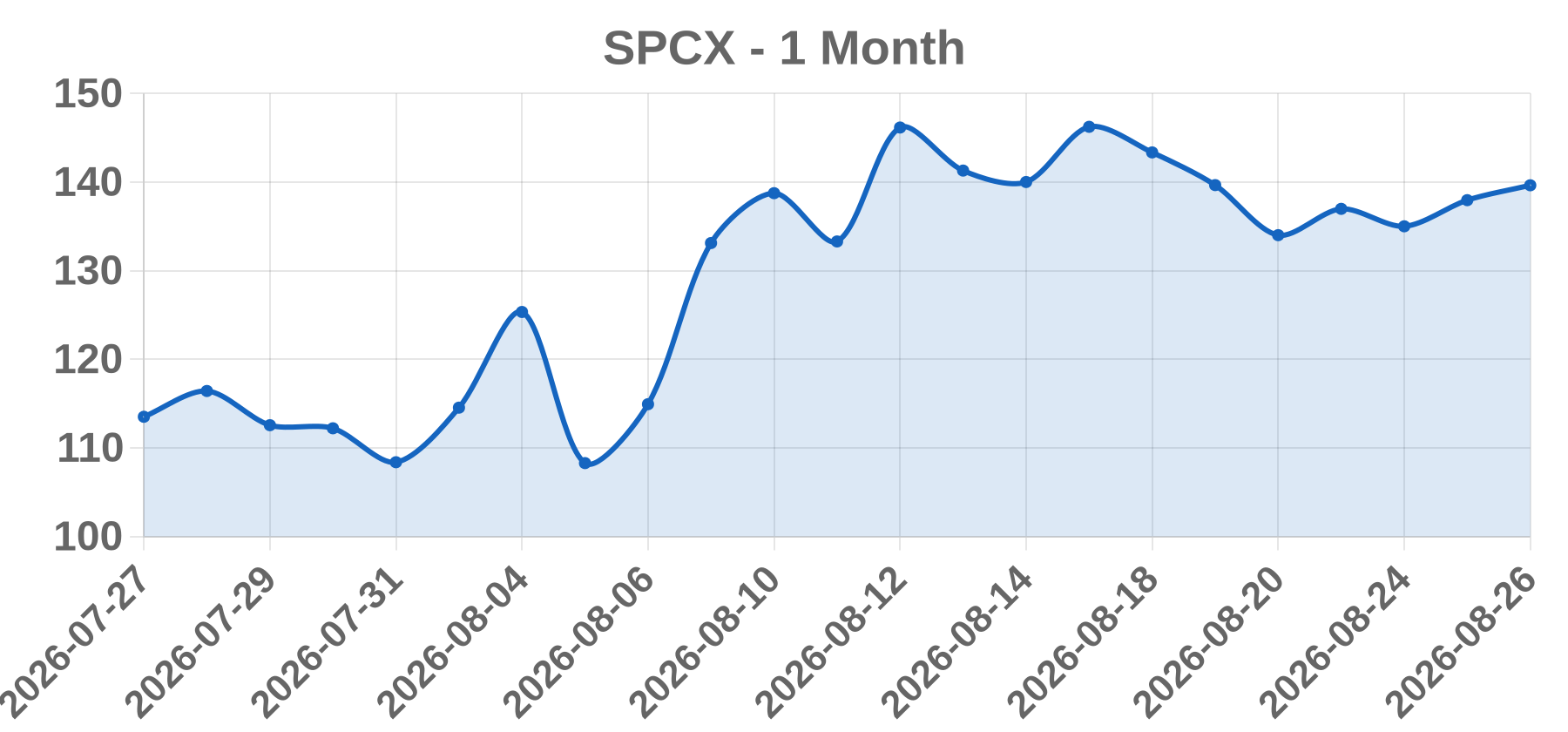
Business Space Exploration Technologies Corp. (NASDAQ: SPCX) is a privately-public aerospace and satellite communications company specializing in reusable rocket launches (Falcon 9, Starship), Starlink satellite broadband, and AI services via SpaceXAI. It operates through Space, Connectivity, and AI segments and went public in June 2026 as a trillion-dollar company.
Today’s take SPCX rose +1.22% to close at $139.63 on Aug 26, 2026, driven by a cluster of same-session bullish catalysts. Morgan Stanley's Adam Jonas reiterated Overweight with a $300 PT (implying +115% upside from $139.63), arguing the stock is 'attractively valued' at 10x sales and 25x EBIT on FY28 forecasts following SpaceX's $100B Louisiana 'Starbase' announcement. Wolfe Research's Emilee Deutchman also reiterated Outperform with a $175 PT, citing the spaceport and last week's White House executive order on launch regulatory relief as bullish indicators. Reuters reported JPMorgan would accept insider shares as loan collateral before the customary 135-day window (JPM earned $75M underwriting the IPO), reducing forced-selling pressure. SpaceX launched 27 Starlink satellites from Vandenberg the same morning. The stock rebounded in a choppy post-lockup phase, after trading ~33% below its June high near $225 before the session.
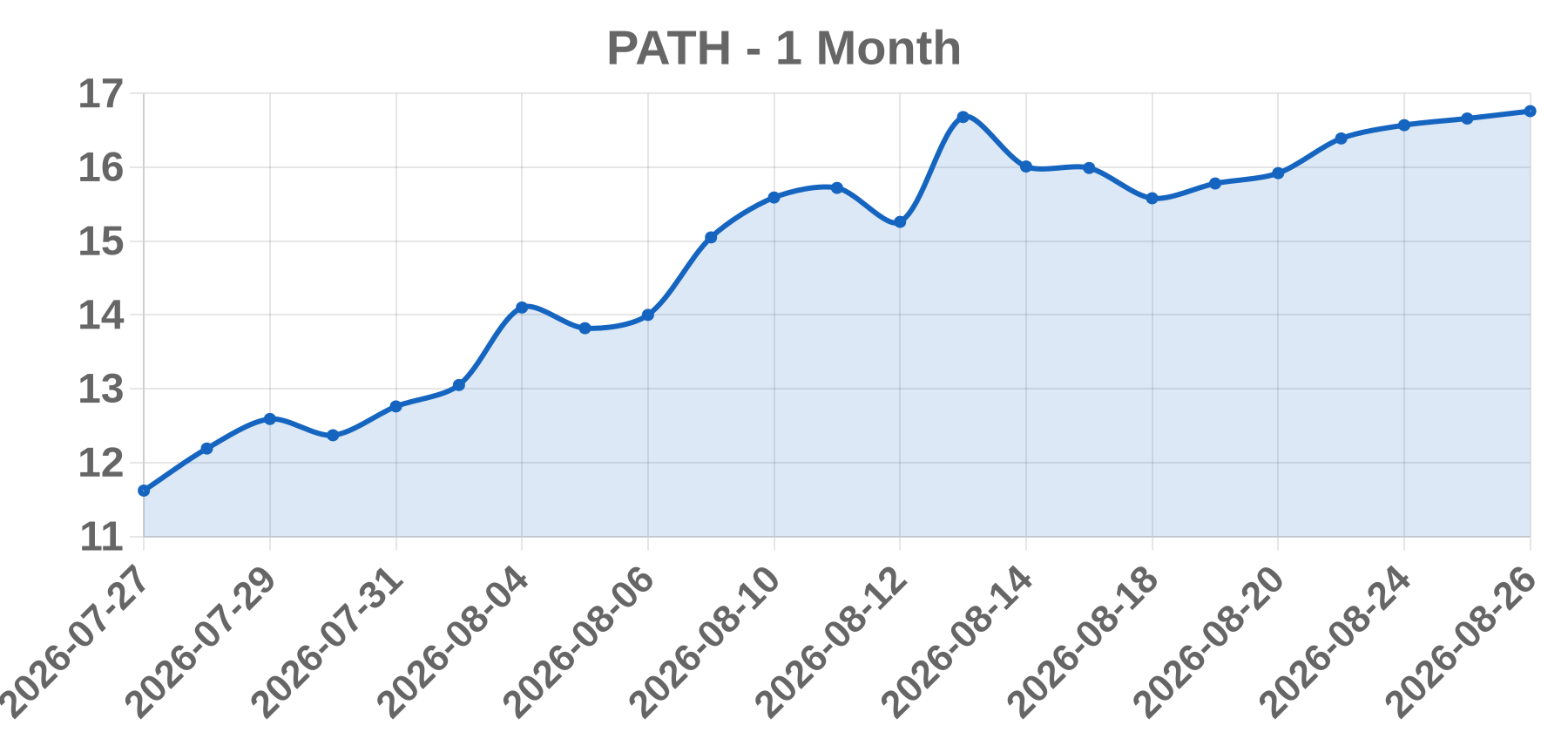
Business UiPath, Inc. (NYSE: PATH) is a global leader in business orchestration and automation software. Originally known for robotic process automation (RPA), the company has pivoted toward an agentic automation and orchestration platform - the UiPath Platform - that coordinates people, AI agents, robots, systems, and third-party partners within governed, scalable workflows across an enterprise. The platform integrates automation, orchestration, AI, and testing, serving highly regulated industries including financial services, healthcare, manufacturing, retail, and the public sector. Flagship technologies include Maestro (business orchestration), Autopilot/agentic AI capabilities, and the core RPA runtime, positioning UiPath to capture the shift from task-level automation to full end-to-end proces
Today’s take On August 26, 2026, UiPath (PATH) closed at $16.76, up $0.10 (+0.60%) on ~56.2M shares traded. The primary catalyst was a corporate announcement: UiPath issued a press release revealing that Banco Azteca, one of Mexico's largest financial institutions, transformed its automation program using UiPath Maestro, orchestrating more than 8,800 enterprise processes and 300+ automations (the equivalent of ~3,300 FTE). This customer-validation news is positive but was a modest, confirmation-style headline rather than a market-moving fundamental event, consistent with the small +0.60% move. The more powerful backdrop is the momentum from UiPath's Q1 FY2027 earnings (reported Aug 6, 2026), which delivered the company's first-ever GAAP profit and raised FY2027 revenue guidance, sparking a substantial post-earnings rally and a series of analyst price-target increases. The Banco Azteca announcement reinforces the agentic-orchestration narrative that underpins the buy thesis, while the stock's steady multi-week climb reflects continued accumulation. No earnings, M&A, or other macro event occurred on the session date; the day's positive move is best characterized as continuation within an uptrend
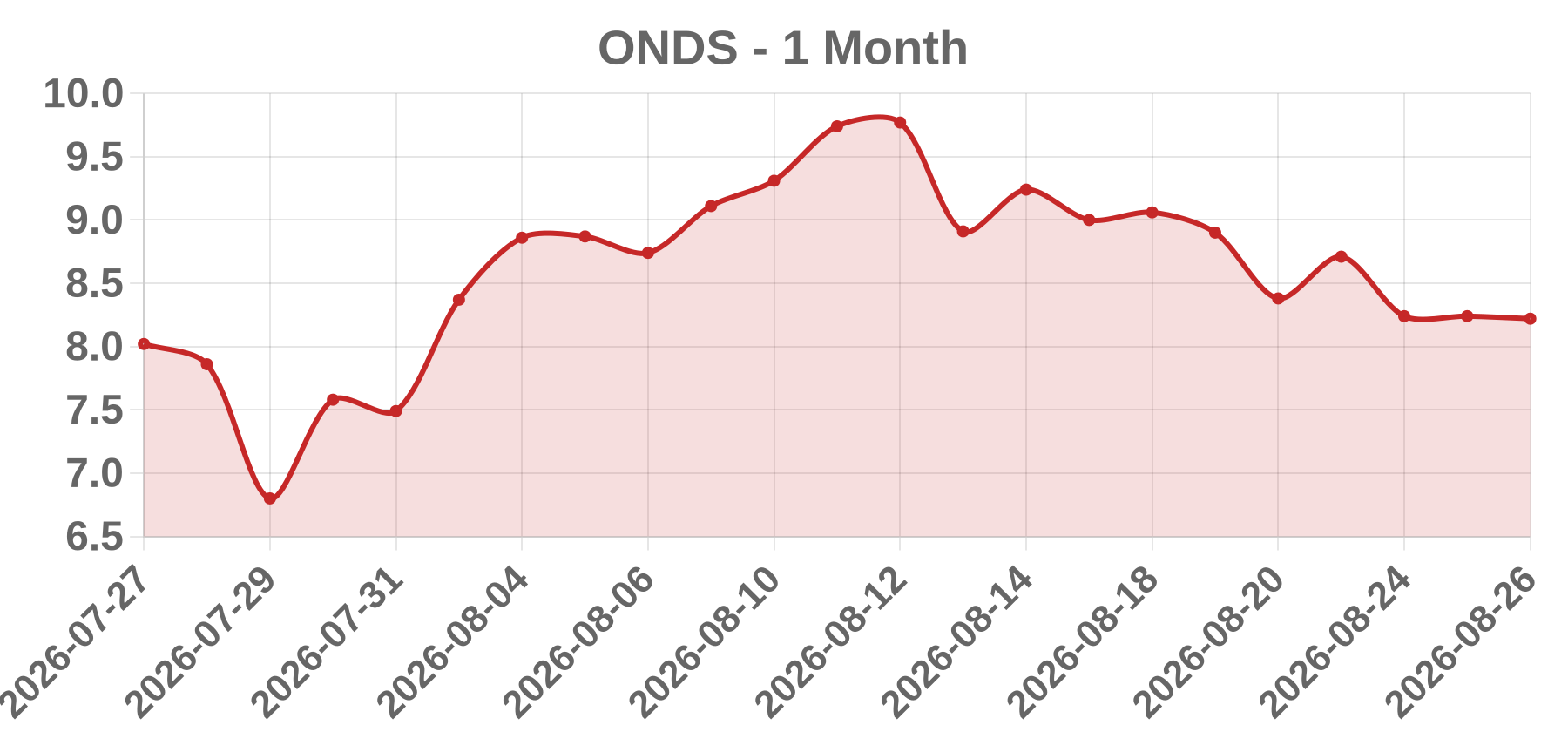
Business Ondas Inc. (Nasdaq: ONDS), headquartered in West Palm Beach, Florida, is a leading provider of autonomous systems, robotics, and mission-critical wireless technologies for defense, homeland security, public safety, and industrial markets. It operates through Ondas Networks (FullMAX software-defined radio) and Ondas Autonomous Systems (drones, counter-UAS platforms including Optimus, Iron Drone Raider, Sentrycs, ULTRA and Stratollite, plus defense units Ondas Sentinel, Cyberhawk and pending Aran Defense).
Today’s take ONDS closed essentially flat at $8.22 (-0.24%) on Aug 26 within a tight $7.96-8.27 range, testing its 50-day MA (~$8.20). Same-day catalysts: (1) Benzinga short-interest data (Aug 26, 1:38pm UTC) showed short interest at 40.65% of float (~230.5M shares), down 1.9% from July 31, keeping ONDS among the most-shorted US names; (2) a bullish TheStreet Pro article by James 'Rev Shark' DePorre added ONDS to his buy list at the 50-day MA, noting ~41% short float, $19.68 avg target, and a crowded-short squeeze setup if Q3 earnings (>$140M guide) deliver. Broader context: record Q2 revenue of $83.8M (13x YoY), raised FY26 guidance to $525-550M, $757M backlog, ~$1.4B cash, and the Aran Defense acquisition. Insider selling (CEO Brock sold 2.38M shares for ~$32M) and heavy top-end dilution from stock-based acquisitions temper the bullish narrative. The stock is consolidating around an $8 base after falling from a ~$15 June high.
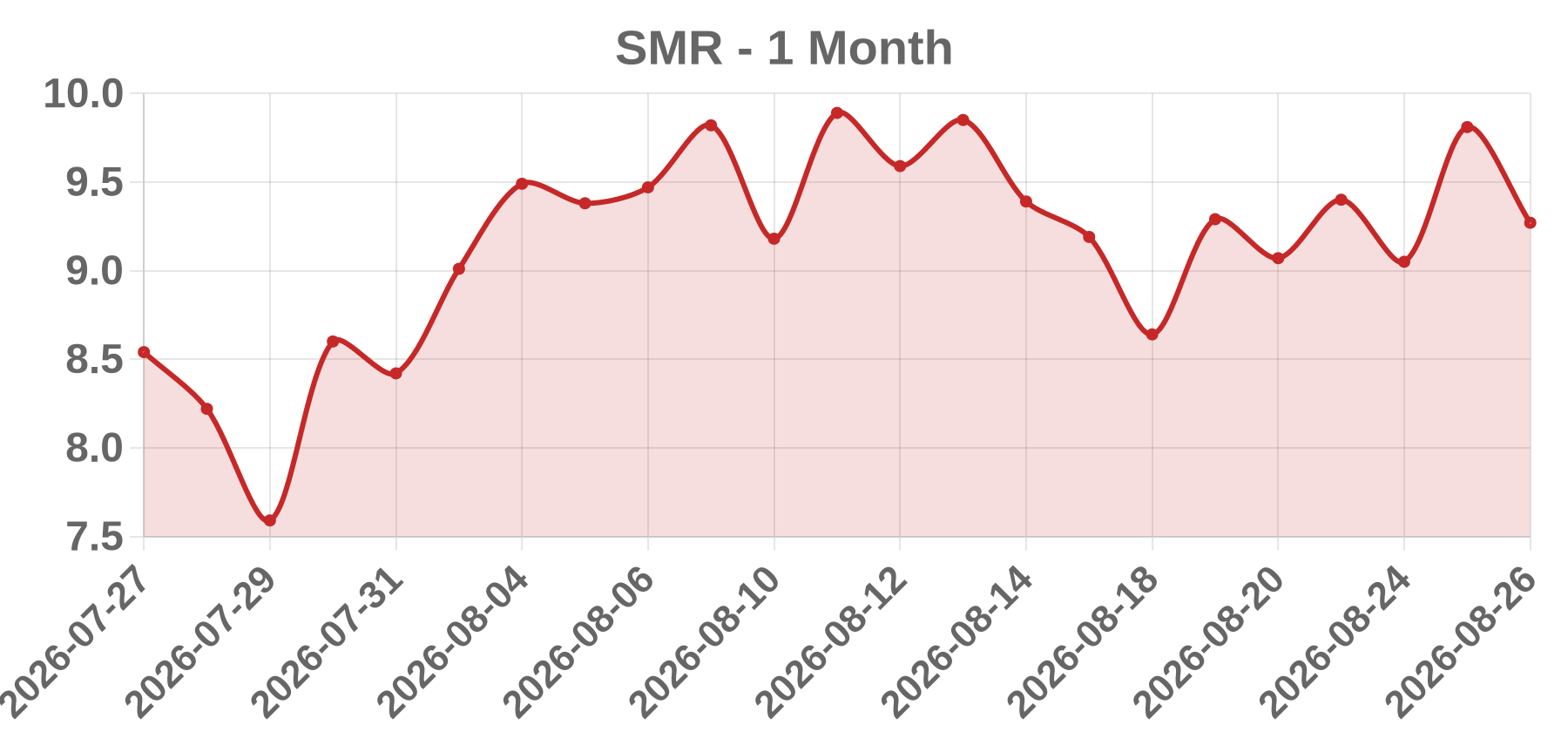
Business NuScale Power Corporation (NYSE: SMR) is the leading U.S. developer of small modular reactor (SMR) nuclear technology. Its core product, the NuScale Power Module (NPM), is a light-water reactor generating 77 MWe each, scalable to 924 MWe in a 12-module plant, and it holds the only NRC design certification among U.S. SMR firms. The company remains pre-commercial, targeting deployment via projects such as the Tennessee Valley Authority (TVA) partnership and Romania's RoPower plant.
Today’s take SMR fell -5.50% to $9.27 on Aug 26, a sharp one-day reversal of the prior session's news-driven rally. On Aug 25 the stock surged +8.40% to $9.81 after NuScale announced it was deploying nuclear-specific AI tools (Nuclearn's AtomAssist and NPX) said to cut engineering search time by up to 80%. The Aug 26 pullback was classic profit-taking on a speculative pop: the AI news produced no customer contracts or revenue, and the market cap swing (~$400M) far exceeded the company's Q2 revenue of just $75K (down ~99% YoY, net loss ~$47.5M). A persistent $750M at-the-market offering filed Aug 11 (~17-18% potential dilution), insider Form 144 selling, and 2026 analyst price-target cuts (Citi to $6.50 Sell; RBC to $10; consensus ~$12.63) capped upside. The stock opened at $9.85, spiked to $10.26 intraday before failing to hold $10, and closed near session lows at $9.27 — consistent with heavy shorting (~19% of float) and renewed dilution anxiety.
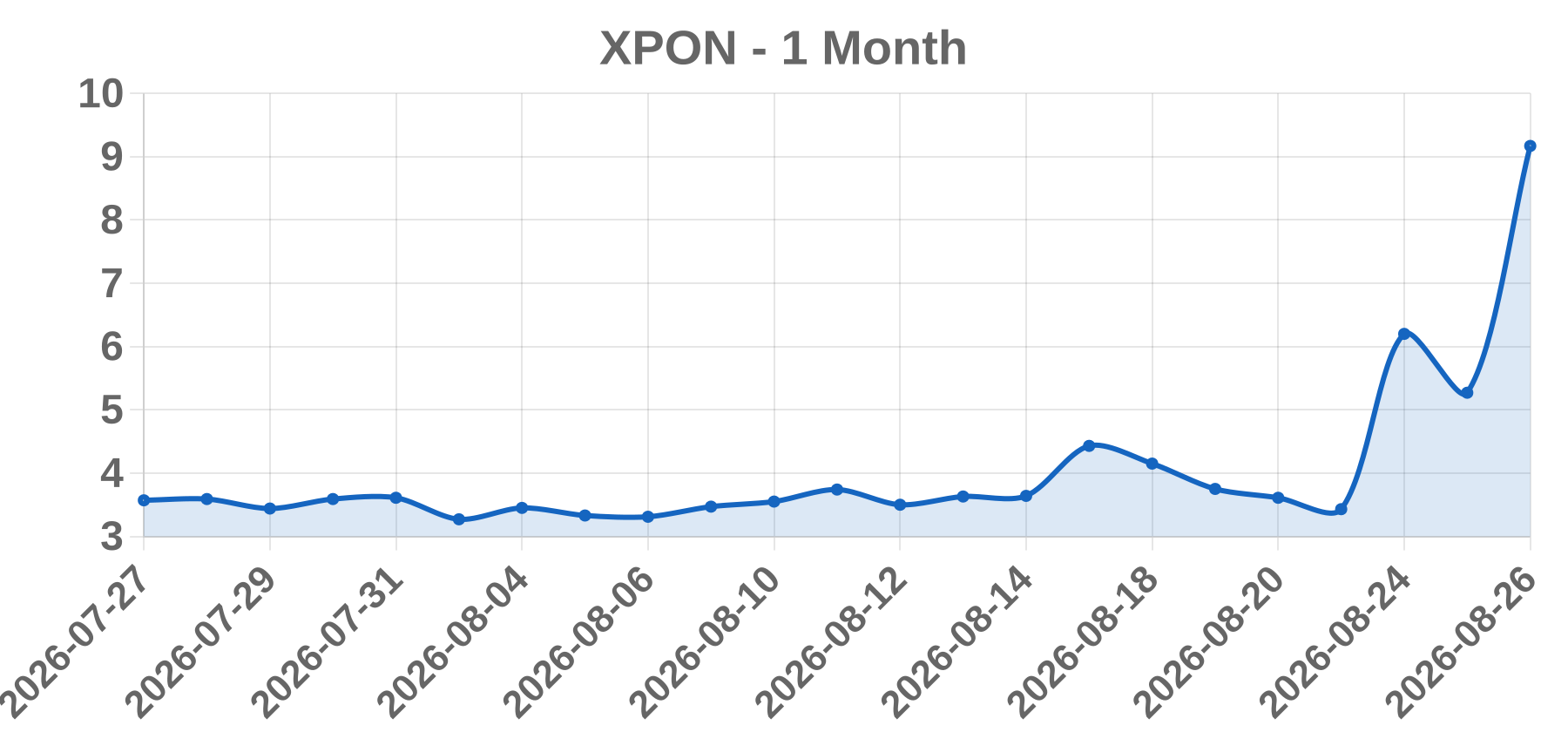
Business Expion Energy, Inc. (formerly Expion360 Inc., renamed effective Aug 20, 2026), is a NASDAQ-listed micro-cap that originally designed, manufactured, and sold premium lithium iron phosphate (LiFePO4) batteries and accessories for RV, marine, and industrial use. The company is pivoting into oil & gas exploration under its new Expion Energy banner and trades under ticker XPON.
Today’s take XPON surged +74.00% to close at $9.17 on Aug 26, 2026, after opening at $6.40, ranging $6.30-$11.79 on ~36.2M shares, following a wild momentum re-rating tied to its strategic transformation. The catalyst chain: (1) name change to Expion Energy effective Aug 20; (2) Aug 24 announcement of a ~$3.425M Eastern Louisiana oil & gas acquisition (~3,000 net acres + wellbore + IP) and the initial $9M closing of a private placement (8% convertible debentures, warrants at $4.25, up to $91M additional); (3) appointment of oil & gas CEO Kevin Sellers. On Aug 24 the stock spiked to ~$9.26 then faded to $5.27 on Aug 25, before rebounding +74% on Aug 26 with multiple volatility trading halts. This is classic headline/momentum penny-stock speculation around AI data-center gas and LNG narratives, not fundamental earnings.
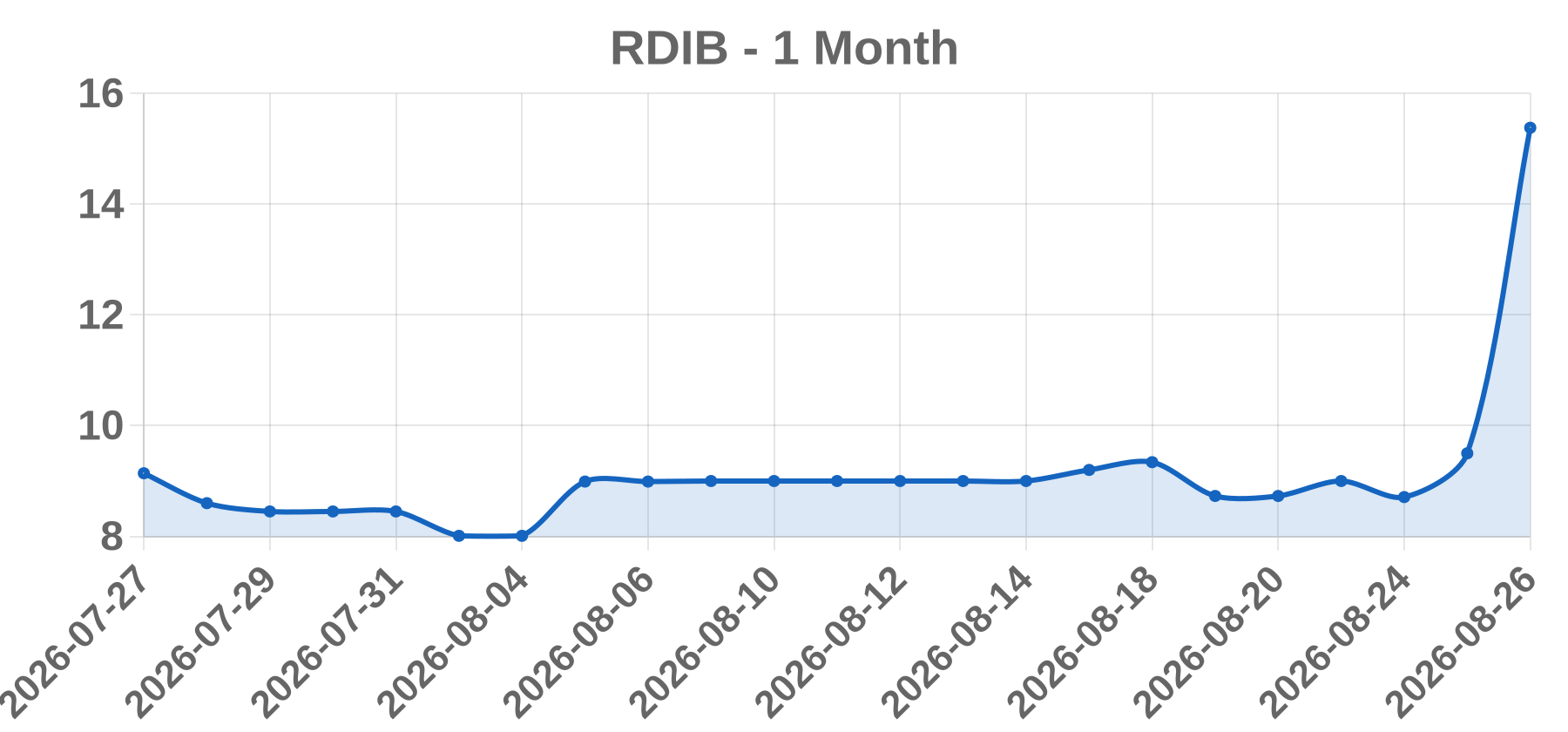
Business Reading International, Inc. (NASDAQ: RDIB) is a diversified entertainment and real-estate company with dual-listed Class A (RDI) and Class B voting (RDIB) shares. It owns, develops, and operates multiplex cinemas (Reading Cinemas, Consolidated Theatres, Angelika Film Center) and retail/commercial/live-theatre real estate in the United States, Australia, and New Zealand, operating in Cinema Exhibition and Real Estate segments.
Today’s take RDIB closed up 61.89% to $15.38 on 2026-08-26 (gap-open $12.63, day range $12.00-$17.77) on ~8.4-8.5M shares vs a daily average of ~1.03K-1.4K — roughly 8,000x normal volume on an extremely thin float. The Class B voting shares total only ~1.68M issued/shares outstanding with a public float of ~299K shares, so single-day volume turnover was about 5x the entire Class B share count. Financial Modeling Prep explicitly noted 'no clear immediate company-specific news appears to explain the surge' and attributed the move to 'speculative trading interest.' No discrete catalyst (M&A, FDA, upgrade) occurred on 8/26. The backdrop was a well-received Q2 2026 report (8/14, EPS $0.10 beat vs $0.06 est, revenue $66.9M beat $63.47M) plus earnings-call highlights published 8/20-8/25 citing the best quarter since 2018 and record Australian revenue. The move is best characterized as an extreme low-float illiquid speculative squeeze/momentum event riding positive earnings sentiment.
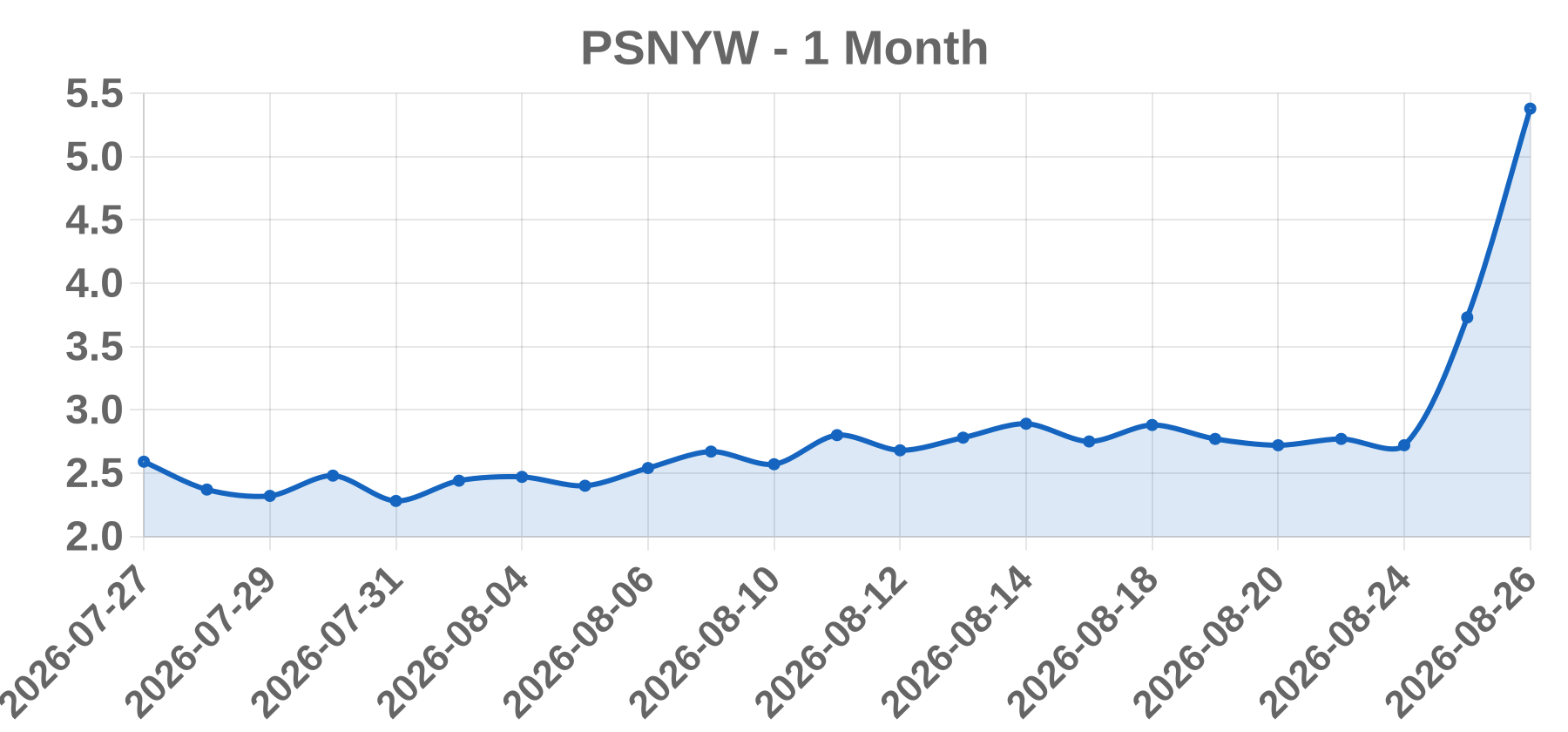
Business PSNYW is the Sponsored Class C-1 ADS (warrant) of Polestar Automotive Holding UK PLC (Nasdaq: PSNY), a Swedish electric-vehicle maker majority-owned by Geely. The warrants grant the right to buy Polestar ADRs at a set price and are known for high volatility and speculative trading.
Today’s take PSNYW surged 44.24% on Aug 26, 2026, closing at $5.38 on ~3.13M shares (vs. ~79K-160K average, 20-40x). This capped a two-day rally (up 37% on Aug 25 to $3.73) driven by speculation into Polestar's Q2 2026 earnings, scheduled for Aug 27 before the open. Analysts modeled a narrower -$1.81 EPS on $878.1M revenue vs. the prior quarter's -$3.09 loss, and the confirmed date re-ignited warrant buying after warrants had unwound mid-August when the date went unconfirmed. Adding fuel, Polestar announced the Aug 25 appointment of Arek Nowinski (Volvo Cars exec) to the board. This all unfolded against Polestar's U.S. Commerce Department ban on selling 2027+ model-year vehicles, which had crushed the shares and made low-priced warrants the chosen speculative vehicle.
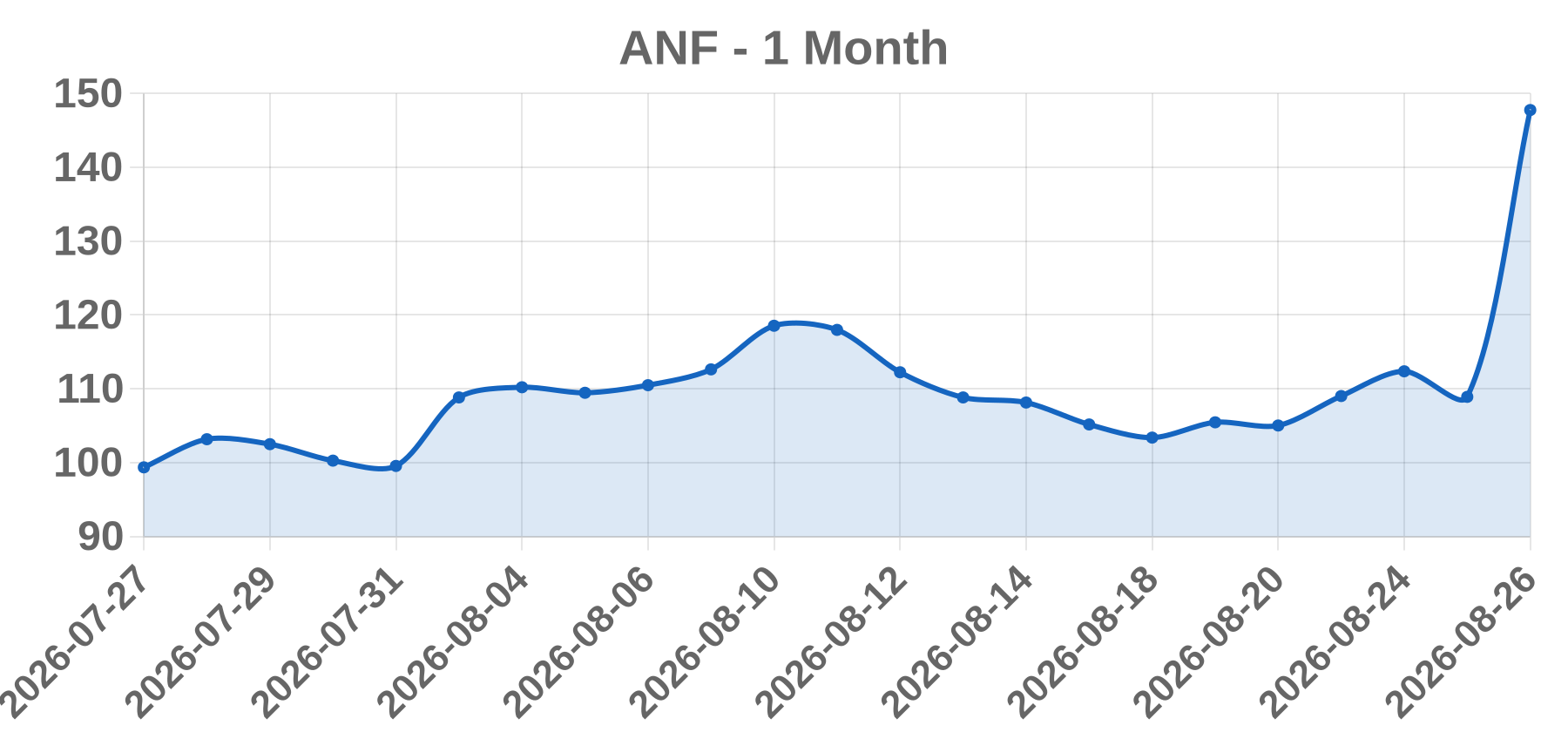
Business Abercrombie & Fitch Co. (NYSE: ANF) is a globally led, omnichannel specialty retailer of apparel and accessories, founded in 1892 and headquartered in New Albany, Ohio. The company operates roughly 730 store locations and sells through its family of brands including Abercrombie & Fitch, abercrombie kids, Hollister, Gilly Hicks, and Your Personal Best across the Americas, Europe, the Middle East, Africa, and the Asia-Pacific. Fiscal year 2026 revenue was approximately $5.27 billion.
Today’s take Abercrombie & Fitch reported fiscal Q2 2026 results (quarter ended August 1, 2026) on the morning of August 26, delivering a massive beat: adjusted EPS of $4.17 vs. consensus of ~$1.98 (a beat of $2.19, or +110%), and record revenue of $1.27B (+5% YoY) versus ~$1.25B consensus. The earnings surge was substantially driven by a one-time ~$100 million IEEPA tariff refund following a Supreme Court ruling, which added ~$1.75 to diluted EPS and 790 basis points to operating margin (lifting Q2 operating margin to 19.9% vs. ~10% guidance). Management sharply raised FY2026 guidance: EPS to $13.10-$13.60 (from $10.20-$11.00), sales growth to ~5%, and operating margin to 14.5%-15%. The company also expanded buybacks, targeting at least $500M in FY2026 repurchases (YTD $282M, ~7% of shares). Q3 guidance of EPS $2.90-$3.20 and revenue $1.355-$1.367B also topped consensus. Shares surged to an intraday high of $154.58 (+~50%) before closing at $147.75, up +35.67%, at a new 52-week high with market cap ~$6.56B.
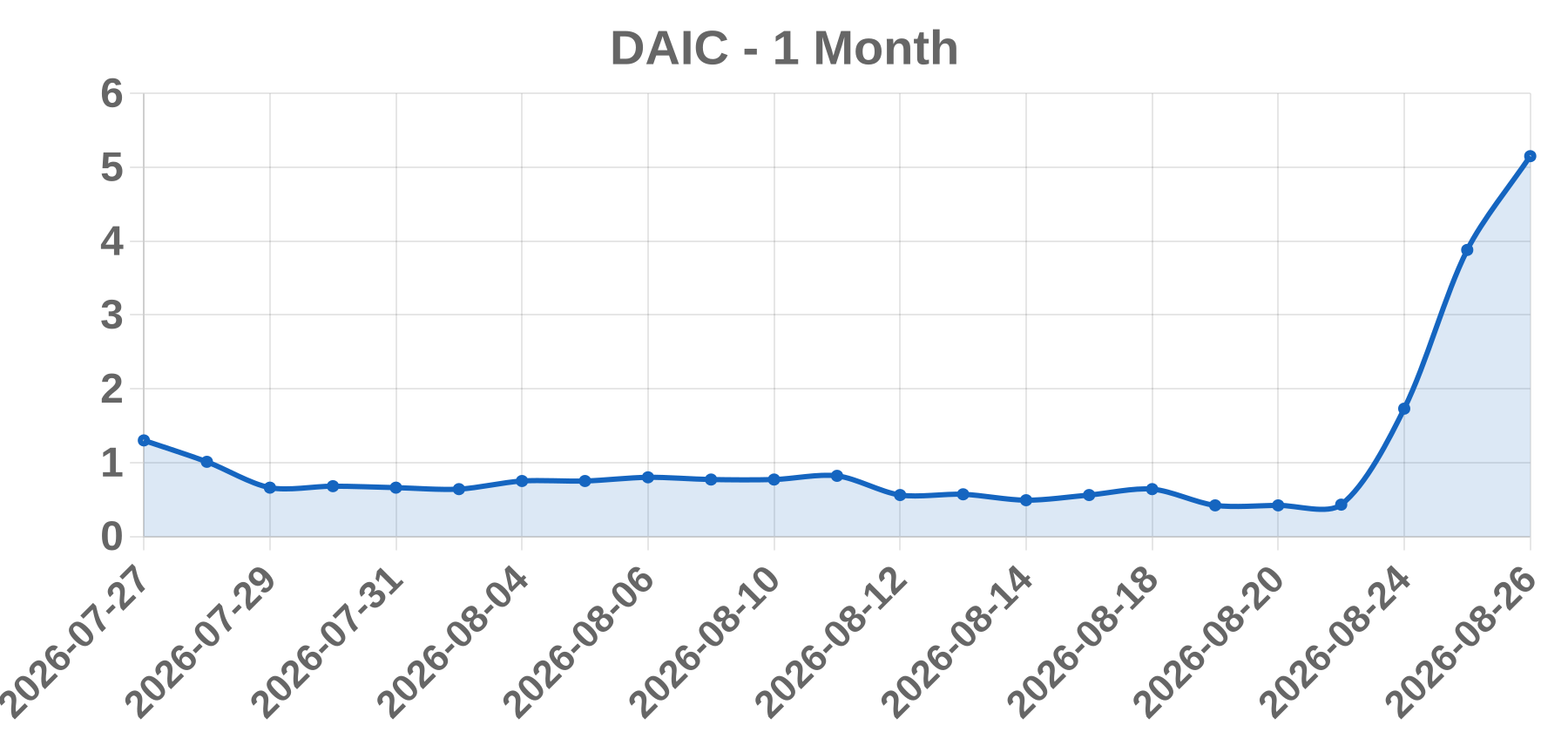
Business CID HoldCo, Inc. (Nasdaq: DAIC) is an IoT and AI-based SaaS company headquartered in Las Vegas, Nevada, developing near real-time precision-based asset tracking platforms using RFID, low-power edge camera platforms and AI. It serves industries including construction, military, mining, retail, warehousing, and manufacturing.
Today’s take DAIC surged +32.73% to close at $5.15 on Aug 26, 2026, capping a spectacular low-float speculative momentum run from $0.42 (Aug 19) — roughly +1,100% in five sessions. The stock opened at $6.21, ranged $4.26-$6.69, and closed at $5.15 with ~49.9M shares traded. No fundamental corporate announcement drove the Aug 26 move; the InvestorsHub report explicitly characterizes the rally as 'without an identifiable fundamental catalyst,' attributing it to the stock's low-float characteristics (only ~1.21M shares outstanding, ~693K float) and 'growing interest from momentum traders.' The speculative backdrop included a Nasdaq delisting notice (Aug 6) for failing the $50M MVLS requirement, an appeal filed Aug 13, and a $6M preferred stock investment announced in July. With market cap near $6.2M and float under 700K shares, DAIC exemplifies a classic meme-style micro-cap trading frenzy.
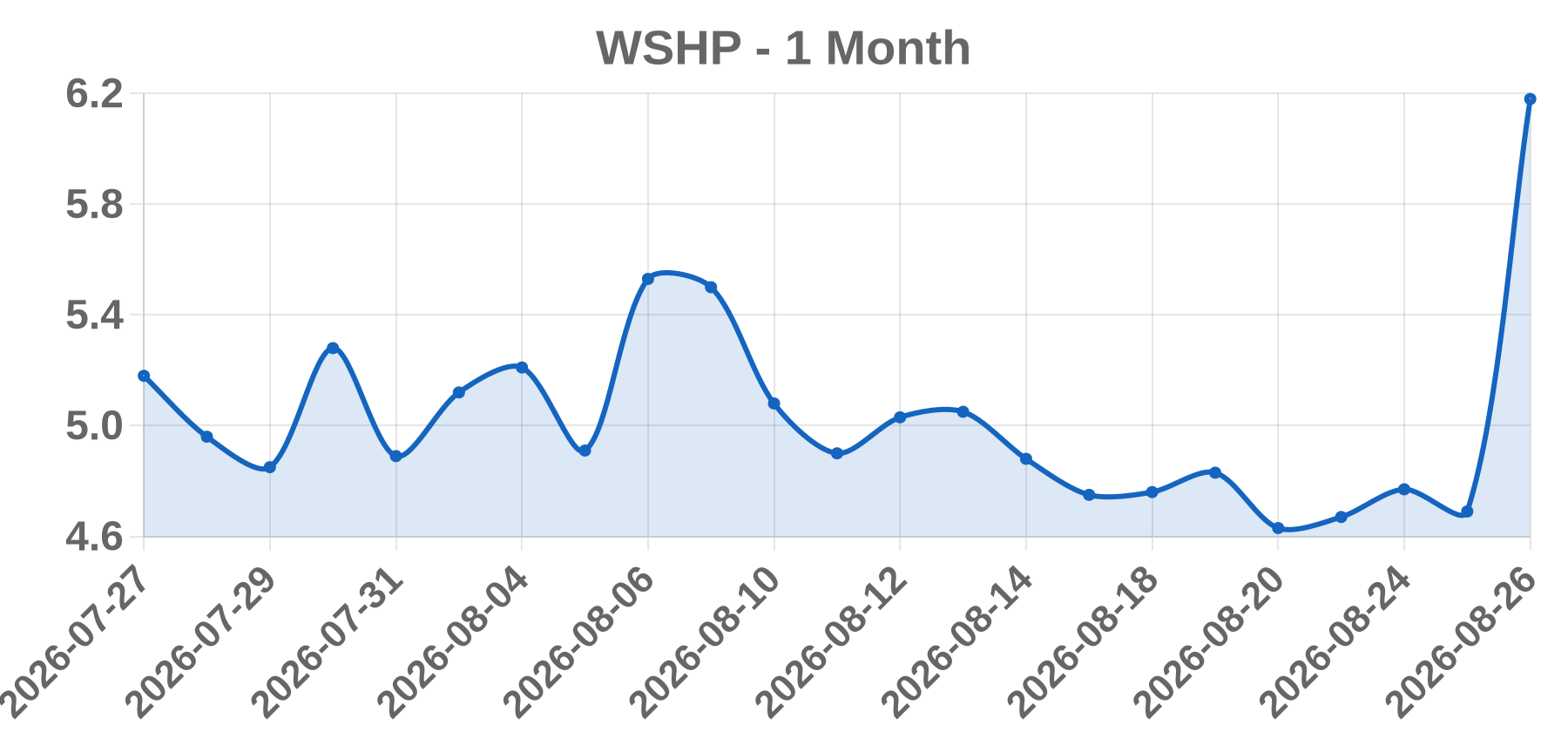
Business WeShop Holdings Limited (NASDAQ: WSHP) is a Channel Islands/British Virgin Islands-registered company operating a social commerce platform billed as the world's first community-owned shopping network. Its mobile-led app combines product discovery, user-generated content, affiliate commerce, and equity-linked rewards, letting shoppers earn company shares on purchases made through partner retailers in the UK, with planned U.S. expansion.
Today’s take WSHP surged +31.88% to $6.18 on 2026-08-26 amid extreme volume of ~13.1M shares, roughly 50x its ~265K daily average (Robinhood showed ~53.5K ADV). The session saw an intraday range of $4.78 low to $7.95 high, classic short-covering volatility on a heavily shorted microcap. Short interest was exceptionally elevated, running ~25%–37% of float (MarketWatch/Barron's, July 2026) and reaching as high as ~69.5% of float in April (Quiver/Benzinga). Crucially, there was no positive company-specific catalyst on Aug 25–26: the preceding H1 2026 print (Aug 24) was fundamentally weak, with net revenues collapsing ~81% to just £54,359 and net loss widening 28% to £5.16M. No M&A, upgrade, or material announcement was found. The move fits a positioning-driven short-squeeze/short-covering rally rather than fundamental news, consistent with WeShop's history of periodic squeezes (June 26 +69.85%, Aug 6 +12.63%).
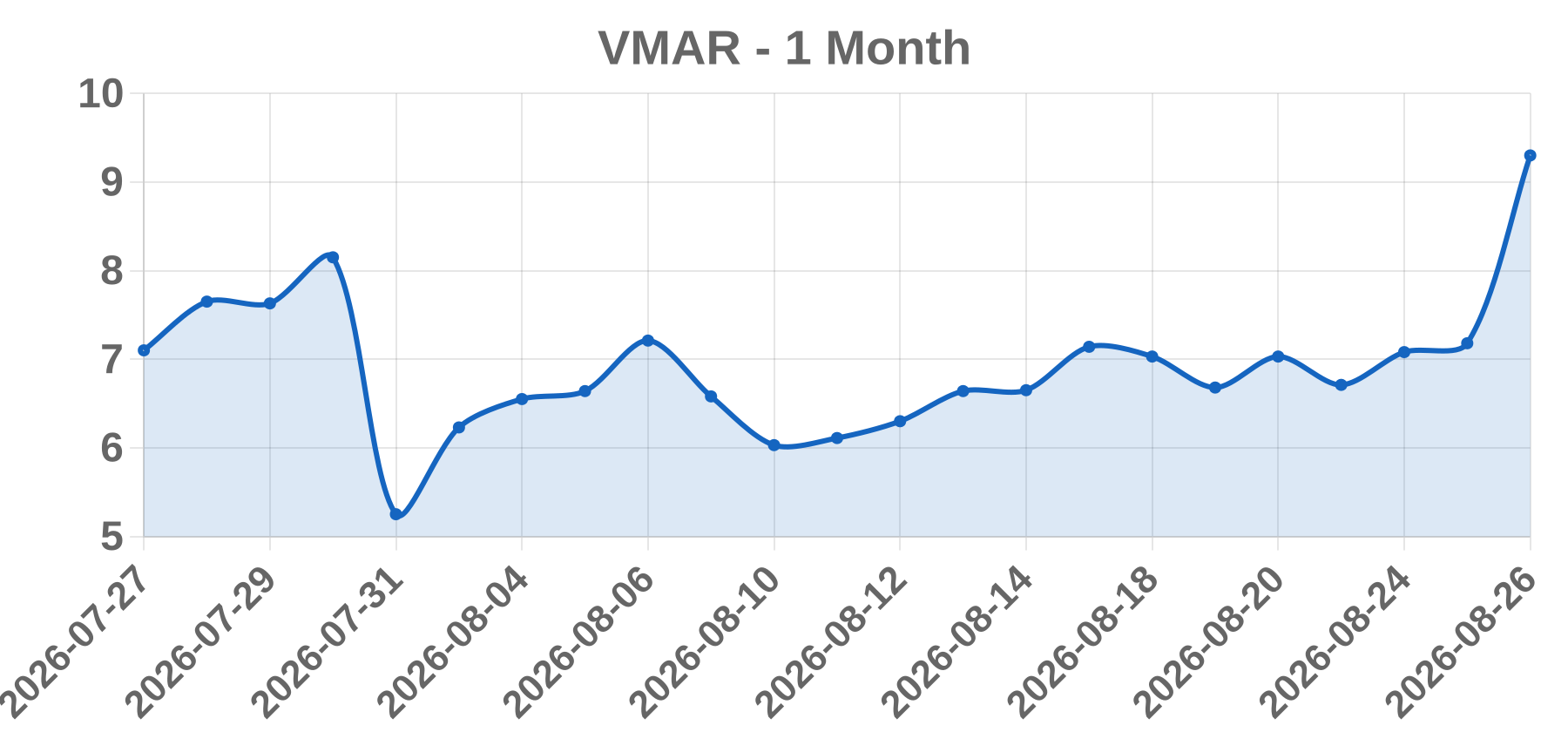
Business Vision Marine Technologies Inc. (NASDAQ: VMAR) is a Quebec-based marine technology company that designs, manufactures, rents, and sells electric boats and marine propulsion systems, including its flagship E-Motion™ high-voltage electric outboard powertrain. Through its Nautical Ventures subsidiary it also operates a multi-brand recreational boating retail and service network in Florida. The company also announced a non-binding LOI for a reverse takeover that would pivot it into unmanned aerial (UAV), autonomy, and defense technologies.
Today’s take On Aug 26, 2026, VMAR surged +29.49% to $9.30 on volume of 3.42M shares, driven by a confluence of four company-specific events, not macro (S&P 500 +0.1%; Nasdaq red). (1) A 1-for-10 reverse stock split became effective at the market open, mechanically repricing shares (reducing outstanding from ~6.53M to ~653K) to regain Nasdaq's $1.00 minimum bid compliance (Rule 5550(a)(2)). (2) The market digested a non-binding reverse-takeover LOI signed Aug 20 with an undisclosed defense/UAV company that would leave existing holders with ~2.9% of the combined entity. (3) Voluntary TSXV delisting took effect at market close, consolidating liquidity on Nasdaq. (4) A new E-Motion™ patent application was filed Aug 25. The daily range of $7.37-$12.96 (high $12.96 vs $9.30 close) reflects high-beta, ultra-low-float speculation. Key risks: the LOI is non-binding, requiring US$25M financing, US$100M binding 2027 purchase orders, and approvals by a Dec 31, 2026 target.
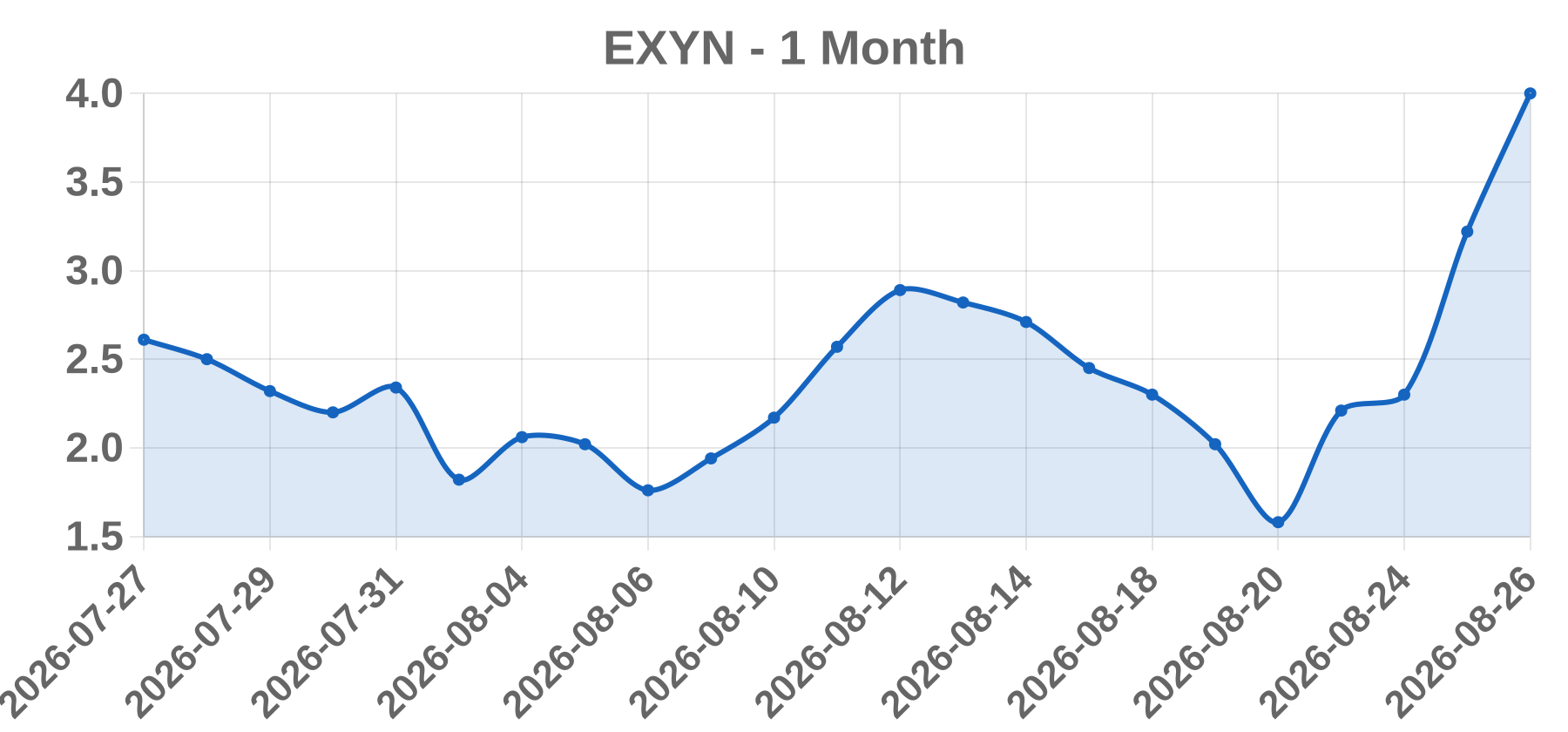
Business Exyn Technologies, Inc. (Nasdaq: EXYN/EXYNW, IPO May 2026, HQ Philadelphia) is a micro-cap pioneer in fully adaptive, cognitive mission-level autonomous robotics and AI. Its ExynAI autonomy software and Nexys autonomous mapping/LiDAR platform navigate and map in complex, GPS-denied, communications-constrained environments (underground mines, facilities, contested terrain), serving mining, infrastructure, government, and defense markets via subsidiaries Exyn Defense and Exyn Latin America.
Today’s take EXYN closed Aug 26, 2026 at $4.00, +24.22% (+$0.78) on ~3.2M shares (~1.5x the ~2.17M average), marking the second consecutive double-digit rally after +40% on Aug 25 and +4.07% on Aug 24. The move was a continuation of a violent momentum/short-covering rebound off the Aug 20 low of $1.50 (post-Q2 earnings selloff: revenue ~$950K down ~30% Y/Y, going-concern cash warning), then accelerated by the defense/government-contract narrative: third disclosed U.S. government engagement (Exyn Nexys LiDAR selection Aug 6), Goog UAS certification pursuit, US Air Force Warner Robins sustainment agreement, Exyn Defense subsidiary rebrand (June), defense advisory board (Aug 12), and interim CEO appointment (Aug 20). No discrete fundamental event was announced on Aug 26 itself; the session extended two-day gains of ~74% off the Aug 24 close as speculative/short-covering demand at high relative volume drove the micro-cap higher. Market cap ~$32M.
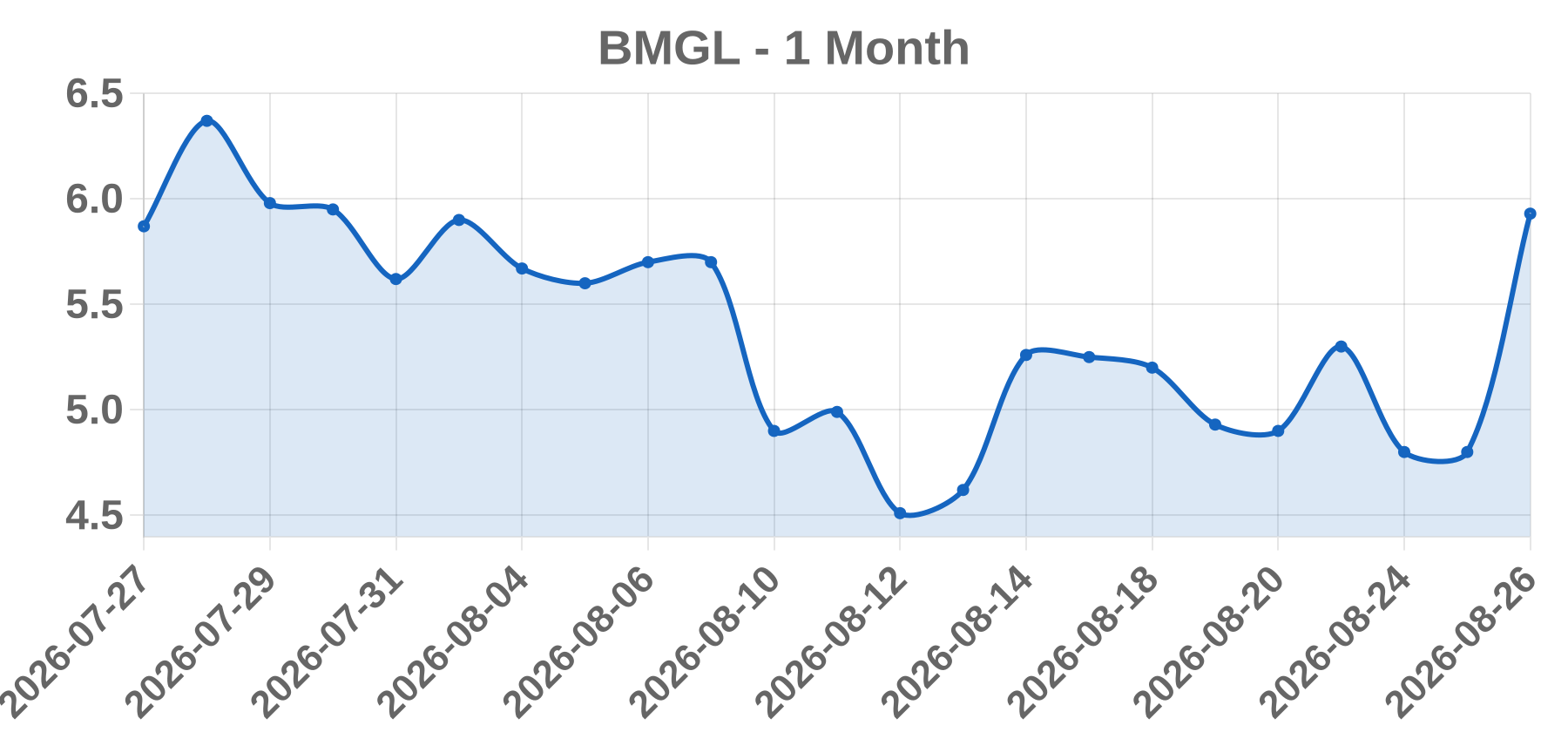
Business Basel Medical Group Ltd (NASDAQ: BMGL) is a Singapore-based healthcare services company delivering specialist medical expertise, medical supplies and equipment, advanced medical technology solutions, and pharmaceutical products. The company, established in 2023 and headquartered at Gleneagles Medical Centre, has roughly 82 employees and operates as an issuer filing under Form 20-F.
Today’s take On August 26, 2026, BMGL closed at $5.94, up +$1.14 (+23.65%), after opening at $4.54 (down ~5% from the prior $4.80 close), rallying to a $6.00 session high. No company-issued press release, earnings, M&A, or regulatory event occurred on that date (last earnings/6-K was June 26 and Aug 10). The move was a low-float, retail-driven volatility spike: BMGL has only ~1.57M shares outstanding and a public float of just ~501K shares (market cap ~$9.3M), so even small share flows drive outsized price swings. Short interest was ~15,664 shares (3.12% of float, 0.45 days to cover) after declining from 32,559 (6.49% of float) in mid-July — a classic squeeze/supply-scarcity setup. The stock opened weak then surged ~30% intraday, characteristic of a squeeze on a thin float with multiple August 'volatility trading pause' halts. Context includes a June 22, 2026 1-for-12 reverse split to regain Nasdaq bid compliance (regained July 10, 2026) and a July 23/ Aug 5 NY securities class action naming the company among 30+ issuers (disclosed in Aug 10 6-K). The sharp price jump reflects sentiment/scarcity dynamics rather than a fundamental catalyst.
Business Greenland Mines Ltd (Nasdaq: GRML), headquartered in Charlotte, N.C., is a development-stage critical-minerals company with two divisions: (1) Natural Resources, focused on the Skaergaard Project in southeast Greenland (palladium, gold, platinum) and the pending acquisition of the Sarfartoq Nd-Pr rare-earth project in southwest Greenland, and (2) Cell & Gene Therapy, including Klotho's KLTO-202 for ALS. Formerly Klotho Neurosciences, the company renamed itself in March 2026.
Today’s take GRML collapsed 48.09% on Aug 26, 2026 to $5.04 after pricing a heavily discounted 4,000,000-share public offering (or equivalents) for roughly $20M gross proceeds, implying ~$5.00/share — a ~48.5% discount to the prior close of $9.71. The raise, placed by A.G.P./Alliance Global Partners, is intended to fund the Sarfartoq Nd-Pr rare-earth acquisition ($35M total: $20M cash + $15M stock per the May 2026 definitive agreement). Just days earlier (effective Aug 24), the company completed a 1-for-50 reverse stock split (from ~158.85M to ~3.18M shares) to regain Nasdaq's $1 minimum bid compliance. The combination of a steeply discounted offering priced near the reverse-split share price and same-session markdown sparked the single-day crash; volume spiked to ~2.74M vs typical ~40-130K. Expected close Aug 27, 2026.
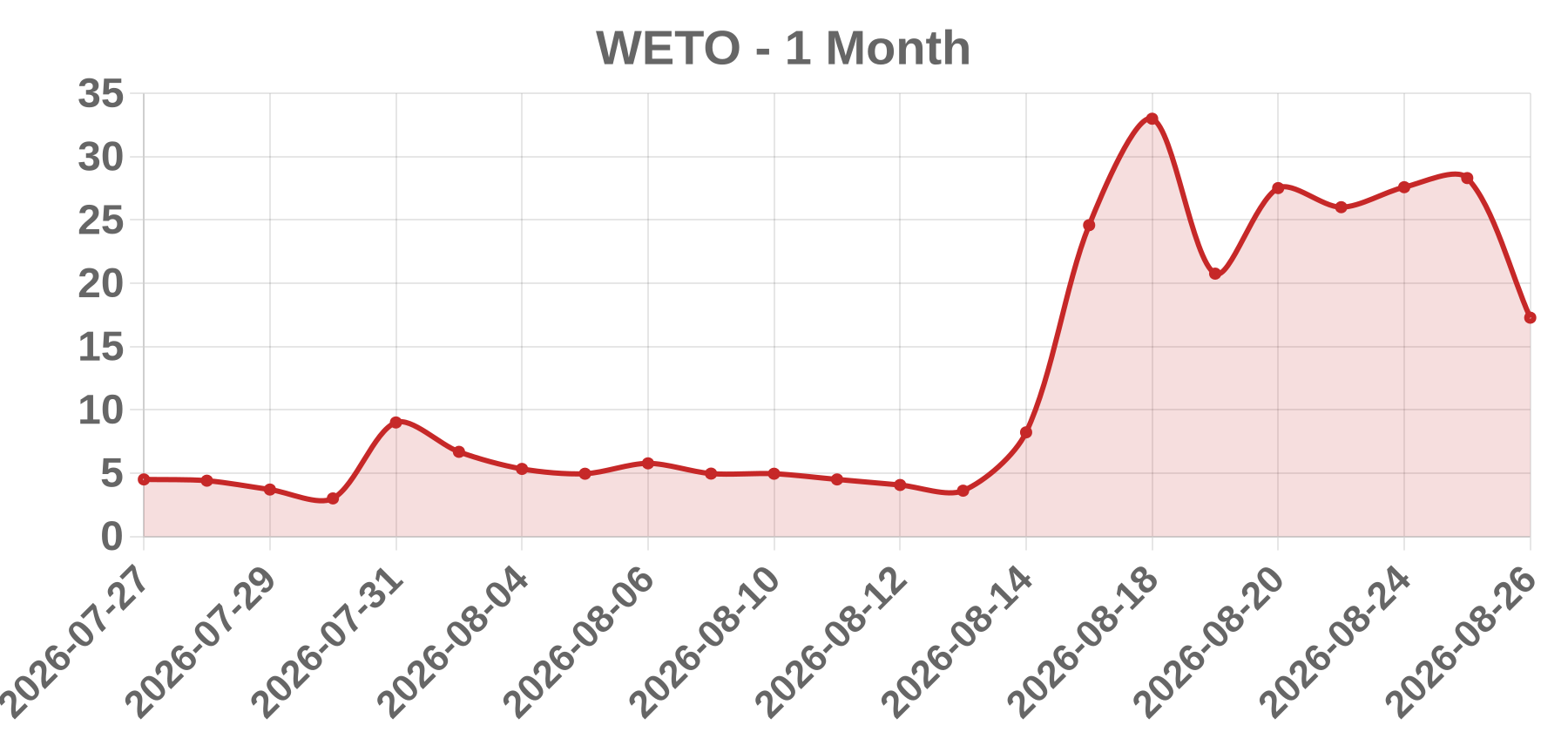
Business Wetour Robotics Limited (NASDAQ: WETO) is a Physical AI infrastructure and wearable robotics company headquartered in Austin, Texas, listed on the Nasdaq Capital Market since its IPO on February 27, 2025. It operates AI-driven premium travel and mobility services under the Wetour brand and is developing Orchestra, a proprietary edge-AI operating system that connects wearable sensors, visual intelligence, and connected physical devices.
Today’s take WETO plunged 38.96% to close at $17.28 on Aug 26, 2026 (open 23.17, high 24.13, low 15.70), after the company filed a Form 424B5 prospectus supplement announcing a new at-the-market (ATM) equity distribution agreement with Rodman & Renshaw LLC to sell up to $75 million of ordinary shares at prevailing market prices (up to 3% sales-agent commission). This fresh dilution slug came right after the Aug 24 EGM (announced Aug 25) approved a 100:1 reverse stock split and a massive jump in authorized capital to 2 trillion shares (US$20 billion). The stock had been in an extreme speculative melt-up—Aug 14 +128%, Aug 17 +199%, Aug 18 +34%, Aug 20 +33%—while a prior $17M Chaince ATM (later topped-up $50M on Jul 6 and effectively expired on Aug 24) shows the pattern of serial equity dilution. The same-day ATM announcement, combined with reverse-split mechanics and ultra-thin float, triggered the violent reversal from the $28.31 prior close.
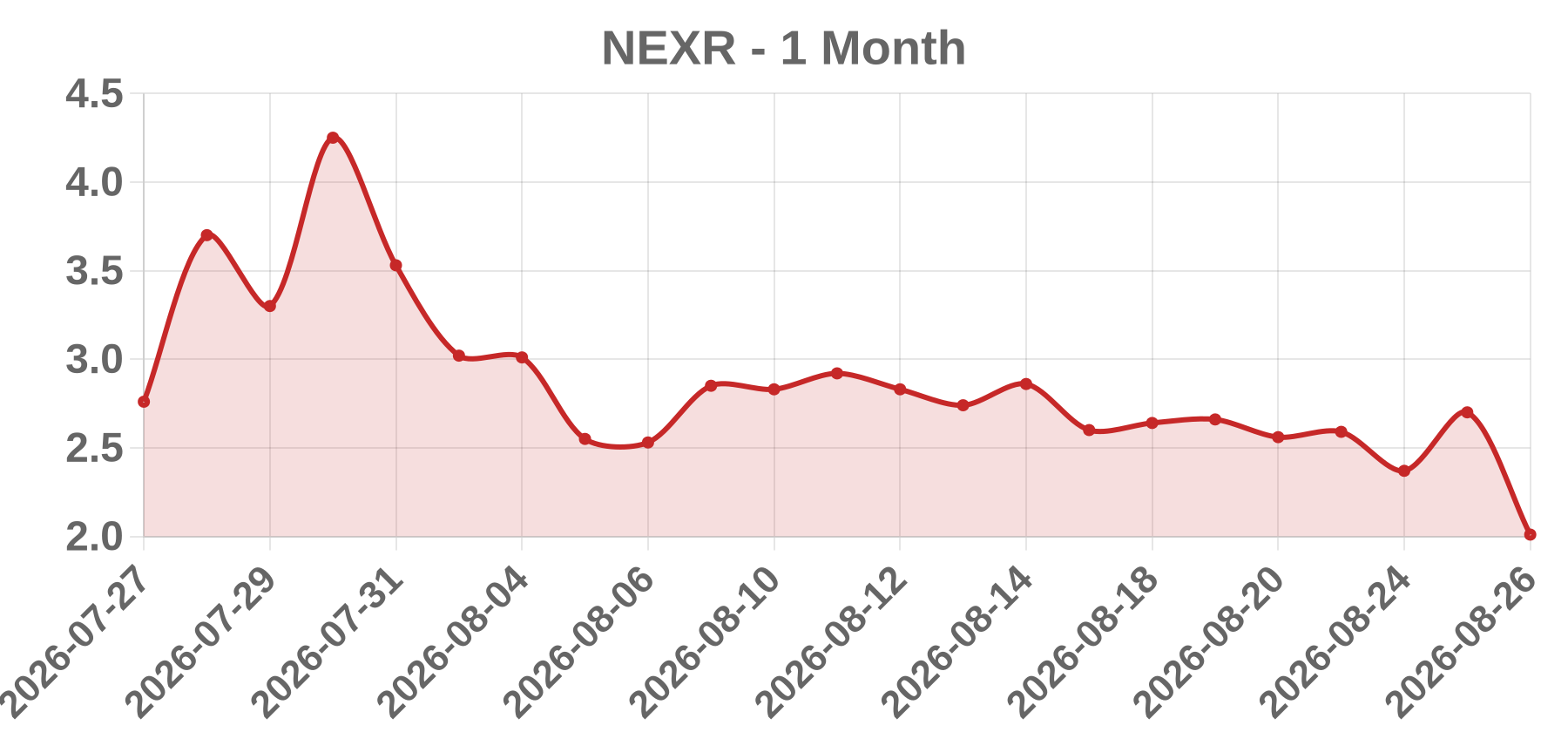
Business Nexera Technologies Ltd (Nasdaq: NEXR), formerly Jeffs' Brands Ltd (renamed March 26, 2026), is an Israeli data-driven company operating e-commerce on the Amazon Marketplace while expanding into homeland security (HLS) via AI-driven solutions. Operations run through KeepZone AI Inc., ~70.19%-owned Fort Technology Inc. (TSXV: FORT / Nasdaq: FRTT), and legacy Amazon e-commerce (Smart Repair Pro, Top Rank).
Today’s take On Aug 26, 2026 Nexera announced that its majority-owned subsidiary Fort Technology formally closed its acquisition of a 50.1% stake in Logia USA, a US fuel-integrity solutions provider for data centers. The deal was met with a sharp sell-off rather than enthusiasm: Fort issued only 132,603 new shares valued at ~$125,000 and committed a $2.0M unsecured 6% credit facility, while an equity-rebalancing mechanism can reduce Fort's stake if sales/profit thresholds are met. Investors viewed this as small-scale and dilutive, especially since parent Nexera (~70.19% of Fort) carries TTM revenue of $16.8M, a ~$3.7M net loss, only $1.64M cash, and a ~$1.1M market cap with 557K shares after the 1-for-11 reverse split on July 31, 2026. The stock fell 25.56% to $2.01, marking a fresh 52-week low with no support from a flat NASDAQ, confirming a purely company-specific, event-driven decline.
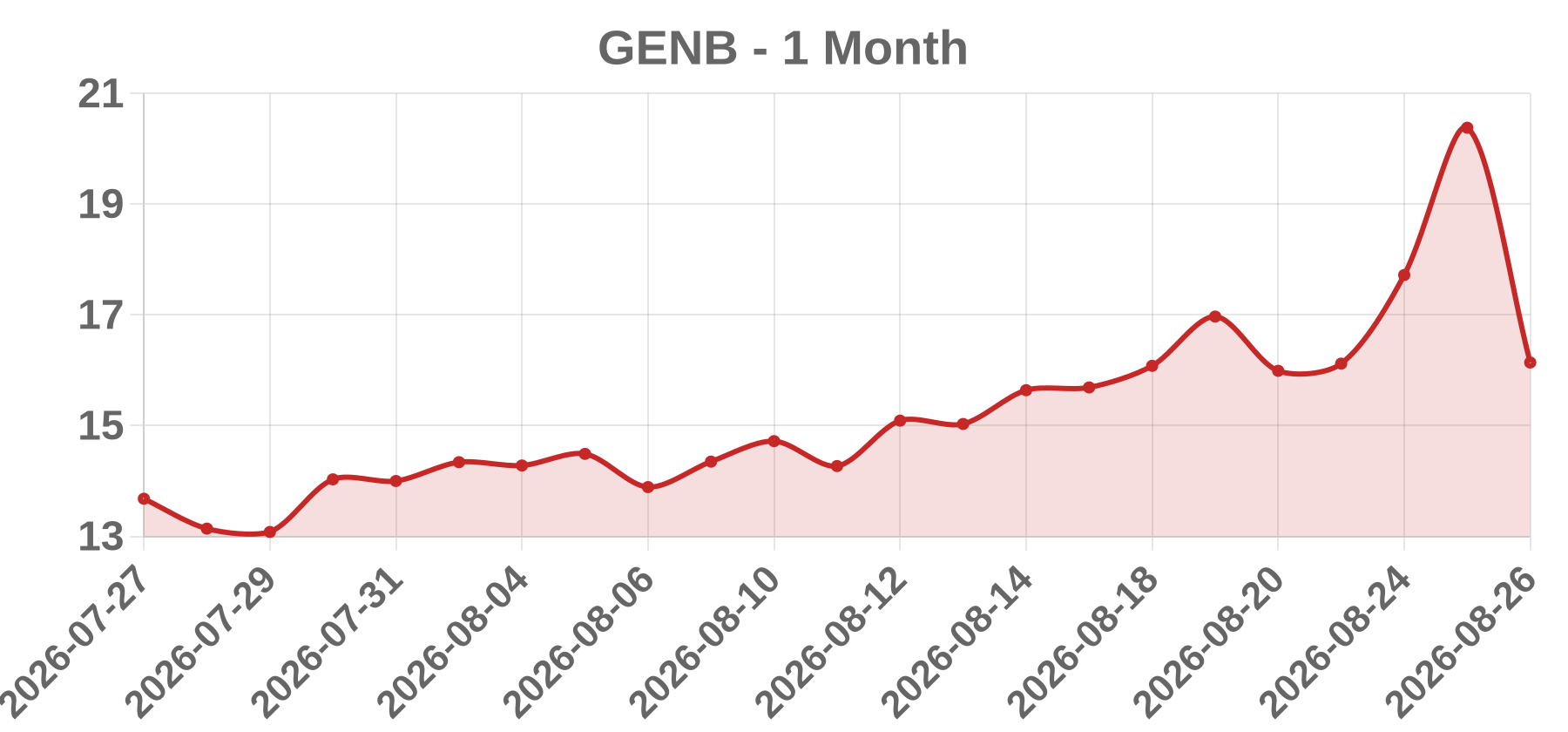
Business Generate Biomedicines, Inc. (NASDAQ: GENB) is a clinical-stage generative biology company founded in 2018 and headquartered in Somerville, Massachusetts, pioneering AI-driven drug design via its Generate Platform combining generative machine learning models (including the diffusion-based Chroma) with high-throughput experimental biohardware. Its lead candidate GB-0895 is an AI-engineered long-acting anti-TSLP antibody for severe asthma (Phase 3) and COPD (Phase 1b), alongside earlier-stage GB-4362 (MMAE neutralizer) and GB-5267 (MUC16 armored CAR-T).
Today’s take GENB fell 20.8% to close at $16.14 on Aug 26, 2026, its largest single-day decline since its Feb 27 IPO at $16.00. The primary catalyst was the expiration of the post-IPO lock-up, releasing 103.14 million shares (80.4% of the 128.27M outstanding, worth ~$1.68B) into the float — roughly quadrupling freely tradable shares and triggering heavy supply-overhang selling. The stock had surged +26.4% over Aug 21 ($16.12) to Aug 25 ($20.38, +15.01%) on positioning ahead of layoff and anticipation of the Sep 8 GB-0895 ERS data. A secondary catalyst was the premature Aug 25 8-K disclosure of positive Phase 1 posters for GB-0895 (a 300mg dose with ~98-day half-life supporting once-every-6-month dosing), which fed a sell-the-news unwind. On Aug 26 shares opened at $20.00, hit $20.14, then collapsed to $15.93, erasing the entire run-up and settling just 1.6% above IPO price. Volume of ~3.8M shares was roughly 4.2-4.5x the ~900K three-month average. Despite the drop, 6 S&P Global-tracked analysts rate it a Strong Buy, average target $25.60 (range $22-30). Q2 2026: collaboration revenue $6.3M, net loss $67.3M, H1 cash burn $138.3M, with $457.4M cash funding operations into H1 2028.
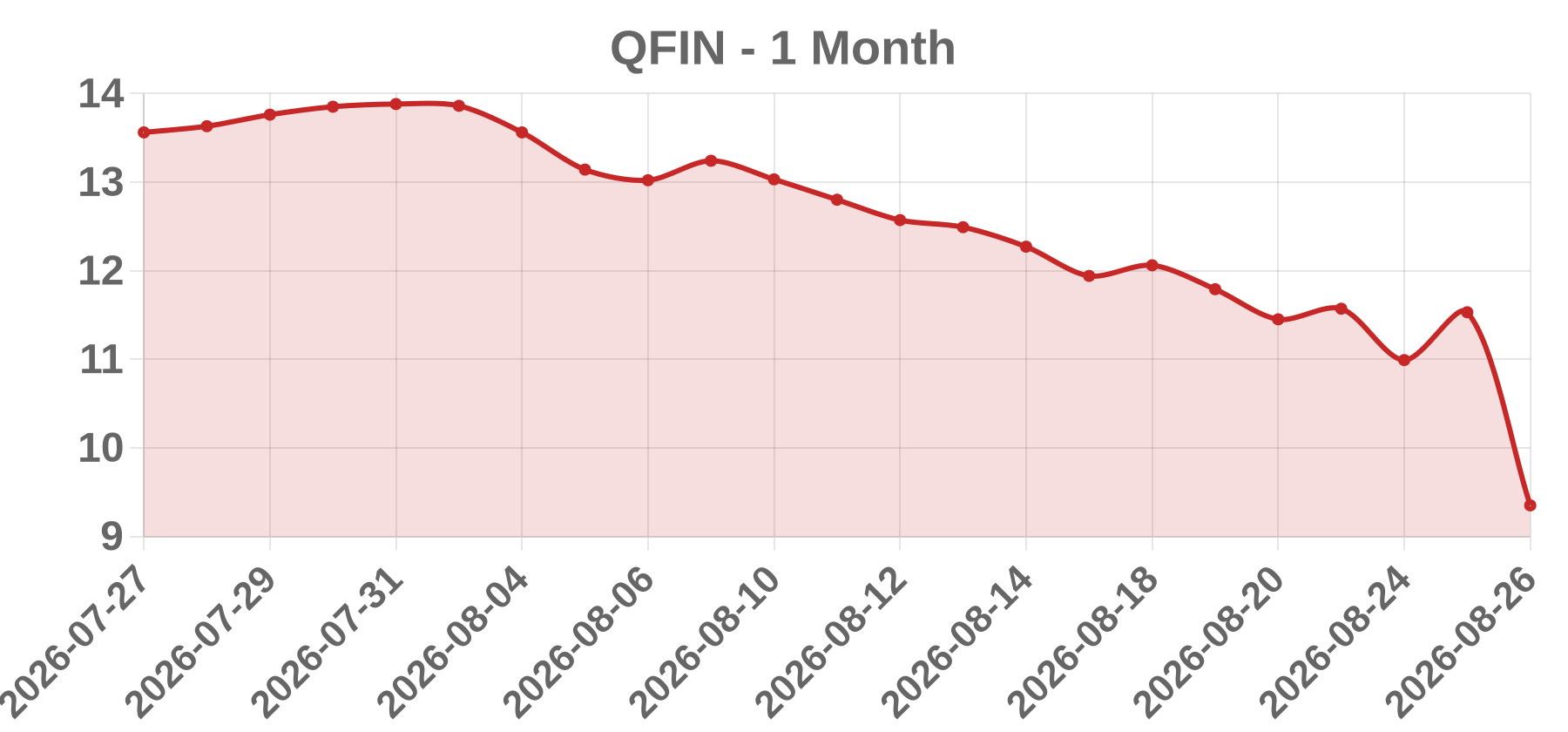
Business Qfin Holdings, Inc. (NASDAQ: QFIN) is an AI-driven credit-technology platform operating under the Qifu Jietiao brand in China. The company matches borrowers with financial institutions, providing borrower acquisition, credit assessment, fund matching, and post-facilitation services. It generates revenue through credit-driven services and platform services, trading as a sponsored ADR on the Nasdaq Global Select Market.
Today’s take Qfin plunged 18.91% to $9.35 on Aug 26, 2026 after reporting Q2 2026 results that showed total net revenue fell 31.6% YoY to RMB 3.567 billion (~US$525.6M), missing consensus, while net income collapsed 76.8% YoY to RMB 405.9 million. Management cited continued industry contraction, tighter regulatory oversight, and a sudden industry-wide liquidity shock in late June. Weak Q3 2026 non-GAAP net income guidance of RMB 360-460M implies a 67-73% YoY decline. A cascade of same-day analyst downgrades amplified the selloff: Morgan Stanley cut to Equal Weight (PT $25→$13), Citigroup downgraded to Sell (PT $30.10→$8.00), JPMorgan cut to Underweight (PT $14→$9), and Jefferies trimmed its target to $15.40. A reduced semi-annual dividend of US$0.46/ADS also pressured sentiment. Volume surged to 11.3M shares vs. roughly 1-1.5M average, reflecting an 8-10x spike as trapped longs exited.
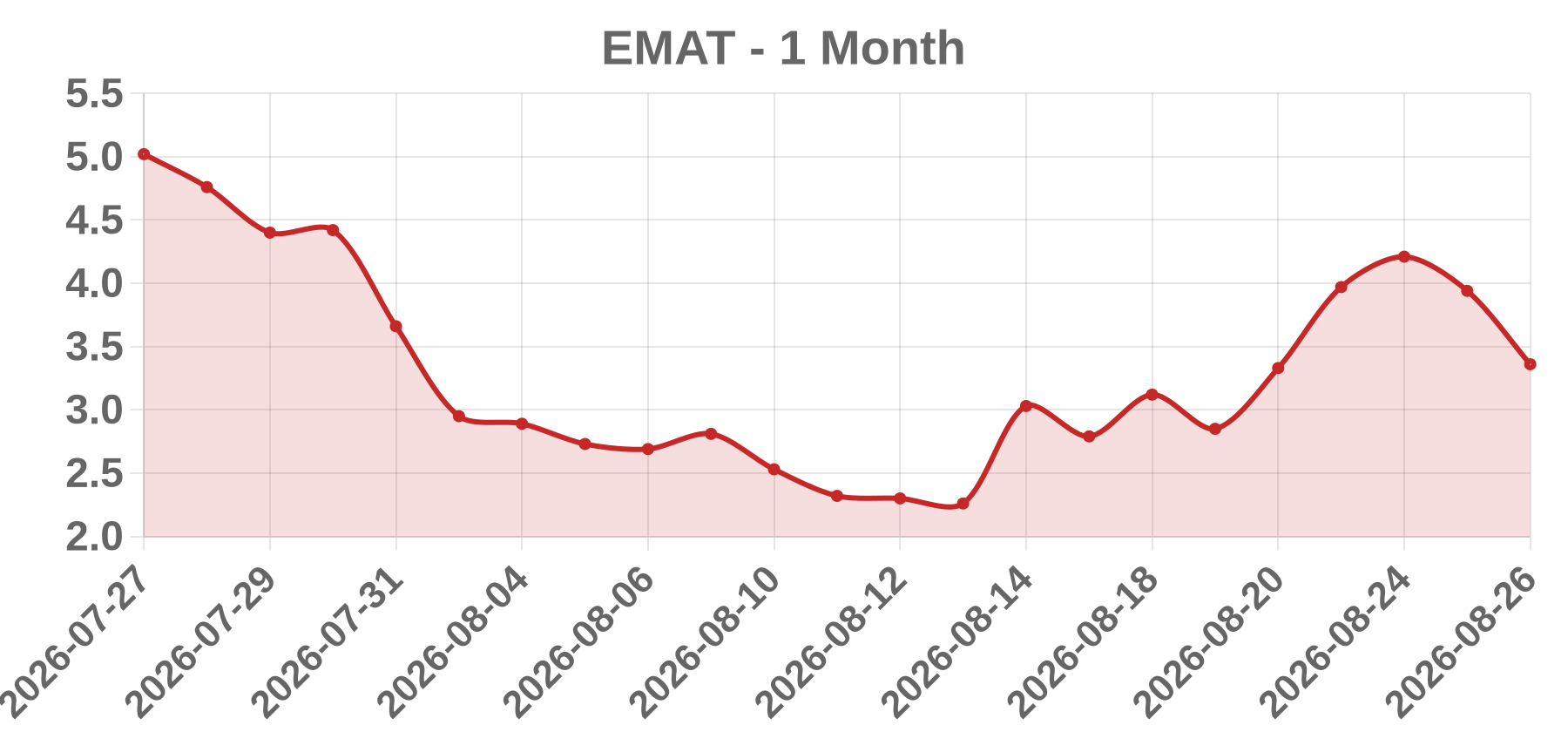
Business Evolution Metals & Technologies Corp. is a U.S.-based critical materials and advanced manufacturing company (Nasdaq: EMAT, Delaware) formed via the January 5, 2026 business combination of Welsbach Technology Metals Acquisition Corp. and Evolution Metals LLC. It operates an integrated platform that recycles end-of-life materials and refines/crafts rare earth permanent magnets, battery metals, and related critical minerals for a secure non-China U.S. supply chain.
Today’s take EMAT plunged -14.72% to $3.36 on Aug 26, extending two consecutive heavy down days after an Aug 24 TipRanks/filed disclosure that $25.8M of Yorkville convertible debentures were outstanding ($20M still undrawn), with an explicit need for more financing. This dilution overhang, tied to a $100M convert deal allowing resale of up to 5.4M shares, overshadowed the Aug 24 Russell 3000/2000 preliminary-inclusion news. Fundamentals worsened after Q2 (reported Aug 17): H1 2026 net loss ballooned to $452.22M (vs $58.89M yr ago) on only ~$3.52M revenue, with cash of just $5.25M and a stockholders' deficit of ~$24.6M, raising Nasdaq/going-concern risks. The stock had already fallen -6.41%/7.6% on Aug 25, and converted Yorkville shares selling into the market on Aug 26 drove the additional -14.72% slide.
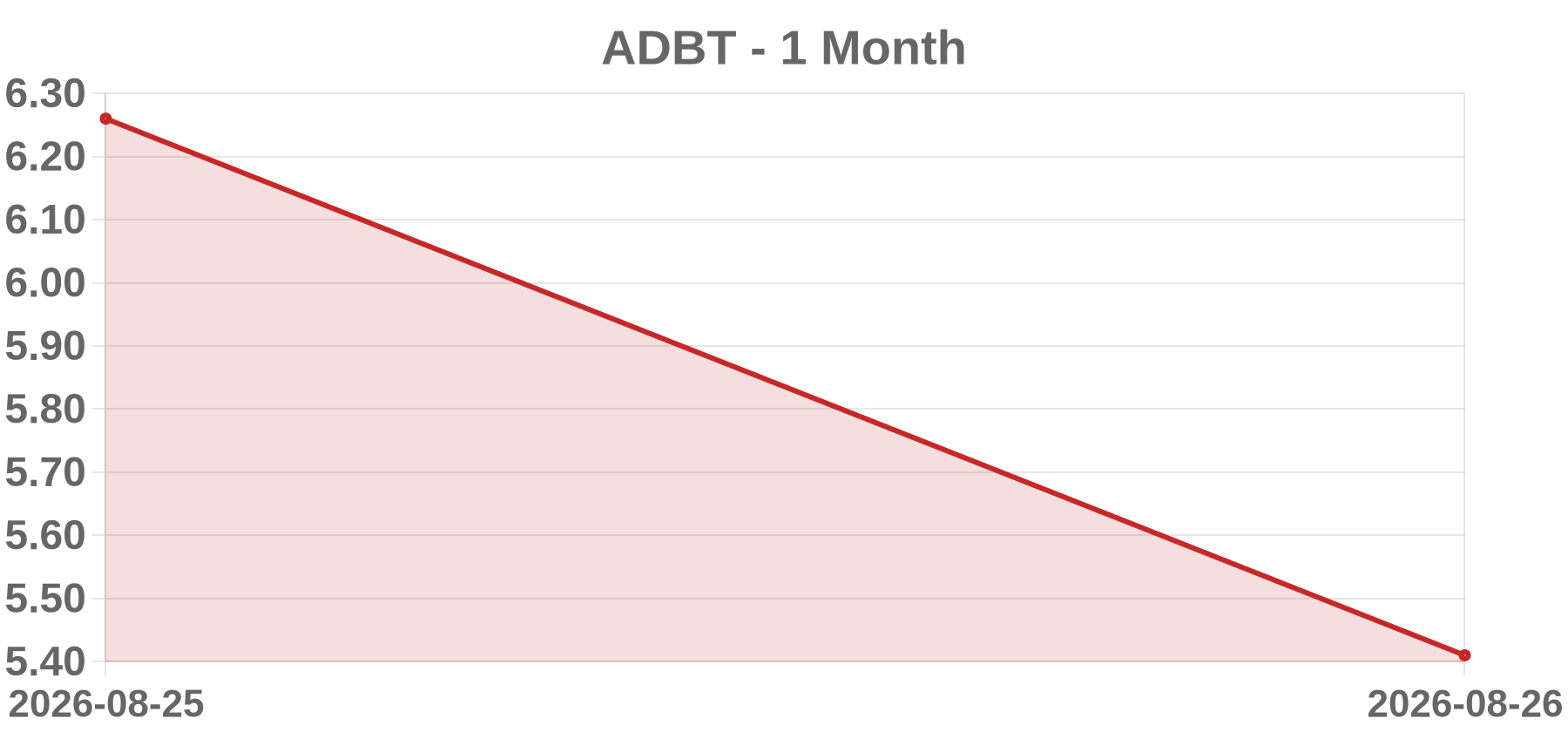
Business Advasa Holdings, Inc. (Nasdaq: ADBT) is a Delaware-incorporated fintech payment holding company operating through Japanese subsidiary ADVASA Co., Ltd. of Tokyo. Its core patented product, the FUKUPE platform, is an Earned Wage Access (EWA) solution that lets employees withdraw already-earned wages in real time, integrating with HR/payroll systems, wallets, cards and bank accounts.
Today’s take The -13.58% close to $5.41 on 2026-08-26 reflects continued post-listing price discovery, not a discrete news catalyst. ADBT only began trading via a Nasdaq Global Market direct listing on August 25, 2026 (Day 1), when the stock opened at $12.00, spiked to $13.20, plunged to $3.89, and closed at $6.26 (-47.8% from open). On the close date (Day 2), it opened at $5.19, ranged $4.93-$5.62, and slid to $5.41, extending the decline from the $6.26 prior close. Because a direct listing has no firm-commitment underwriters and no stabilization, the price must find equilibrium in the open market with no analyst coverage or price target. The valuation stress is extreme: a market cap of $2.64B against trailing revenue of just $18.67M (Price/Sales ~141x; trailing PE ~2,694x), with cash of only ~$1.70M. A March 2026 private placement was priced at $10/share and the stock now trades well below that. Volume of 514,610 vs a 20-day average of 818,004 was thin given only two trading sessions, so no short-squeeze or accumulation pattern is evident.
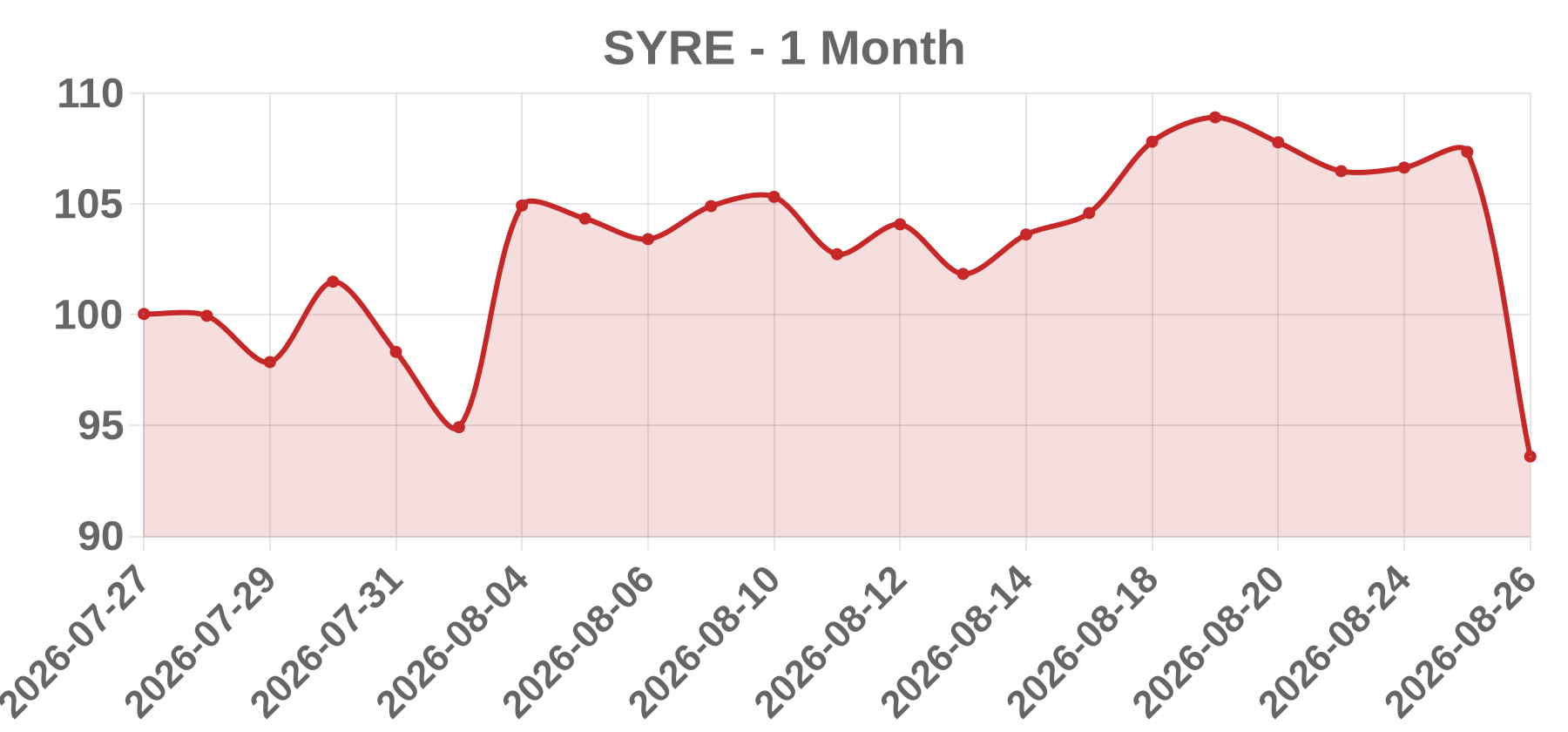
Business Spyre Therapeutics, Inc. is a clinical-stage biotechnology company headquartered in Waltham, Massachusetts, trading on Nasdaq under ticker SYRE. The company develops long-acting (extended half-life) monoclonal antibodies and antibody combinations for inflammatory bowel disease (IBD), rheumatic and other immune-mediated diseases, with its pipeline targeting α4β7, TL1A, and IL-23 pathways.
Today’s take SYRE plunged -12.81% to $93.74 on 8/26/2026 after Spyre disclosed (post-close 8/25) Phase 2 SKYWAY RA sub-study topline data for SPY072 (anti-TL1A). In the 143-patient, 12-week trial, only the low dose hit statistical significance on the primary endpoint (DAS28-CRP reduction of 1.9 vs 1.3 for placebo, p<0.05), while the high dose missed. The effect size fell short of Spyre's internal bar, prompting the company to forgo SPY072 monotherapy development in RA and pivot to psoriatic arthritis and axial spondyloarthritis (Q4 2026 readouts) plus combination settings. The stock, which had rallied ~228% YTD to a >$9B market cap, fell roughly 14% in after-hours, gapped down, and closed -12.8%. Multiple analysts cut targets on 8/26: Wedbush to $123 (from $130), Deutsche Bank to $127 (from $135), BTIG to $121 (from $132). Leerink and Stifel called the RA data disappointing but maintained that Spyre's core IBD combination thesis remains intact.
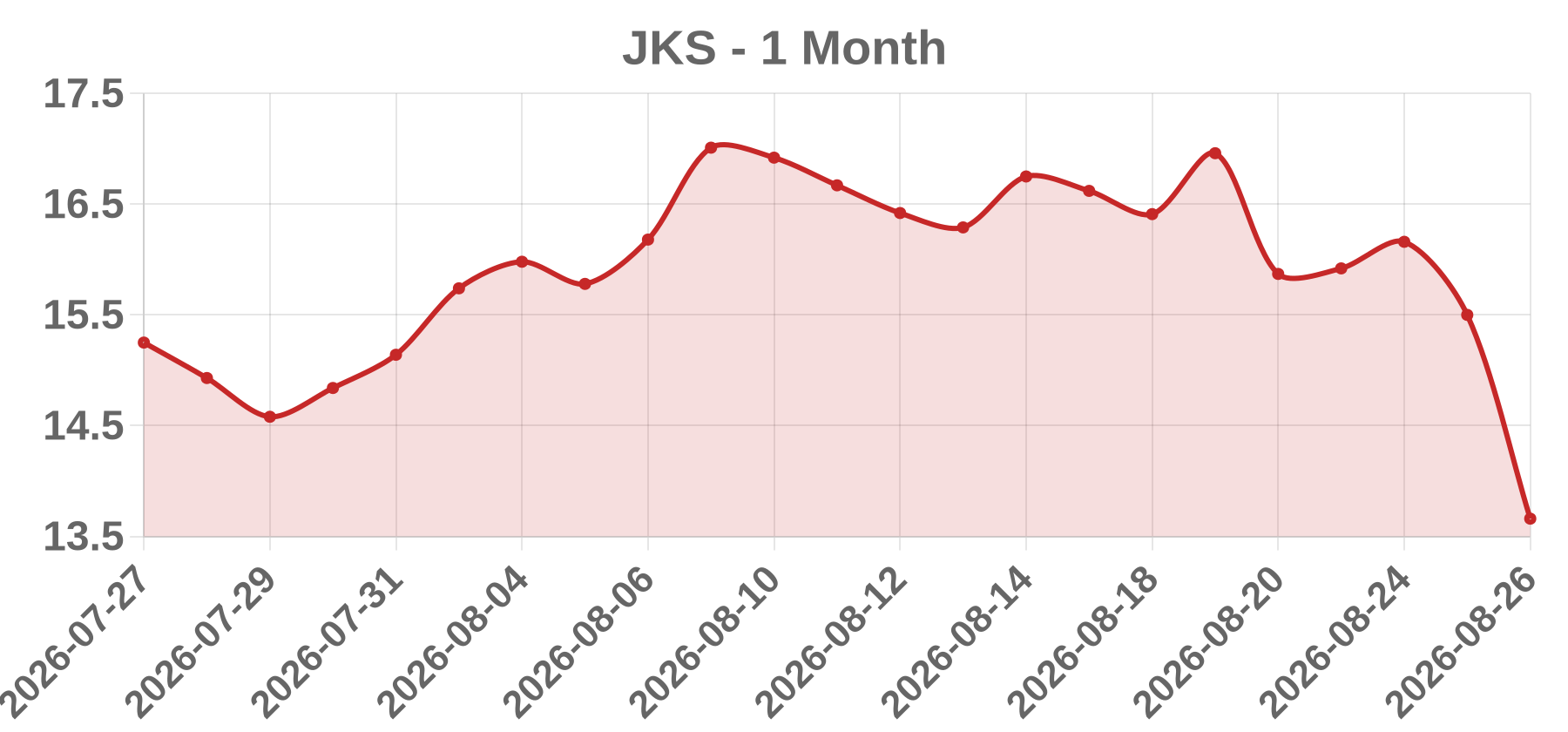
Business JinkoSolar Holding Co., Ltd. (NYSE: JKS), trading as American Depositary Shares (4 ADS per ordinary share), is one of the world's largest solar module manufacturers. It designs, develops and sells high-efficiency TOPCon 'Tiger Neo' solar modules, energy storage systems (ESS) and related solutions to utility, commercial and residential customers across China, the US, Europe, Asia and other global markets.
Today’s take JKS fell 11.87% to $13.66 on 8/26/2026, hitting a fresh 52-week low (intraday $13.08), after reporting Q2 2026 results that badly missed consensus. The company posted an EPS loss of RMB13.19 per ADS versus the -RMB6.09 consensus (a ~RMB7.10 miss, ~$1.78 per ADS on a USD basis), with revenue of RMB12.36B (~$1.82B), down 31.3% YoY and roughly 21% below the estimated RMB15.73B. Gross margin compressed to 4.2% (from 8.3% in Q1 2026), net loss widened to RMB697.3M and operating loss margin hit 11.6%. The company cut FY2026 module shipment guidance to 60-70 GW from 75-85 GW, prioritizing profitability over volume, while flagging China utility demand weakness (down 30-40% YoY). CEO Xiande Li resigned and Wei 'Dimi' Du was appointed CEO the same day, adding leadership-transition uncertainty to an already bearish day. The moves reflect a broad solar supply glut and pricing pressure across the PV complex.
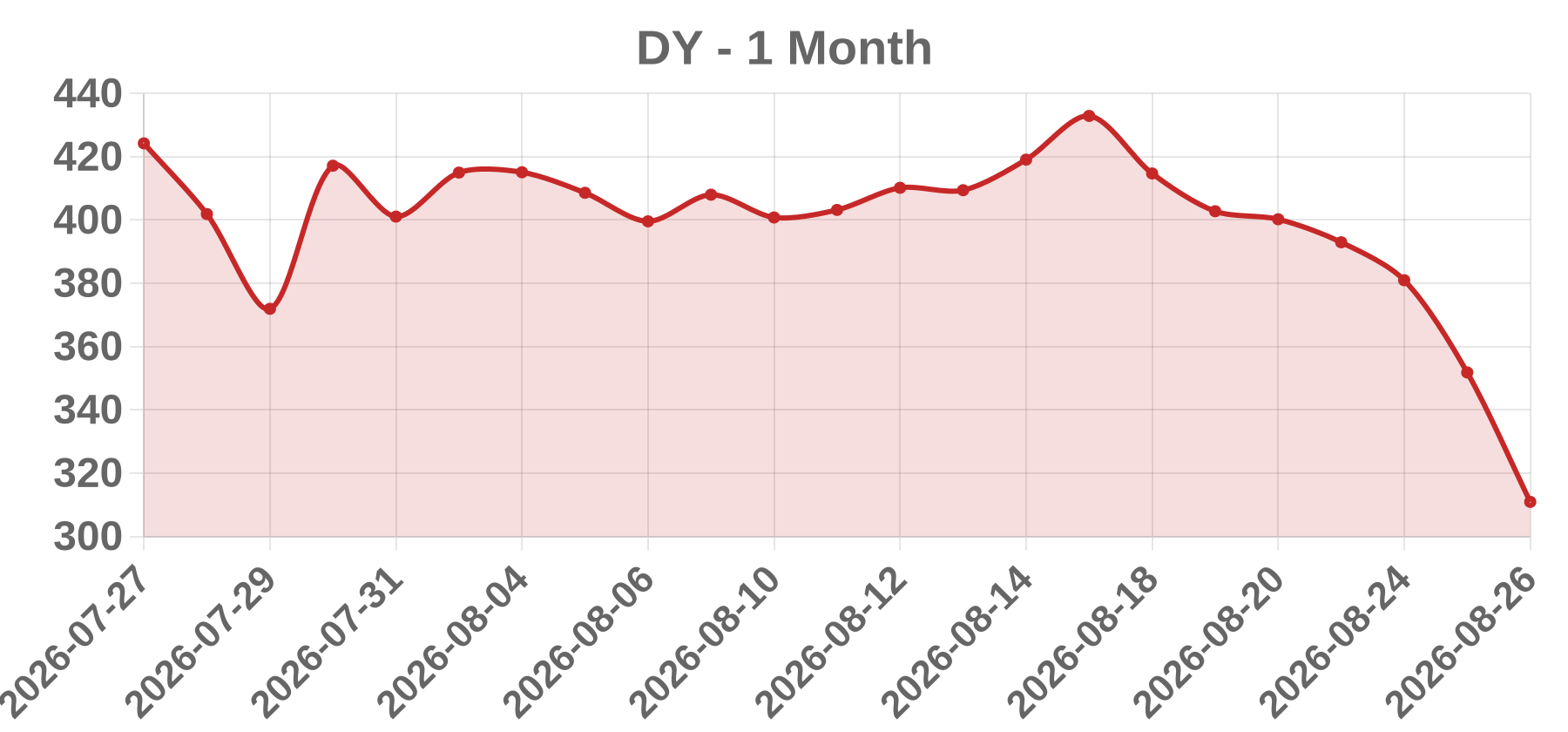
Business Dycom Industries, Inc. (NYSE: DY) is a leading provider of specialty contracting services to the telecommunications infrastructure and utility industries throughout the United States. The company operates in two segments: Communications (fiber construction, engineering, wireless) and Building Systems (electrical contracting for data centers and utilities).
Today’s take Dycom fell 11.62% (-$40.89 to $310.91) on August 26, 2026 after reporting record Q2 FY2027 results that beat estimates but guided fiscal Q3 below consensus — a classic 'beat the quarter, miss the guide' selloff. Q2 contract revenue of $2.006B (+45.6%, +16.7% organic) topped the ~$1.98B estimate, and adjusted EPS of $5.29 beat ~$4.68–4.72 consensus. Backlog hit a record $12.242B (+53.2%), and the company raised full-year revenue guidance to $7.48–7.66B. However, management guided Q3 adjusted EPS of $4.33–4.79 (midpoint $4.56, below ~$4.72–4.79 consensus) and Q3 revenue of $1.90–1.98B. Approximately $150M of wireless program revenues were deferred from FY2027 into FY2028, and Communications segment EBITDA margin declined 134 bps to 13.6% on scaling investments, wireless deferrals, and higher fuel costs. Despite record results, investors focused on near-term deceleration and valuation concerns (stock traded near $535 in May 2026), driving heavy selling on volume ~4.8x the daily average.