US common stocks / ADRs: top 10 by volume; top 10 gainers (by % change, volume as tie-breaker); top 10 losers (by % change, prefer liquid names). Deep notes cover the de-duplicated set across the three boards.
30 names on this page · volume 10 · gainers 10 · losers 10
Order: volume board → gainers → losers; each ticker appears once. Summaries of public information only — please verify primary sources.
1/10SPCX SPCX
-4.05%
Close 134.00 · Vol 119.81M · Type: Other
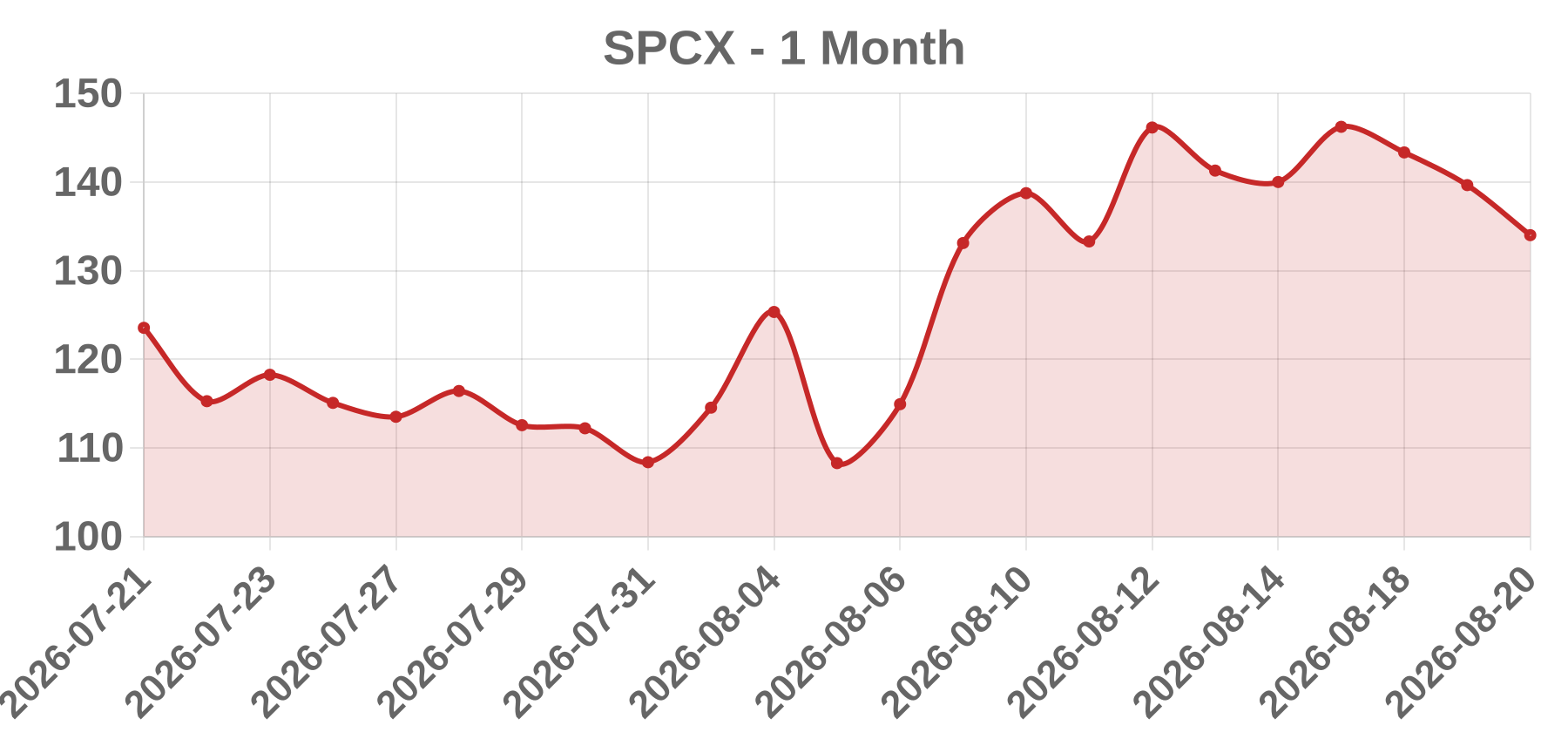
Approx. 1-month price (illustrative)
Business Space Exploration Technologies Corp. (SpaceX), based in Starbase, Texas, is an aerospace & defense company founded in 2002 and led by CEO Elon Musk. It designs and launches reusable rockets (Falcon 9, Falcon Heavy, Starship) and Dragon spacecraft, operates the Starlink low-Earth-orbit satellite broadband network, and runs a vertically integrated AI platform (Grok, X). The Class A shares trade on NASDAQ (SPCX) following a June 12, 2026 IPO priced at $135.
Today’s take SPCX fell 4.05% (-$5.65) to $134.00 on Aug 20, closing below its $135 IPO price for the first time since the June debut (intraday low $130.39, lowest close since Aug 11). The dominant catalyst was the second post-IPO lockup expiry: ~319M shares (49.9% of the 638.9M sold in the June IPO, ~7% of outstanding) held by employees and early investors became eligible to trade, adding ~$103B of potential supply. Coincident pressures included CEO Elon Musk pushing the next Starship 'catch' back 'a few months' (disappointing the late-August timeline), and DZ Bank initiating coverage with a Sell and $100 target warning of 'crash risk in the valuation orbit.' Partly offsetting were Morgan Stanley's bullish $300 price target (127% upside) and UBS's Buy at $210. Q2 showed revenue up 92% to $7.81B (AI +247.5% to $2.56B) but a $541M net loss and $18.4B capex.
Business Ambev S.A. is the largest brewer in Latin America, producing, distributing, and marketing beer (Skol, Brahma, Antarctica, Corona, Budweiser) along with carbonated soft drinks, water, and the BEES B2B digital marketplace, listed on the NYSE as an ADR with a primary listing on B3.
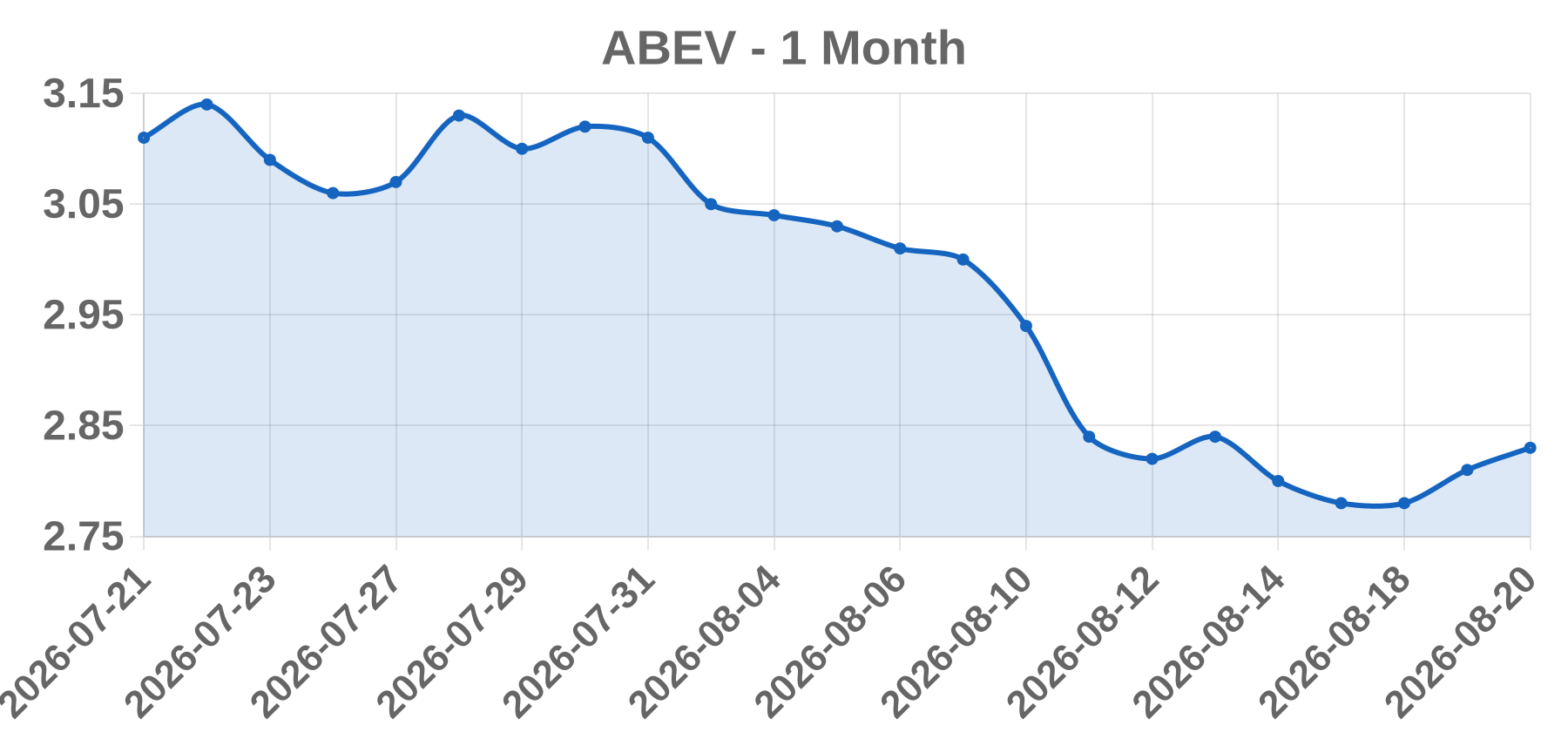
Today’s take On Aug 20, 2026 ABEV closed at $2.83 (+0.71%) on volume of 107.9M shares, ~3.7x its ~27-29M average and the largest session of 2026 (at 14:50 EDT 95.7M ADRs had traded, 3.3x the 10-day average). The price barely moved despite the surge, indicating non-directional block/positioning rather than conviction buying. The catalyst was structural: on Aug 13 Ambev cancelled 279M treasury shares (~1.8% of capital, cutting the base to 15.485B shares) and closed its 208M-share buyback after hitting the limit. Day volume equaled ~34% of the cancelled block, suggesting index/benchmark rebalancing and ADR-related positioning. Q2 2026 (Jul 30) was solid — net revenue R$20.15B (+6.1% organic), normalized EBITDA R$6.38B (+8.9%, margin 31.6%), normalized profit R$3.49B (+23.3%) — but analysts hold a consensus Hold (PT $3.33-3.34). UBS reiterated Sell ($2.85 target) on Aug 11 while Evercore holds Buy ($4.00).
Business NVIDIA Corporation (NASDAQ: NVDA) is the world's leading designer of programmable graphics processors (GPUs) and AI computing platforms, headquartered in Santa Clara, California. It is the most valuable company globally with a market capitalization above $5 trillion, powering AI data centers, autonomous vehicles, and accelerated computing.
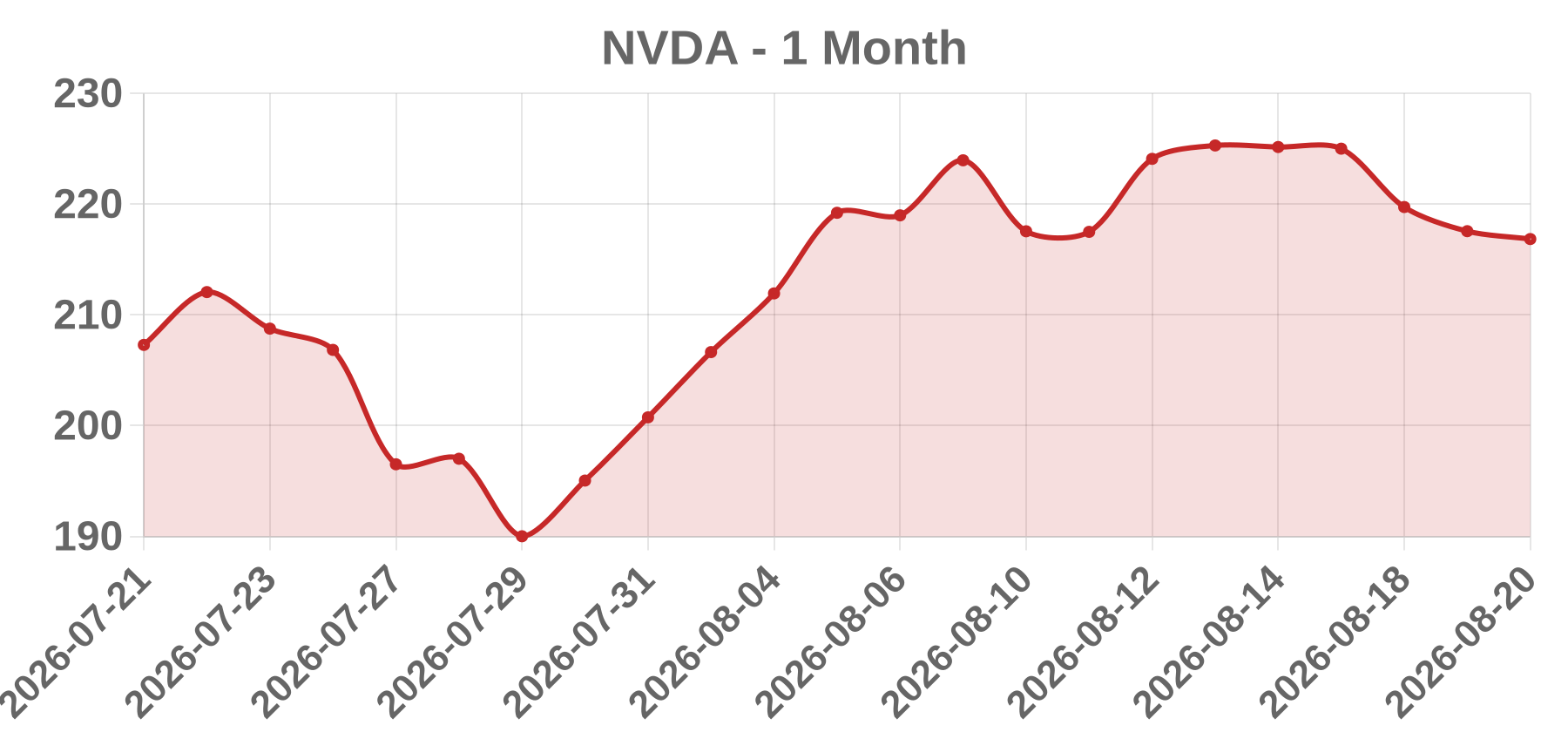
Today’s take NVDA closed at $216.85 on Aug 20, 2026 (-0.33%), as the market braced for its fiscal Q2 2027 earnings due Aug 26 after the close. The company guided to ~$91.0B revenue, while consensus sits near $91.96B (+~97% YoY), with adjusted EPS around $2.07-2.09. Analyst support remained strong ahead of results: RBC Capital (Outperform, $300 PT), Oppenheimer (Outperform, $265), Stifel (Buy, $282) and BofA (Buy, $350). Concurrently, FT reported H200 chips reaching ByteDance and Tencent (~10,000 each), but Wedbush noted the China return may barely move revenue due to regulatory limits; KeyBanc estimated ~1.5M H200 units could generate ~$30B. The stock also faced a headwind from the 30-year Treasury yield climbing to ~5.33% (19-year high), pressuring high-multiple AI names, and OpenAI's disappointing Q2 results weighed on the semiconductor complex. Insider selling of ~$1.7B over the past year added caution, leaving the stock ~7.9% below its 52-week high heading into a high-hurdle 'beat-and-raise' report.
Business Intel Corporation (NASDAQ: INTC) is a US-based semiconductor designer and manufacturer producing processors for data center/AI, client computing, and edge/networking, and operates Intel Foundry, a contract chip-manufacturing arm competing with TSMC and Samsung. It is a member of the S&P 500 and SOXX.
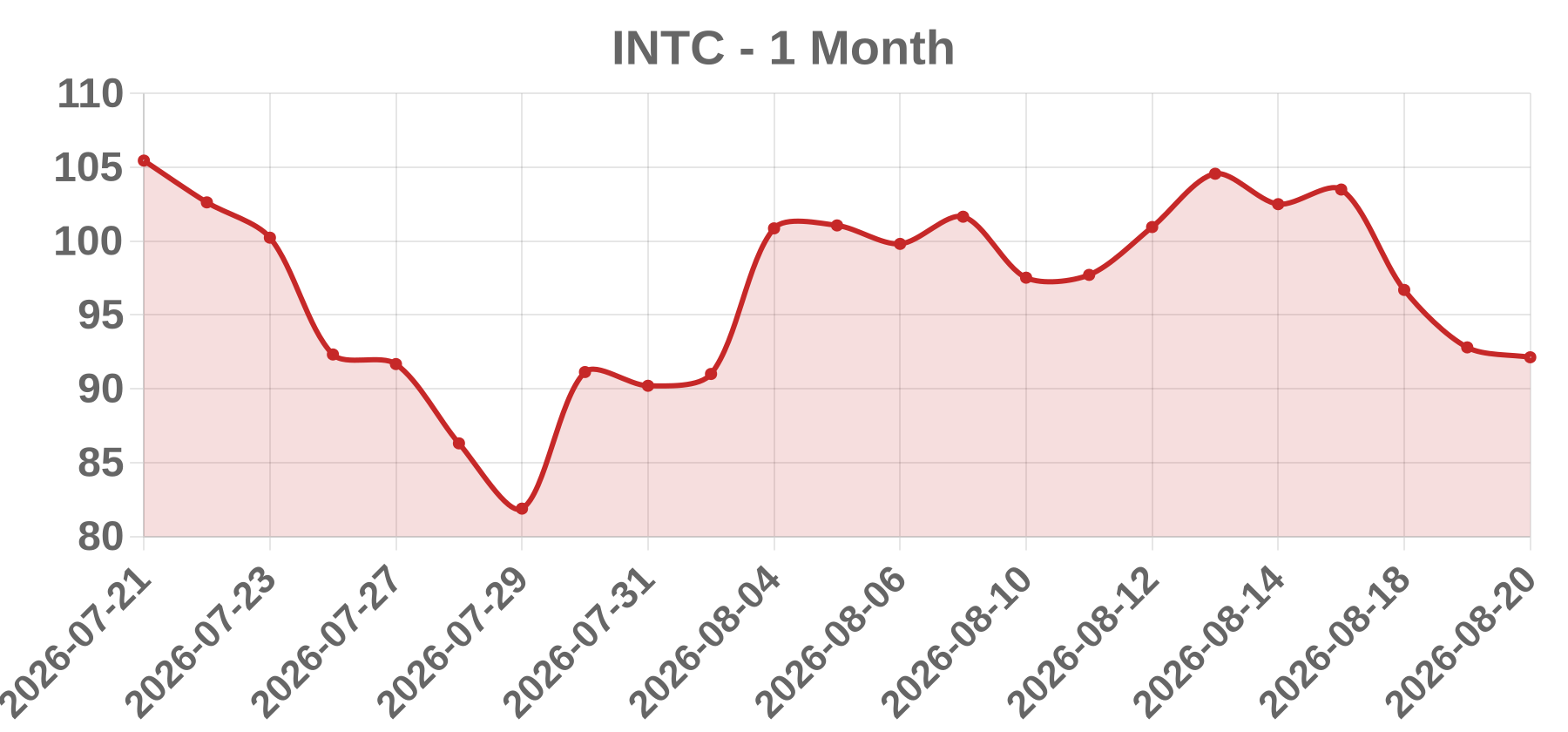
Today’s take Intel closed at $92.13 on Aug 20, 2026, down $0.67 (-0.72%), weighed by the aftermath of its record $20B equity offering priced at $95/share (upsized from $15B, sellable up to ~$23B with the underwriters' 31.6M-share option). After closing below the offer price for the first time on Aug 19 (-4.02% to $92.80), the stock extended losses intraday on Aug 20, hitting a low of $89.85 before closing at $92.13 — about 3% below the offering price, leaving deal participants underwater and underscoring ~4-4.6% dilution. Same-day catalysts included a positive Socionext 18A-P foundry win (first external performance-node customer), offset by reports that Nova Lake and Razor Lake CPUs will lean more on TSMC 2nm (N2P/N2X), undermining the foundry thesis, plus a broader semiconductor risk-off tape. 13F filings (Aberdeen -9.9% stake cut in Q2; SoftBank's 67% concentration) added noise. The stock sits ~35% below its June 30, 2026 52-week high of $142.35.
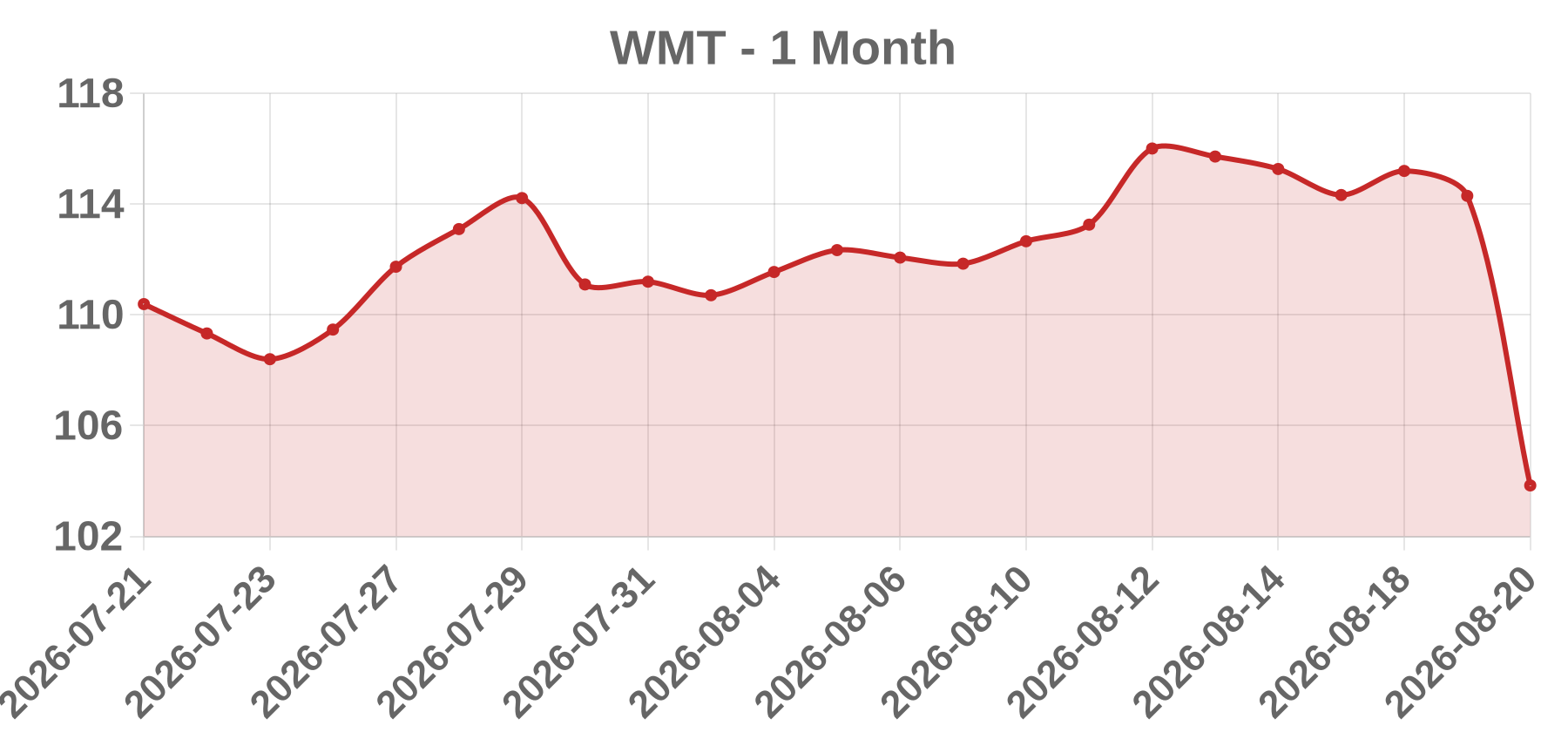
Business Walmart Inc. is a people-led, tech-powered omnichannel retailer listed on NASDAQ (WMT), operating three segments: Walmart U.S., Walmart International, and Sam's Club U.S. It runs more than 10,900 retail units and e-commerce platforms across 19 countries, with FY2026 revenue of approximately $713 billion and roughly 2.1 million employees worldwide.
Today’s take Walmart reported Q2 FY2027 earnings on Aug 20, 2026, beating headline estimates (EPS $0.81 vs $0.74 est; revenue $187.94B vs ~$186.6B est) yet the stock plunged 9.15% — its steepest one-day drop since July 2022. The trigger was U.S. comparable sales growth of only 2.6% versus ~3.7-3.8% consensus, the slowest rate since late 2020. Management attributed ~80 bps of the drag to mandatory Medicare prescription drug price reductions, and warned the full-year comp headwind could reach ~125 bps. Additionally, ~$2.9B of quarterly earnings came from federal tariff refunds rather than core operations, raising earnings-quality concerns. Q3 EPS guidance of $0.62-$0.64 and full-year EPS of $2.80-$2.87 both trailed sell-side expectations. Rising oil prices (gas above $4/gallon) and higher 30-year Treasury yields pressured consumer spending and defensive valuations. Post-report, BofA cut its price target to $126 from $144 (Buy maintained); Gordon Haskett downgraded WMT to Accumulate from Buy. Consensus remains Buy with a mean target near $136.
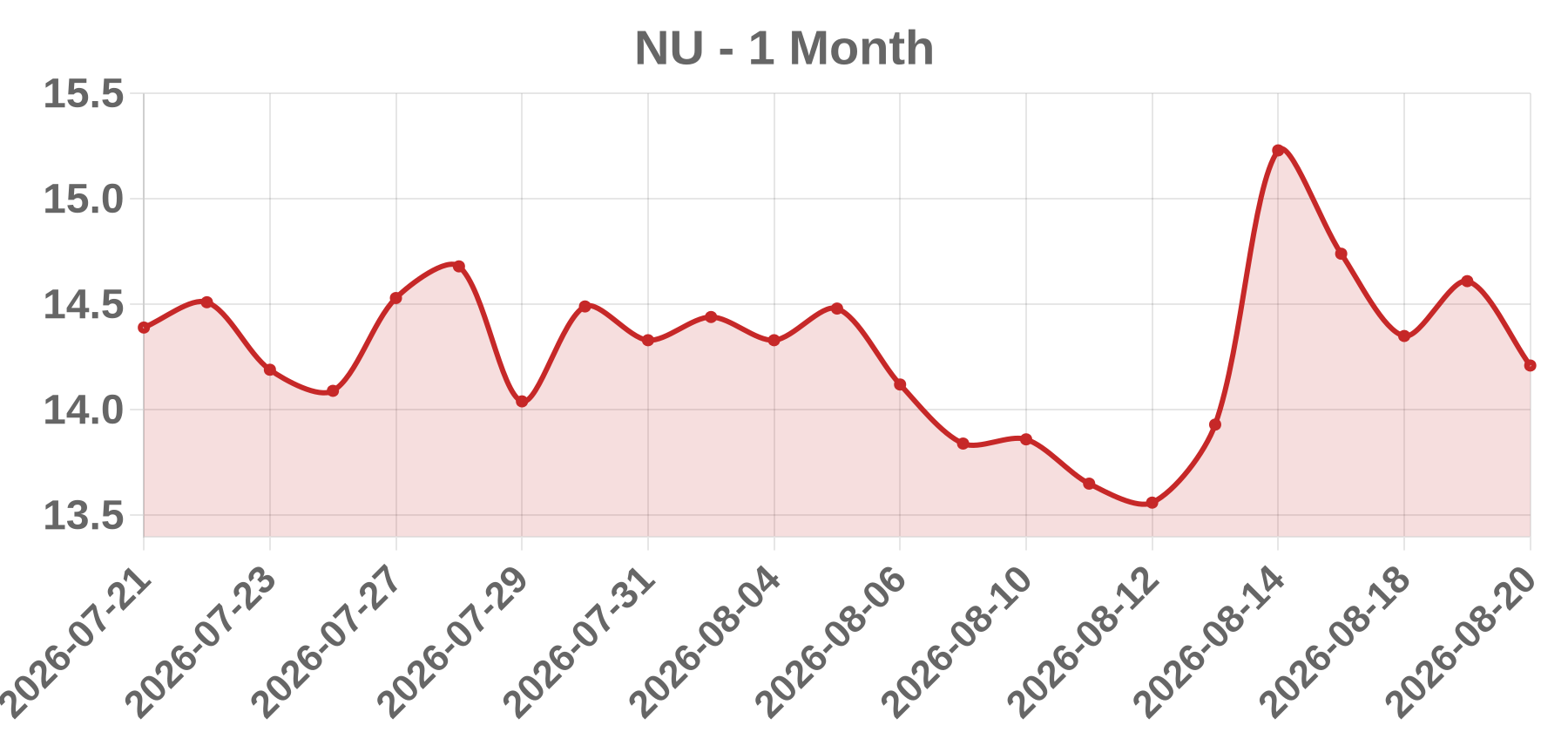
Business Nu Holdings Ltd. (NYSE: NU) is a leading Latin American digital banking and fintech platform, with nearly 139 million customers across Brazil, Mexico, and Colombia, offering digital accounts, credit cards, loans, and investment products through a fully digital operating model.
Today’s take On August 20, 2026, Nu Holdings fell 2.74% to close at $14.21 (down $0.40), extending a post-earnings pullback. The decline was driven primarily by a broad-market risk-off session: the S&P 500 fell 0.87%, the Dow fell 1.32%, and the Nasdaq fell 1.00%, pressured by Walmart's deeply negative reaction to its Q2 report (stock down ~9-10%, its worst day since 2022), weak TJX results, rising Treasury yields, surging Brent crude oil (+2.4%) after U.S.-Iran geopolitical tensions escalated, and a depreciating Brazilian real (-0.32%) that added FX pressure to the LATAM fintech. On the same morning UBS reiterated a Buy rating and raised its price target to $18.20 from $16.90, but this positive catalyst proved insufficient to offset the market-wide selloff. The stock had opened near the prior close ($14.75) and sold off through the session to a low of $14.14. The move continued a familiar pattern of post-earnings profit-taking: after a record Q2 beat (net income $1.06B, +9.6% vs estimates; revenue $5.88B) reported Aug 13, shares surged ~9-14% on Aug 14 to as high as $15.85, then gave back most of those gains over subsequent sessions. Options positioning signaled caution, with the put/call rati
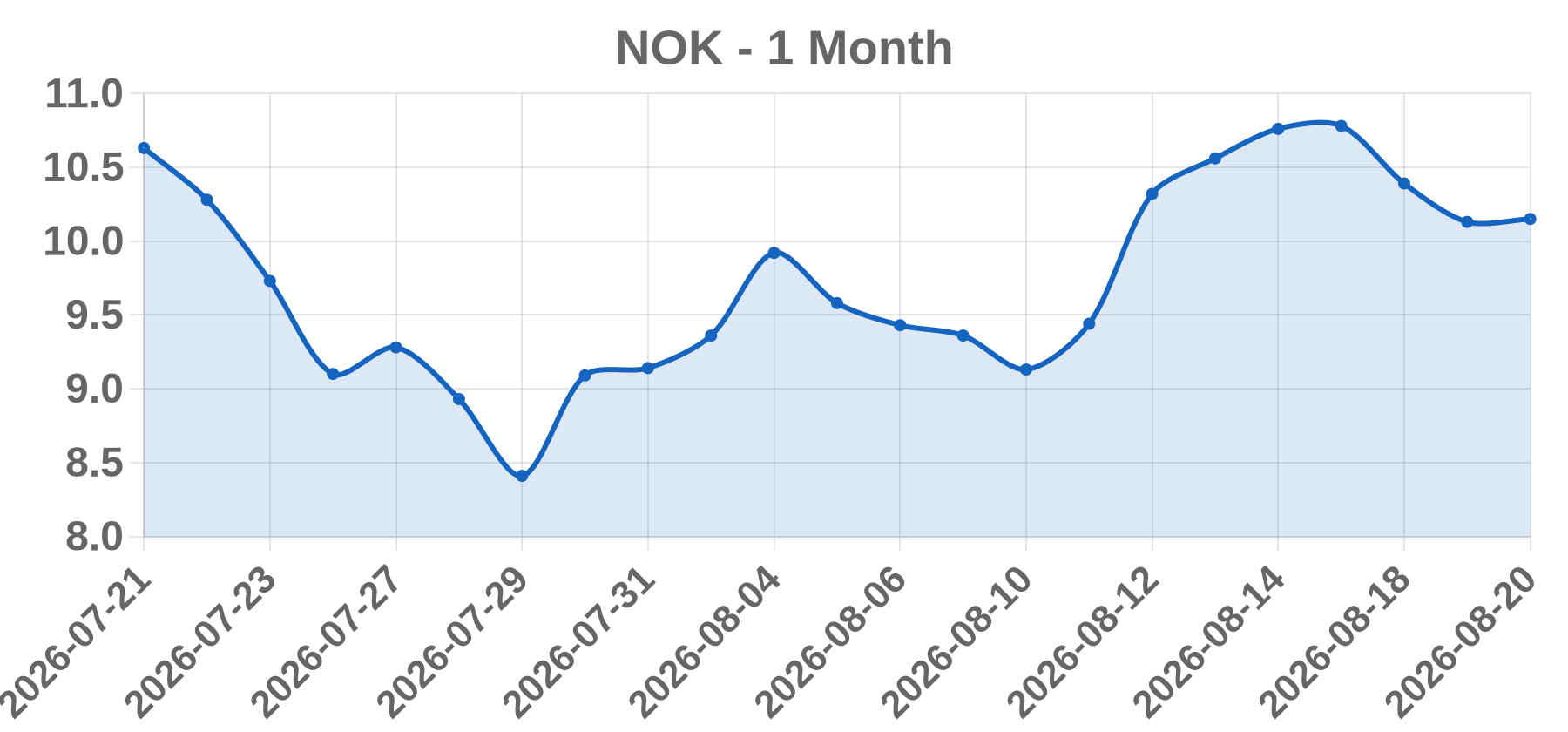
Business Nokia Oyj (also operating as Nokia Corporation) is a Finnish multinational that designs, manufactures, and sells telecommunications and network infrastructure. Its four segments are Mobile Networks (2G–6G RAN), Network Infrastructure (IP, fiber, optical), Cloud and Network Services, and Nokia Technologies (IP licensing). The company is pivoting toward AI infrastructure and optical networking (including the NXP Arizona InP chip fab and an Nvidia AI-RAN collaboration) while scaling back its legacy mainland-China operations.
Today’s take On Aug 20, 2026, NOK closed at $10.15 (+0.20%) after opening at $10.01, ranging between $9.87 and $10.29. The session was a stabilization/bounce following two sharp down days driven by Nokia's confirmed China exit (closing the Hangzhou R&D facility, ~1,600 layoffs, and raising 2026 restructuring guidance to ~€800M, with €350M earmarked for China). Aug 18 fell -3.62% (vol ~108M) and Aug 19 -2.50%. The primary Aug 20 driver was JPMorgan's bullish Aug 19 note (Sandeep Deshpande) reiterating Overweight with an €18 (~$21) target implying ~100% upside. JPMorgan argued the market is too slow to price Nokia's AI/cloud order book (~€2.8B of AI orders in a single recent quarter) supporting stronger 2027–2028 earnings. Co-support came from Omdia naming Nokia No.1 for mobile core portfolio competitiveness for the second consecutive year. The Aug 20 +0.20% move reflects dip-buying on the AI thesis after digesting the China-exit headwind.
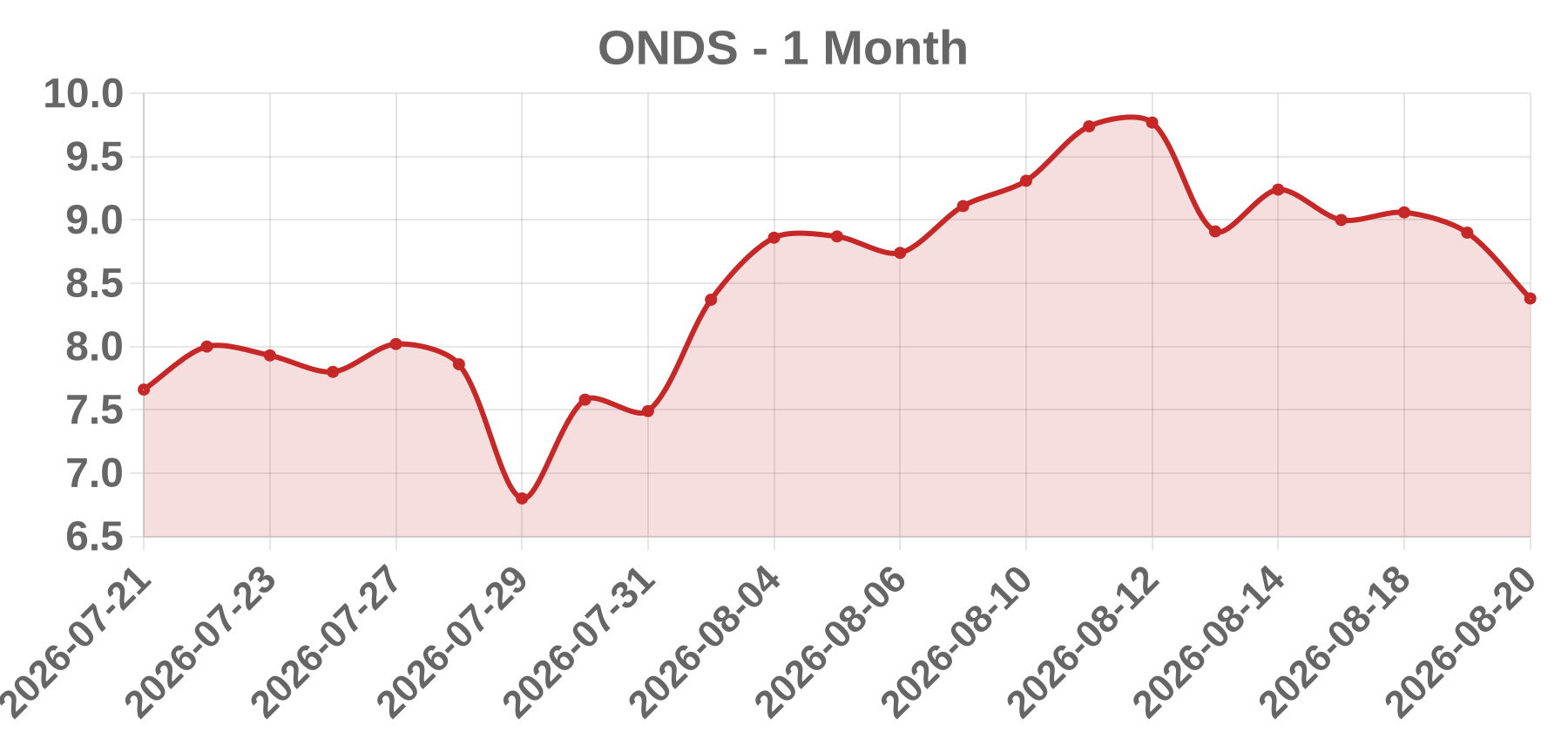
Business Ondas Inc. (NASDAQ: ONDS) is a leading developer of autonomous systems, robotics, and mission-critical technologies for defense, homeland security, public safety, critical infrastructure, and industrial markets. The company operates autonomous drone (Iron Drone, DZYNE), counter-UAS, and AI-driven inspection platforms, having recently acquired Cyberhawk and DZYNE to expand its integrated autonomous defense and infrastructure businesses.
Today’s take ONDS fell 5.84% to $8.38 on Aug 20, 2026 amid a broad drone-sector trade unwind, as Ondas, Unusual Machines, Kratos, and Red Cat fell in sync—pointing to theme de-risking rather than stock-specific news. The move extended selling triggered by China reportedly pressing the US to scrap drone tariffs under Trump's Aug 13 proclamation imposing up to 100% duties, which pressured the whole drone complex. Fundamentals remain mixed: Q2 2026 revenue surged ~1,236% to $83.8M with a wider-than-expected loss, yet management raised full-year guidance to $525-550M (10-fold growth vs 2025) and closed the $118.2M Cyberhawk acquisition on Aug 10. With ~40% short interest and ~$757M pro forma backlog, the stock remains highly volatile and squeezable, though the session's decline was driven by sector momentum rather than ONDS-specific catalysts.
Business UiPath, Inc. (NYSE: PATH) is a global leader in business orchestration and automation, best known for robotic process automation (RPA) and increasingly positioned around agentic AI technology. Its flagship Business Automation Platform integrates RPA, process mining, document understanding, and AI orchestration for enterprise customers. UiPath is headquartered in New York.
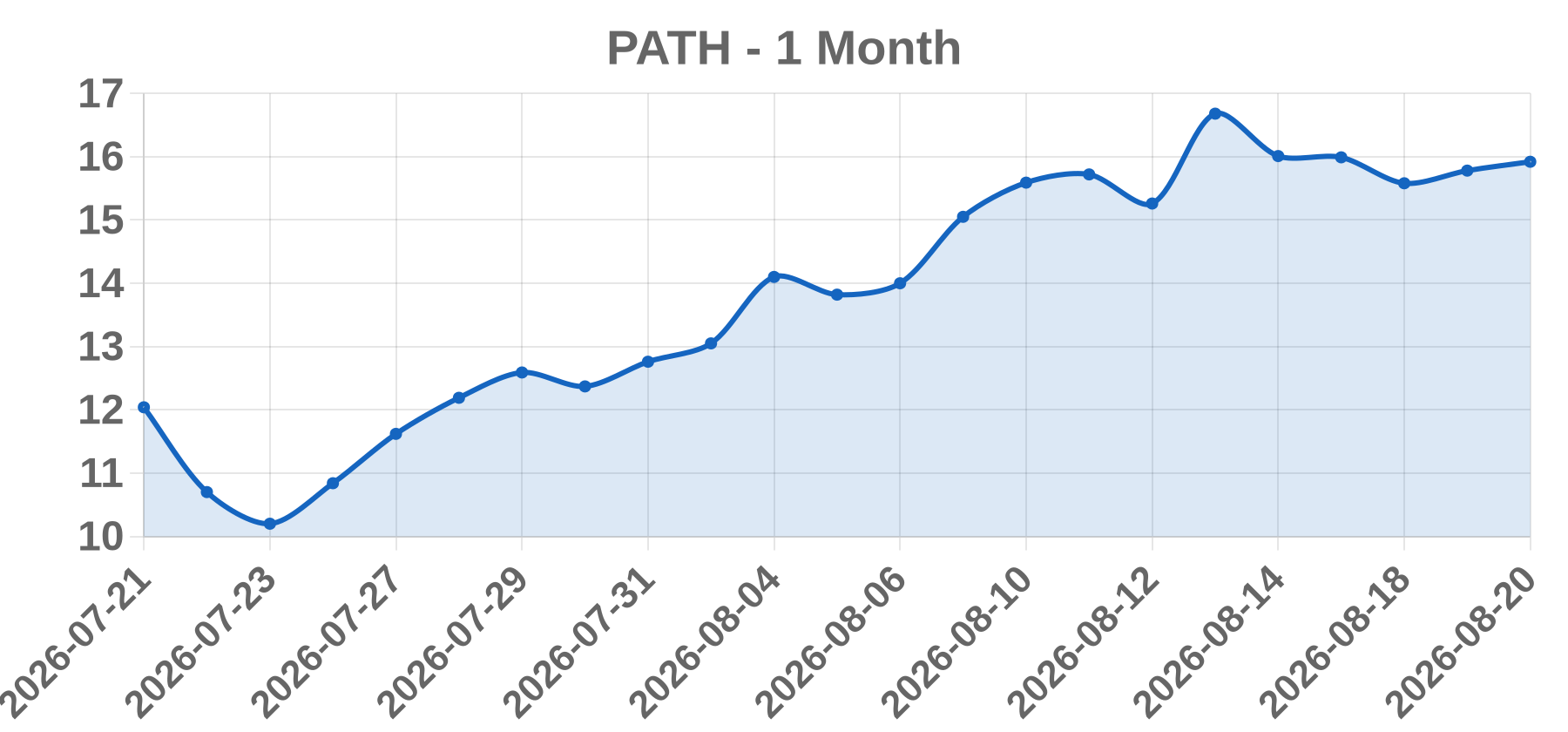
Today’s take PATH closed at $15.92, up $0.14 (+0.89%), on Aug 20, 2026, after opening at $15.55 and trading a roughly 3% range (high $15.99, low $15.40). The primary catalyst was the Aug 19 launch of UiPath Maestro Flow, a developer-first orchestration canvas that lets builders use coding agents (Claude Code, Cursor, GitHub Copilot, Codex) to design, run, observe, and govern end-to-end business processes. The release reinforces UiPath's 'enterprises don't have an agent problem; they have an orchestration problem' narrative and deepens the agentic-AI growth story; Aug 19 closed +1.28% and Aug 20 extended that momentum. Partially offsetting sentiment, CEO Daniel Dines' SEC Form 4 (transaction dated Aug 19) disclosed a sale of 1,402,347 Class A shares (~$22.5M at ~$16.07), reducing his direct stake by ~5%, although executed under a pre-arranged plan. The stock also remained supported by RBC's Aug 14 price-target increase to $15 (Sector Perform).
Business BitMine Immersion Technologies, Inc. (NYSE: BMNR) is a Bitcoin and Ethereum network company headquartered in Las Vegas, Nevada, focused on acquiring, holding and actively managing ETH as its primary treasury reserve asset (about 5.82M ETH, ~4.8% of circulating supply, ~$11.4B treasury). It also provides BTC ecosystem advisory and equipment/power-hosting services, and uplisted from NYSE American to the NYSE main board in April 2026.
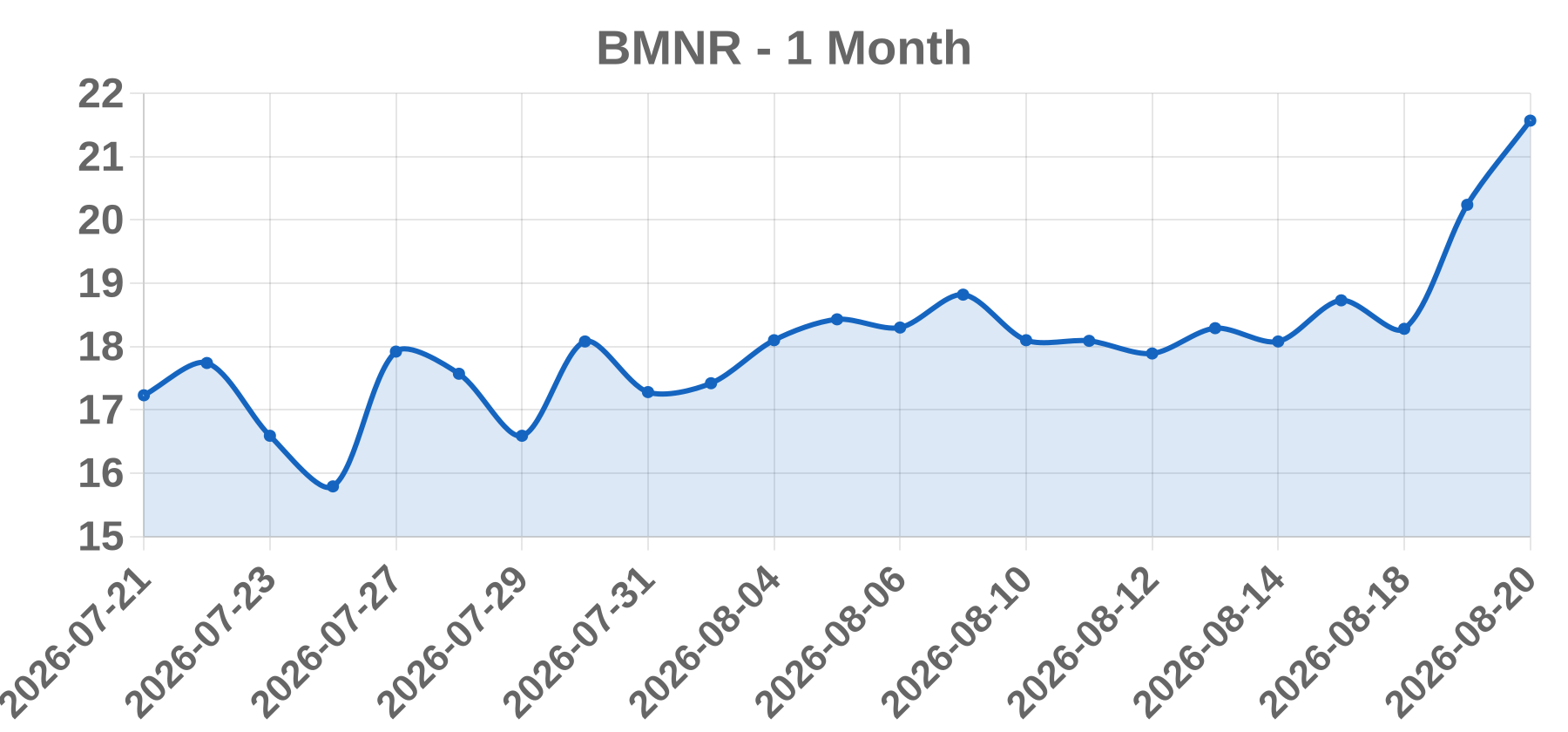
Today’s take On the Aug 19-20 window, Bitcoin surged ~11% breaking ~$71,000-71,600 and Ethereum rallied toward/above ~$2,200, triggering a ~$3B+ crypto short squeeze that lifted digital-asset equities broadly (MSTR, COIN, CRCL, SBET). As the largest listed Ethereum treasury holder, BMNR re-rated sharply; press cited it climbing 7% to ~$21.72, while the wider sector squeezed roughly $2-3.3B in liquidations. This was reinforced by company-specific positives: an Aug 17 update showing total crypto+cash treasury crossing $11.4B, continued ETH accumulation (~10K tokens), and ~20.8M shares bought back under the $4B program. Shares closed at $21.57, +6.57%, on Aug 20 after +10.72% the prior session, with ETB staking yield (~87% staked) amplifying the ETH move into equity returns.
Business PicoCELA Inc. (NASDAQ: PCLA) is a Tokyo-headquartered company providing enterprise-grade wireless mesh network solutions, including the PCWL series of mesh Wi-Fi access points and the PicoManager cloud platform. The company listed American Depositary Shares on the Nasdaq Capital Market in January 2025 at $4.00 per ADS.
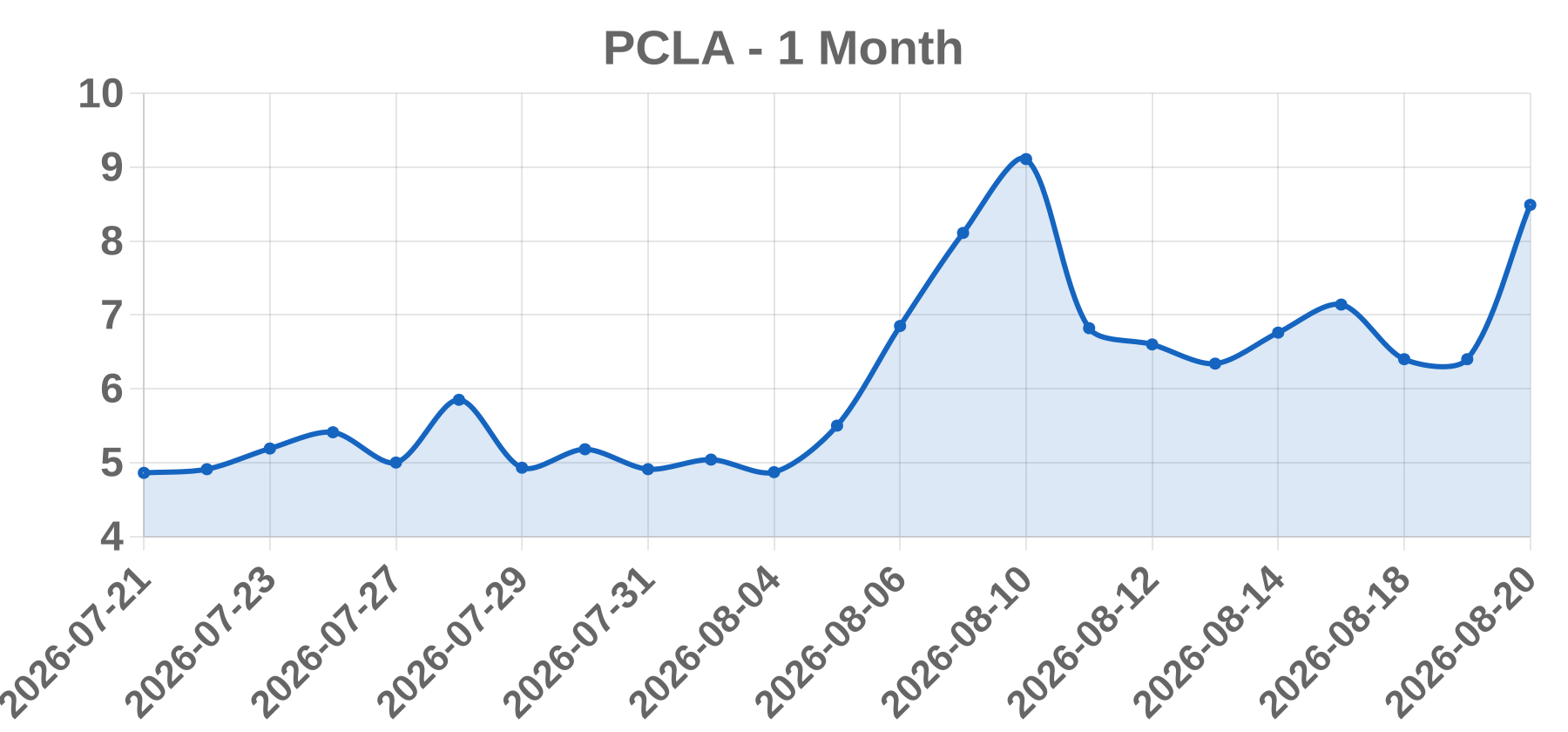
Today’s take PCLA closed August 20, 2026 at $8.49, up $2.09 (+32.66%), after an explosive intraday move that spiked to a high of $12.86 (~102% above the prior close of $6.40) before settling. Session volume reached ~5 million shares versus a ~1.75-2.0M 30-day average (~3x relative volume). The move is widely attributed to a short squeeze: the Financial Modeling Prep market desk reports that short interest rose an extraordinary 29,900.8% (per Defense World) and that 13.3% of outstanding shares were short. ChartExchange FINRA data shows 429,834 shares short as of July 31, 2026, representing 58.60% of the float. With a thin float (~9.6M shares outstanding, ~$61M market cap), buy pressure forced covering that cascaded price higher. Several Nasdaq volatility trading pauses were triggered during the session (noted at ~10:12 AM and ~10:20 AM EDT). Supporting backdrop: PCLA had spiked to a 52-week high of $19.61 on August 10, 2026 on ~4.3M volume, and had recently completed a $5M preferred-share deal (July 2026) and regained Nasdaq minimum bid price compliance. The August 20 move represents classic low-float, high short-interest momentum dynamics.
Business Wetour Robotics Limited (formerly Webus International), a Cayman Islands company trading on Nasdaq Capital Market under WETO, is a Physical AI infrastructure and wearable robotics company headquartered in Austin, Texas. It develops Orchestra, a portable edge-AI operating system coordinating wearable sensors, visual intelligence and connected physical devices, while retaining an AI-driven premium travel/mobility legacy business.
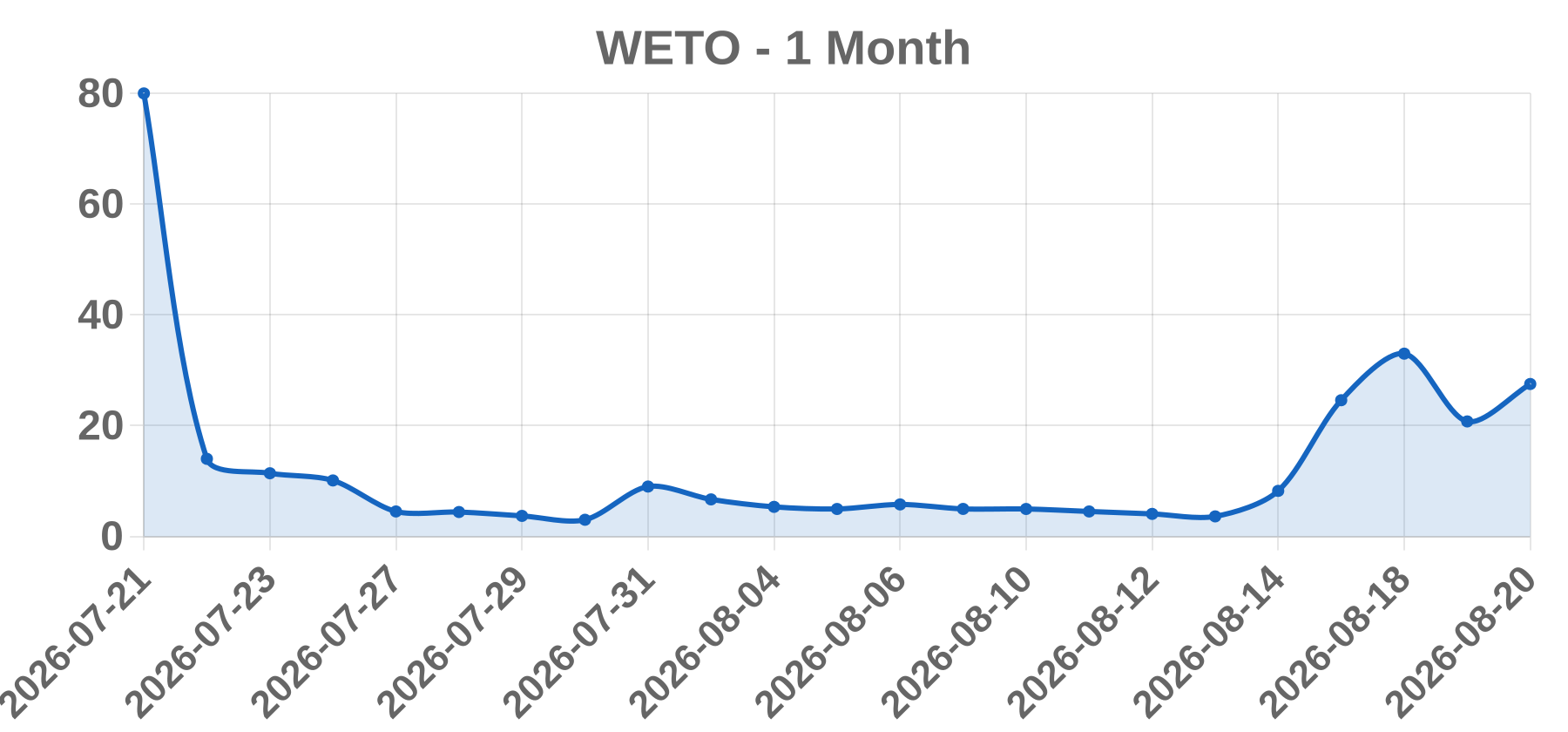
Today’s take The Aug 20, 2026 close of $27.52 (+32.59%; range $26.20-36.29) marks an extreme speculative episode in a low-float micro-cap, not a fundamentals/earnings event. Financial Modeling Prep tied the move to the announced 1-for-100 reverse stock split (announced Jul 29, effective Aug 3). The prior week saw violent swings: Aug 14 +127.7% on 58.3M shares, Aug 17 +199.2% on 30.3M, Aug 18 +34.2% on 9.1M, Aug 19 -37.1% on 950K. Short interest was extreme at 88.62% of float (Jul 31, per Benzinga/Quiver), up 832.76% from Jul 15, a powerful squeeze/momentum setup. Headline catalyst is the Aug 24 EGM to approve ANOTHER 100-for-1 consolidation plus a massive capital increase, with the float already cut to ~820K post-split shares. After-hours fell 6.4% to $25.77.
Business ARB IOT Group Limited (NASDAQ: ARBB) is a Singapore-based holding company that provides comprehensive Internet of Things (IoT) system solutions, including smart home/building integration, smart agriculture and IoT device distribution. With only 1.77 million shares outstanding and a float of about 1.14 million, it is an ultra-thin, low-float micro-cap IT services company.
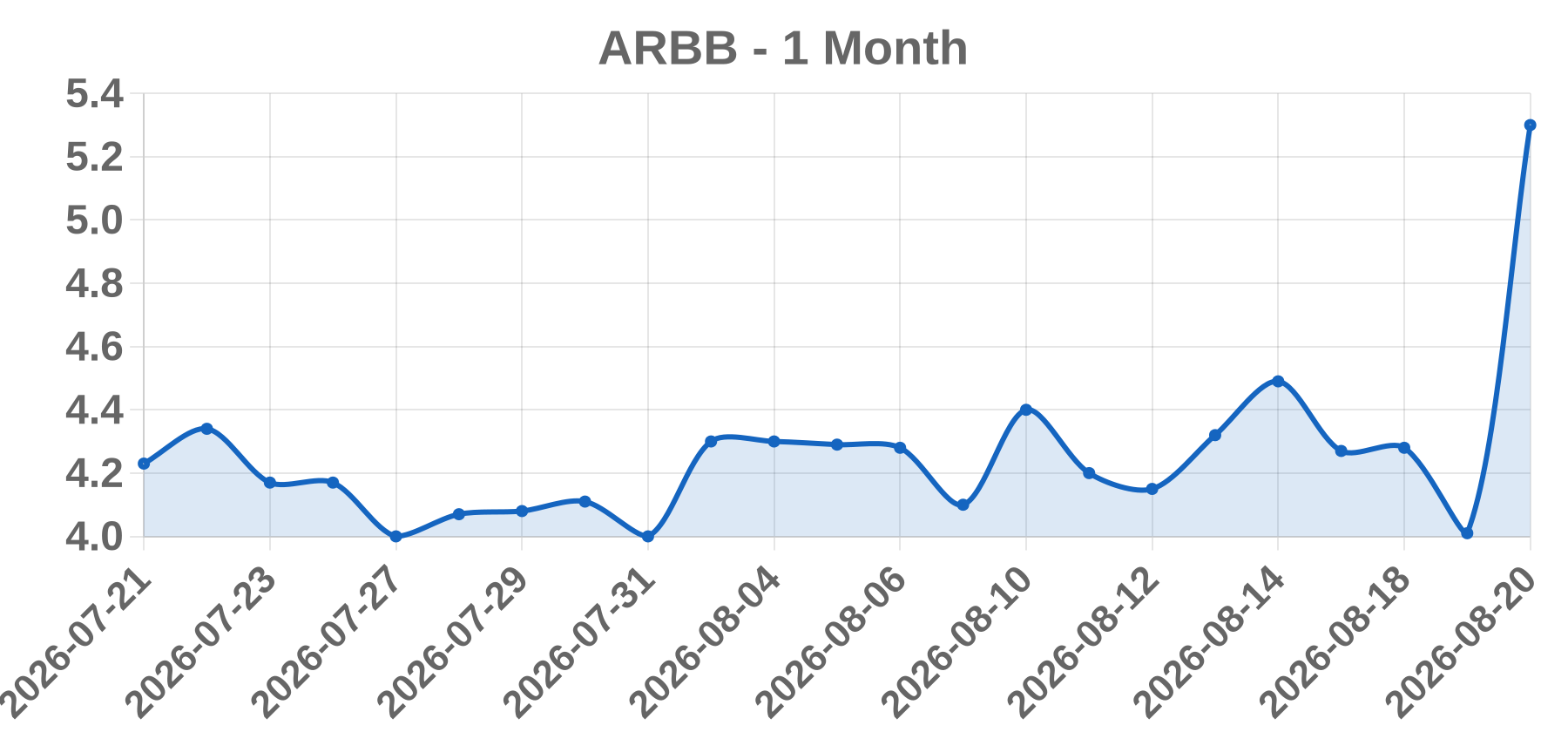
Today’s take On Aug 20, 2026, ARBB surged +32.17% ($4.01 to $5.30), opening at $4.04 and peaking at $5.43 intraday, on volume of ~153,756 shares versus a typical daily volume of just ~1,882-4,970 shares (20-day avg ~10,433), roughly 15-31x normal trading. No company-specific catalyst was identifiable: there were no earnings (last reported May 8, 2026; next est. Sep 2, 2026), no M&A, no analyst actions and no SEC filings tied to that date — Motley Fool lists 'No articles available.' This is an extremely thin micro-cap with 1.77M shares outstanding, a 1.14M float and a ~$7-9M market cap, so a modest influx of retail/momentum buying can move the price sharply. Short interest is negligible (~7,403 shares, 0.42% of outstanding), ruling out a short squeeze. The stock fell ~6-10% in after-hours ($4.75-4.98), indicating the spike was a speculative intraday pop in a thin market rather than news-driven. The move is best characterized as a high-volume, low-float speculative run with no fundamental trigger.
Business StablecoinX Inc. is a publicly traded stablecoin infrastructure company based in Frisco, Texas, listed on the Nasdaq Capital Market under tickers USDE/USDEW. It became the first publicly listed Ethena-ecosystem company after completing its business combination with SPAC TLGY Acquisition Corp., holding a ~$275M ENA token treasury, and operates across decentralized validation infrastructure, stablecoin middleware orchestration, and institutional distribution of Ethena's USDe/USDtb digital dollar products.
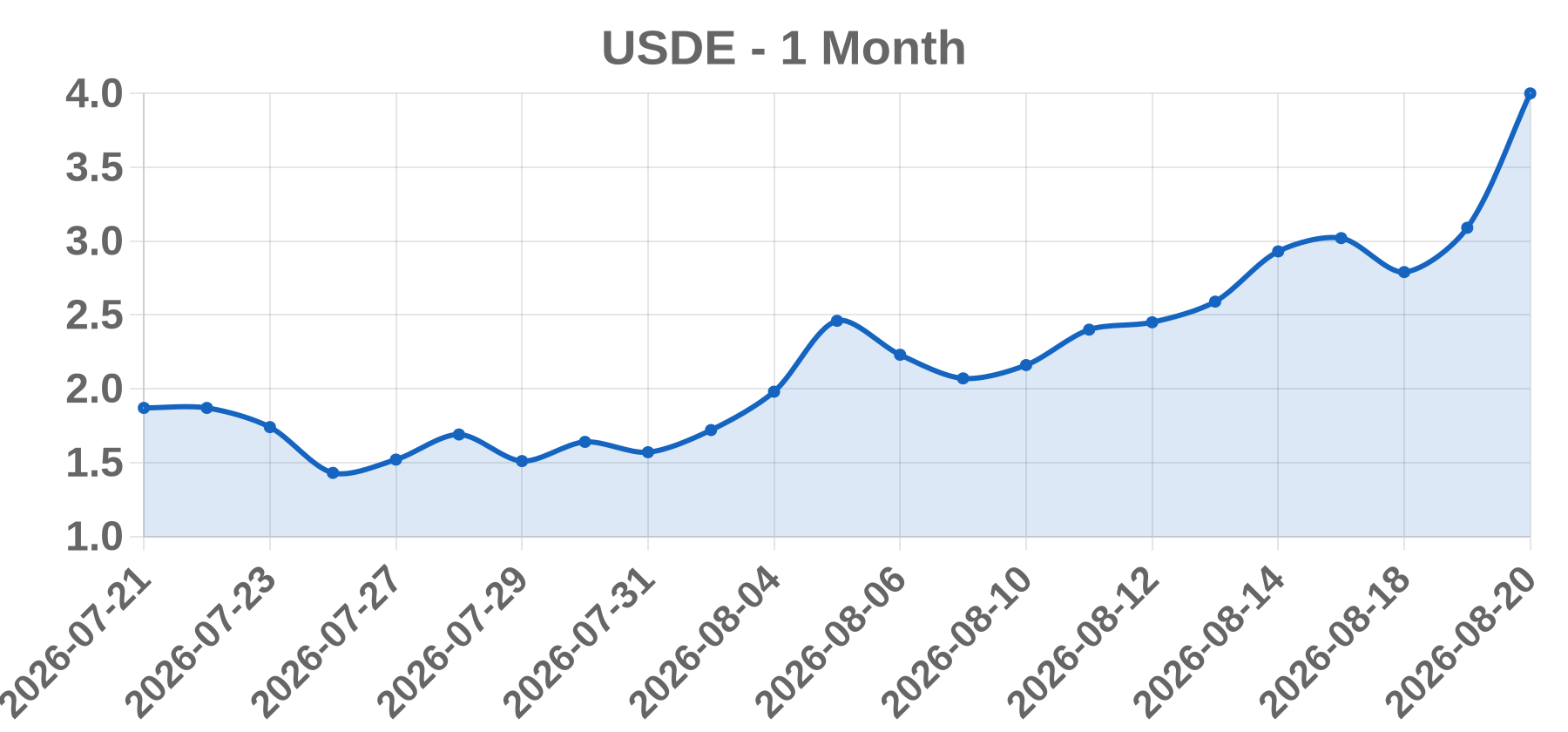
Today’s take StablecoinX surged +29.45% to $4.00 on Aug 20, 2026 (from $3.09 prior close, intraday high ~$4.13-4.46, a new 2-week high) on ~2.9-3.3M shares, well above its ~2.3M average daily volume. The move was driven by a broad crypto-sector rally rather than a company-specific event. On Aug 19-20, Bitcoin surged past $72,000 (up ~11% over two days, +5% on Aug 20 alone), Ether gained ~19%, driven by President Trump's White House meeting with crypto executives and his push for the Clarity Act regulatory framework. This lifted crypto-linked equities broadly. Additionally, on Aug 19, FalconX announced a $1B secured credit facility with Ethena deploying USDe backing into institutional credit markets - directly supporting the entire Ethena ecosystem StablecoinX provides exposure to. Musk's X platform also reportedly explored stablecoin payments to creators. The stock was previously flagged for a Q2 earnings 8-K disclosure on Aug 14, adding to recent news flow.
Business Xos, Inc. (NASDAQ: XOS) is a Los Angeles-based clean energy and commercial vehicle technology company specializing in mobile energy storage, EV charging infrastructure, and battery-electric commercial vehicles. Founded in 2016 and publicly traded since 2021, Xos has deployed over 250 megawatt-hours of behind-the-meter energy storage across utility, fleet, government, and industrial customers.
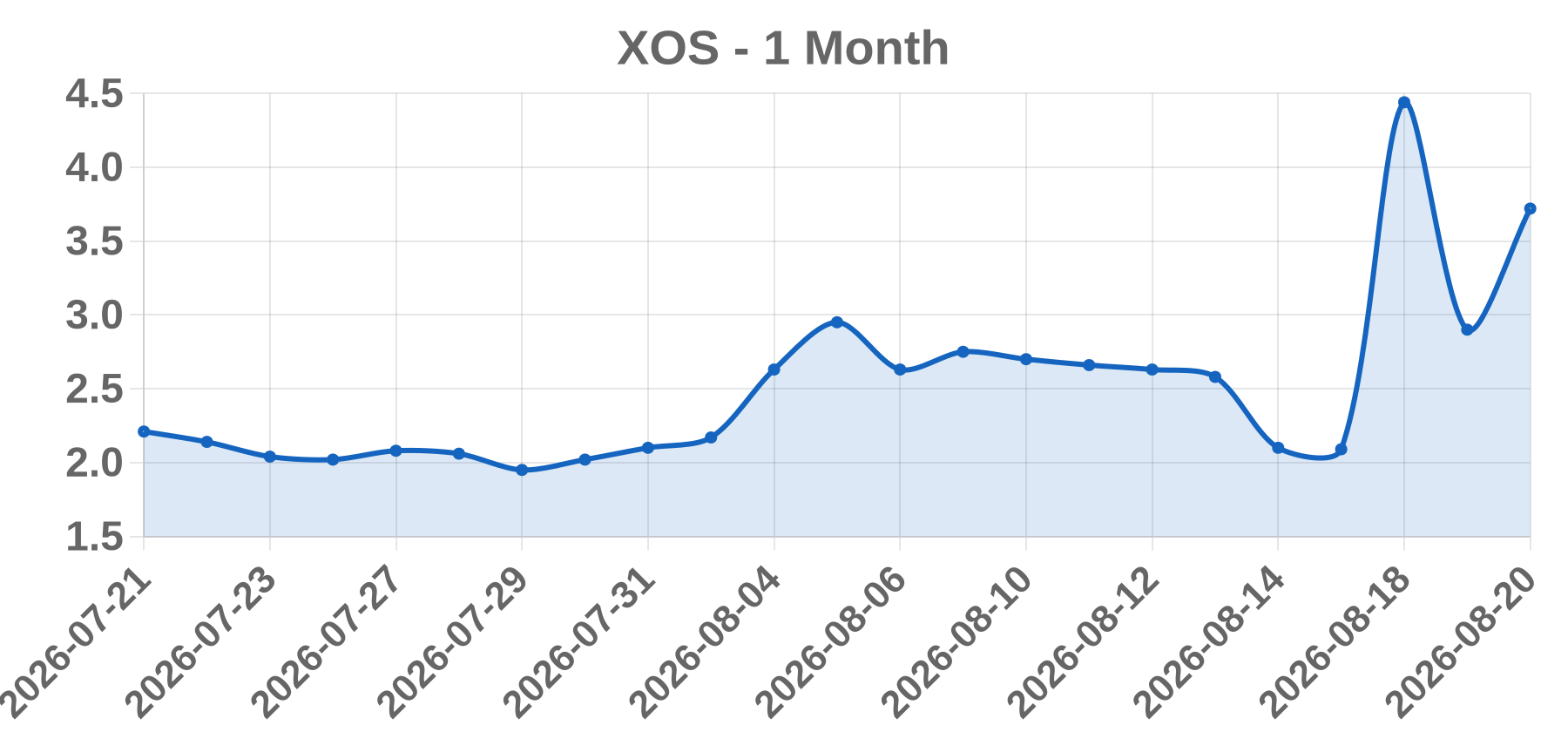
Today’s take On Aug 20, 2026, XOS rebounded +28.28% to close at $3.72 (range $2.89-$4.03), reversing a portion of the prior session's -34.68% crash. The primary catalyst was the Xos Hub's achievement of UL 2202 certification, announced in a press release dated Aug 19 that hit the tape during the Aug 20 session. This trinational (US/Canada/Mexico) safety standard for DC EV charging equipment simplifies permitting, insurance, and deployment timelines for the Hub product line (210-630 kWh), supporting the company's fleet electrification strategy. The move also reflected continued momentum from the Aug 18 Air Force prototype contract that drove a +112% surge to $4.44 before profit-taking. Aug 20 volume reached ~14.8M shares (~3x the ~5M average; ~104% of shares outstanding), indicating sustained retail speculation. Short interest stood at ~579K shares (~8.6-13.4% of float), adding a potential short-covering dynamic. Q2 2026 revenue was weak at $4.74M (-74% YoY).
Business Wing Yip Food Holdings Group Limited (Nasdaq: WYHG) is a mainland China meat-product processing company. Through its operating subsidiaries it offers cured meat products (cured pork sausages, cured pork, plus chicken/duck/fish), snacks and frozen meat products under flagship brand 'Wing Yip' (traceable to 1915) plus 'Jiangwang' and 'Kuangke,' sold via self-operated stores, distributors and e-commerce across 18+ mainland provinces. Its ordinary shares list on the KOSDAQ (Korea Exchange, since 2018); its ADSs list on the Nasdaq Capital Market after a November 2024 US IPO.
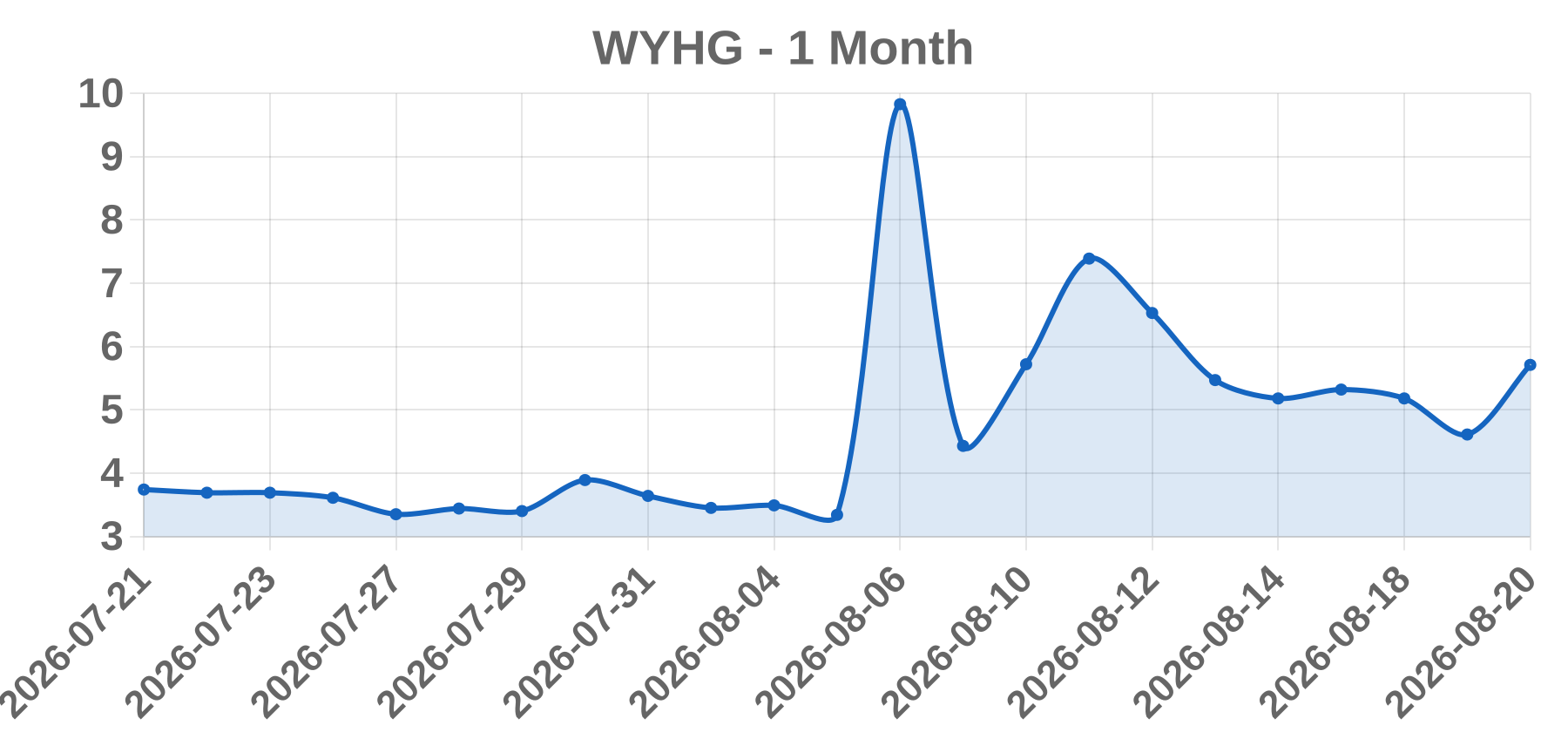
Today’s take WYHG closed at $5.71 on Aug 20, 2026, up 23.86% from the prior close of $4.61, with an intraday range of $4.10-$6.89 and volume of 3,692,152 — then fell -15.06% after-hours to ~$4.85. No company-specific fundamental event (earnings/M&A/FDA) occurred that day. The move was speculation-driven continuity of one of the most violent micro-cap bubbles on US markets in August 2026. The bubble ignited on Aug 6, when shares surged +194% to $9.83 on 57.78M shares after shareholders approved a KRW 36.8B (~$25.8M, 182.8% of outstanding) private placement; the US ADS traded at a 27x premium to the Korean line. The stock then whipsawed (Aug 10 +29%, Aug 11 +29%, Aug 13 -16%, Aug 7 -55%). Underpinning the narrative is the June 16, 2026 regain of Nasdaq's $1.00 minimum-bid-price compliance, aided by a June 2, 2026 1:4 reverse split. Fundamentals deteriorated (2025 revenue -6.5%, net income -30%, negative op cash flow -$13.15M, thin float, ~0.22% short interest), so the surge is a pure low-float speculative/ momentum squeeze with delisting & dilution risk.
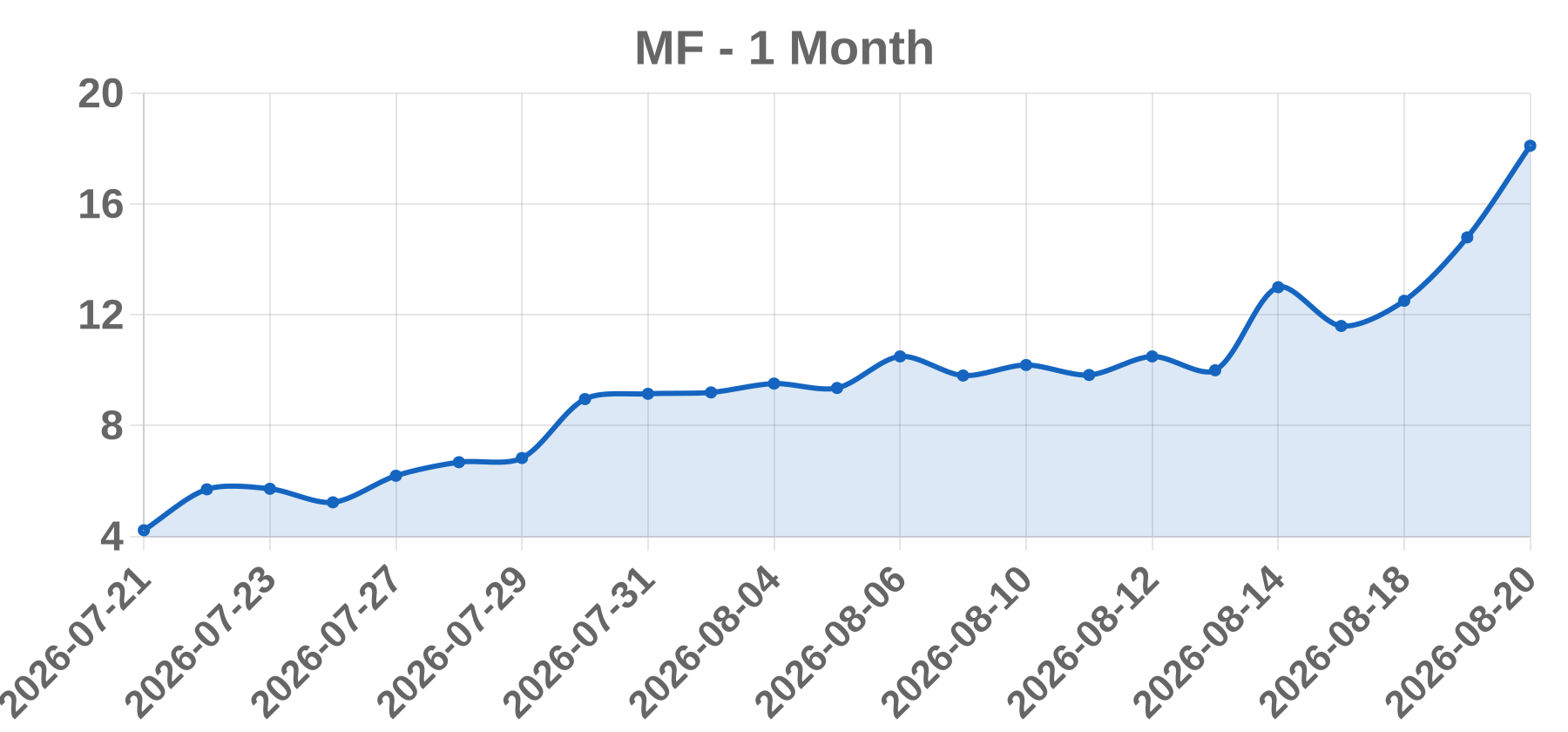
Business MindForge Inc. (Nasdaq: MF), formerly U-BX Technology Ltd. (renamed July 2026), is a Beijing-based Chinese insurtech holding company that provides AI-driven value-added services—including digital promotion and an underwriting risk algorithm—to insurance carriers and brokers in China. It is an ultra-low-float microcap (~1.2M float shares, ~$33M market cap) listed on the Nasdaq Capital Market.
Today’s take On August 20, 2026, MindForge surged +22.36% to $18.11 yet the session volume was a thin 104,652 shares, capping a three-day run (Aug 18: +7.84%, Aug 19: +18.31%) from $11.60. The move was the 7th-best among Chinese concept stocks that day and was driven by a broad sector rally in Chinese ADRs: Nasdaq China Golden Dragon Index +1.52%, Kingsoft Cloud +14% on strong Q2 earnings, Li Auto +5%, Huazhu +5%, Atour +5%. There was no company-specific news (no earnings, M&A, or analyst action) on Aug 20. The outsized move reflects momentum on an ultra-low-float microcap (~1.2M float, ~$33M cap, RSI 78, beta -5.72) that amplifies sector tides; shorts cover only 1.52% of outstanding. The stock had a 1:25 reverse split (May 2026) and was renamed in July 2026 after collapsing ~80% over 52 weeks.
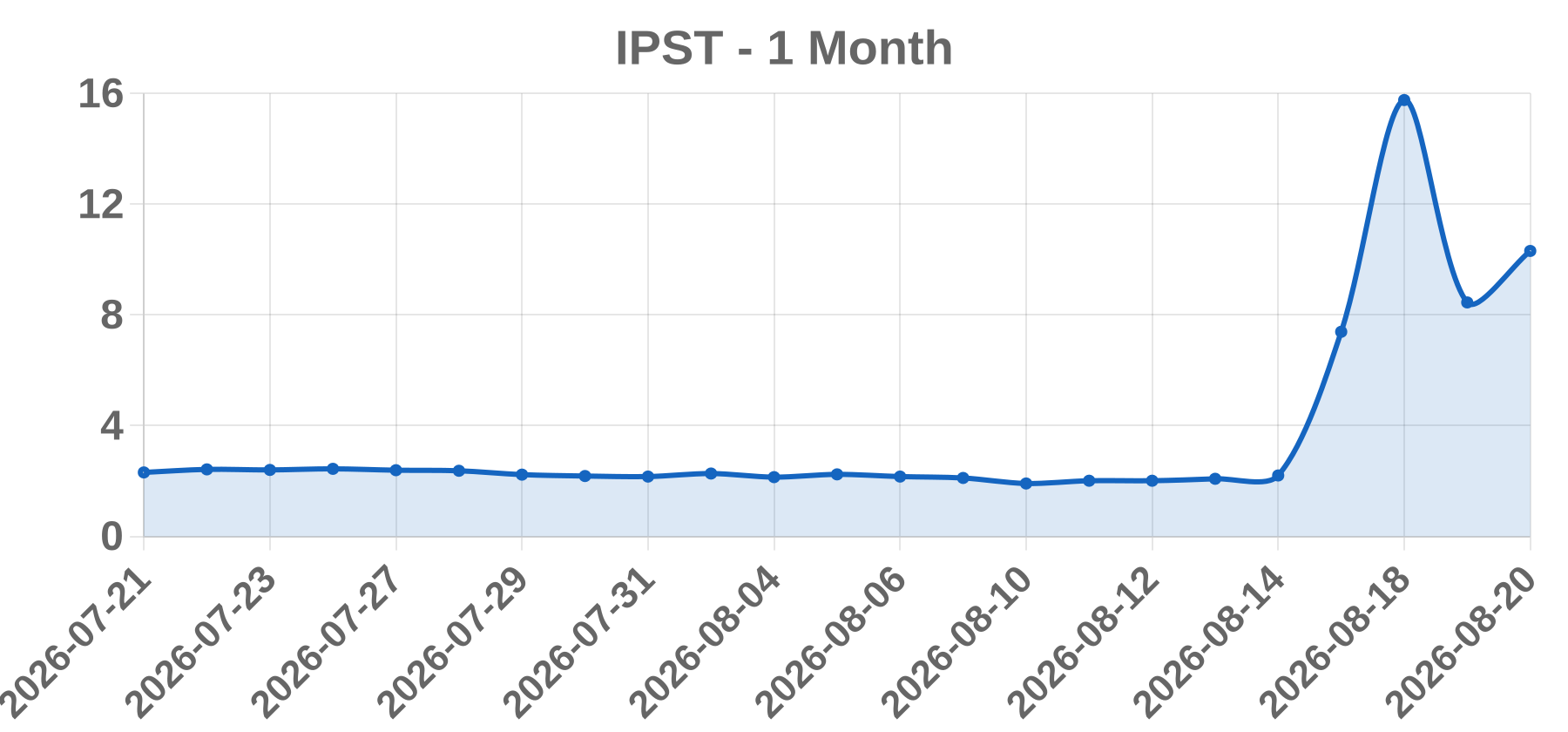
Business IP Strategy Holdings, Inc. (NASDAQ: IPST), formerly Heritage Distilling Holding Company, is a microcap that pivoted from craft spirits to a 'programmable IP economy' model: it holds $IP tokens as a primary treasury reserve asset and operates a validator node on the Story Protocol. The company combines digital asset management with a legacy craft-spirits business (c. 41.5% of revenue).
Today’s take IPST's +22.01% advance to $10.31 on Aug 20 (intraday range $8.40-$15.27, roughly +/-30% swings) was a violent volatility reversal within an extreme speculative blow-up, not a news-driven event. No company-specific fundamental catalyst was identified for 8/20. The move is a dead-cat bounce off the prior session's -46.38% collapse (to $8.45) amid a parabolic retail short-squeeze: +235.89% on Aug 17 (103.9M shares), +113.26% on Aug 18 (32.3M, peak $25.34, multiple volatility halts), -46.38% on Aug 19. Intraday volatility was extreme (~81% range). Fundamental headwinds drove the underlying fragility: IPST filed a Form 12b-25 delaying its Q2 10-Q and disclosed a preliminary Q2 net loss of $13.8M-$17.8M (vs $7.3M a year ago) and revenue collapsing to ~$0.39M-$0.5M. After-hours added ~+8%, confirming continued speculation rather than fundamentals.
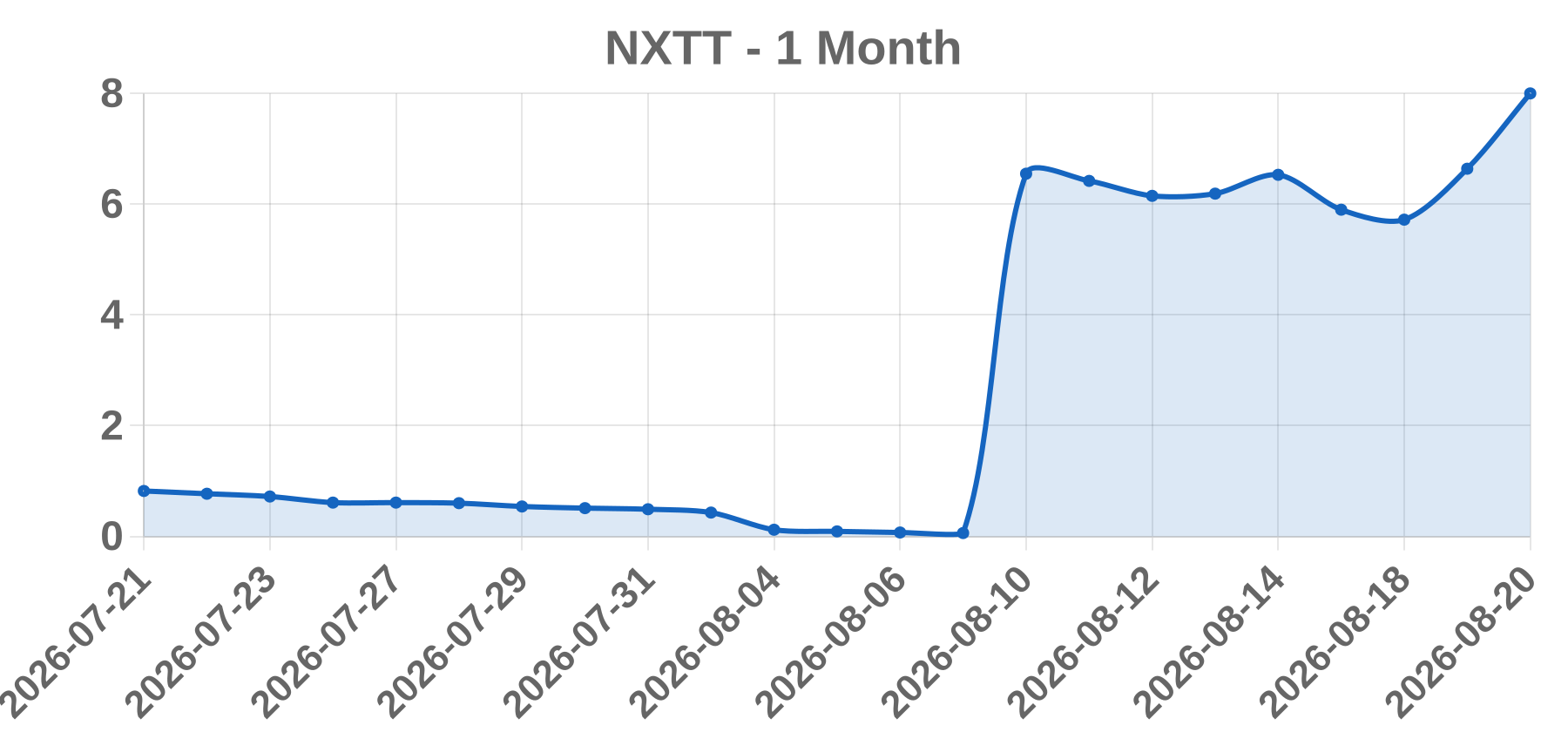
Business Next Technology Holding Inc. (NASDAQ: NXTT) is a technology firm providing AI-enabled SaaS software development services across the U.S. and Asia, but it has evolved into a Bitcoin treasury company that also holds one of the largest corporate BTC balances. It is the largest Chinese-linked bitcoin treasury issuer.
Today’s take On Aug 20, 2026, NXTT closed at $8.00 (+20.48%) after a violent intraday spike from an open near $6.54 to a high of $13.21 (roughly +90% intraday), triggering a volatility trading halt at 12:58 EDT that resumed at 13:08 EDT. The driver was macro/crypto: Bitcoin surged ~10-11% in two days, breaking past $70,000 toward ~$71-72K on President Trump's push for the Clarity Act and the Treasury's expanded bond buybacks. NXTT holds ~5,833 BTC (~$351.5M at June 30, 2026), yet the entire company was valued at only ~$11.78M market cap with a ~1.45M-share float post the 1-for-100 reverse split (effective Aug 10, 2026). This extreme NAV discount to its BTC holdings, combined with the tiny float and ~4.65M shares traded (~33x prior-day average, ~3x float turnover), produced a speculative squeeze/re-rating. The stock had already risen +16.08% the prior session as the crypto rally built.
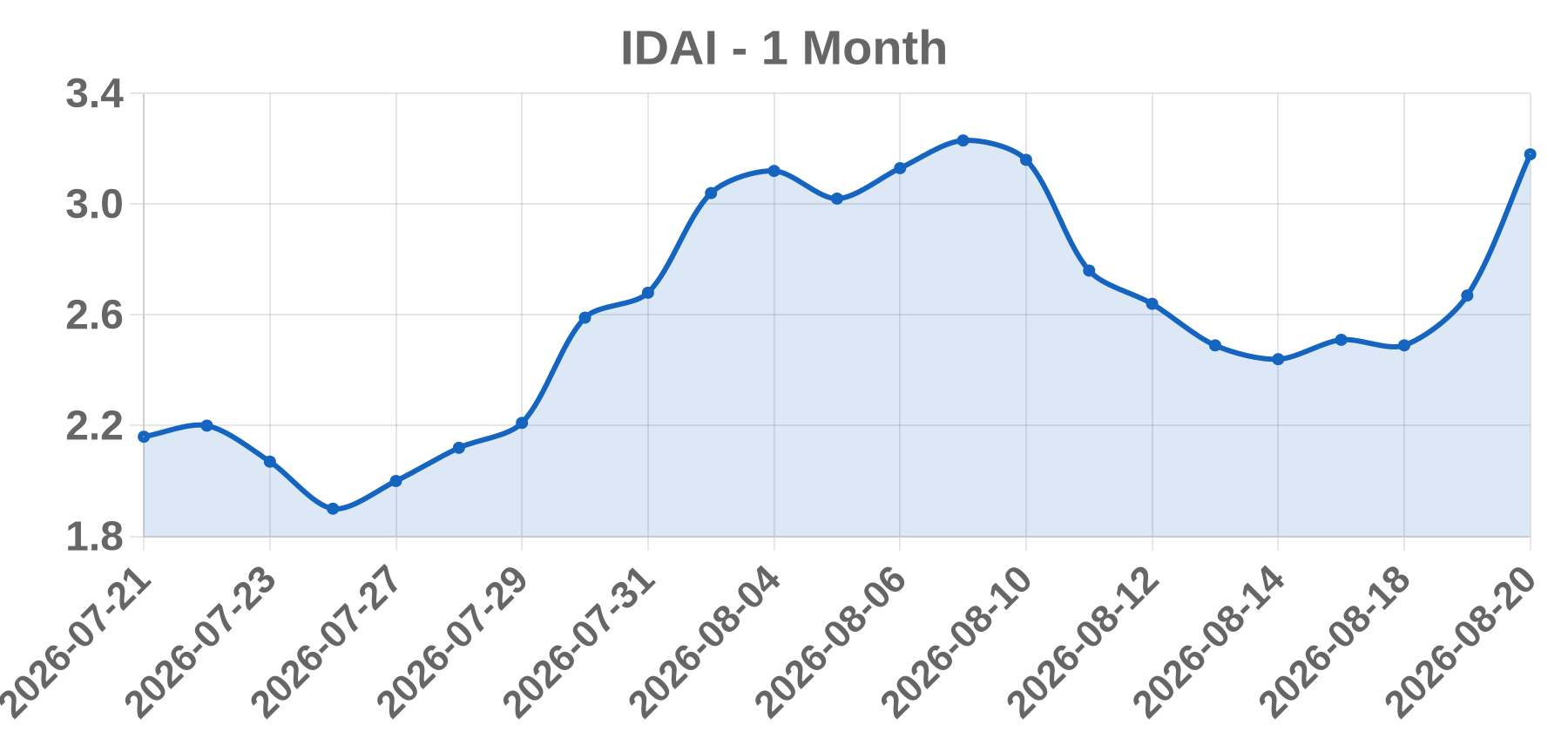
Business T Stamp Inc. (Nasdaq: IDAI), operating as Trust Stamp, is a global provider of AI-powered identity and trust solutions. The company develops artificial-intelligence-driven software using biometrics, cryptography, and data mining to detect fraud, tokenize and secure personal data, and verify digital identity for banking, government, healthcare, real estate, and communications sectors. Incorporated in Delaware (April 2016), it trades on the Nasdaq Capital Market with operations across North America, Europe, Asia, and Africa.
Today’s take IDAI surged +19.10% to close at $3.18 on Aug 20, 2026 (prev close $2.67, range $2.74-$3.24) on elevated volume of ~121,700 shares vs. avg ~33-70K. The primary catalyst was a Form 4 filed with the SEC that day disclosing CEO/Chairman Gareth Neville Genner made four open-market purchases totaling ~7,300 shares (~$18,617): 4,000 @$2.46, 500 @$2.53, 2,000 @$2.52 (all Aug 18) plus 800 @$3.09 (Aug 20). This insider buying, disclosed publicly that day, was a strong bullish signal. The move extended a post-earnings rebound following the H1 2026 report (Aug 13) announcing a 22% rise in net recognized revenue to $1.66M, IPCEI AST semiconductor program selection, entry into the $48B sovereign AI market, and a $42.40M pipeline. After falling from ~$3.16 to ~$2.49 post-report, shares rebounded (+7.23% on Aug 19) before the Aug 20 spike, aided by short-covering dynamics following the June 2026 short-seller rebuttal and $5.51M financing.
Business First Breach Inc. (NASDAQ: FBDT) is a Delaware-incorporated, Hagerstown, Maryland-based defense/ammunition manufacturer founded in 2018. It is an ISO 9001:2015 certified, vertically integrated producer of match-grade ammunition components, finished ammunition, and next-generation unmanned aerial systems (drones), serving commercial, law enforcement, and military markets through its in-house Hagerstown facility, including an on-site lead smelting operation.
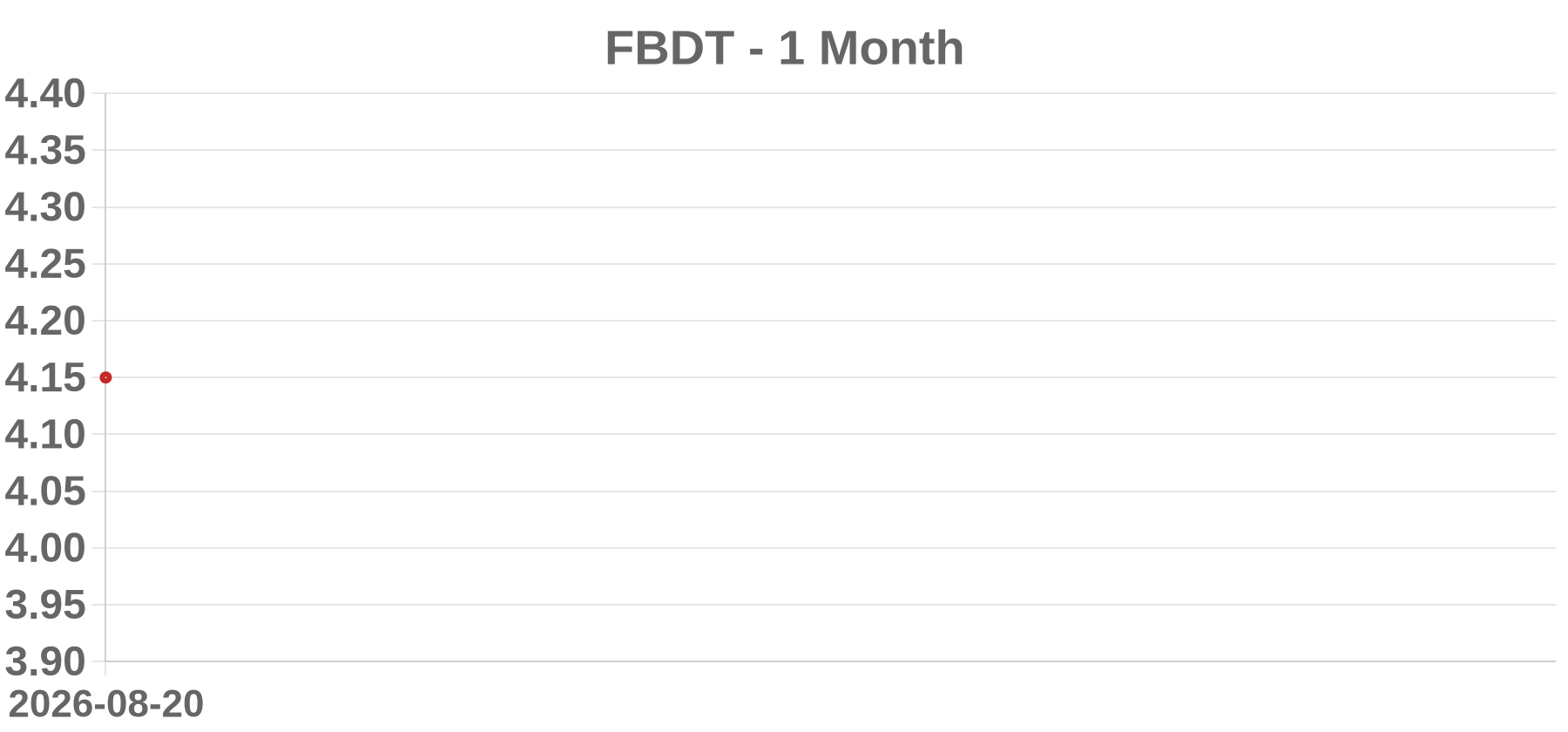
Today’s take August 20, 2026 was FBDT's very first day of trading on the Nasdaq Capital Market via a direct listing, not a routine down day. In this non-underwritten structure (RBW Capital Partners acted as financial advisor; no capital was raised), existing holders sold stock into the market. The stock opened near $12.00, ranged $2.81-$12.00, and closed at $4.15 — declines of roughly -61.6% (Yahoo, vs. ~$10.80 reference), -65.4% (Barchart, vs. $12.00 open), and about -72% (vs. the ~$15 assumed/late reference base, matching the user's -72.33%). The price action was a first-day 'pop-and-drop' price-discovery event: the opening/reference price was far above both the $8.00-$8.00 proxy price range and prior private-round valuations ($3.00/share in 1Q26 ≈ $135M; history $1.00-$8.00). A massive resale overhang of up to ~70.7M shares registered for resale (~99.88% of outstanding) pushed the price toward fundamental value. Fundamentals were thin: FY2025 revenue was only ~$384k with a net loss of ~$13.8M; founders held ~36% of shares.
Business Profusa, Inc. (Nasdaq: PFSA) is a commercial-stage digital health company based in Berkeley, California that develops tissue-integrating biosensors which continuously measure and transmit clinical-grade biochemical data. Its Lumee Oxygen platform monitors tissue oxygenation for peripheral artery disease, chronic wounds, and reconstructive surgery, with a Lumee Glucose continuous-glucose platform in research. The stock trades on the Nasdaq Capital Market.
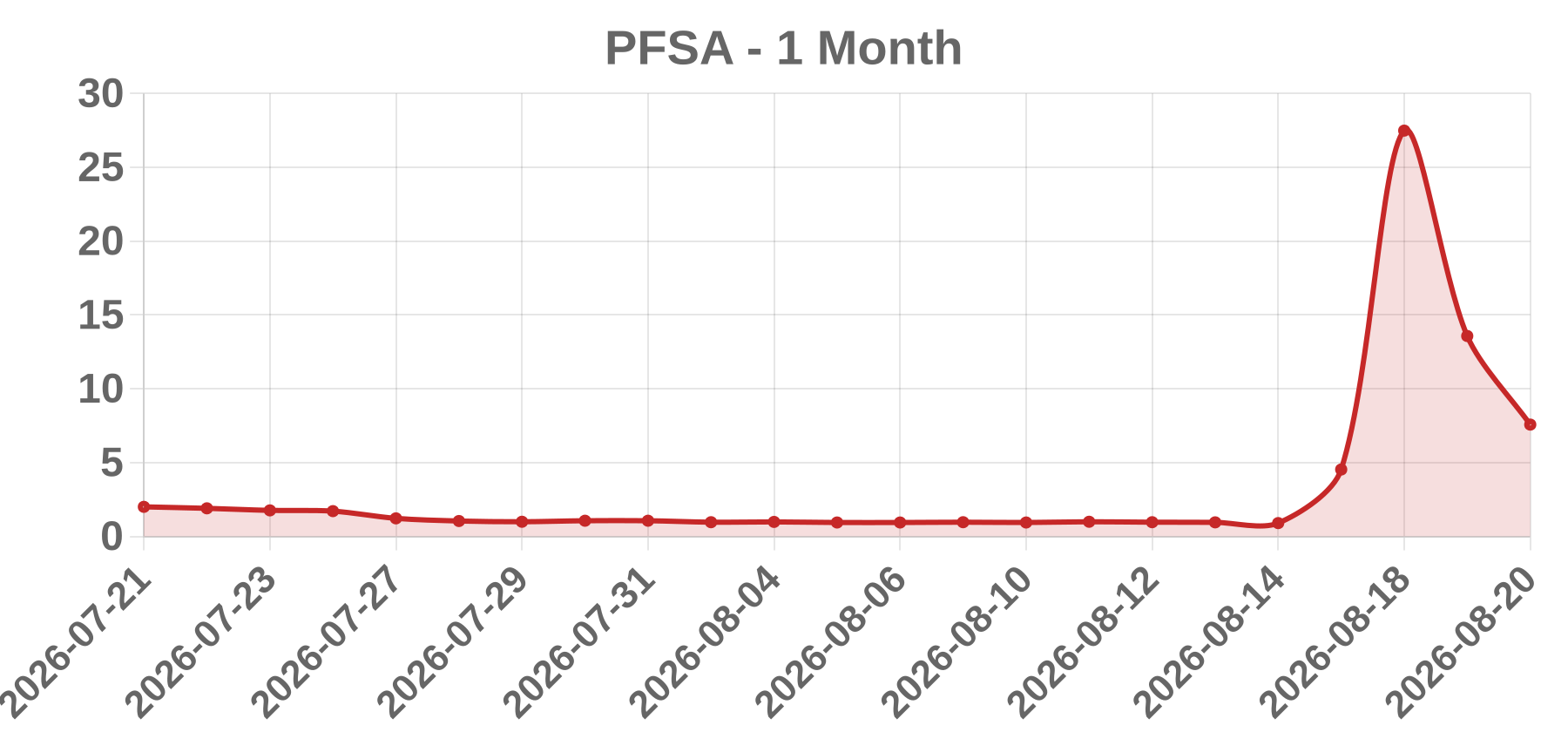
Today’s take PFSA plunged 44.22% to close at $7.57 on Aug 20, 2026 after the pre-market release of Q2 2026 results (SEC 8-K filed 08:32 ET). The report showed a sharply widened net loss of $8.8M (vs. $2.3M a year earlier), a six-month loss of $12.2M (vs. $5.1M), cash of just $719K, total assets of $1.0M, and stockholders' deficit of $(27.1)M against $28.2M liabilities. The move was amplified by heavy post-split unwinding: the stock spiked +506% on Aug 18 (effective date of the 4-for-1 reverse split) then fell -50% on Aug 19 and another -44% on Aug 20 amid a 'volatility trading pause' halt at 09:33 (resumed 09:38). With only ~46,600 shares outstanding and a ~$352K market cap, this distressed micro-cap (third reverse split of 2026: 1-for-75 in Feb, 1-for-25 in Jul, 1-for-4 in Aug) trades like a speculative momentum vehicle. Poor fundamentals, funding/going-concern risk, and G3 Vision Labs's option-agreement conditionality drove the selloff.
Business CDT Environmental Technology Investment Holdings Limited (NASDAQ: CDTG) is a Shenzhen, China-based company that designs, develops, manufactures, sells, installs, operates and maintains sewage treatment systems and provides sewage treatment services to municipalities and enterprise clients across China.
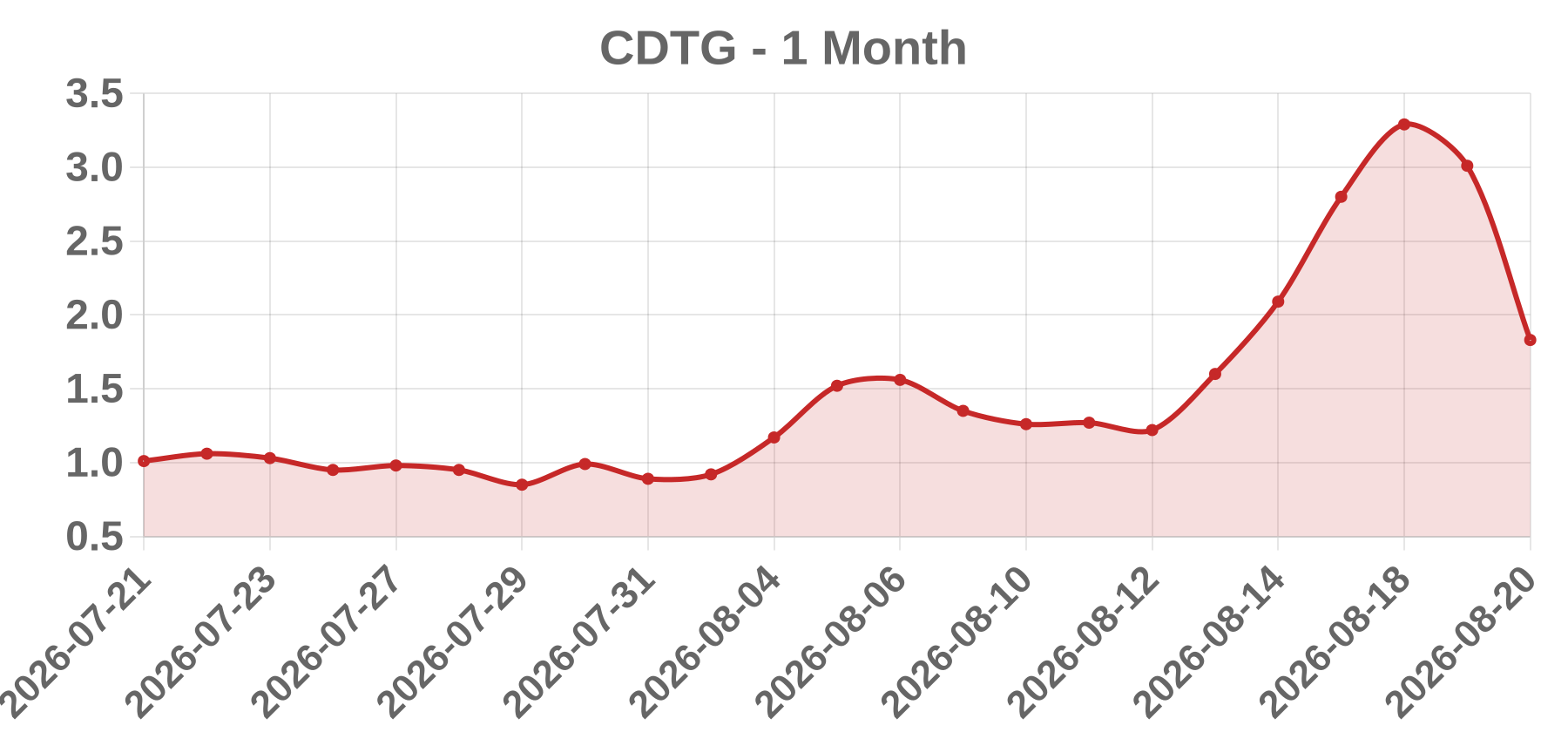
Today’s take On Aug 20, 2026, CDTG plunged 39.20% to close at $1.83 after opening at $3.57 and spiking to a high of $4.68 before collapsing to a low of $1.82. Volume hit ~18.2M shares (stockanalysis) to ~21.8M (Motley Fool) vs. average ~1.67M — roughly 11-13x normal, with the ~2.77M-share float turning over several times (turnover rate approached 1,243% per Chinese data). This was the final leg of a violent speculative pump-and-dump: the micro-cap Chinese ADR surged from $1.22 (Aug 12) to an intraday high of $8.48 (Aug 18) — a ~595% move in four sessions — with no fundamental news catalyst. The stock had only ~3.02M shares outstanding, ~$9M market cap, negative TTM net income, and Nasdaq issued a volatility trading pause at 3:29 PM on Aug 18. A 1-for-25 reverse split effective June 1, 2026 had recently shrunk the float. No earnings, M&A, FDA, analyst, or regulatory news drove the collapse — it was pure retail/hot-money speculation unwinding in an ultra-thin, loss-making Chinese small-cap.
Business Tenon Medical, Inc. (NASDAQ: TNON) is a micro-cap medical device company focused on minimally invasive treatment of sacroiliac (SI) joint disorders, a common cause of chronic lower back pain. Its portfolio centers on the Catamaran SI-Joint Fusion System (FDA 510(k) cleared in July 2026) and the SImmetry+ SI-Joint Fusion System, targeting primary, revision and spinal-fusion applications.
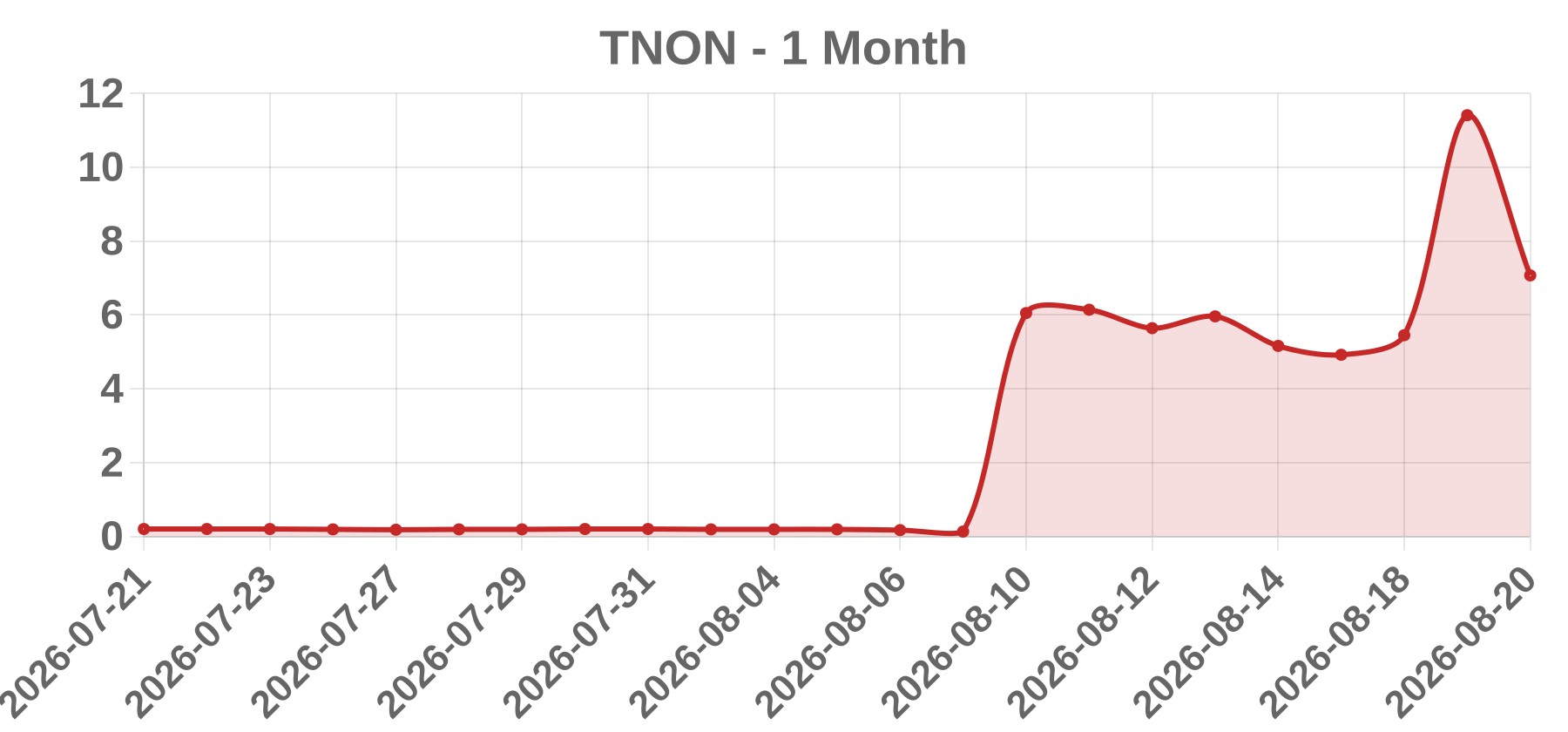
Today’s take The Aug 20 close of $7.07 (–38.04%) was not a fresh fundamental event but the unwinding of a low-float speculative squeeze, a classic parabolic blow-off reversal. Sequence: Aug 18 closed $5.45 (+10.8%) and jumped +82% after-hours on NO specific news (float only ~450k shares, market cap ~$3.5M). Aug 19: USPTO notice of allowance for 'Systems, Apparatus and Methods for Stabilizing Sacroiliac Joints' pushed shares to +155.78% intraday (~$13.85), closing $11.41 (+109%). Aug 20 gapped down ~34% at $7.50 open, low $6.35, close $7.07, on ~1.88M shares (~342% float turnover on stockanalysis/10jqka). The squeeze ran against weak fundamentals: Q2 (Aug 13) revenue $1.28M missed $1.54M consensus and EPS –$12.35 missed –$8.40; 1-for-35 reverse split (Aug 10) to regain Nasdaq bid-price compliance before Aug 24; a ~$100M shelf plus ~$4.4M ATM (filed Aug 17) and a $4.2M offering in July created dilution overhang; cash just $1.68M with $5.2M convertible notes maturing Sept 11, 2026. Once momentum faded, the tiny float turned over 3x+ and the stock crashed.
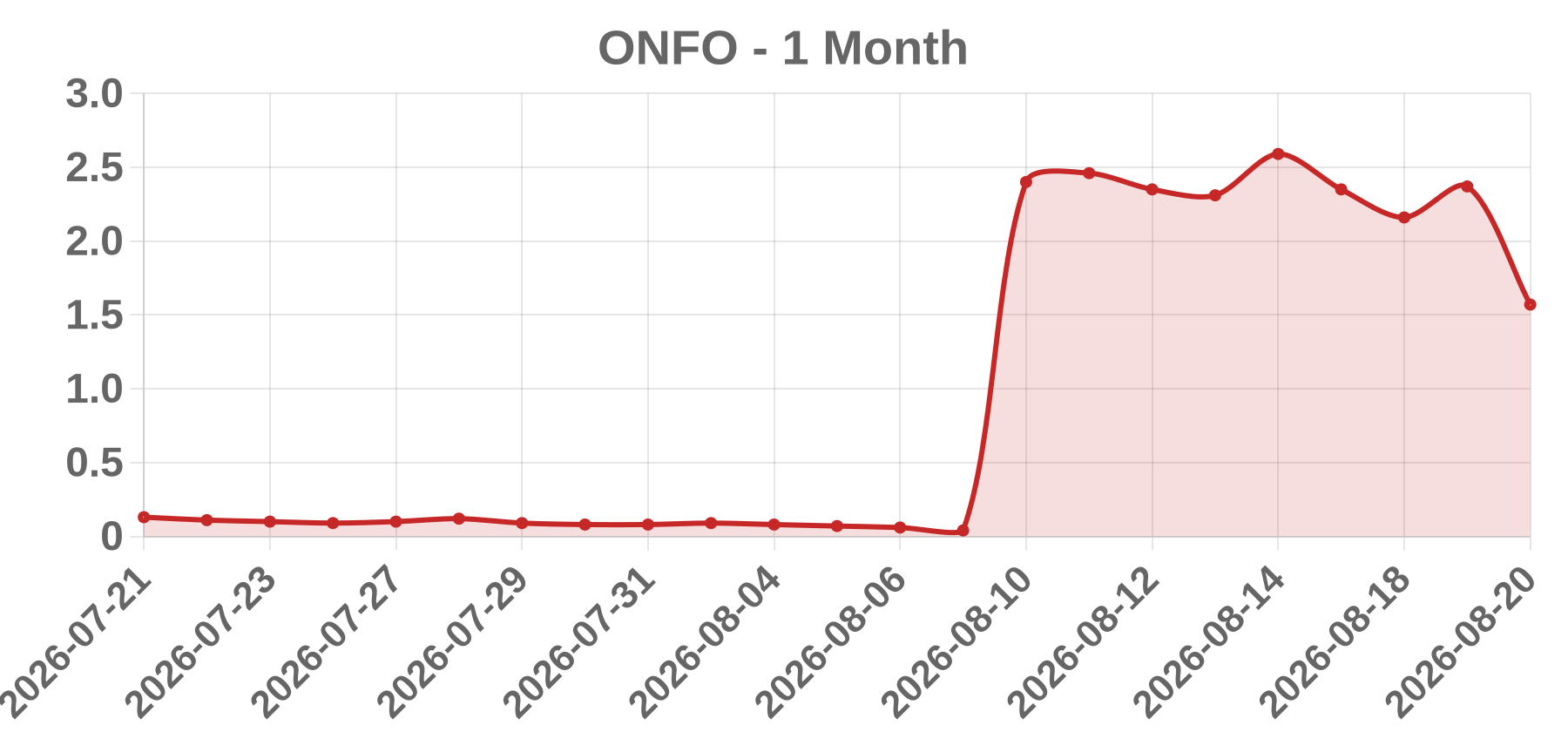
Business Onfolio Holdings, Inc. (NASDAQ: ONFO) is a Delaware-incorporated holding company that acquires and operates cash-generative online businesses across digital marketing services, online education, and e-commerce. Its portfolio includes Eastern Standard, RevenueZen, Proofread Anywhere, Vital Reaction, and PACE Generative, operating through B2B and B2C segments with roughly 27 employees.
Today’s take On August 20, 2026, ONFO collapsed -33.76% to $1.57 (from $2.37) after the pre-market release of Q2 FY2026 results revealed catastrophic deterioration. Total revenue plunged -52% Y/Y to $1.50M (from $3.15M). B2B services revenue fell -41% to $1.22M on AI-driven disruption at Eastern Standard, while B2C product revenue collapsed -74% to $279K after an advertising pullback at Proofread Anywhere. Gross margin contracted to ~49% from 62%, abandoning the prior mid-60% 2026 guidance. Net loss attributable to Onfolio widened to $4.54M from $570K, driven by a $2.95M non-cash loss on fair value of derivative liabilities tied to senior secured convertible notes. Loss per share reached an extraordinary -$35.57. Cash plunged to just $251K (from $2.17M at year-end 2025), triggering going-concern disclosures. The company was already under severe distress: a 1-for-50 reverse split effective Aug 10 to regain Nasdaq's $1 bid compliance, and the July 22 mutual termination of the Paramount Helium strategic LOI.
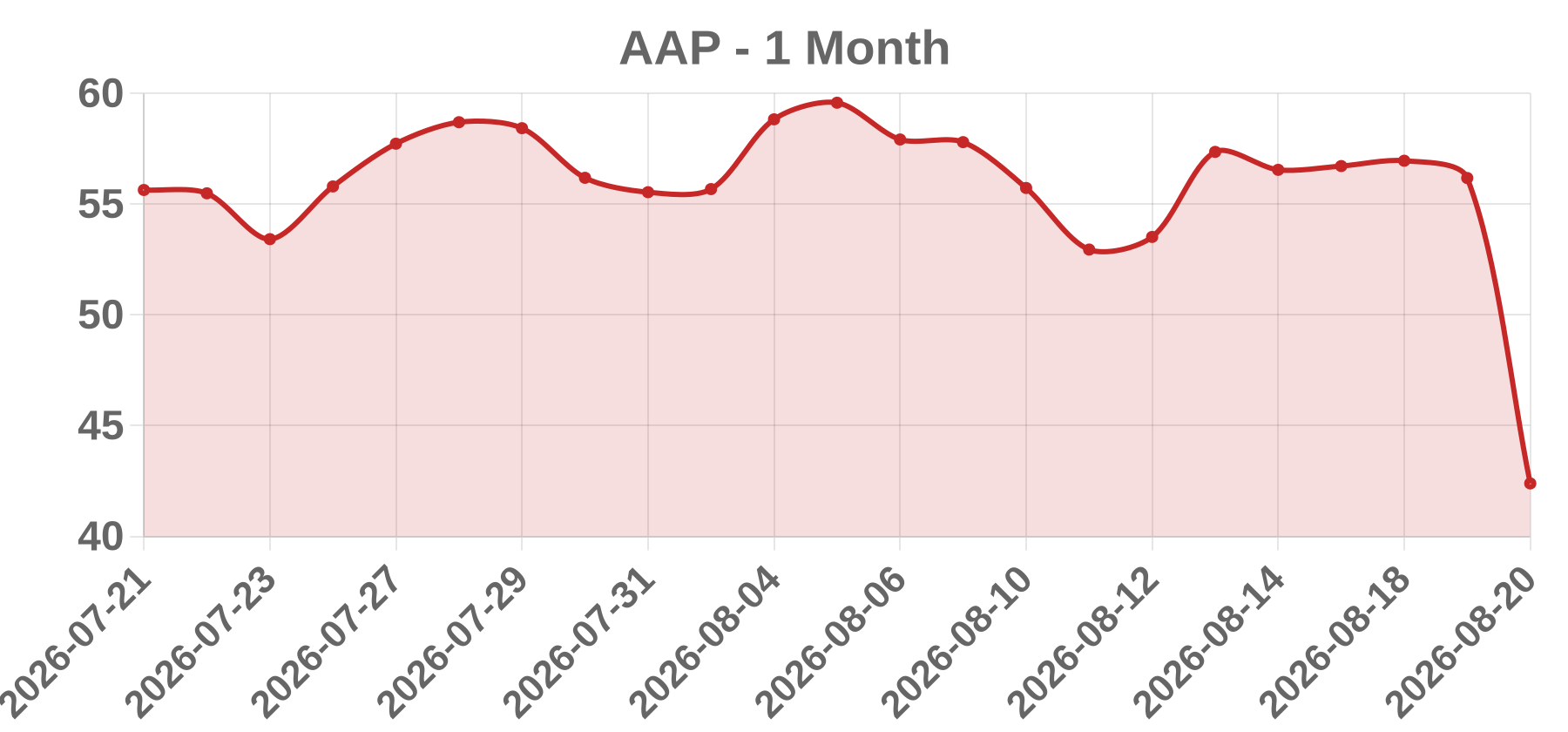
Business Advance Auto Parts, Inc. (NYSE: AAP) is a leading North American automotive aftermarket parts supplier headquartered in Raleigh, North Carolina. Founded in 1929, it operates approximately 4,305 stores across the U.S., Canada, Puerto Rico, the U.S. Virgin Islands, and Mexico under the Advance Auto Parts and Carquest brands, serving both professional installers (Pro) and do-it-yourself (DIY) customers.
Today’s take AAP plunged 24.55% to close at $42.39 (from prior $56.18) on Aug 20, 2026 after Q2 FY2026 results (period ended July 18) revealed an adjusted EPS 'beat' that was largely flattered by one-time items. Adjusted EPS of $1.03 beat the $0.81 consensus, but management disclosed ~$0.31 came from a $26M tariff refund, leaving core earnings near $0.72 — an actual miss. Revenue of $2.000B declined 0.5% YoY, below the ~$2.04B estimate, and comparable store sales fell -0.5% vs. +1.4% consensus, driven by DIY channel weakness from 'tighter household budgets' in the final four weeks. Full-year adjusted EPS guidance was raised to $2.60-$3.30 (from $2.40-$3.10) largely due to tariff refund flow-through and interest income, while revenue guidance of $8.485B-$8.575B was reaffirmed with no upside. The market read the print as deteriorating end-market demand, with shares trading near the lower end of the 52-week range ($37.89-$65.21). Peers AutoZone and O'Reilly both fell ~3-4% on read-through.
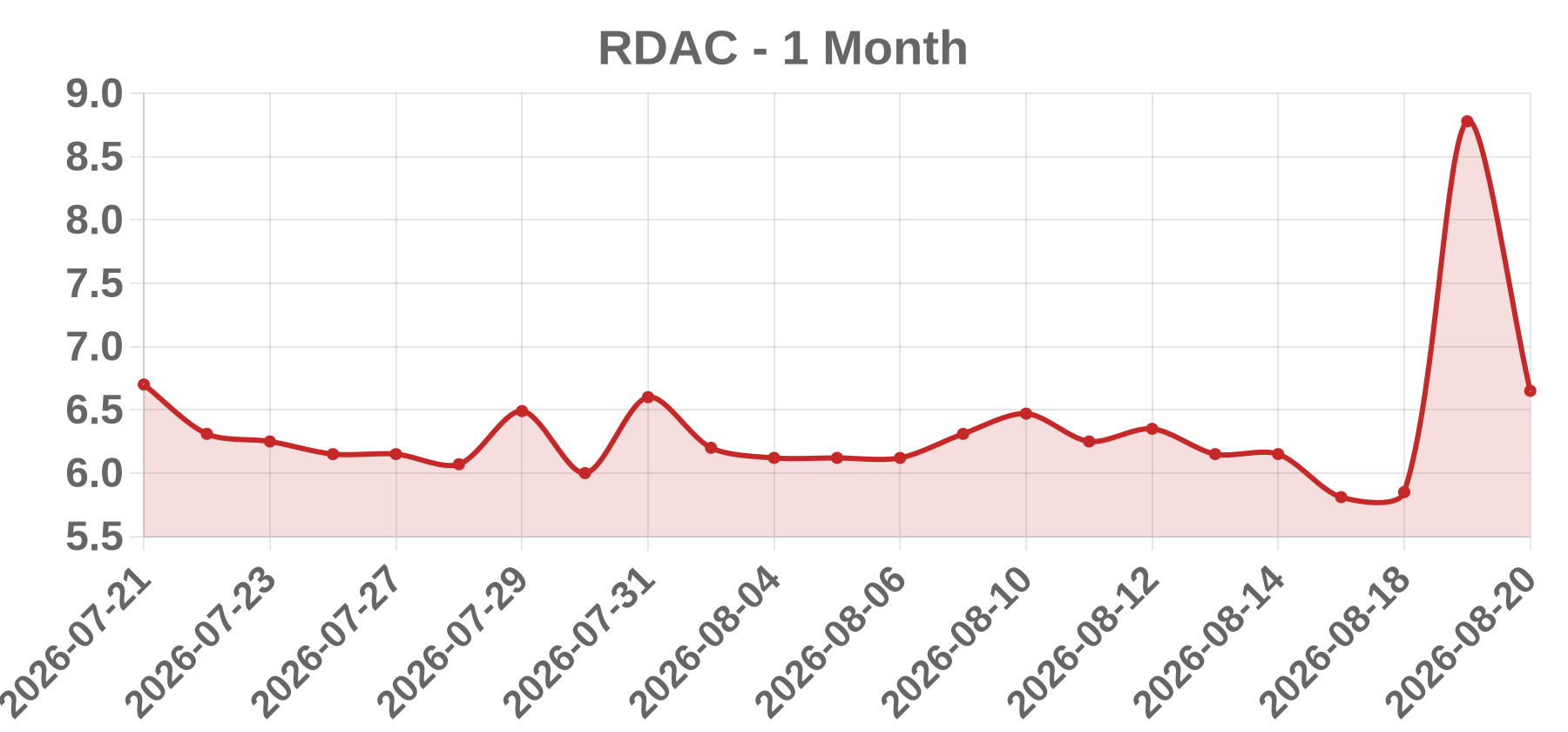
Business Rising Dragon Acquisition Corp. (RDAC) is an early-stage special purpose acquisition company (SPAC / blank check company) incorporated in 2024 with principal offices in Taiyuan, China, and listed on the Nasdaq Capital Market. It has no operations and exists solely to complete a business combination, with a planned ~$350M merger with HZJL Cayman Limited, led by CEO Lulu Xing.
Today’s take RDAC plunged -24.26% on Aug 20, 2026, closing at $6.65 (volume 246,351), reversing a +50.09% spike to $8.78 the prior session (Aug 19, up from a $5.85 close on Aug 18 with average daily volume of only ~500-1,000 shares). The primary catalyst is regulatory: on Aug 19, 2026, the company disclosed a Nasdaq continued-listing compliance warning (Form 8-K dated Aug 20) stating its Market Value of Listed Securities (MVLS) had been below the $35M minimum for 30 consecutive business days, while also failing the Equity (5550(b)(1)) and Net Income (5550(b)(3)) standards. The company has until Feb 16, 2027 to regain compliance or risk delisting. Highly speculative, thinly traded China-linked micro-cap SPAC volatility drove the sharp reversal as profit-taking followed the extreme spike.
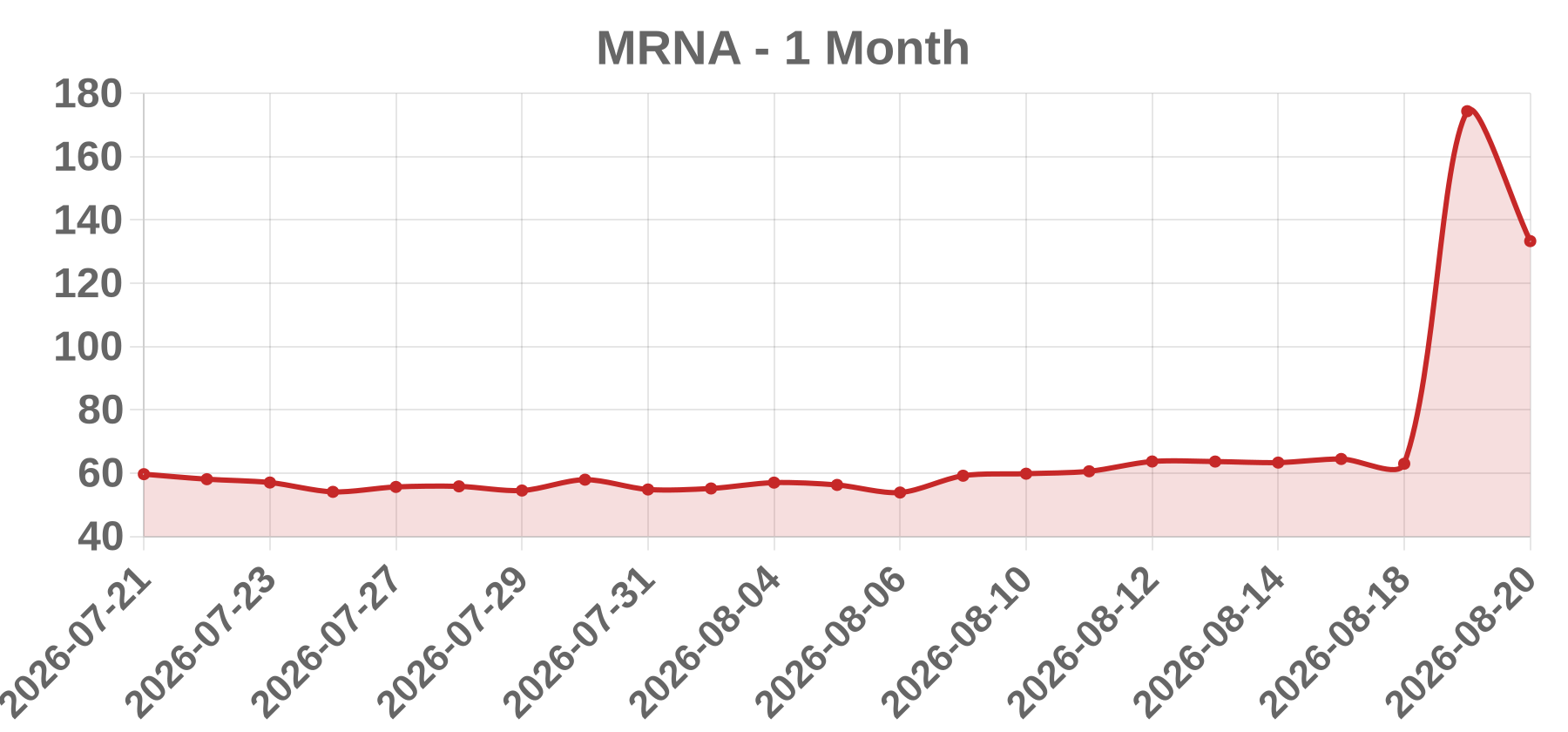
Business Moderna, Inc. is a biotechnology company listed on NASDAQ (ticker: MRNA) that develops messenger RNA (mRNA) therapeutics and vaccines. Its pipeline spans infectious disease vaccines (Spikevax COVID-19, mRESVIA RSV, mFLUSIVA influenza), oncology (intismeran autogene personalized cancer vaccine co-developed with Merck), and rare disease programs.
Today’s take On August 19, 2026, Moderna surged +176.97% to close at $174.38 after announcing positive Phase 3 INTerpath-001 results with Merck for intismeran autogene, a personalized mRNA melanoma vaccine. The stock's short interest stood at ~12.5-13.7% of float before the rally, making it one of the most heavily shorted US large-caps; S3 Partners estimated short sellers lost ~$5.5 billion on paper. The August 20 session fell -23.55% to $133.32 (range $128.61-$155.00) as investors locked in gains and the short squeeze partially unwound. No company-specific adverse news was announced. Analyst target upgrades (BofA to $170, RBC to $130, Piper Sandler to $167) remained below the August 19 close, and consensus fundamentals remained challenged: Q2 2026 revenue was only $145M with a $782M net loss. The reversal represents pure post-catalyst profit-taking and valuation normalization after an unprecedented single-day 177% move.
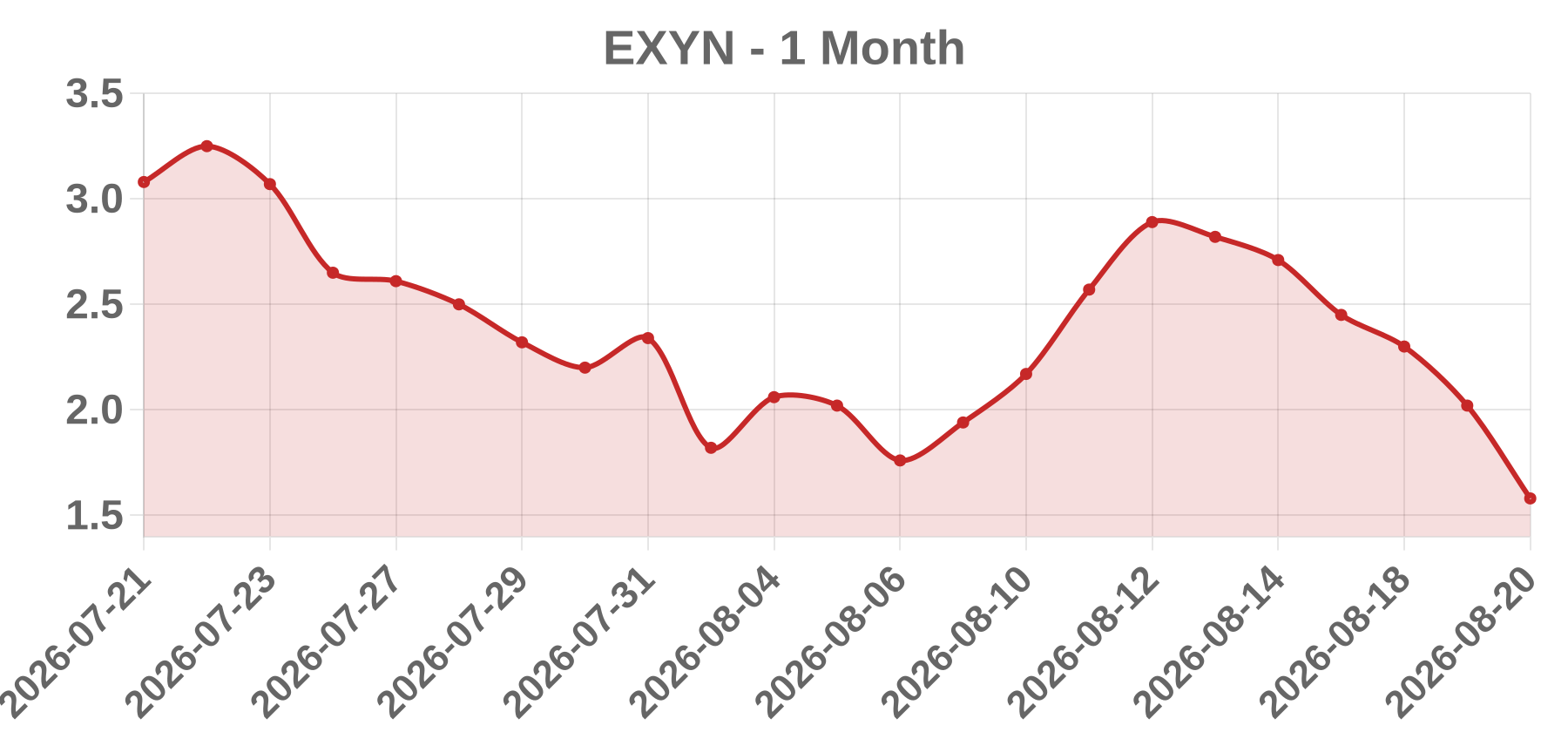
Business Exyn Technologies, Inc. (NASDAQ: EXYN) is a robotics and AI company that develops autonomous mapping and perception-driven navigation systems for complex, GPS-denied environments. Its proprietary ExynAI autonomy platform powers aerial and ground robotic systems, including the Nexys mapping platform, serving mining, construction, infrastructure, geospatial, industrial, government, and defense customers. The company completed its NASDAQ IPO in May 2026.
Today’s take EXYN plunged 21.78% to $1.58 on Aug 20, 2026, after trading as low as $1.50 (a new post-IPO low vs. the $7.20 June high). The collapse followed the Q2 2026 earnings miss reported Aug 19 and the same-day announcement that CEO/Chairman Brandon Torres Declet resigned (effective Aug 19), with COO Ben Williams named Interim CEO and Gregory McNeal appointed Chairman. Q2 revenue was $950K, down ~32% YoY from $1.4M due to customer deployment timing; GAAP net loss widened to $6.9M (-$1.55/share), missing consensus by ~$0.95. Citing Seeking Alpha, the earnings summary showed EPS of -$0.96 missing by $0.36, with revenue beating by $275K. The company's cash stood at only $7.8M as of June 30 with a ~$6.9M quarterly loss pace — implying less than two quarters of runway. Gross margin did expand 630 bps to 46.9%. Governance concerns were compounded by the 10-Q/A disclosure mentioning an Audit Committee internal investigation and material weaknesses in internal controls over financial reporting, plus a registration filing to sell 3.66M shares. After-hours continued down to $1.51.
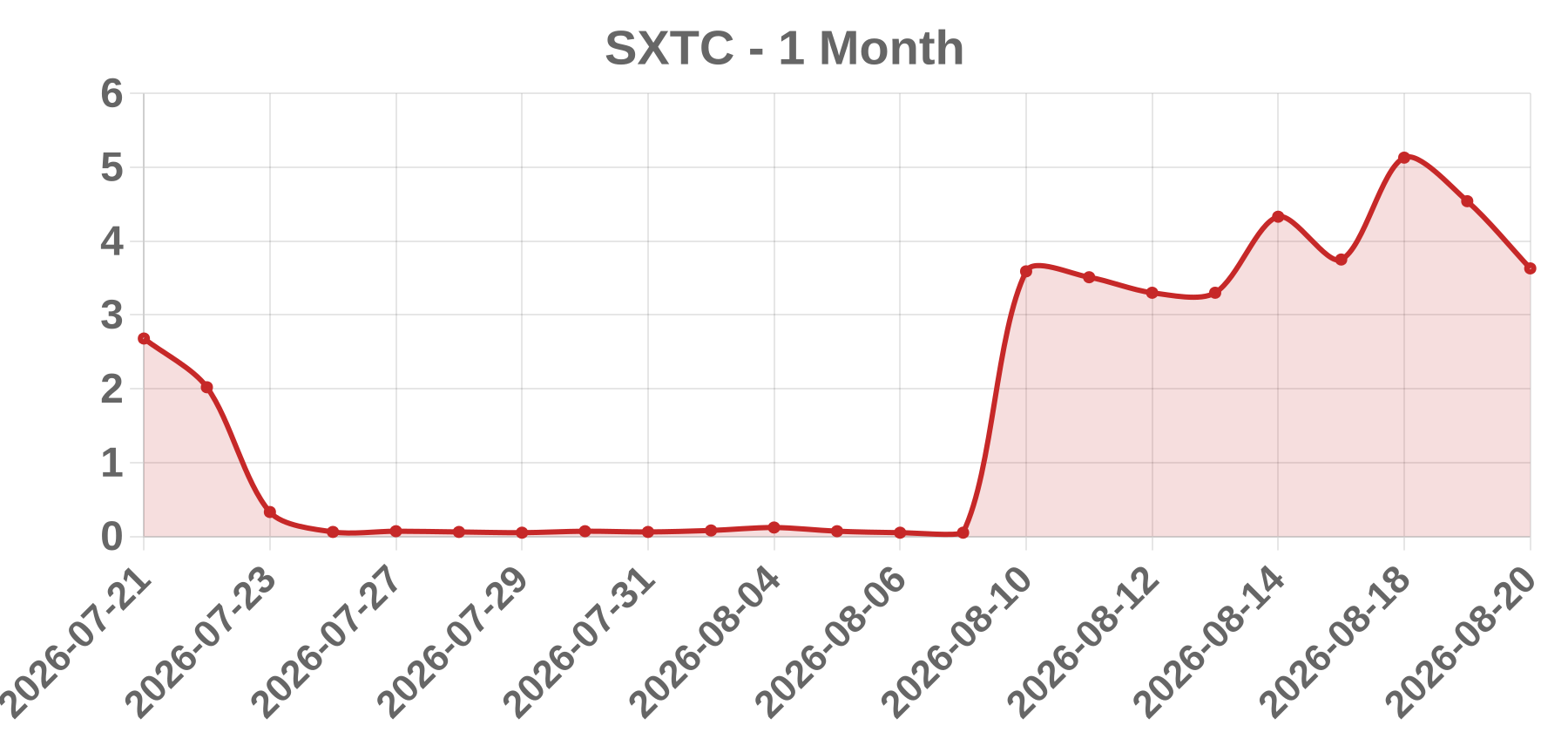
Business China SXT Pharmaceuticals, Inc. (NASDAQ: SXTC) is a micro-cap China-based pharmaceutical company, headquartered in Taizhou, that researches, develops, manufactures, markets and sells Traditional Chinese Medicine Pieces (TCMP) — including Directly-Oral TCMP, After-Soaking-Oral TCMP, fine TCMP and regular TCMP — plus TCM Homologous Supplements (TCMHS), under brands such as 'Su Xuan Tang' and 'Tongrentang', sold mainly as prescription products in China.
Today’s take SXTC closed at $3.63 on 2026-08-20, down 20.04% (open 4.29, high 4.40, low 3.60), and ranked as the 7th-biggest Chinese-ADR decliner of the session per Chinese financial media. There was no same-day company-specific fundamental catalyst (no earnings, M&A, FDA or deal) that drove the drop — it is a technical/momentum unwind in an extremely volatile, heavily-diluted micro-cap. Context: the stock executed a 1-for-80 reverse split effective Aug 10, 2026 (CUSIP G2161P173), lifting the price from sub-$0.10 to a ~$200 pre-split-equivalent level in a few weeks of low-float day-trading. After the split, swings were violent: Aug 4 +60%, Aug 5 -45.6%, Aug 14 +31.2% (15.9M vol), Aug 18 +36.8% (12.99M vol), Aug 19 -11.5%, then Aug 20 -20% on 251,646 shares. Key backdrop: closed $9M registered direct offering (July 24) and a $100M ATM program (signed June 1) point to heavy dilution, while the day-trading momentum thesis (Timothy Sykes, Motley Fool) highlights ~$28M cash, ~$6-29M equity, near-zero revenue (~$1.14M) and price/book ~0.07. The move is profit-taking/technical selling, not fundamental.